Ar C.J. Walsh – Registered Architect, Fire Engineer & Independent Technical Controller …… International Expert on Accessibility for All (including Fire Safety) + 'Real' Sustainability Implementation !
Update 2020-09-01: Although the term ‘Vulnerable People’ remains unaltered, I considered it wise, and very necessary bearing in mind the obvious myopia in the mainstream health, safety and design worlds … clearly demonstrated by the 2017 Grenfell Tower Fire in England, and this current CoronaVirus / CoVID-19 Global Pandemic … to include references to specific social groups …
Vulnerable People: Those people – in a community, society or culture – who are most at risk of being physically, psychologically or sociologically wounded, hurt, damaged, injured, or killed … and include, for example, people with disabilities, young children, people with health conditions, frail older people, women in late pregnancy, refugees, migrants, prisoners, the poor, and homeless.
.
2020-07-20: So many diverse design disciplines and interested groups are involved in the realization, operation and maintenance of a Safe, Inclusive, Resilient and Sustainable Human Environment (built, social, economic, virtual, and institutional) … that the use of simple, easily assimilated language and precise, harmonized technical terminology must be widely exercised. For the effective application of Building Information Modelling (BIM), this is particularly important.
And concerning Fire Engineering, it is not clear when the practice began, but defining a concept simply in terms of performance in a ‘standard test fire’ is entirely inadequate, and fails to explain the actual meaning of the concept.
This Terminology … a body of particular terms, each explaining and defining a single concept, covering inter-related building requirements, e.g. human health, accessibility and fire safety for all, firefighting, social rights, design, performance monitoring, and facility management … takes account of:
Sustainability Impact Assessment (SIA)
WHO International Classification of Functioning, Disability and Health (ICF)
Universal Declaration of Human Rights (UDHR)
U.N. Convention on the Rights of Persons with Disabilities (CRPD)
Environmental Impact.
Fire Engineering Terms … take account of the ‘realistic’ end condition, i.e. a real fire in a real building which is occupied or used by real people with varying behaviour and abilities in relation to self-protection, independent evacuation to an external place of safety remote from a fire building, and active participation in a building’s Fire Emergency Management Plan.
General Terms … are also included in order to facilitate a better understanding of:
the complexity of human behaviour and perception (visual, auditory, olfactory, gustatory, tactile and proprioceptive) ;
the wide range of health conditions ; and, more specifically
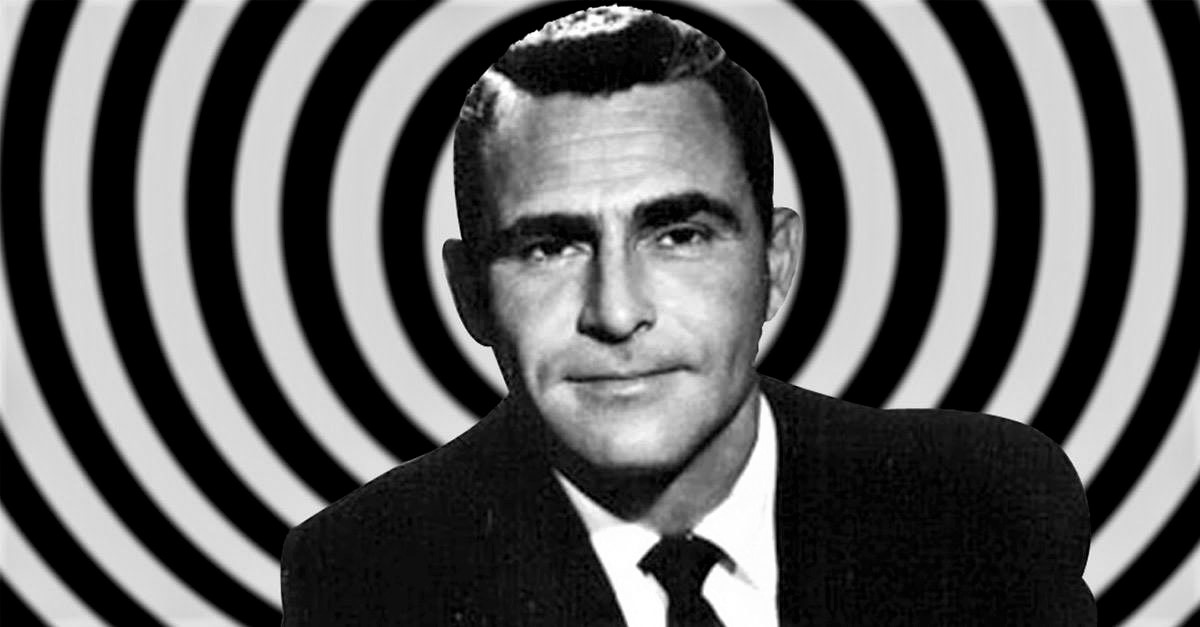
2019-04-05 (2021-07-22): Let us imagine, for a moment, that we are in another dimension … The Twilight Zone …
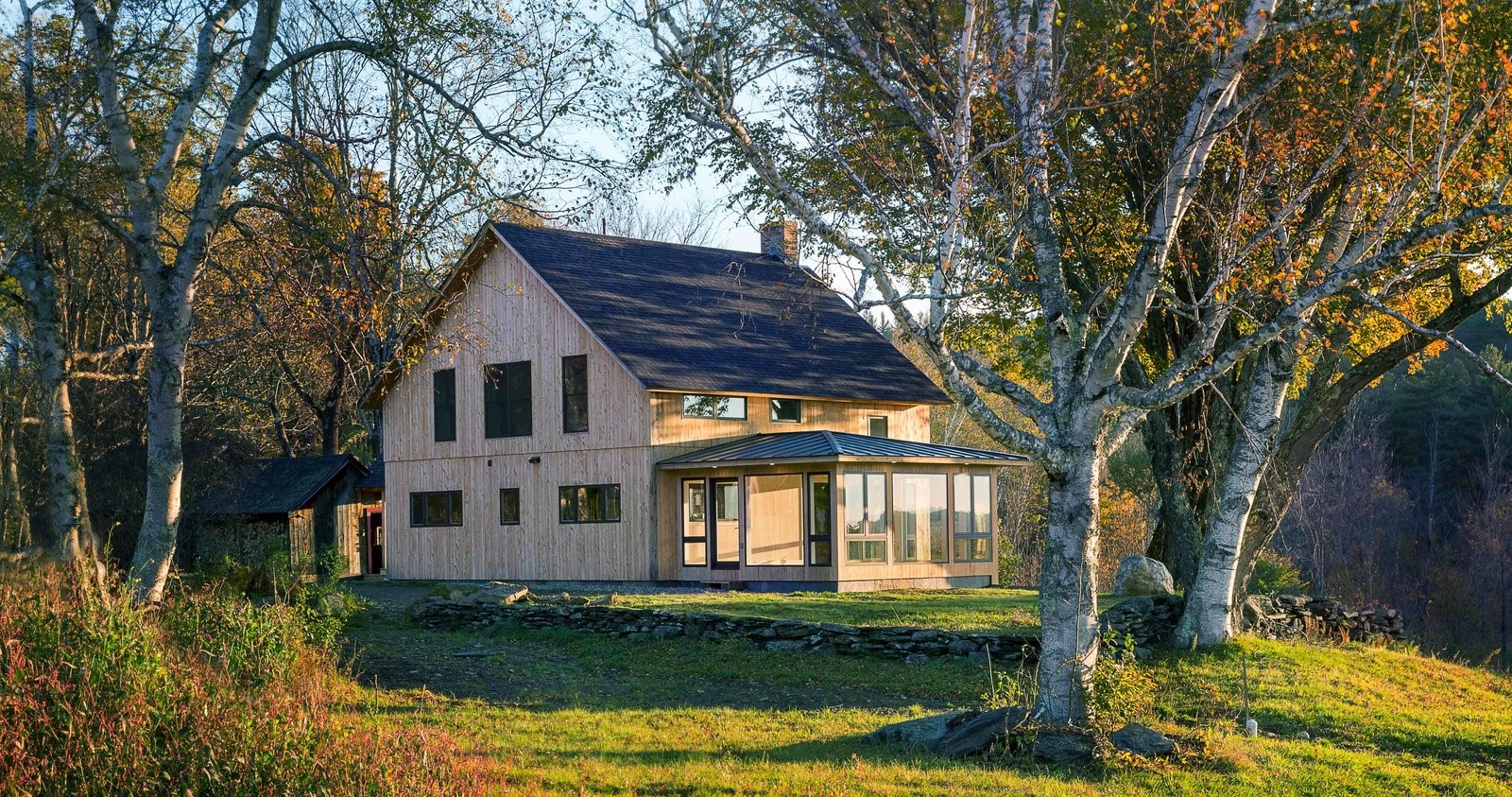
… and that this is a Positive Energy Building, set in a sprawling, diverse, interconnected and flourishing #Woodland with its ecosystems, flora and fauna … an idealized scene … the Sustainability Idyll …
Colour photograph proposing, as the Sustainability Idyll, a Positive Energy Building in the midst of a diverse, interconnected and flourishing Woodland. Climate disruption is increasing the risk of more frequent and intense Wildfires, threatening this idealized scene. Click to enlarge.
But … is it … ?? What percentage of the world’s population would ever have the opportunity to live this way ???
And … lurking all around this beautiful scene, is an inherent and growing threat to life, property, and those trees, shrubs, and wildlife … #Wildfires / #Bushfires …
The Aim of Sustainable Fire Engineering (#SFE) is to dramatically reduce direct and indirect fire losses in the Human Environment (including the social, built, economic, virtual, and institutional environments) … to protect the Natural Environment … and, within Buildings, to ensure that there is an effective level of Fire Safety for All Users / Occupants, not just for Some, during the full building life cycle.
[ Human Environment: Anywhere there is, or has been, an intrusion by a human being in the Natural Environment. ]
So … how do we reduce direct and indirect fire losses in the Human Environment … and improve its #Resilience ?
.
A recent publication provides a good platform – a benchmark – to begin this serious conversation …
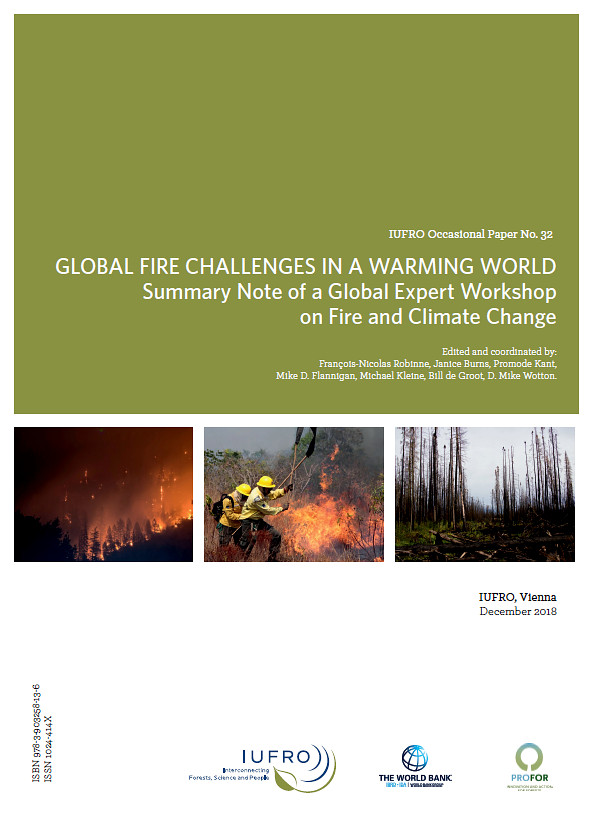
December 2018 … the International Union of Forest Research Organizations (#IUFRO), which is based in Vienna, published Occasional Paper No. 32: ‘GLOBAL FIRE CHALLENGES IN A WARMING WORLD – Summary Note of a Global Expert Workshop on Fire and Climate Change’ …
IUFRO Occasional Paper 32 – Cover Page. Click to enlarge.
Today, catastrophic wildfires are increasingly common across the globe. Recent disasters have attracted media attention and strengthened the perception of wildfires as ‘bad’ events, a plague worsened by climate disruption that has yet to be eradicated. Although it is true that fire has a destructive potential, the reality of global fire activity depicts a much more complex picture in which fire can be a useful, if not necessary, tool for food security and the preservation of cultural landscapes, as well as a an integral element of many ecosystems and their biodiversity.
Global fire activity is shaped by diverse social, economic, and natural drivers influencing the fire environment. The culminating complexity of these factors defines, in turn, the likelihood of a landscape to burn and the potential positive or negative outcomes for communities and ecosystems that can result from a blaze. Although many regions remain understudied, the effects of ongoing climate disruption associated with other planetary changes are already visible, transforming fire activity in ways that are not well understood but are likely to be dramatic, with potential dire consequences for nature, and society in case of #Adaptation failure.
Based on the limited available statistics, there is a growing trend in the cost of wildfires. In addition to human lives that are lost to flames or smoke, and the billions of euros imputable to firefighting and insurance coverage, the growing interest in costs linked to healthcare, business stability, or the provision of ecosystem services such as drinking-water indicates negative economic consequences impacting countries’ GDP and social stability. Attempts to evaluate the future costs of wildfire disasters point at a worsening situation, yet the list of possible social and economic effects is incomplete and the magnitude of envisaged impacts is conservative.
Notwithstanding the difficulties inherent to global climate modelling, there is a scientific consensus on the future increase in the frequency of fire-conducive weather associated with drier ecosystems, a mix that will eventually result in more frequent and intense fire activity. When combined with an ever-growing world population and unsustainable land uses, the conditions leading to fire disaster will only be intensified. Although fire governance has historically advocated for fire suppression, a ‘NO FIRE’ motto is not an option anymore in the new fire reality. Current policies aiming at total fire suppression have been shown to be detrimental and are therefore outdated. The key to wildfire disaster risk reduction in a changing world now lies in learning to live with fire.
Investments in international co-operation, integrated management, local community involvement, cutting-edge technologies, and long-term data collection are critically needed to ensure the future of fire disaster risk mitigation. Moreover, future land development policies must prioritize the protection and the restoration of natural and cultural landscapes that have been degraded by the inappropriate use of fire or, conversely, by historical fire exclusion; keeping a place for fire in forest resource management and landscape restoration has been shown to be a cost-effective and efficient solution to reduce fire hazard.
Overall, synthesis of globally available scientific evidence revealed the following key issues for Landscape Management and Governance:
Climate Disruption, with longer, hotter, and drier fire seasons, in combination with other environmental changes linked to population growth and unsustainable land-use practices, is contributing to extreme wildfire events that exceed existing fire management capacities. The world is entering a ‘new reality’ that demands new approaches to fire governance.
Fire is an inherent feature of the Earth System and many ecosystems, including their fauna, are dependent on it for their long-term survival; nevertheless, ongoing changes in global fire activity in terms of location, intensity, severity, and frequency will have immense costs for biodiversity, ecosystem services, human well-being and livelihoods, and national economies – to extents that have yet to be evaluated. Investment in social, economic, and environmental monitoring is therefore urgent, especially in under-studied regions.
Integrated fire risk reduction is key to adapting to ongoing changes in global fire risk. Future #Sustainable Fire Risk Mitigation demands integrated region-specific approaches based on a clear understanding of fires in context, population awareness and preparedness, fire surveillance and early-warning systems, adaptive suppression strategies, fire-regime restoration, landscape-scale fuel management, changes to many land use practices, and active restoration of landscapes.
Engagement with local communities, land-owners, businesses and public stakeholders – via multiple tiers of governance – is crucial to restore and maintain landscapes that are biodiverse and functional, respectful of local cultures and identities, economically productive, and above all, fire-resilient.
People have historically achieved sustainable co-existence with flammable ecosystems and have often used fire as a land-management tool, thereby shaping many modern and long-standing landscapes around the world. Traditional fire knowledge is thus key to adapting to local changes in fire activity, using known techniques for the reduction of dangerous fuel loads, prescribed burning and sustainable landscape management practices.
Building adaptive capacity to confront fires must be based on knowledge of the natural and cultural roles of fire, how they have shaped our modern landscapes, and their importance in the long-term functioning of socio-ecological systems. Further developments in land-system science, geospatial technologies, and computer modelling will enhance our understanding of the long-term ecological and socio-economic drivers of fire through the widespread collection and distribution of harmonized fire data at the global level. However, creating and sharing such knowledge requires national and international investments in scientific and operational fire science programmes.
Catastrophic fires are undeniably part of our future. Current scientific estimates are conservative, meaning that changes in fire activity might be worse than anticipated. We have to act now to mitigate catastrophic fires and limit the occurrence of disastrous situations. Given disparities but also similarities in the levels of fire risk around the world, and the capacities to manage it, knowledge and technology transfers through international cooperation will be a paramount factor in learning to live with fire.
This Occasional Paper is the result of a large collaborative effort by fire scientists and practitioners who believe that learning to co-exist with changing fire activity is not only possible but necessary if we, as a global society, are to adapt to climate disruption and keep our natural and cultural landscapes healthy, resilient, and safe for the next generations. The work presented hereafter was developed during, and as follow-up to, the Global Expert Workshop on ‘Fire and Climate Change’ hosted in Vienna, Austria, on 2-4 July 2018. It stresses the diversity and the complexity of the global fire situation, a situation that is evolving, positively or negatively, in unknown proportions due to global environmental changes — with climate disruption being the most acknowledged manifestation.
Conclusion – Learning To Live With Fire
We live on a flammable planet; although not everything is meant to burn, fire cannot be eliminated. Ongoing global climate disruption combined with other planetary changes is leading to more frequent and more extreme fires exposing vulnerable societies, economies, and ecosystems to disaster situations. The recognition of fire activity as a worsening hazard threatening human security is the necessary first step towards international co-operation for the mitigation of disaster risk situations in fire-prone areas.
However, we are not defenceless. Fire scientists in many regions of the world have been developing successful strategies and tools based on cutting-edge technologies for several years. Those are now mature enough to be up-scaled and adapted to other geographic contexts as part of national fire management frameworks. Additionally, integrating existing and future scientific knowledge on climate disruption and changing fire regimes, and systematically collecting long-term data on current and past fire uses will foster better informed decisions, models and enhanced efforts towards Wildfire Disaster Risk Reduction, as well as contribute to the development of Sustainable Anthropocene Fire Regimes.
We hope this paper will be a catalyst for a paradigm shift, so fires are not seen as an enemy to fight but as natural and necessary phenomena, as well as a useful and necessary tool that can often help protect people and nature. It is paramount to revise, fund, and fulfil future management, research, and governance needs if we are, as world citizens, to trigger a societal change that will help us better live with fires.
The information and insights contained in this Occasional Paper connect together to promote the use of several existing solutions to the problem: defining national fire risk reduction frameworks, collecting and analyzing relevant traditional knowledge and biophysical fire data, investing in fire detection and prediction technologies, involving and preparing stakeholders, and improving fire use and landscape management in ways that help control the fuel load and the spread of fire, while limiting GreenHouse Gas (#GHG) emissions and protecting the communities and the landscapes they live in and often depend on.
The Status Quo is no longer an option; it is time to make Integrated Fire Management the rule rather than the exception.
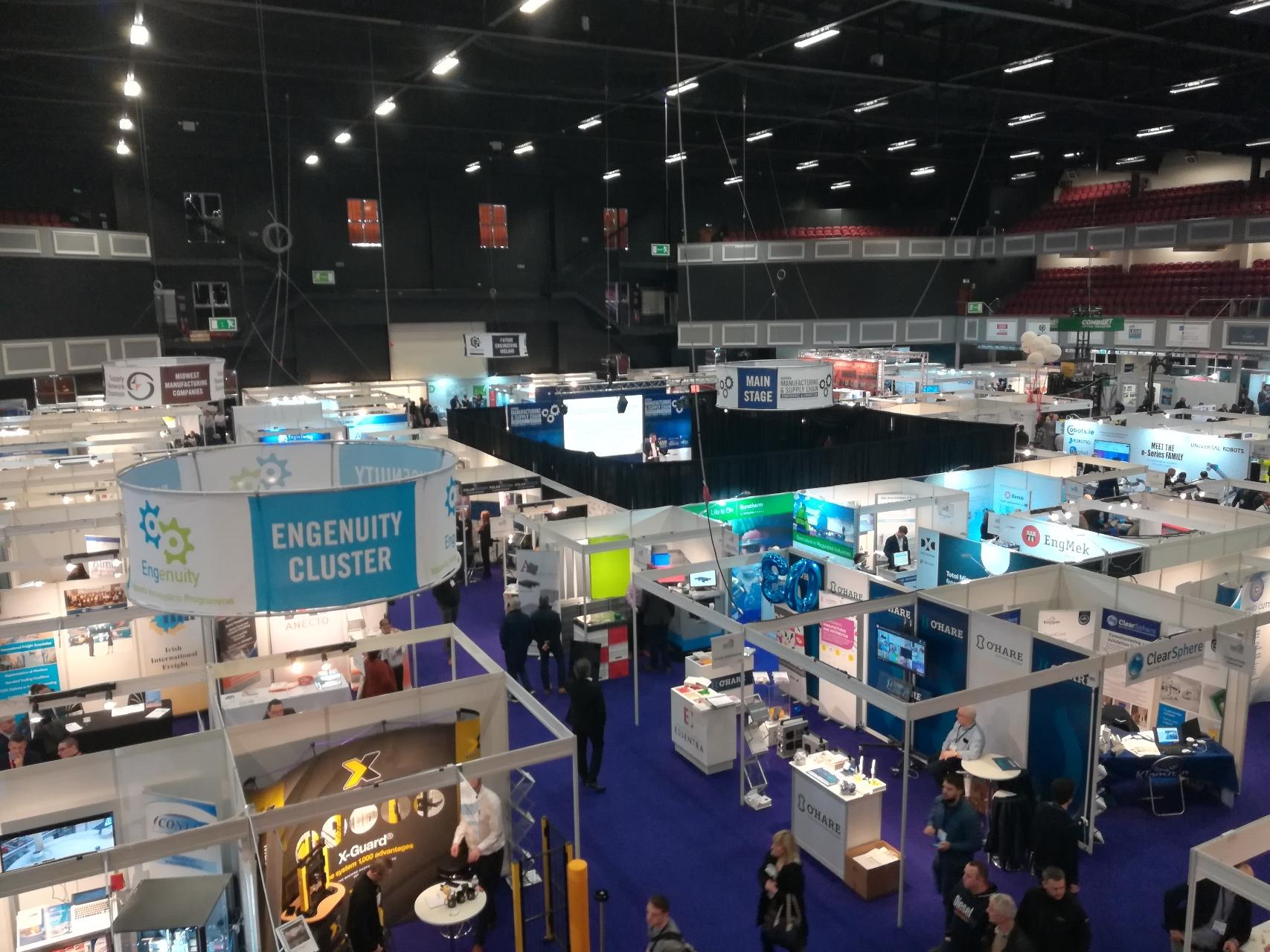
2019 City West Summits, Dublin – Colour photograph showing the view over the Exhibition Hall. Click to enlarge.
.
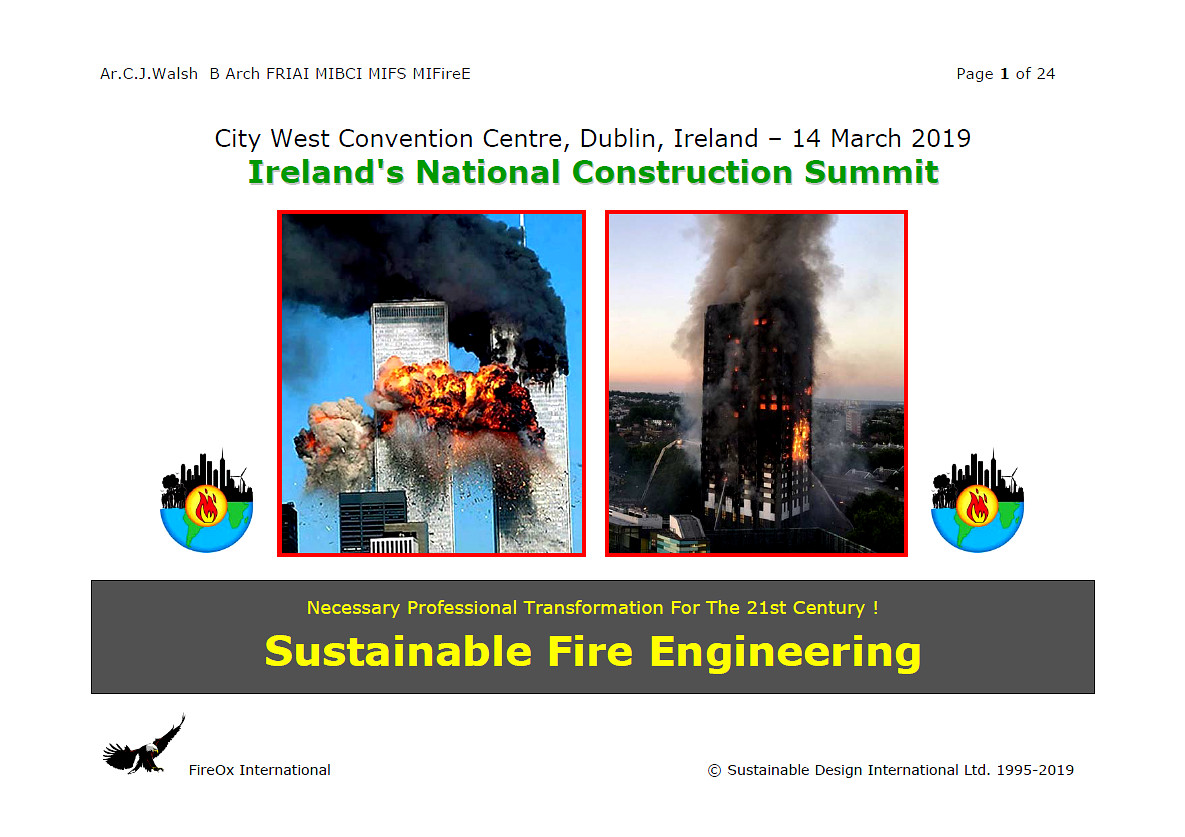
I was very pleased to make a Presentation at both events, adapted to suit an Irish context, on … ‘Sustainable Fire Engineering – Necessary Professional Transformation For The 21st Century’ … which continues to evolve.
Sustainable Fire Engineering: The creative, person-centred and ethical Fire Engineering response, in resilient built form and smart systems, to the concept of Sustainable Human and Social Development … the many aspects of which must receive synchronous and balanced consideration !
Sustainable Fire Engineering Internet: www.sfe-fire.eu Twitter: @sfe2016dublin
Presentation Abstract
Annual Fire Losses, both direct and indirect, amount to a very significant percentage of Gross Domestic Product (#GDP) in all economies, whether they are rich or poor … and result in enormous environmental devastation and social disruption. Some losses have not yet been fully identified, e.g. environmental impact … while others are not yet capable of being fully quantified, e.g. business interruption, brand and reputation damage. Globally, fire statistics still remain unreliable. In all cases, however, the waste of valuable human and natural resources caused by preventable fires is unsustainable and no longer acceptable.
From an entirely different perspective … Sustainable Buildings are presenting every society with an innovative and exciting re-interpretation of how a building functions in response to critical energy, environmental, climate change and planetary capacity pressures … an approach which has left the International Fire Engineering and Firefighting Communities far behind in its wake, struggling to develop the necessary ‘creative’ and ‘sustainable’ fire safety strategies.
The Aim of Sustainable Fire Engineering (#SFE) is to dramatically reduce direct and indirect fire losses in the Human Environment (including the social, built, economic, virtual, and institutional environments) … to protect the Natural Environment … and, within buildings, to ensure that there is an effective level of Fire Safety for All Occupants, not just for Some, over the full building life cycle.
The following Priority Themes for SFE lie outside, or beyond, the constrained and limited fire safety objectives of current fire regulations, codes and standards – objectives which do not properly protect society, a fire engineer’s clients, or the facility manager’s organization:
Fire Safety for ALL, not just for Some. Nobody left behind !
Firefighter Safety. Everyone goes home ! It is easy to dramatically improve firefighter safety with building design. So, why haven’t NIST’s 2005 and 2008 WTC 9-11 Critical Recommendations been properly implemented anywhere ?
Property Protection. Fire damage and post-fire reconstruction/refurbishment are a huge waste of resources. On the other hand, protection of an organization’s image/brand/reputation is important … and business continuity is essential. Heritage fire losses can never be replaced.
Environmental Impact. Prevention of a fire is far better than any cure ! But prevention must also begin by specifying ‘clean’ technologies and products. Low Pressure Water Mist Systems are not only person/environment-friendly and resource efficient … they are absolutely essential in airtight and hyper energy-efficient building types (e.g. LEED, PassivHaus, BREEAM) in order to achieve an effective level of fire safety for all occupants, and firefighters. [ Note: Environmental Impact Assessment (#EIA) has been superseded by Sustainability Impact Assessment (#SIA).]
Building Innovation, People and Their Interaction. Fire engineers and firefighters must begin to understand today’s new design strategies.
Sustainable Design and Engineering. Wake up and smell the coffee ! Legislation can only achieve so much. Spatial planners, building designers and fire engineers must subscribe to a robust Code of Ethics * which is fit for purpose in the Human Environment of the 21st Century.
Sustainable Fire Engineering Solutions are …
Adapted to a local context, i.e. climate change/variability/extremes, social need, geography, economy, and culture, etc ;
Reliability-based – lessons from real extreme and hybrid events, e.g. 2001 WTC 9-11 Attack, 2008 Mumbai/2015 Paris/2016 Brussels Hive Attacks and the 2011 Fukushima Nuclear Incident, are applied to frontline practice ;
Person-centred – real people are placed at the centre of creative endeavours and due consideration is given to their responsible needs, and their health, safety, welfare and security in the Human Environment ;
Resilient – functioning must be reliable during normal conditions, and include the ability to withstand, adapt to and absorb unusual disturbance, disruption or damage, and thereafter to quickly return to an enhanced state of function.
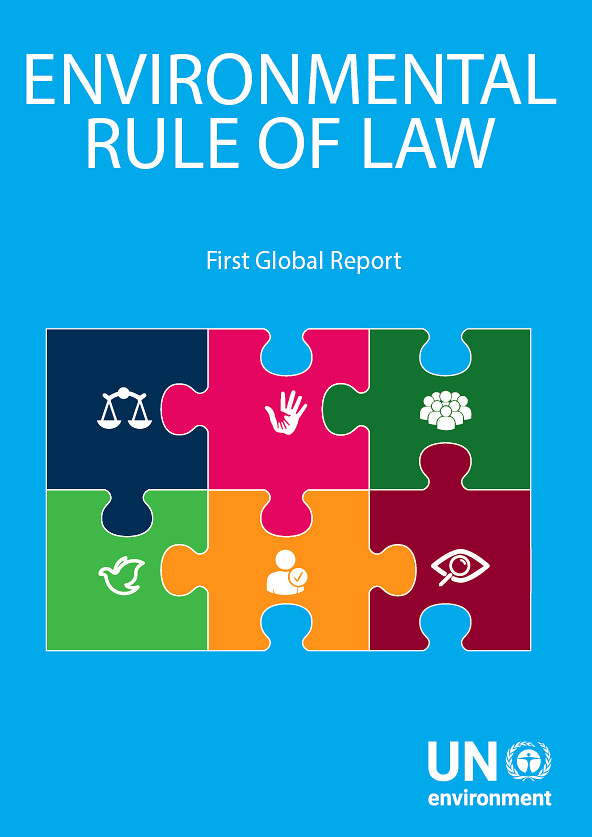
The United Nations Environment Programme (UNEP – https://www.unenvironment.org/) has recently published the First Global Report on Environmental Rule of Law … which finds weak enforcement to be a global trend that is exacerbating environmental threats, despite the prolific growth in environmental laws and agencies worldwide over the last four decades.
The answer, of course, is rigorous implementation of environmental law … most particularly in those developed countries which have amassed their riches, over past centuries, from the plunder of natural, human and cultural resources in Central & South America, Africa and Asia.
UNEP: ‘Environmental Rule of Law – First Global Report’ (2019)
If human society is to stay within the bounds of critical ecological thresholds, it is imperative that environmental laws are widely understood, respected, and enforced … and the benefits of environmental protection are enjoyed by people and the planet. Environmental rule of law offers a framework for addressing the gap between environmental laws on the books and in practice, and is key to achieving the U.N. Sustainable Development Goals.
Environmental laws have grown dramatically over the last three decades, as countries have come to understand the vital linkages between environment, economic growth, public health, social cohesion, and security. As of 2017, 176 countries have environmental framework laws; 150 countries have enshrined environmental protection or the right to a healthy environment in their constitutions; and 164 countries have created cabinet-level bodies responsible for environmental protection. These and other environmental laws, rights, and institutions have helped to slow – and in some cases to reverse – environmental degradation and to achieve the public health, economic, social, and human rights benefits which accompany environmental protection.
The 1972 United Nations Conference on the Human Environment brought the global environment into the public consciousness, leading to the establishment of the United Nations Environment Programme. Following the 1992 United Nations Conference on Environment and Development (known as the Rio Earth Summit), many countries made a concerted effort to enact environmental laws, establish environment ministries and agencies, and enshrine environmental rights and protections in their national constitutions. By the 2012 United Nations Conference on Sustainable Development, the focus had shifted to implementation of environmental laws, which is where progress has waned.
Too often, implementation and enforcement of environmental laws and regulations falls far short of what is required to address environmental challenges. Laws sometimes lack clear standards or necessary mandates. Others are not tailored to national and local contexts and so fail to address the conditions on the ground. Implementing ministries are often underfunded and politically weak in comparison to ministries responsible for economic or natural resource development. And while many countries are endeavouring to strengthen implementation of environmental law, a backlash has also occurred as environmental defenders are killed and funding for civil society restricted. These shortfalls are by no means limited to developing nations: reviews of developed nations have found their performance on environmental issues lacking in certain respects. In short, environmental rule of law is a challenge for all countries. This Report discusses the range of measures that countries are adopting to address this implementation gap – and to ensure that rule of law is effective in the environmental sphere.
As the first assessment of the global environmental rule of law, this Report draws on experiences, challenges, viewpoints, and successes of diverse countries around the world, highlighting global trends as well as opportunities for countries and partners to strengthen the environmental rule of law.
The Report highlights the need to undertake a regular global assessment of the state of environmental rule of law. To track progress nationally and globally, it is necessary to utilize a set of consistent indicators. The Report proposes an indicator framework for environmental rule of law and highlights existing datasets that may be utilized in support of the global assessment.
The Report also calls for a concerted effort to support countries in pilot testing approaches to strengthen environmental rule of law. Such an initiative could support testing of approaches in diverse contexts, and then adapting them before scaling them up. It should also foster exchange of experiences between jurisdictions to foster learning.
In addition to these two cross-cutting recommendations, the Report highlights numerous actionable steps that States can take to support environmental rule of law. For example, States can evaluate the current mandates and structure of environmental institutions to identify regulatory overlap or underlap. States and partners can build the capacity of the public to engage thoughtfully and meaningfully with government and project proponents. They can prioritize protection of environmental defenders and whistle-blowers. States may consider the creation of specialized environmental courts and tribunals, and use administrative enforcement processes to handle minor offences. And there is an ongoing need to research which approaches are effective under what circumstances.
The benefits of environmental rule of law extend far beyond the environmental sector. While the most direct effects are in protection of the environment, it also strengthens rule of law more broadly, supports sustainable economic and social development, protects public health, contributes to peace and security by avoiding and defusing conflict, and protects human and constitutional rights. As such, it is a growing priority for all countries.
The creative, person-centred and ethical fire engineering response – in resilient built or wrought form, and using smart systems – to the intricate, open, dynamic and continually evolving concept of Sustainable Human & Social Development … the many aspects of which must receive balanced and synchronous consideration.
SFE PRIORITY THEMES
1. Fire Safety for ALL – Not Just for SOME People. Nobody Left Behind !
Do Building Designers and Fire Engineers have any understanding of what it feels like to be left behind in a fire emergency … perhaps to die ?
Do Building Designers and Fire Engineers have any understanding of the ‘real’ people who use their buildings … or their ‘real’ needs ?
2. Firefighter Safety – It’s So Easy to Dramatically Improve Their Safety At A Fire Scene ! A Firefighter’s Protective Clothing and Equipment are not enough !
Conscious awareness of this issue by Building Designers and Fire Engineers is required … and appropriate education/training.
3. Property Protection – A Minor Code Fire Safety Objective, Insofar As It Is Necessary to Protect the Safety of Building Users … Only !
Fire damage and post-fire reconstruction/refurbishment are a huge waste of resources. On the other hand, protection of an organization’s image/brand is important … and business continuity is essential.
Heritage Fire Losses cannot be replaced !
To properly protect Society and the interests of a Client/Client Organization … Building Designers and Fire Engineers are ethically bound to clearly explain the limitations of Code and Standard Fire Safety Objectives to their Client/Client Organization.
4. Environmental Impact – Prevention Is Far, Far Better Than Cure. Instead of resisting, and erecting ‘professional’ barriers … Spatial Planners, Building Designers and Fire Engineers must begin to properly understand this concept … and act ethically to defend and protect the environment !
Environmental Impact: Any effect caused by a given activity on the environment, including human health, safety and welfare, flora, fauna, soil, air, water, and especially representative samples of natural ecosystems, climate, landscape and historical monuments or other physical structures, or the interactions among these factors ; it also includes effects on accessibility, cultural heritage or socio-economic conditions resulting from alterations to those factors.
This Planet – Our Common Home – can no longer suffer the scale and extent of total devastation seen after the 2015 Tianjin (China) Regional Fire Disaster !
5. Building Innovation, People and Their Interaction – Fire Engineers and Firefighters must understand current approaches to more sustainable building design, the ‘real’ people who use the built environment, and the complex interactions between both.
People with Activity Limitations (E) / Personnes à Performances Réduites (F): Those people, of all ages, who are unable to perform, independently and without aid, basic human activities or tasks – because of a health condition or physical/mental/cognitive/psychological impairment of a permanent or temporary nature.
The above Term, in English and French, includes …
people who experience difficulty in walking, with or without a facilitation aid, e.g. stick, crutch, calliper or walking frame ;
wheelchair users ;
the very young (people under 5 years of age), frail older people, and women in the later stages of pregnancy ;
people who are visually and/or hearing impaired ;
people who suffer from arthritis, asthma, or a heart condition … or any partial or complete loss of language related abilities, i.e. aphasia … or who have a cognitive impairment disorder, including dementia, amnesia, brain injury, or delirium ;
people impaired after the use of alcohol, other ‘social’ drugs e.g. cocaine and heroin, and some medicines … or following exposure to environmental pollution and/or other irresponsible human activity, e.g. war or terrorism ;
people who experience a panic attack in a real fire situation or other emergency ;
people, including firefighters, who suffer incapacitation as a result of exposure, during a real fire, to smoke and poisonous/toxic substances and/or elevated temperatures.
6. Sustainable Design & Engineering – Get With The Programme ! The extensive United Nations 2030 Sustainable Development Framework Agenda was overwhelmingly agreed and adopted in 2015.
Sustainability Impact Assessment (SIA): A continual evaluation and optimization process – informing initial decision-making, design, shaping activity/product/service realization, useful life, and termination or final disposal – of the interrelated positive and negative social, environmental, economic, institutional, political and legal impacts on balanced and equitable implementation of Sustainable Human & Social Development.
‘Carrots and Sticks’ can only achieve so much. Spatial Planners, Building Designers and Fire Engineers must – individually and as a group – subscribe to a robust Code of Ethics which is fit for purpose in today’s Human Environment.
New CIB W14: ‘Fire Safety’ Research Working Group VI Reflection Document: ‘Sustainable Fire Engineering Design, Construction & Operation’, which will establish a framework for the future development of Sustainable Fire Engineering.
Preparation of this Document will soon begin, and the following issues will be explored:
Conceptual Framework for Sustainable Fire Engineering (SFE), with a necessary accompanying Generic SFE Terminology ;
Strategy for Future SFE Development ;
Implementation of 2005 & 2008 NIST WTC 9-11 Recommendations ;
Fresh, New SFE Research Agenda ;
Resilient Implementation of SFE Research Agenda.
Would you like to get involved, and help with this work ?
.
PRIORITY THEME 1 – FIRE SAFETY FOR ALL (2017)
The Fire Safety Task Group, chaired by CJ Walsh, of ISO Technical Committee 59, Sub-Committee 16, Working Group 1, has already commenced the revision and further development of the fire safety texts in International Standard ISO 21542 (2011): ‘Building Construction – Accessibility & Usability of the Built Environment’.
The main effort, initially, has been focused on developing a coherent Fire Safety for All approach … token consideration, or a post-design graft-on, of the fire safety needs of people with activity limitations do not work, and are unacceptable.
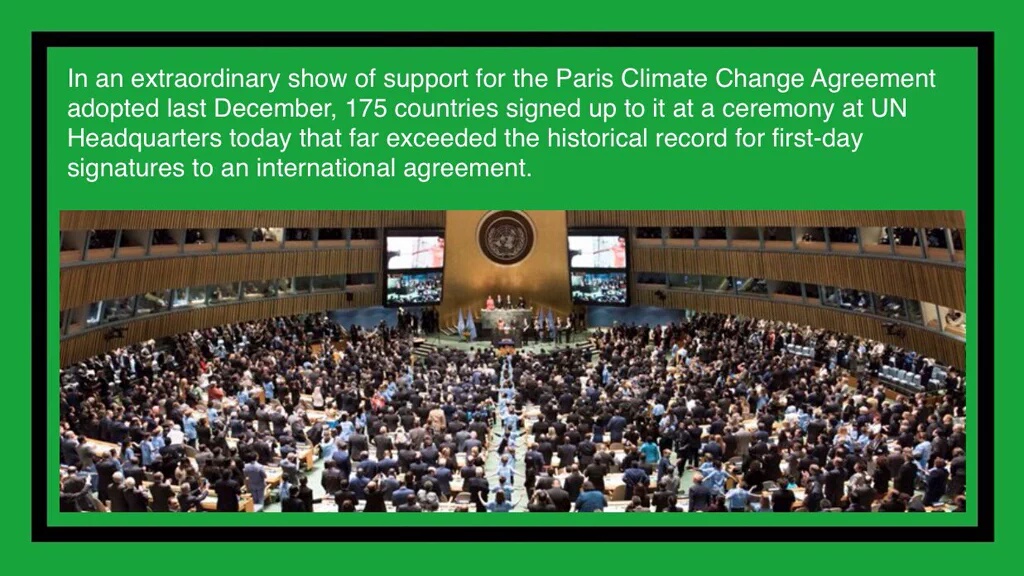
2016-04-23: Yesterday … Earth Day … and also the Official Signing Ceremony for the 2015 Paris Climate Change Agreement at United Nations Headquarters, in New York City …
Click image to enlarge.
On the day before that, 21 April, in a Press Release issued by the World Meteorological Organization (WMO) …
A prolonged run of record global temperatures and extreme weather, the rapid melting of Arctic ice, and widespread bleaching of ocean coral reefs underline the urgent need to sign and implement the Paris Agreement on Climate Change, according to the World Meteorological Organization (WMO).
WMO Secretary-General Petteri Taalas said that 2016 has so far overshadowed even the record-breaking year of 2015.
“The magnitude of the changes has been a surprise even for veteran climate scientists. The state of the planet is changing before our eyes,” said Mr Taalas.
.
A little earlier in April 2016 … and within the above international context came this problematic, but not-entirely-unexpected tale from Great Britain … the tip of a foul-smelling iceberg in quite a few countries …
Green Deal & Energy Company Obligation
“Improving household energy efficiency is central to government achieving its aims of providing taxpayers with secure, affordable and sustainable energy. The Department of Energy and Climate Change’s ambitious aim to encourage households to pay for measures looked good on paper, as it would have reduced the financial burden of improvements on all energy consumers. But in practice, its Green Deal design not only failed to deliver any meaningful benefit, it increased suppliers’ costs – and therefore energy bills – in meeting their obligations through the Energy Company Obligation (ECO) Scheme. The Department now needs to be more realistic about consumers’ and suppliers’ motivations when designing schemes in future to ensure it achieves its aims.”
Amyas Morse, Head of the British National Audit Office (NAO), 14 April 2016.
[ And as you read further down … consider how important it must be for future effective climate change policy implementation in all of our countries, particularly those countries with an ‘historical responsibility’ …
that accurate, precise and reliable climate change data and statistics be gathered together and properly managed … and this means, for example, that at European Union Member State level, the national statistics organization must be in control of the process … and at EU level, Eurostat must be in control ;
that implementation be stringently and independently monitored for long-term effectiveness ;
that economists be removed from core decision-making in this area … and the veto they currently exercise over necessary mitigation and adaptation actions be removed. ]
The National Audit Office has today concluded that the Department of Energy and Climate Change’s (DECC) Green Deal has not achieved value for money. The scheme, which cost taxpayers £240 Million including grants to stimulate demand, has not generated additional energy savings. This is because DECC’s design and implementation did not persuade householders that energy efficiency measures are worth paying for.
The NAO Report: Green Deal and Energy Company Obligation also found that DECC’s design of its Energy Company Obligation (ECO) scheme to support the Green Deal added to energy suppliers’ costs of meeting their obligations. This reduced the value for money of ECO, but the Department’s information is not detailed enough to conclude by how much suppliers have met their obligations for saving carbon dioxide (CO2) and reducing bills.
The report finds that while the Department achieved its target to improve 1 Million Homes with the schemes, this is not a direct indicator of progress against the objective of reducing carbon dioxide (CO2) emissions. This is because different types of energy-efficiency measures save different amounts of CO2.
The schemes have saved substantially less CO2 than previous supplier obligations, mainly because of the Department’s initial focus on ‘harder-to-treat’ homes, as its analysis showed that previous schemes had absorbed demand for cheaper measures. The Department expects the measures installed through ECO up to 31 December 2015 to generate 24 Mega Tonnes of carbon dioxide (Mt CO2) savings over their lifetime, only around 30% of what the predecessor schemes achieved over similar timescales.
Demand for Green Deal finance has fallen well below the government’s expectations, with households only funding 1% of the measures installed through the schemes with a Green Deal loan. The schemes have not improved as many solid-walled homes, a key type of ‘harder-to-treat’ homes, as the Department initially planned. As part of changes to ECO in 2014, the Department enabled suppliers to achieve their obligations with cheaper measures, moving away from its focus on harder-to-treat properties. ECO has generated £6.2 Billion of notional lifetime bill savings to 31 December 2015 in homes most likely to be occupied by fuel poor people. Beyond this, the Department cannot measure the impact of the schemes on fuel poverty.
There are significant gaps in the Department’s information on costs, which means it is unable to measure progress towards two of its objectives: to increase the efficiency with which suppliers improve the energy efficiency of ‘harder-to-treat’ houses, and to stimulate private investment. The lack of consistency in the government’s approach during the schemes could increase the long-term costs of improving household energy efficiency.
In the NAO’s accompanying investigation into DECC’s loans to the Green Deal Finance Company, also published today, it found that the Department expects that it will not recover its £25 Million stakeholder loan to the finance company, plus £6 Million of interest that has accrued on it. The Department based its stakeholder loan on forecasts of significant consumer demand for Green Deal loans. But demand for Green Deal finance was lower than the Department forecast from the outset, meaning the finance company could not cover its operating costs. The Department agreed a second loan worth up to £34 Million in October 2014, of which the finance company has drawn down £23.5 Million. The Department still expects to recover this loan in full as it will be repaid before other investors in the finance company.
.
Is it any wonder that the ‘real’ Greenhouse Gas (GHG) Numbers continue to climb relentlessly ?!?
2016-04-19: A Priority Theme of SFE 2016 DUBLIN, next September, is the ‘Adverse Environmental Impact’ caused by Preventable Fires in the Built Environment. Last year’s horrendous devastation of large tracts of land, air and ground waters in the Tianjin port region of North-Eastern China is one very obvious example.
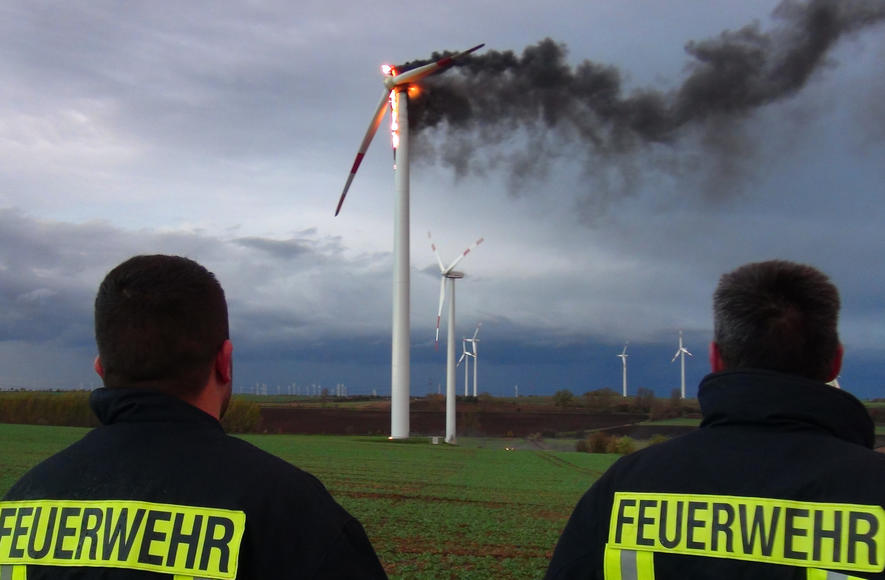
BUT, consider also … Wind Turbine Fires. As we move closer and closer towards a planetary environmental precipice … there IS enormous pressure to harvest more and more energy from renewable, non-carbon resources. Windmills, of old, used wind energy to perform an important function in a local context. Everybody could see what was happening inside. Local people reaped the benefits. Modern wind turbines, on the other hand … ?
The First Major Issue concerning Wind Turbines, which received only half-hearted attention at best, was their …
Environmental Impact: Any effect caused by a given activity on the environment, including human health, safety and welfare, flora, fauna, soil, air, water, and especially representative samples of natural ecosystems, climate, landscape and historical monuments or other physical structures, or the interactions among these factors; it also includes effects on accessibility, cultural heritage or socio-economic conditions resulting from alterations to those factors.
But, at least, ‘it’ was mentioned in conversations !
.
Click image to enlarge.
The next major issue, the Fire Issue, is a different matter entirely. This problem does NOT exist … NEVER happens … NOBODY KNOWS NOTHING ! And not just in Ireland or Europe … the ‘real’ fire statistics are either ignored, massaged or concealed.
Wind turbines differ from other forms of traditional power generation because of the inherent risk of total fire loss of the nacelle. The main features of this risk include:
high concentration of value within the nacelle ;
high concentration of potential ignition sources within the nacelle, and increased risk of lightning strikes ;
unmanned operation ;
no possibility of fighting a fire in the nacelle by local fire service personnel, because they are too high up and/or there is no access for fire service vehicles ;
remote, sometimes very difficult to reach geographical locations of wind turbines, particularly in the case of offshore installations.
[ Nacelle: A cover, or housing, for all of the generating components in a wind turbine, including the generator, gearbox, drive train, and brake assembly.]
The cost of wind turbines and their components, as well as restoration and repair costs after a fire, increase in proportion to installed generating capacity. In addition, losses caused by service interruption also increase in a similar proportion.
According to the loss experience of Insurers, fires in wind turbines can cause significant damage to property and have very high post-fire costs.
Fire Loss in Wind Turbines Can Occur …
in the nacelle ;
in the tower ;
in the electrical sub-station of the wind turbine or wind farm.
Due to the high concentration of technical equipment and combustible material in the nacelle, fire can develop and spread rapidly. There is also the danger that the upper tower segment will be damaged. In the case of a total loss of the nacelle, restoration costs may well reach the original value of the whole turbine.
These ‘Preventable’ Fire Losses Are NOT Sustainable !
.
PDF File, 601Kb – Click ‘CFPA-E Guideline’ link below to download.
Which is why, in September 2012, the European Fire Protection Associations decided to publish a common guideline in order to ensure similar interpretations in the different European countries … and to give examples of acceptable solutions, concepts and models. The Confederation of Fire Protection Associations in Europe (CFPA-E) aims to facilitate and support fire protection work.
The European marketplace is constantly imposing new demands for quality and safety. According to CFPA-E, fire protection forms an integral part of a modern business strategy for survival and competitiveness. We thoroughly agree !
This CFPA-E Guideline (No.22 – September 2012) on Wind Turbine Fire Protection in Europe – produced by VdS Schadenverhütung and drafted by Hardy Rusch – is primarily intended for those people responsible for fire safety in companies and organizations. It is also addressed to fire services, consultants, safety companies, etc … so that, in the course of their work, they may be able to assist companies and organizations in increasing levels of fire safety.
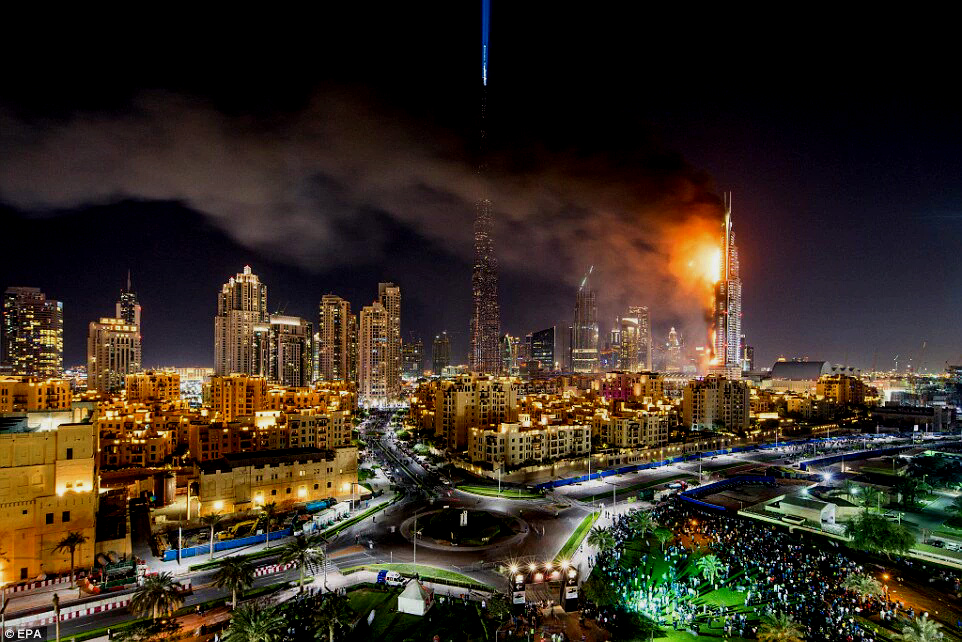
And Maybe … if it hadn’t been that particular night, during all the festivities of New Year’s Eve 2015, we would never have heard about the Address Supertall Hotel Fire, in Dubayy (UAE). A long search on the Internet afterwards led to the detailed, post fire analysis report on the 2014 Lacrosse Docklands Fire, in Melbourne (Australia) … followed by some more searching, and a very large can of worms opened up … similar nasty façade (external fabric) fires in many, many countries … involving large chunks of flaming debris falling from terrific heights, carried by the wind to a significant distance away from the building of fire origin.
Click to enlarge.
Some people have tried to suggest that the only reason for these fires is inadequate building codes/regulations. No … the reason for these fires is much more than that … it’s the ‘SYSTEM’ ! In other words, how the International Construction Sector is organized and goes about its ordinary, everyday activities and tasks. We must also talk about poor quality design and construction … and a lack of stringent, independent enforcement of effective building codes/regulations and standards. I have written this down many times before … Self-Regulation is NO Regulation !!
It is very clear that Conventional Fire Engineering … as currently practiced, internationally … is no longer ‘fit for purpose’. For discussion at SFE 2016 DUBLIN. Check out the Fire Conference Website: www.sfe-fire.eu … and on Twitter: @sfe2016dublin
.
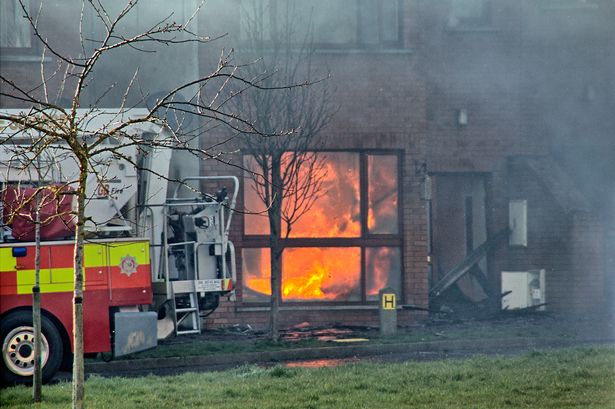
IN IRELAND … A 2015 TERRACED HOUSING FIRE …
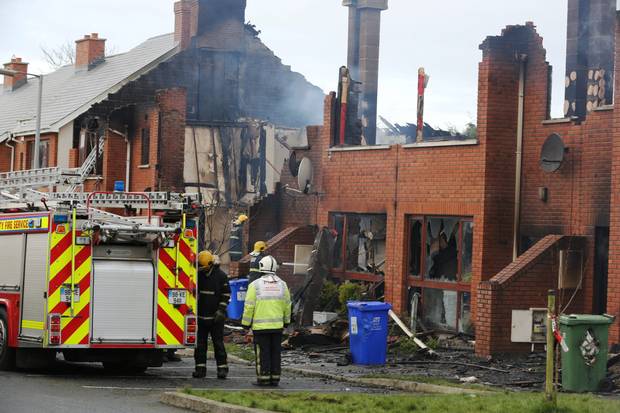
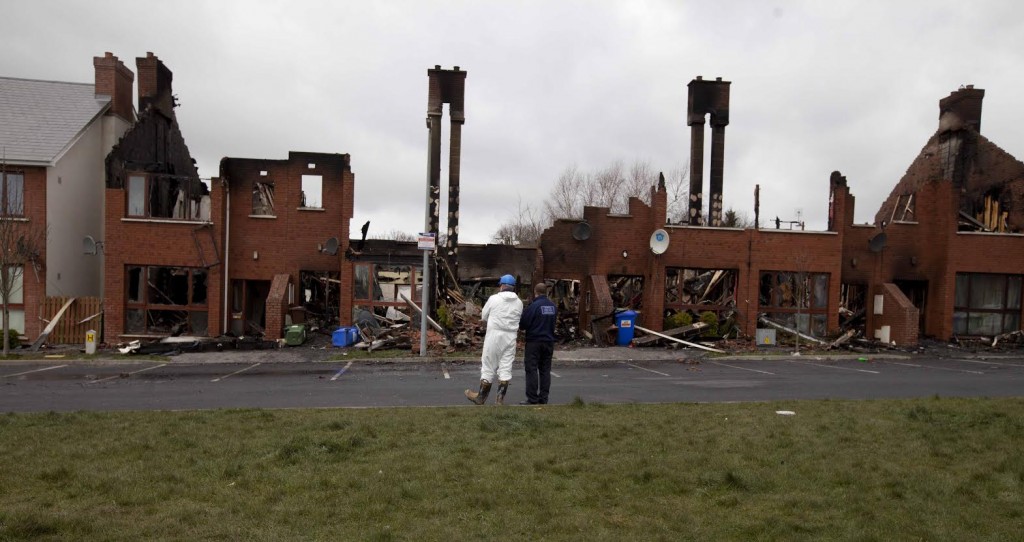
The general public was shocked and stunned, to put it mildly, by a very rapid and extensive 2015 Terraced Housing Fire on the outskirts of Dublin …
Click to enlarge.
[ See my Blog, dated 2011-04-06 … about a different, but related, 2011 Terraced Housing Fire in Terenure, a suburb of Dublin City.]
Click to enlarge.
[ Fast forward from 2011 … overtaking Priory Hall (see my series of Blogs) … to Longboat Quay, a large residential development on the south bank of the River Liffey, which flows through the middle of Dublin. A recent visual/surface inspection of one of the units there revealed not just a poor quality of construction … but a lack of care and attention, with a mixture of incompetence and ignorance thrown in for good measure.]
Click to enlarge.
The 2015 Terraced Housing Fire, shown above, should not have been a surprise to the ‘System’ in Ireland. Research carried out in the U.S.A., Belgium and The Netherlands since 2012, and a serious PassivHaus Apartment Fire in Köln, Germany, on the night of 5 February 2013 … have all shown that the modern home (highly insulated, airtight, packed with electronic equipment and wiring, and fast-burning synthetic furnishings, etc.) is the ‘perfect storm’ of fire conditions and outcomes. More open residential design + increased fuel loads + new construction systems and materials = faster development of fires, much reduced times to flashover, far less time for occupant evacuation, particularly people with activity limitations … and shorter building collapse times.
The time to flashover in modern high-performance housing, i.e. Sustainable/Green/PassivHaus/Eco/LEED/Bio/+Energy/Low Carbon/BREEAM/Zero Carbon/SMART … can be 7 times faster than in conventional/legacy housing … or less than 5 minutes, compared with just over 29 minutes !
All of this research can be found on the Links & Docs Page of the SFE 2016 DUBLIN Website.
Let us be crystal clear … there is nothing Sustainable/Green/PassivHaus/Eco/LEED/Bio/+Energy/Low Carbon/BREEAM/Zero Carbon/SMART about the post-fire scenes of destruction shown above. And only for the physical separation between terraces, which can be clearly seen in the last photograph … the fire would have kept spreading.
.
URGENT FIRE SAFETY RECOMMENDATIONS …
Without a balanced, proper approach to the issue of Fire Safety in this type of modern, high-performance housing … occupant safety is seriously threatened. And if, in the event of a fire incident, the occupants are asleep … or people with activity limitations are living in the house … that threat will be extremely grave indeed.
Reality – Reliability – Redundancy – Resilience !
So … what needs to change ? In Ireland, our immediate problem is Timber-Framed Housing (as shown above) … and the following is an outline of what must change … NOW !
Party Walls, i.e. the walls separating one house from another, must be constructed of solid masonry, with a uniform and uncompromised thickness of at least 200mm … plastered on both sides, not dry-lined, for adequate smoke resistance … and be continued above the roof covering for at least 300mm.
An effective Fire Detection System must be installed. The conventional ‘package’ of one smoke detector per floor in the hallway and staircase of a standard 2 storey semi-detached house is nowhere near being adequate.
An effective Residential / Domestic Fire Suppression System must be installed, e.g. low pressure water mist. See later post, dated 2016-06-13, for a costed notional installation.
If there is a Controlled Ventilation System, either mechanical or natural, in the house (for the purposes of air quality, heat exchange and energy conservation), it must be linked to the fire detection system. In the event of a fire incident, the Ventilation System must immediately cease operation, and remain ‘fully open’. This is in order to mitigate the build-up of high positive pressure, within a confined airtight space, caused by a developing fire … and to provide an exhaust route for smoke and toxic gases … during the short period of time prior to activation of the fire suppression system.
Intermediate Timber Floors and Evacuation Routes, including fire resisting doorsets, must be reliably protected from fire and smoke. The minimum period of fire and smoke resistance must be linked to local fire service support infrastructure. In other words, the local fire services must be allowed sufficient time to arrive at the scene of a fire in strength … to search for any occupants still remaining in the fire building … and to bring the fire under control.
Uppermost Ceilings under a trussed timber roof structure, including any trap doorsets into the roof space, must be similarly and reliably protected from fire and smoke. Once fire enters a roof space, the light trussed timber structure will collapse within a few minutes.
Front and Back Entrance/Egress Doors must be outward opening. In the 2013 German PassivHaus Apartment Fire, the occupant found it extremely difficult to open inward opening doors and windows because of the high positive pressure caused by the developing fire. This unusual phenomenon was confirmed in the 2015 Finnish Apartment Fire Tests, when much higher positive pressures were observed.
Internal Linings of External Walls must comprise 2 layers of plasterboard, with all joints staggered … steel fixed, at not more than 150mm centres. Once fire breaches the internal lining of an external wall, the whole building will become involved in the fire. Horizontal and vertical fire sealing behind these linings, even if properly installed (!), are too little and too late.
Frontline Firefighters must be supported by specialist structural engineering and hazard appraisal units … and light/portable/reliable Thermal Imaging Cameras must be recognized as a standard tool of firefighting.
.
SUSTAINABLE HOUSING & RESIDENTIAL BUILDINGS …
These building types are more popularly known as Green, PassivHaus / Passive House, LEED, Eco, Bio, BREEAM, +Energy, Zero / Low / Nearly Zero Carbon, or SMART, etc., etc, etc. In ALL of these cases, however, an Effective Residential Fire Suppression System MUST BE INSTALLED, e.g. low pressure water mist !
In everyday practice … Authorities Having Jurisdiction (AHJ’s), and the Organizations and Individuals responsible for the far-too-rapid construction of these innovative building types are either completely and blissfully ignorant, or callously and negligently in denial, about the seriously negative impacts on Occupant & Firefighter Fire Safety and Building Fire Protection.
BUT … slowly … more and more reliable evidence is being gathered ! Please visit the Links & Docs Page on: www.sfe-fire.eu … and also view this Presentation on some very interesting 2015 Apartment Fire Tests in Finland: www.youtube.com/watch?v=0Ss_ONolzLY
.
ENERGY CONSERVATION & EFFICIENCY UPGRADING OF EXISTING BUILDINGS …
In refurbishment projects where insulation is fixed to the internal surfaces of external walls … similar fire safety problems exist, and they must be solved by reviewing the full checklist above. Refer again to the PassivHaus Apartment Fire in Köln, Germany, on the night of 5 February 2013 … and to the 2015 Apartment Fire Tests in Finland
2015-11-06 ! We are very pleased to announce that the Fire Safe Europe Alliance … www.firesafeeurope.eu … has become actively involved, together with Glasgow Caledonian University and FireOx International, in co-hosting SFE 2016 DUBLIN. To facilitate the Network’s full engagement and provide sufficient time for promotion, etc … it was jointly agreed that the new dates for this Event shall be from 28-30 September 2016.
We have every confidence that SFE 2016 DUBLIN will now be a much better event … having a wider range of stakeholder participation.
.
2015-06-29 …
Sustainable Fire Engineering – Effective Fire Safety for All in Sustainable Buildings ! 28-30 September 2016 Dublin, Ireland
———— www.sustainable-firengineering.ie or www.sfe-fire.eu
——— Approved Regional Sustainable Built Environment Conference in the 2016-17 Series
—— The Gresham Hotel, O’Connell Street, Dublin, Ireland
Céad Míle Fáilte (Hundred Thousand Welcomes) to Dublin, in Ireland … and to the First International Conference devoted to this complex subject !
The 21st Century has had a cruel and savage birth: extreme man-made events, hybrid disasters, severe natural events, complex humanitarian emergencies, with accelerating climate change and variability. The old certainties are crumbling before our eyes …
The resolute Answer to these threats and the rapidly changing social and environmental needs of our world is Sustainable Fire Engineering !
• SFE fulfils a critical role in the realization of a Safe, Resilient & Sustainable Built Environment for All ;
• SFE facilitates positive progress towards the United Nation’s 17 Sustainable Development Goals & 169 Performance Targets, which were adopted in September 2015 ;
• SFE fast-tracks proper compliance with the Basic Requirements for Construction Works in the European Union’s Construction Products Regulation 305/2011 (Annex I), specifically the interlinked Requirements 7, 2, 1, 3 & 4.
Please join us in an informal, multidisciplinary and pre-normative forum … as we examine Sustainable Fire Engineering more deeply.
INTRODUCTION to SFE 2016 DUBLIN
Fire Losses – both direct and indirect – amount to a very significant percentage of GDP in all economies, whether they are rich or poor … and result in enormous environmental damage and social disruption. Fire Engineering, including Fire Prevention and Protection in Buildings, is a major multi-billion Euro/Dollar component of the Construction Industrial Sector – worldwide.
Unfortunately … a fundamental conflict exists between Sustainable Building Design Strategies and the fire safety responses adopted in today’s Conventional Fire Engineering. To take a simple example: for cooling, heating or ventilation purposes in a Sustainable Building, it is necessary to take advantage of natural unobstructed patterns of air movement in that building. On the other hand, fire engineers in private practice and control personnel in Authorities Having Jurisdiction (AHJ’s) will demand that building spaces be tightly compartmented in order to limit the spread of fire and smoke … dramatically interfering with those natural patterns of air movement.
Unusual fire behaviour and a range of difficult fire safety issues (critical, in the case of firefighters) also arise from the Innovative Design Features (for example, ‘green’ roofs, elaborate intelligent façades) and Building Products / Systems (for example, photovoltaic panels) being installed in Sustainable Buildings.
A wide chasm separates the language and understanding of these two very different design disciplines. As a result, the performance of Sustainable Buildings can be seriously compromised. If, on the other hand, adequate independent technical control is absent on site … it is fire safety which is weakened.
And because, in most countries, the emphasis is placed on pre-construction design intent rather than the ‘real’ performance of the completed/occupied building … these problems are ignored and remain hidden … until a serious fire breaks out !
SUSTAINABLE FIRE ENGINEERING’s AIM
The Aim of Sustainable Fire Engineering is to dramatically reduce all direct and indirect fire losses in the Human Environment (including social, built, economic, environmental, virtual, and institutional) … and to protect the Natural Environment.
Towards Zero Preventable Fires in the Built Environment !
In essence … Sustainable Fire Engineering heavily front-loads Fire Prevention and Fire Protection Measures … above and beyond the minimal and very limited fire safety objectives mandated by current legislation.
Adapted to local geography, climate change and variability, social need, economy, and culture ;
Reliability-based ;
Person-centred ;
Resilient.
SFE 2016 DUBLIN OBJECTIVES
1. To initiate discussion and foster mutual understanding between the International Sustainable Development / Climate Change / Urban Resilience Communities and the International Fire Science & Engineering Community. 2. To bring together today’s disparate Sectors within the International Fire Science and Engineering Community … to encourage better communication between each and trans-disciplinary collaboration between all. 3. To transform Conventional Fire Engineering into an ethical and fully professional Sustainable Design Discipline which is fit for purpose in the 21st Century … meaning … that fire engineers can participate actively in a sustainable design process, and can respond creatively with sustainable fire engineering design solutions which result in Effective Fire Safety for All in Sustainable Buildings. 4. To launch a CIB W14 Research Working Group VI Reflection Document: ‘Sustainable Fire Engineering Design & Construction’ … which will establish a framework for discussion on the future development of Sustainable Fire Engineering.
Download the Information on the Links Page … Review the wide range of Topics which will be examined and discussed at SFE 2016 DUBLIN … Submit an Abstract for a Paper … and Give serious consideration to becoming an Industry Exhibitor, or an Enlightened, Far-sighted Sponsor !!
 .
.