Ar C.J. Walsh – Registered Architect, Fire Engineer & Independent Technical Controller …… International Expert on Accessibility for All (including Fire Safety) + 'Real' Sustainability Implementation !
2011-09-17: Remembering a Beautiful Sunset … looking out over the Sea and the many small Islands … those wisps of Cloud creating such a magical effect … on the evening of Tuesday, 14 June 2011 … followed by rakı, good food and wine … and enjoying good company …
Photograph by CJ Walsh. 2011-06-14. Click to enlarge.
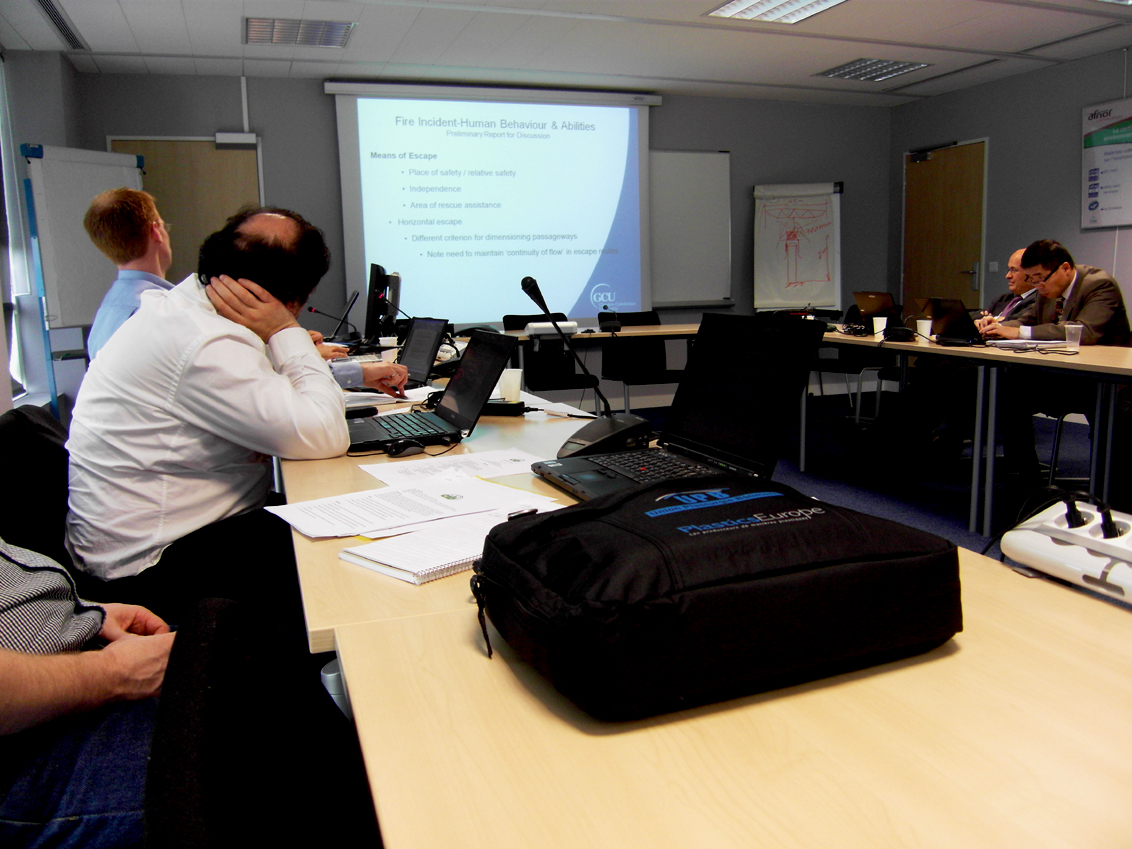
2011-04-29: A Meeting of CIB Working Commission 14: ‘Fire Safety’ took place at the Headquarters of Groupe AFNOR … Association Française de NORmalisation … which is located just outside the centre of Paris, France … on Monday, 11 April 2011.
These meetings are typically, though not always, co-ordinated with a long series of ISO Technical Committee 92: ‘Fire Safety’ Meetings at the same venue. Both technical bodies have a very good working relationship, and there is a strong interchange of membership between the two. The recent revision to the description and scope of CIB W14 will be of enormous benefit to all.
Colour photograph showing the CIB W14: 'Fire Safety' Meeting in Paris, on 11 April 2011, at the Groupe AFNOR Headquarters. Photograph by CJ Walsh. 2011-04-11. Click to enlarge.
.
Some Matters of Interest at the CIB W14: ‘Fire Safety’ Meeting – Presentations & Discussions about Two of the Current Pre-Normative Innovation & Research Projects …
1.CIB W14 Working Group IV: ‘Structural Reliability & Fire-Induced Progressive Collapse’
See the Dedicated Page on this Technical Web Log (Tech-BLOG) Site … https://www.cjwalsh.ie/progressive-collapse-fire/ … for the latest update on the Research Project … which has proposed the following, as a Rational Route Forward …
A.Mainstream the Language, Practices, Procedures and Design Methodologies of Fire Science & Engineering … so that other design disciplines can appreciate that Ethical Fire Science & Engineering also has a sound, modern, rational and empirical basis. [Task for CIB W14]
B. Raise awareness about the primacy, and encourage the wide acceptance, of Fire Serviceability Limit States in Structural Fire Engineering … and the universal requirement that buildings must resist Fire-Induced Progressive Collapse and, in addition, also resist Disproportionate Damage. [Task for CIB W14 Working Group IV]
C. Indicate the need for, and foster the development of, innovative Structural Thermal Insulation Fire Protection Systems which are durable, can resist mechanical damage in ambient and fire conditions, and can be properly shown to be ‘fit for their intended life-cycle use’. [Task for the Fire Industry]
D. In steel construction … depending on its location in a building and having designed sufficiently robust connections for fire conditions … show why, where and how Thermal Insulation must now be used to maintain a Lower Temperature in the Steel … in order to ensure that its deformations (+/- deflection, expansion and distortion, etc.) remain within design parameters … both during the fire and, for a minimum period afterwards, during the ‘cooling phase’. [Task for CIB W14 Working Group IV]
E. Encourage the development of Fire Engineering Design Guidelines for new and existing buildings, along with the Decision Support Tools needed for their use in practice … to support #2 and #4 above. And propose how Existing Code/Regulation Provisions and Standards should be suitably updated and revised. [Task for the International Fire Science & Engineering Community]
During the discussion which followed my presentation, and having reviewed progress … it was generally felt that the time was now ripe to prepare a Discussion Document for Comment. This will be circulated about a month before the next meeting of CIB W14 … to be held in October 2011.
2.CIB W14 Working Group 5: ‘Fire Incident Human Behaviour & Abilities’
The photograph above was actually taken during the presentation of this Research Project … at the time being given by Project Leader, Douglas Hillhouse, Organizer of the Fire Risk Engineering Programme at Glasgow Caledonian University, in Scotland.
Prior to the Paris Meeting, Douglas had circulated a Project Discussion Document for Comment … which was focused mainly on people with disabilities. The Co-Ordinator of CIB W14, Prof. Dr. George Hadjisophocleous, was pleased to see this Research Project develop and gather momentum.
During the discussion which followed the Presentation, I made the following points …
The United Nations Convention on the Rights of Persons with Disabilities (CRPD) was adopted on 13 December 2006; it came into force, i.e. became an International Legal Instrument, on 3 May 2008; and it was ratified by a European Union (E.U.) having, for the first time after the Lisbon Treaty, its own separate legal personality … on 23 December 2010.
In February 2011 … the 2010 European Foundation Centre (EFC) Report: ‘Study on Challenges and Good Practices in the Implementation of the UN Convention on the Rights of Persons with Disabilities’, was approved for publication by the European Commission. Under a duty of loyal co-operation, which derives from Article 4.3 of the Treaty on European Union (TEU), each E.U. Member State is now obliged to properly implement the critical accessibility-related provisions of the UN CRPD, i.e. Preamble (g) and Articles 4.3, 9, 10, 11, with 31 & 33.
The Final Draft of International Standard … ISO FDIS 21542: ‘Building Construction – Accessibility & Usability of the Built Environment’ … was registered with ISO Central Secretariat on 17 March 2011. In spite of the technically flawed submission from ISO Technical Committee 92 to ISO Technical Committee 59, which is responsible for the production of ISO 21542 … we had successfully managed to retain a substantive, and meaningful, body of text relating to Fire Safety for People with Activity Limitations.
Our concern, throughout this CIB W14 Research Project, would be Fire Safety for All … including people with a wide range of behavioural responses and physical/mental/cognitive/psychological abilities during a fire incident … including people with activity limitations, not just people with disabilities … and firefighters. The user profile in a ‘real’ building must be viewed as a continuum.
In attempting to provide better Fire Engineering Design Solutions for people with cognitive impairments, I had realized … many years ago … that the field of Cognitive Psychology offered huge potential for a paradigm shift in Fire Engineering Research. This potential will be identified in the Project.
Amongst the International Fire Science and Engineering Community, there is widespread ignorance about Panic and Panic Attacks … this may help to explain the irrational fear about dealing with this important issue … a fear which the WG 5 Project will confront !
.
Of Unrelated Interest ?
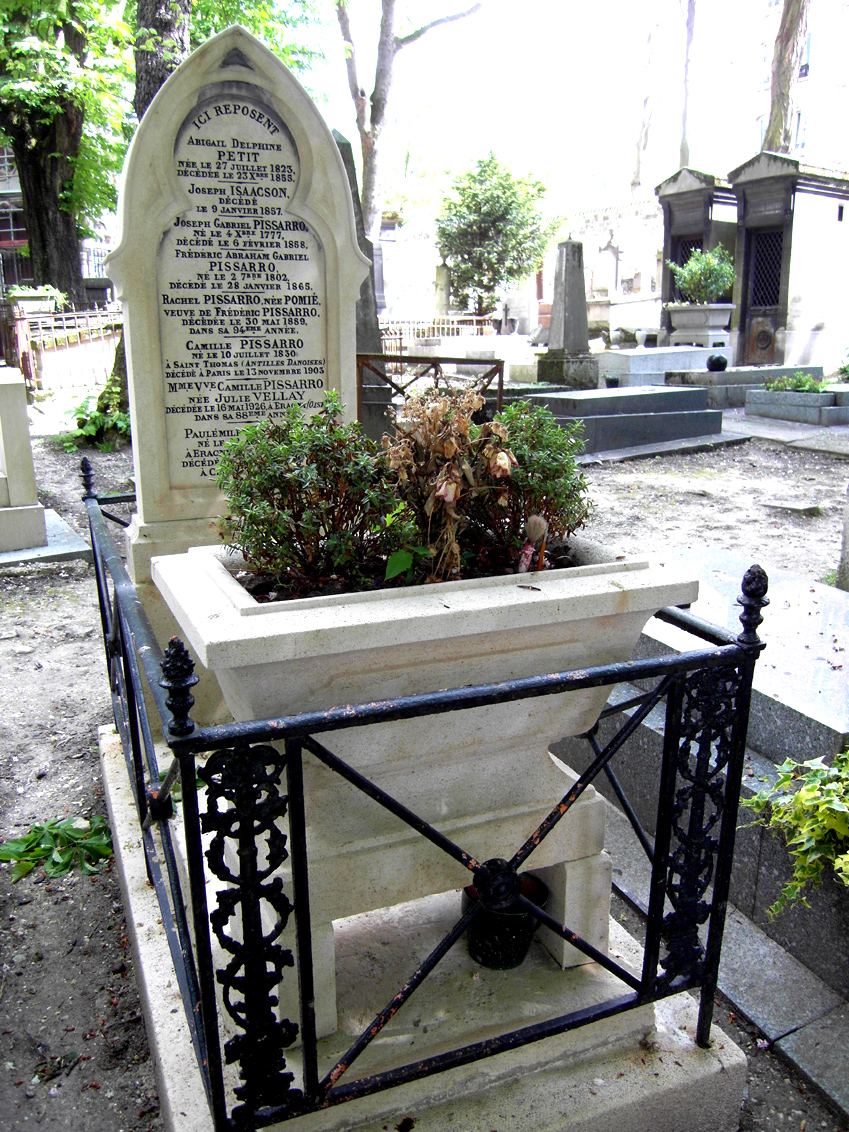
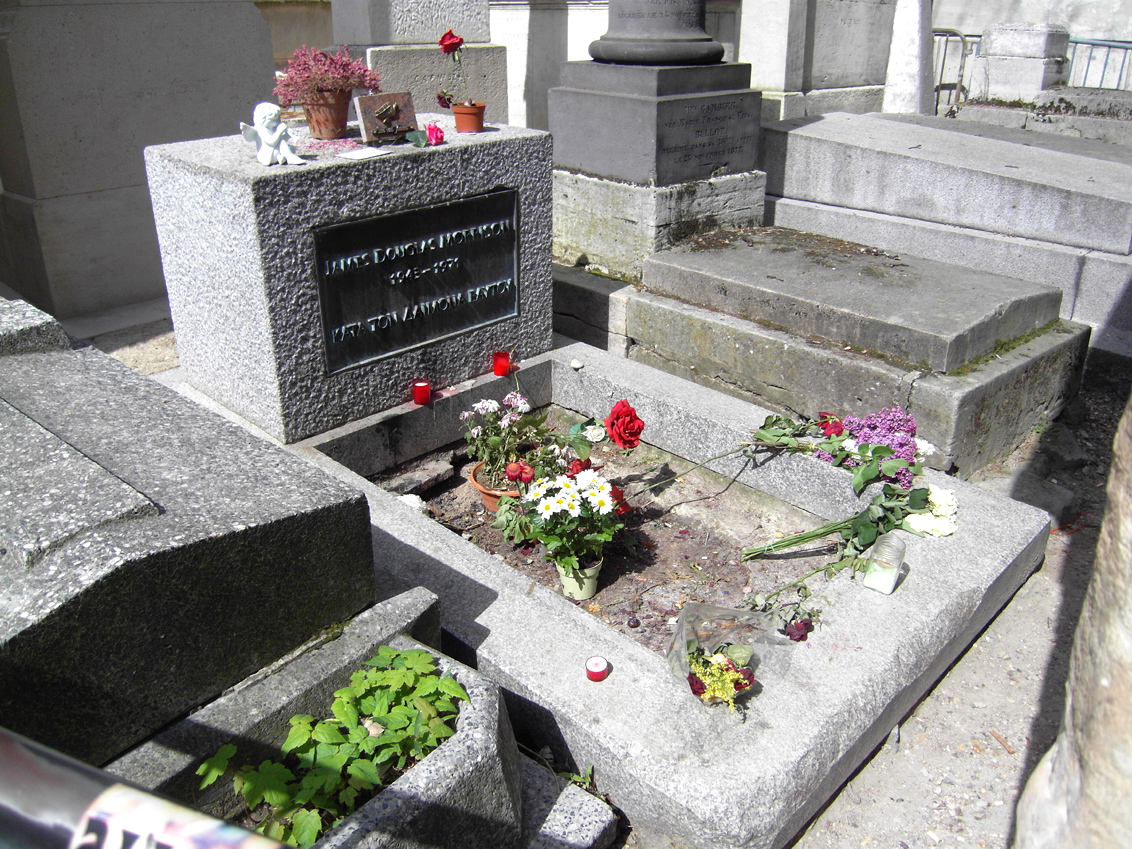
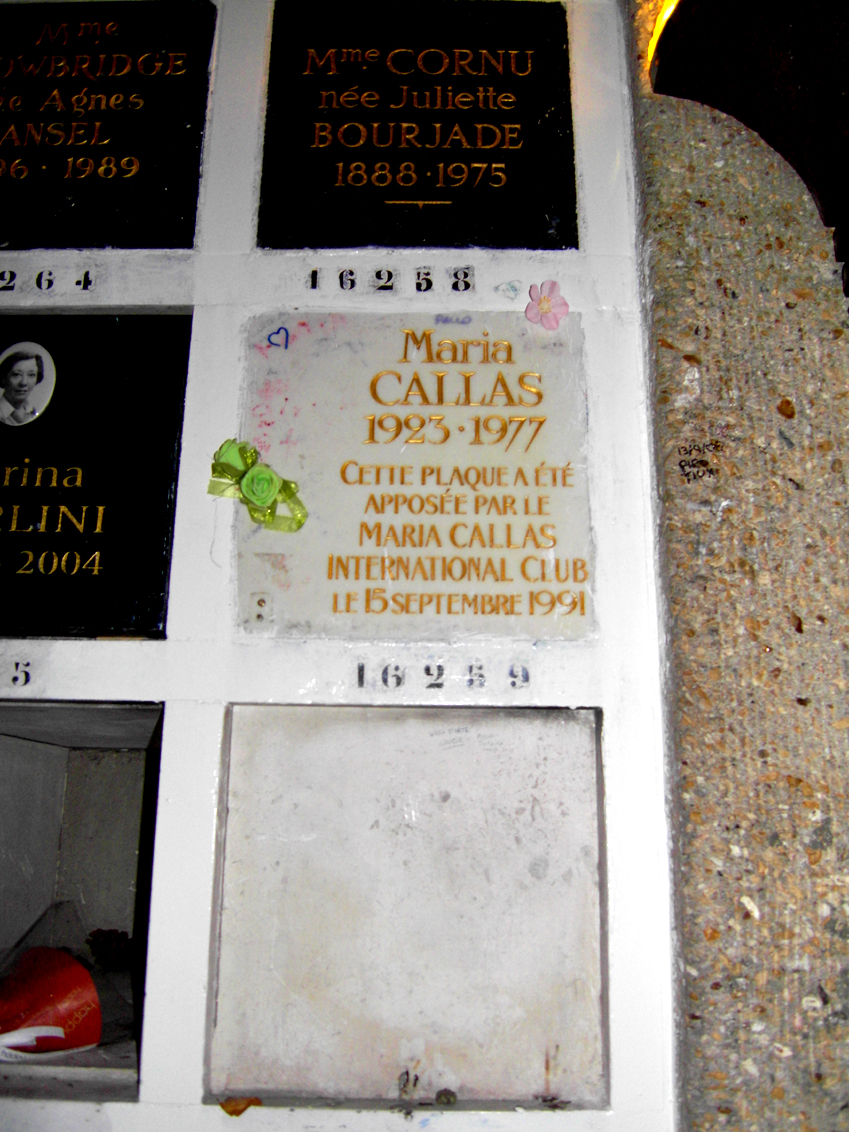
During visits to Paris, I regularly ‘pop-in’ to Père Lachaise Cemetery … in the east of the city. Access is very convenient … the Père Lachaise Métro Station being directly served by Lines 2 & 3. Here are the last resting places (?) of Some Interesting Personalities …
2011-04-23: Never do I cease to be amazed at the number of highly vocal ‘experts’ who pontificate about the small Caribbean island state of Cuba … which has a population of approximately 11 million people, with about 2.5 million of those living in the capital city of Havana … and not once have these ‘experts’ set foot on this beautiful island. What a pity !
A certain fascination with the 1959 Cuban Revolution and its Leaders … and a large dose of curiosity about the countryside and its people … were the principal drivers behind an extensive Family Tour in April 2007 … before Fidel Castro departed the scene. At the time, he was seriously ill.
Straight away, therefore, let me clarify that I do not consider the Tourist Resort of Varadero to be an accurate representation of everyday life and living in Cuba. And I mean that in the worst possible way ! Similarly, the illegally occupied U.S. Military Base at Guantánamo Bay must be excluded as a valid island experience … the annexation of the bay area remains, to this day, an international act of piracy – see the 1901 Platt Amendmentand later Treaties with Cuba procured by the threat or use of force.
Getting back to those ‘experts’ … sometimes, they might be rabid, Older Generation Cuban Exiles now living in Miami (USA) … the privileged island classes of the 1950’s … who either left hurriedly or were booted out after the success of the Castro Revolution. At other times, the ‘experts’ might be Criminal Ex-Members of Dictator Fulgencio Batista’s Military and Police Forces who are still working for the U.S. Central Intelligence Agency. For some unknown reason, however, both groups continue to hold the United States Political System – at Florida State and Federal Levels – by the balls ! Sad, but true !!
In its early days, Castro’s Revolutionary Government abolished racial discrimination, reduced rents and the cost of electricity, nationalized American and British commercial firms, and permanently ‘evicted’ the American Mafia. The new government, however, was far from being firmly rooted, confident and stable … but all of that changed, utterly, after events in April 1961 …
.
On Saturday last, 16 April 2011 … I attended a day long ‘Girón 50’ Symposium and Victory Celebration, which was held in Liberty Hall, Dublin. This special occasion commemorated the 50th Anniversary of the Cuban Victory at the Bay of Pigs (Bahia de Cochinos) … scene of the ill-fated 1961 U.S. Inspired, Financed and Resourced Counter-Revolutionary Invasion of Cuba.
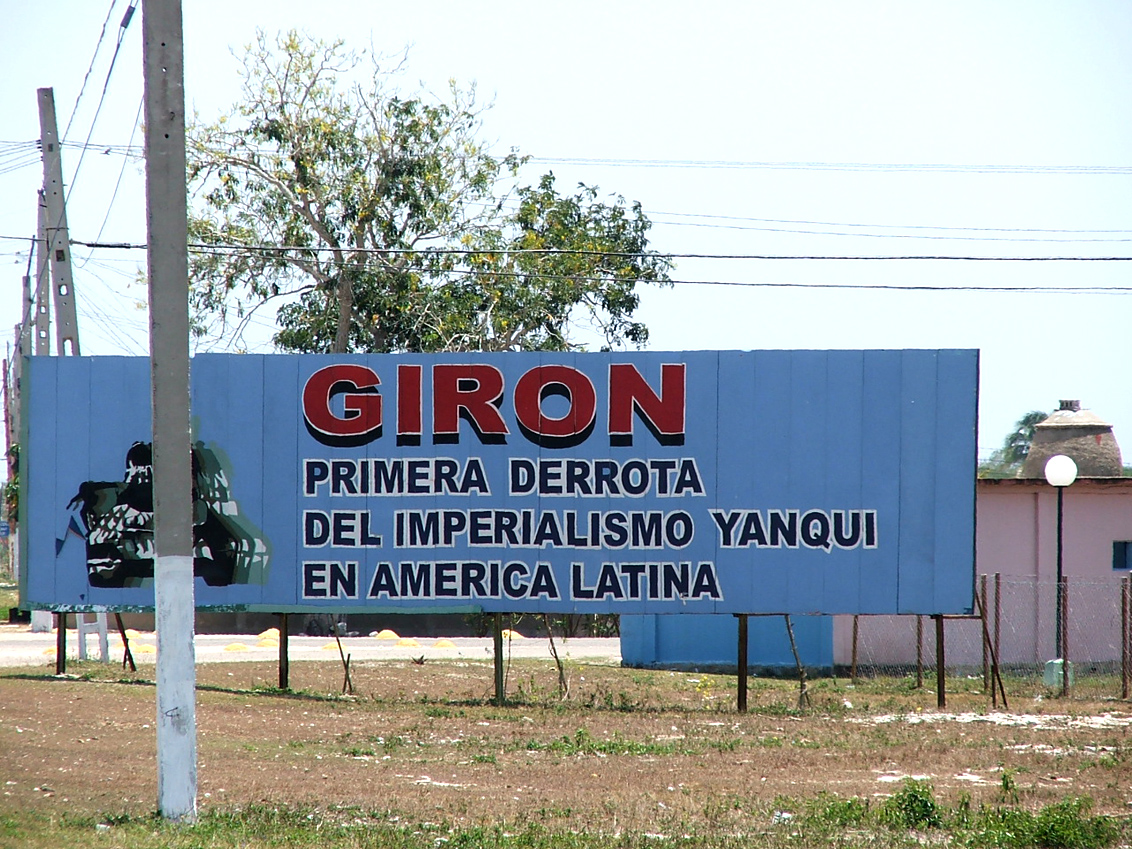
Colour photograph showing a roadside hoarding near Playa Girón, in the Bay of Pigs (Bahia de Cochinos) area of Cuba. In Spanish ... telling it like it really was, and still is ... "The First Defeat of Yankee Imperialism in Latin America". Photograph by CJ Walsh. 2007-04-13. Click to enlarge.
.
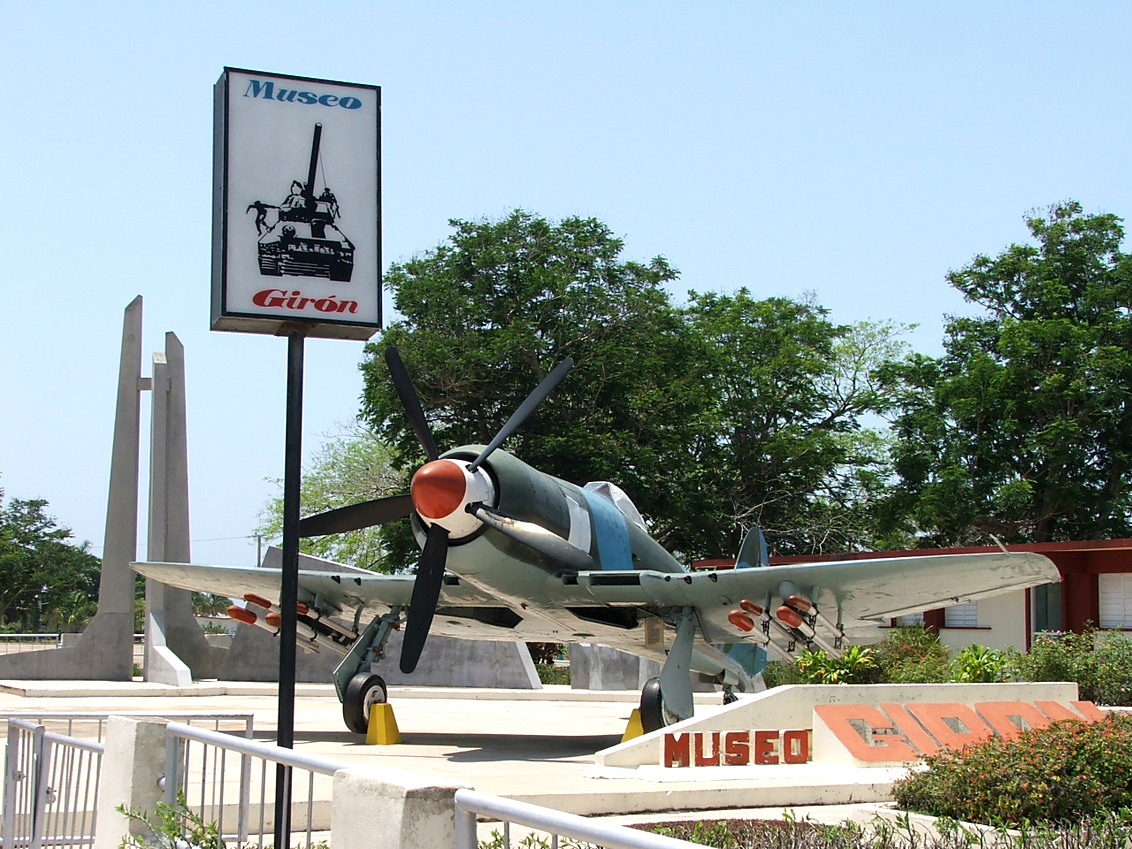
Colour photograph showing the entrance to the small Museum near Playa Girón, in the Bay of Pigs (Bahia de Cochinos) area of Cuba. Photograph by CJ Walsh. 2007-04-13. Click to enlarge.
.
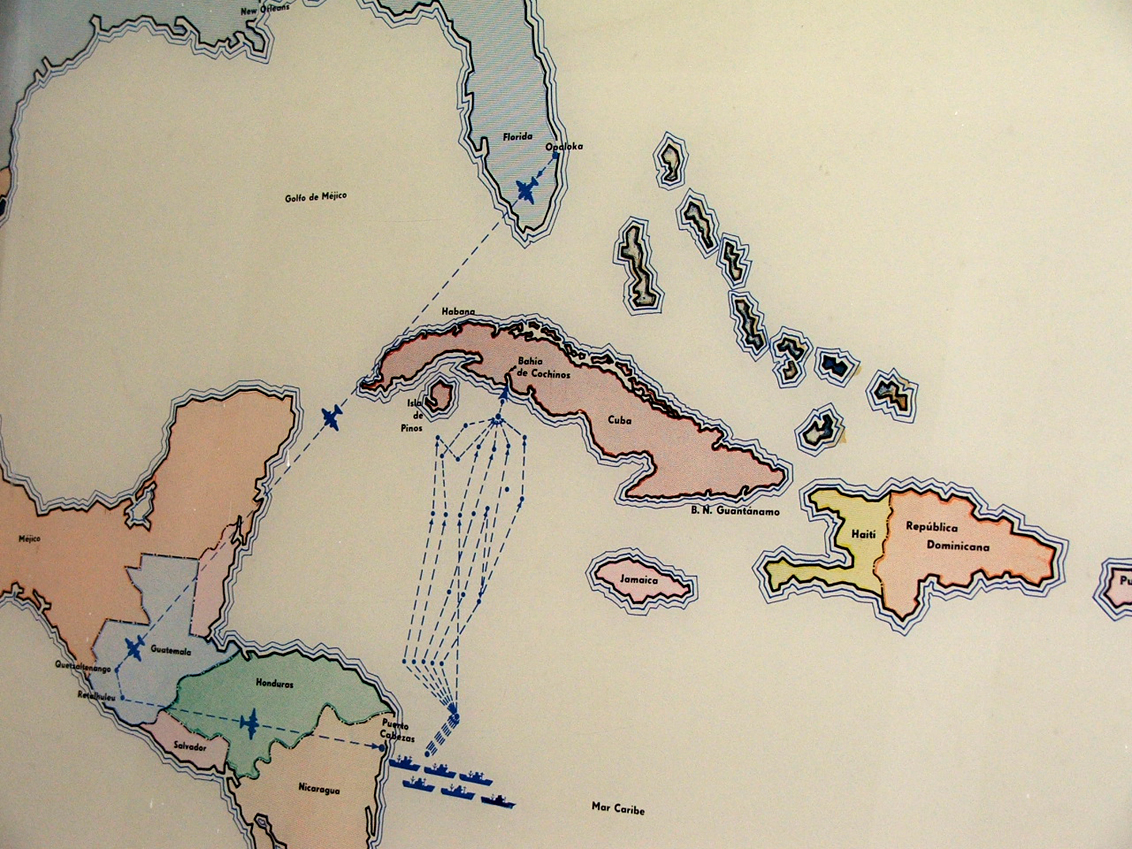
The route taken by the 1961 U.S. Invasion Force was elaborate and circuitous …
Colour photograph showing the elaborate and circuitous route taken by the 1961 U.S. Invasion Force from Florida to the Bay of Pigs (Bahia de Cochinos), in Cuba. From a display at Girón Museum. Photograph by CJ Walsh. 2007-04-13. Click to enlarge.
.
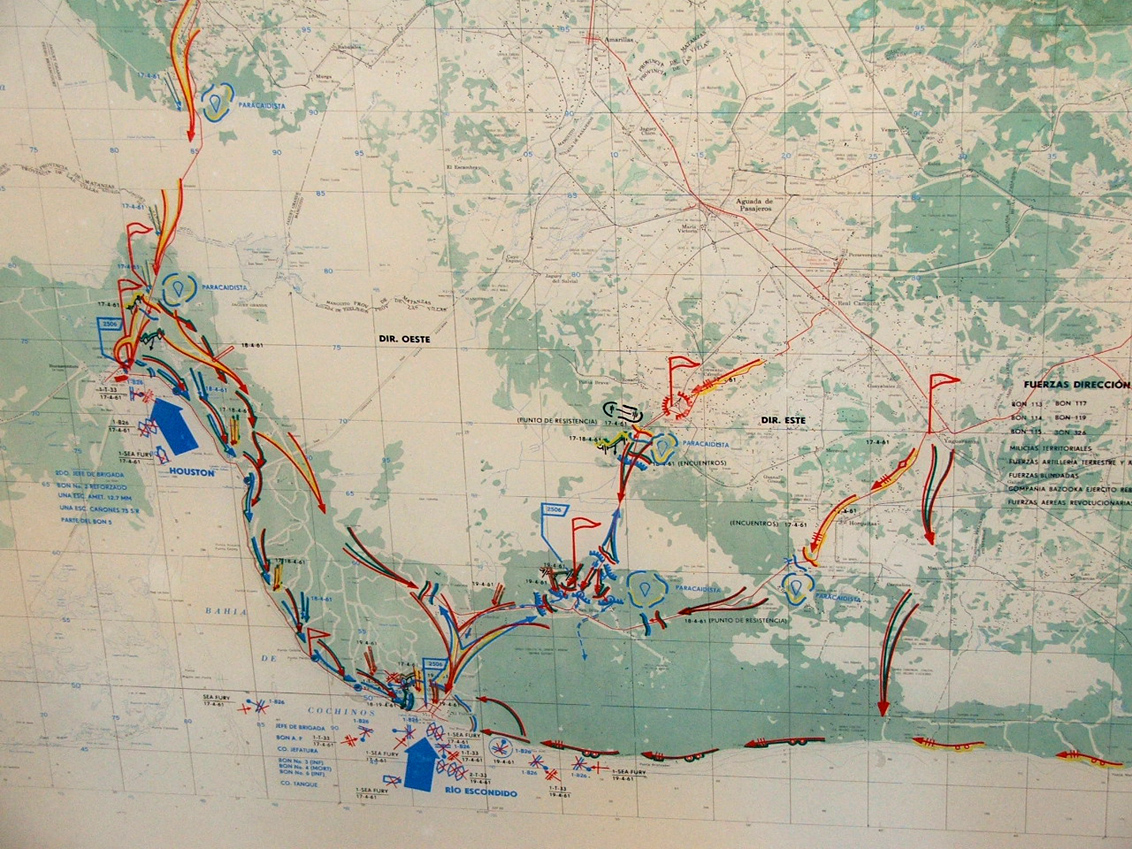
Playa Girón was one of the landing points in the 1961 U.S. Bay of Pigs (Bahia de Cochinos) Invasion …
Colour photograph showing the deployment and movement of forces during the attempted U.S. Invasion of the Bay of Pigs (Bahia de Cochinos), in April 1961. Playa Girón is the lower of the two coastal landing points in view ... Playa Larga, the other. From a display at Girón Museum. Photograph by CJ Walsh. 2007-04-13. Click to enlarge.
.
2011 Dublin ‘Girón 50’ Victory Symposium – Liberty Hall
FINAL DECLARATION
We, the participants in the ‘Girón 50’ Conference commemorating the 50th Anniversary of the Cuban Victory at the Bay of Pigs:
1. Express our firm solidarity with the Cuban Revolution and Its People in their struggle for the defence of their independence, sovereignty and right to build a social and political system of their own choice, with no outside interference.
2. Salute the process of comprehensive and popular debate in Cuban Society which led to the set of guidelines to be discussed and approved during the next few days by the 6th Congress of the Communist Party of Cuba, which is aimed at renewing and updating its economic policy in accordance with the current domestic, regional and international situation.
3. Condemn the illegal and criminal U.S. Economic, Financial and Trade Blockade, which Cuba has suffered for over five decades and which continues to be a flagrant violation of the right of an entire nation to self-determination and the main obstacle to Cuba’s development.
4. Call on the European Union (E.U.) to unconditionally rescind the 1996 E.U. Common Position 96/697/CFSP on Cuba, and to seriously engage in a process of normalization of relations with the island, based on mutual respect and non-interference in their internal affairs.
5. Condemn the ongoing U.S. Sponsored Subversion and Terrorist Actions aimed at overthrowing the Cuban Revolution, and U.S. Double Standards in its War on Terror … once again illustrated by the recent acquittal of Luis Posada Carilles, self-confessed instigator of the Bombing of Cubana Airlines Flight CU-455, which killed all 73 people on board, as it travelled from Venezuela to Cuba, via Barbados, on 6 October 1976.
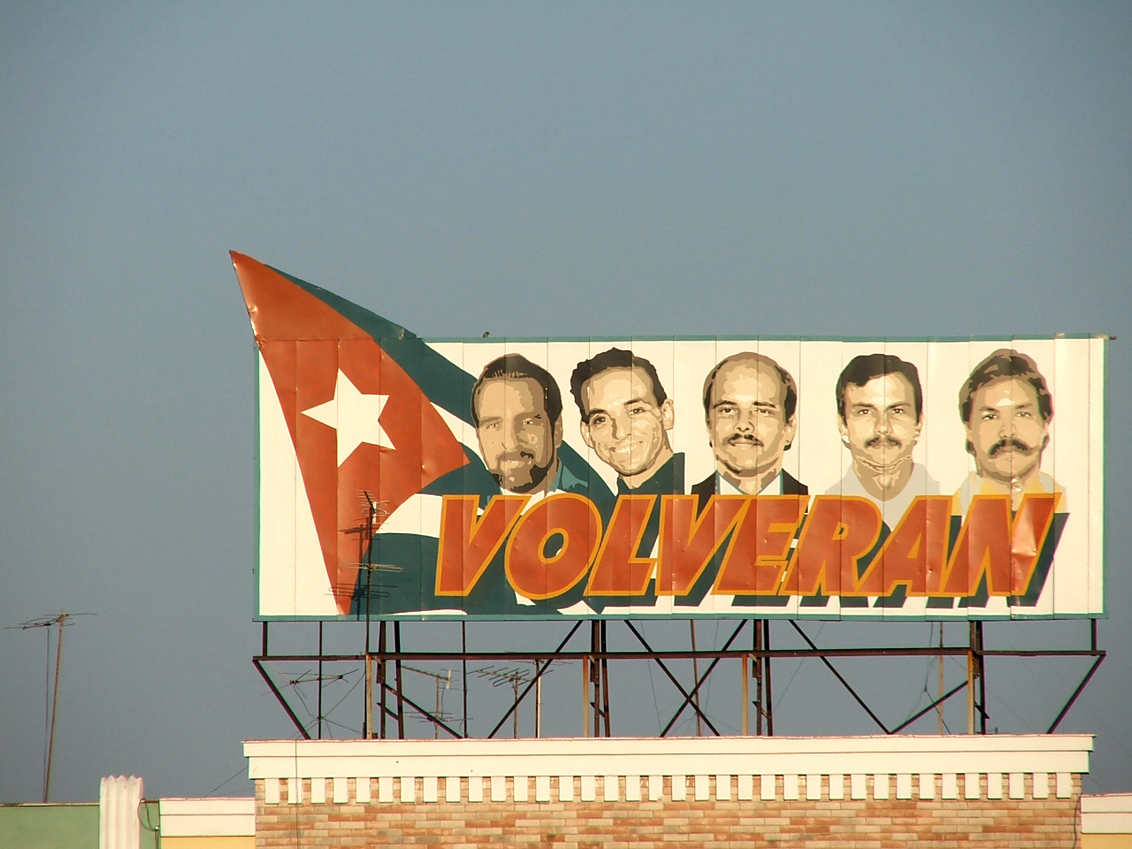
6. Extend our support for the International Campaign of Freedom & Exoneration for the Miami Five – Gerardo Hernández, Antonio Guerrero, Ramón Labañino, René González and Fernando González – the Five Cubans illegally and unjustly imprisoned in the U.S. for fighting terrorism … and join the growing international call on President Obama, including that of Former U.S. President Jimmy Carter, to release them immediately.
7. Call on the Irish Government to continue the development of Bilateral Relations with Cuba, and Ireland’s support for the lifting of the U.S. Blockade and the rescinding of the E.U. Common Position on Cuba.
8. Commit ourselves to undertake the relevant Solidarity Actions in support of Cuba.
Liberty Hall, Dublin.
16 April 2011.
.
AS WE approach Easter Sunday, 2011 … let us remember the Miami Five who have been unjustly incarcerated for much too long …
Colour photograph showing a Miami Five Freedom Campaign Hoarding on the top of a building in Cienfuegos, Cuba. Photograph by CJ Walsh. 2007-04-14. Click to enlarge.
.
AND … after the Bay of Pigs, Vietnam, many countries in Central & South America, Iraq and Afghanistan … let us ponder, at length, on the question of when, if ever, the United States of America will learn to join the International Community of Nations … as an equal !
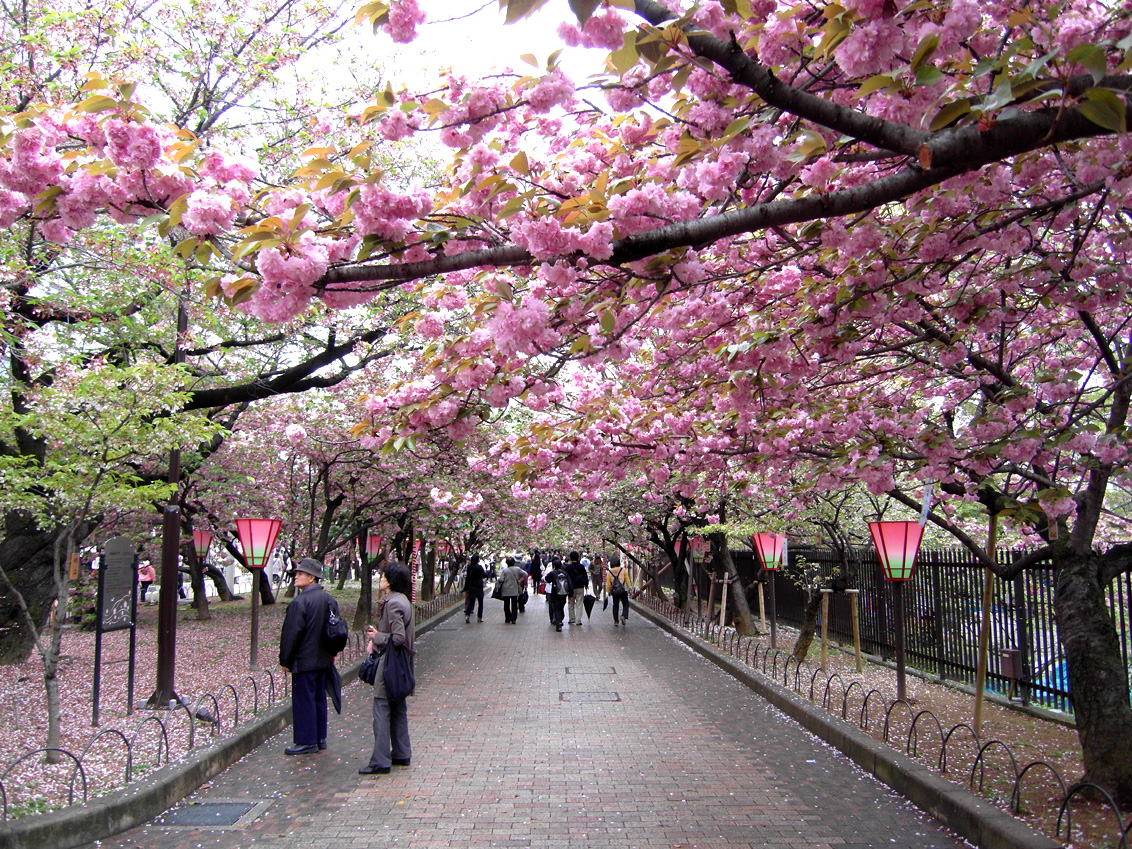
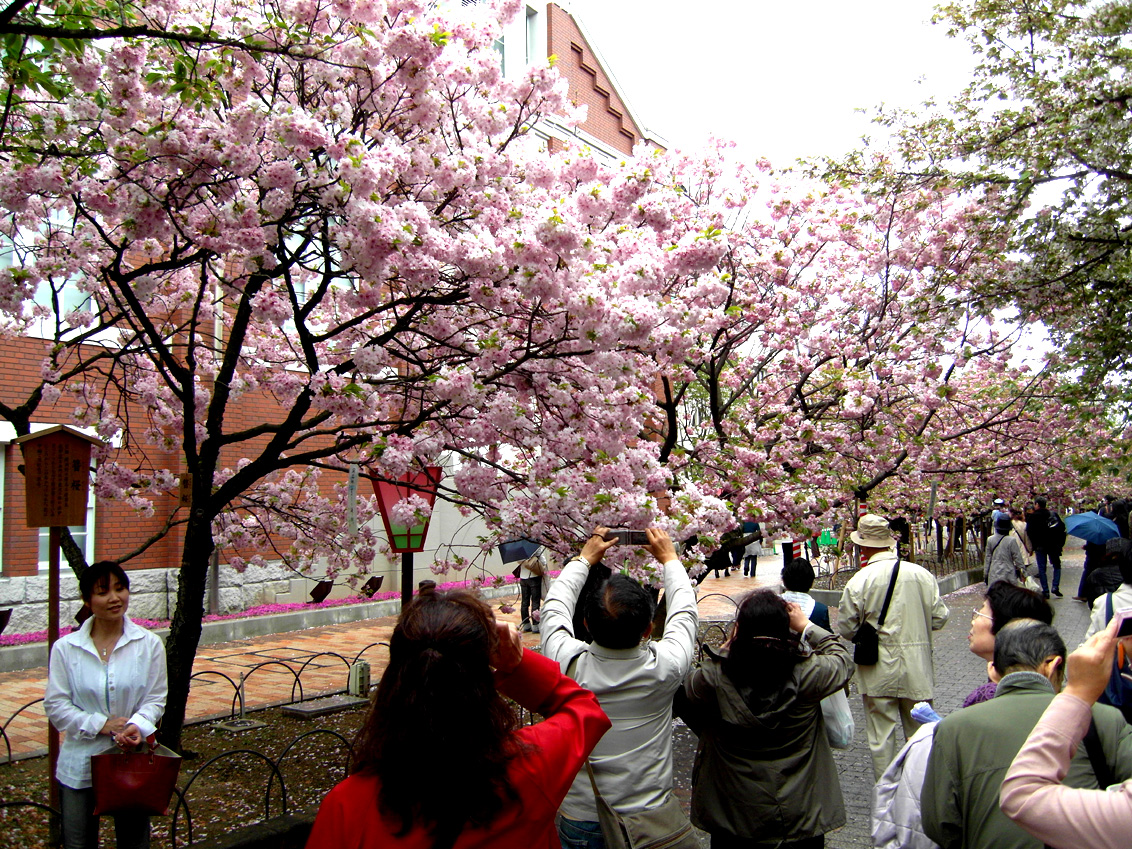
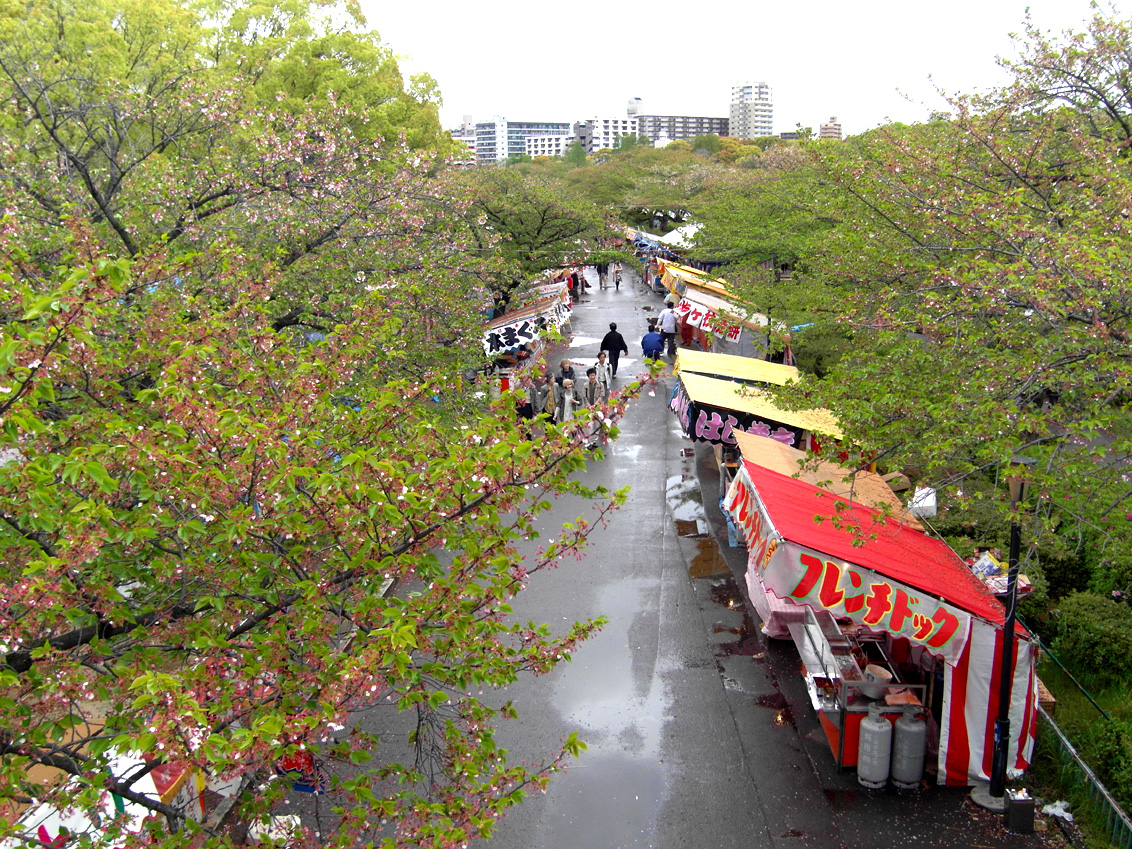
2011-04-19: This year’s Osaka Cherry Blossom Viewing & Festival Market is taking place right now … from 14 April until 20 April 2011 … at the Osaka Mint Bureau (Zoheikyoku) … the head office of Japan Mint … a governmental agency responsible for the supply of coins and medals, and the analysis, testing and certification of metals.
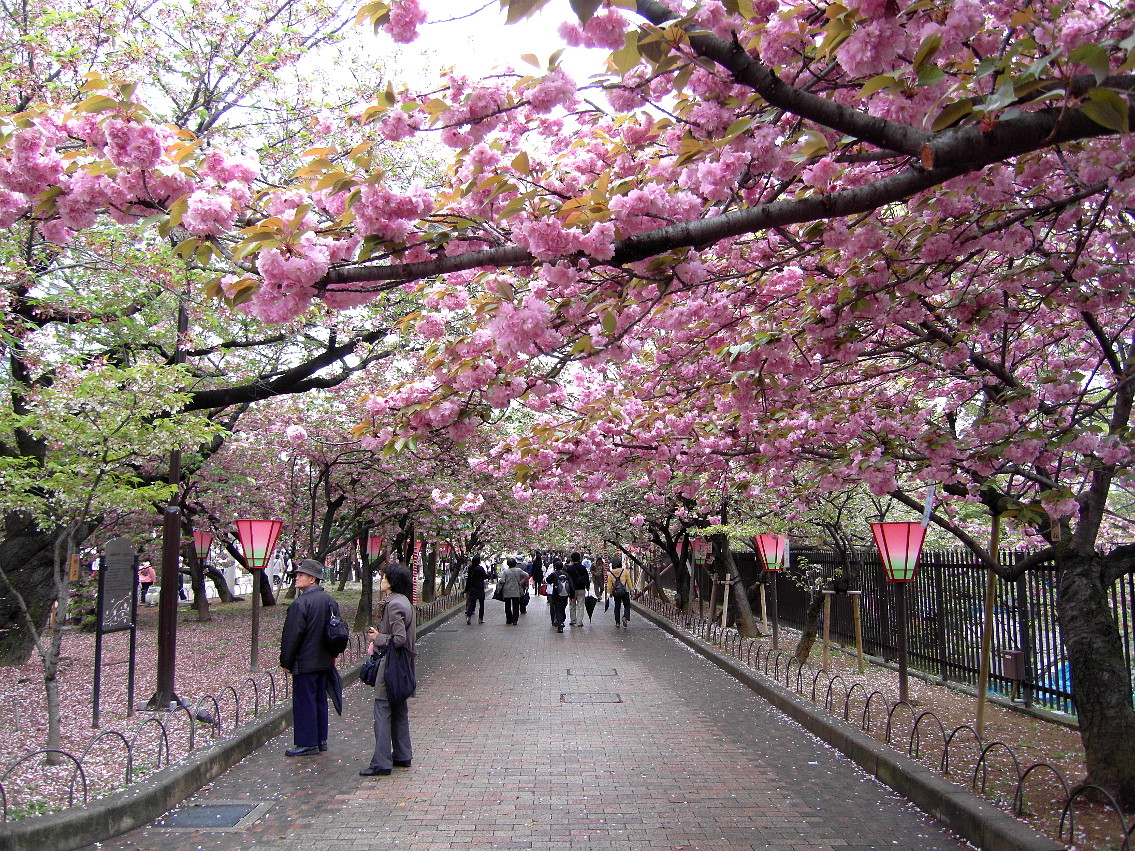
The 560 metre long Cherry Blossom Walk in Osaka is famous, throughout Japan, for its 352 Cherry (Sakura) Trees … comprising 128 Cherry Varieties. It is open for public viewing during one week each year, usually in April, when the flowers are in full bloom.
In 2010, there were 602,000 visitors … and I was very fortunate to be one of those !
Colour photograph showing the 2010 Cherry Blossom Viewing & Festival Market at the Osaka Mint Bureau (Zoheikyoku) in Japan. Photograph by CJ Walsh. 2010-04-20. Click to enlarge.
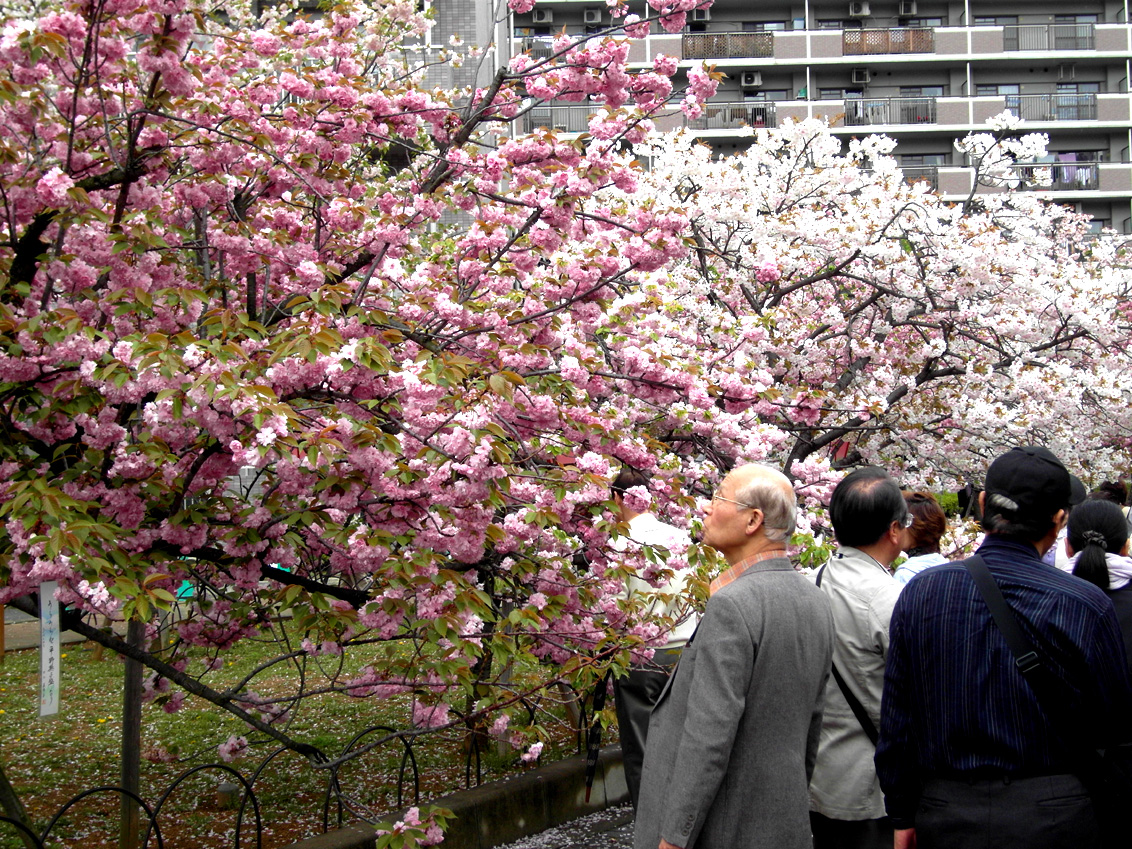
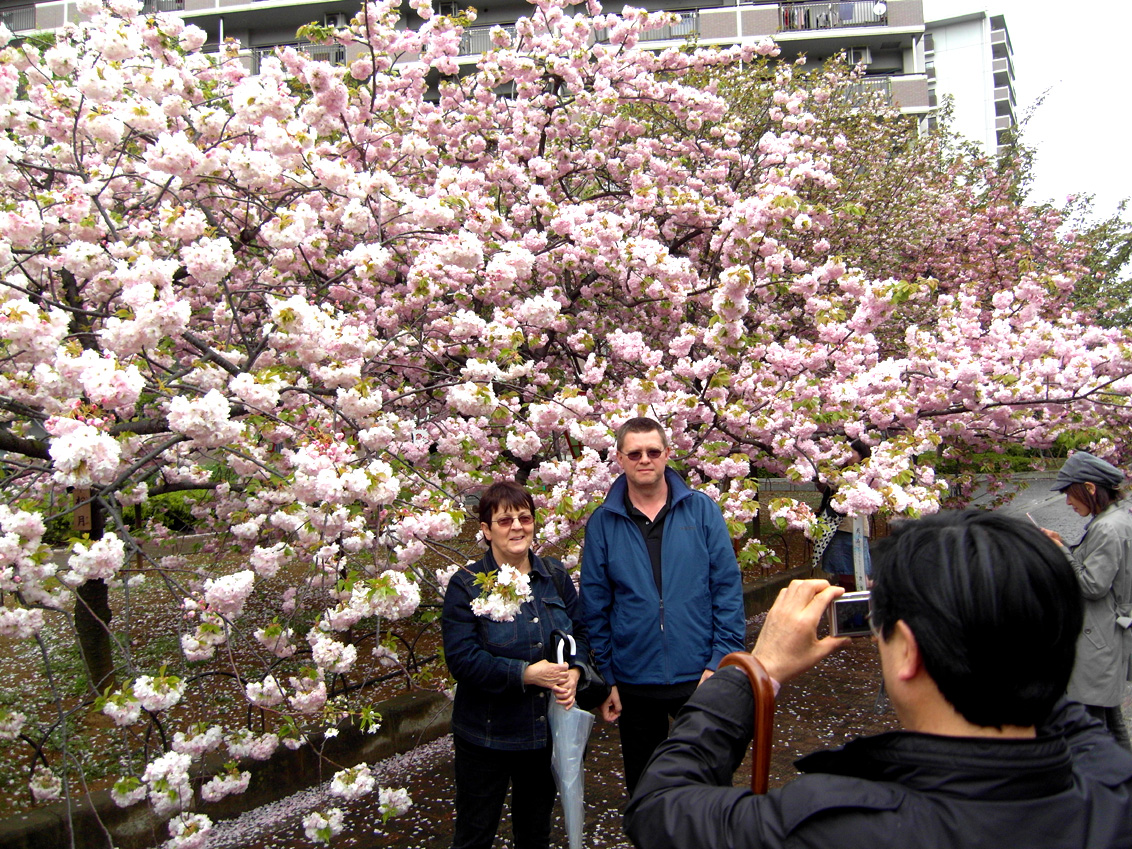
In 2011, the Themed Flowering Cherry is ‘IMOSE’ … so named, because it often bears two fruits from one flower. The flowers are light and dark red in colour … with around 30 petals, which bloom in two stages.
Colour photograph showing the 2010 Cherry Blossom Viewing & Festival Market at the Osaka Mint Bureau (Zoheikyoku) in Japan. Photograph by CJ Walsh. 2010-04-20. Click to enlarge.
.
Colour photograph showing the 2010 Cherry Blossom Viewing & Festival Market at the Osaka Mint Bureau (Zoheikyoku) in Japan. Photograph by CJ Walsh. 2010-04-20. Click to enlarge.
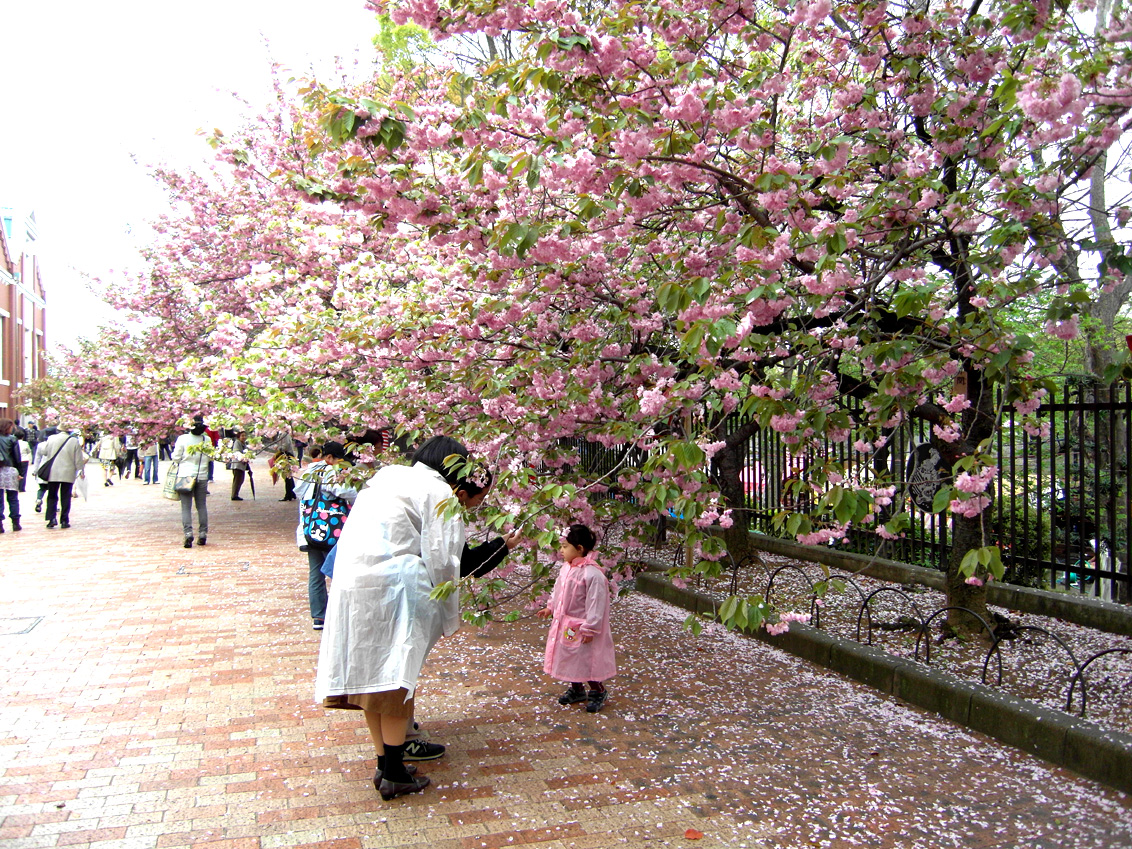
Before the recent Tōhoku Earthquake and Tsunami Disaster in Japan … I would have automatically selected photographs which focused on the Cherry Blossoms, and had few if any people in view. Now, however, it is important to show ordinary Japanese people … people of all ages … enjoying a simple pleasure in life. These are the very same people who were caught up in the tragedy, and continue to suffer horrendously.
Now is the time, after the world’s short attention span has moved on to the next natural or man-made disaster, to continue to keep these people in our thoughts.
Colour photograph showing the 2010 Cherry Blossom Viewing & Festival Market at the Osaka Mint Bureau (Zoheikyoku) in Japan. Photograph by CJ Walsh. 2010-04-20. Click to enlarge.
.
Colour photograph showing the 2010 Cherry Blossom Viewing & Festival Market at the Osaka Mint Bureau (Zoheikyoku) in Japan. Photograph by CJ Walsh. 2010-04-20. Click to enlarge.
2011 Japanese Earthquake & Tsunami Appeal
I am a Member of the Ireland Japan Association (IJA). If you wish to make a donation, please go directly to the IJA WebSite … http://www.ija.ie/ … and please, please give generously. Thank you.
Colour photograph showing the 2010 Cherry Blossom Viewing & Festival Market at the Osaka Mint Bureau (Zoheikyoku) in Japan. Photograph by CJ Walsh. 2010-04-20. Click to enlarge.
The 1949 film: The Third Man – directed by Carol Reed, with the haunting zither music of Anton Karas, and starring Joseph Cotton, Alida Valli, Orson Welles and Trevor Howard … also ‘stars’ the war-damaged city of Vienna, in Austria.
The film screenplay, based on his own original story, was written by Graham Greene.
Late in the Film … having discovered that Harry Lime (Orson Welles) is, after all, alive … Holly Martins (Joseph Cotton) demands to meet him at the Prater Giant Ferris Wheel …
Click the Link Above to Download and/or View this Film Scene Clip (Flash Video File, 4.40 Mb)
.
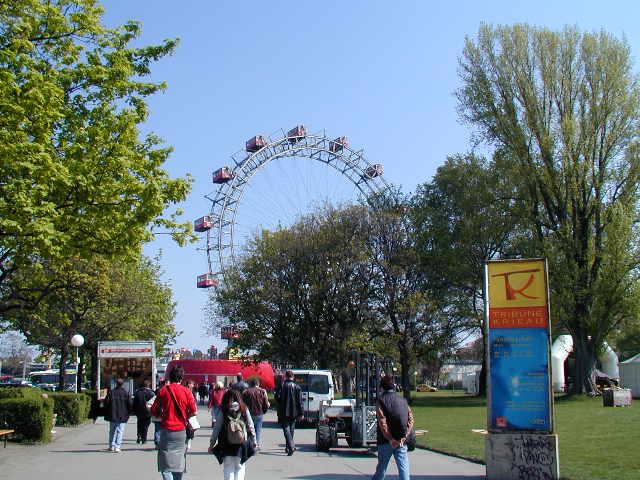
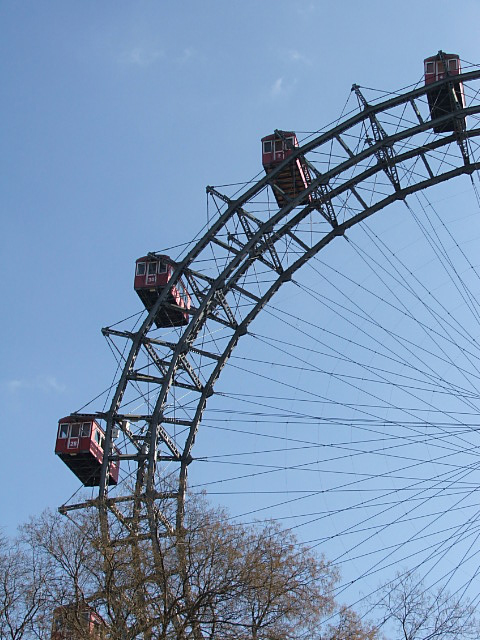
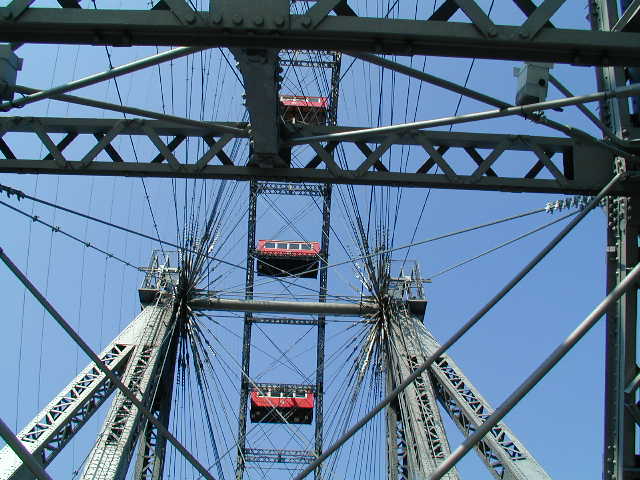
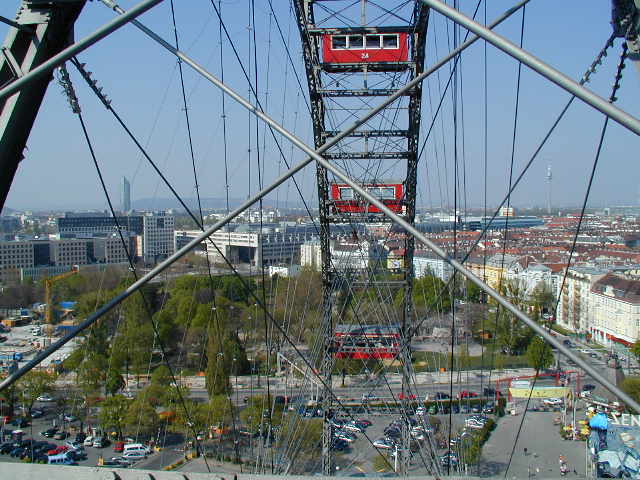
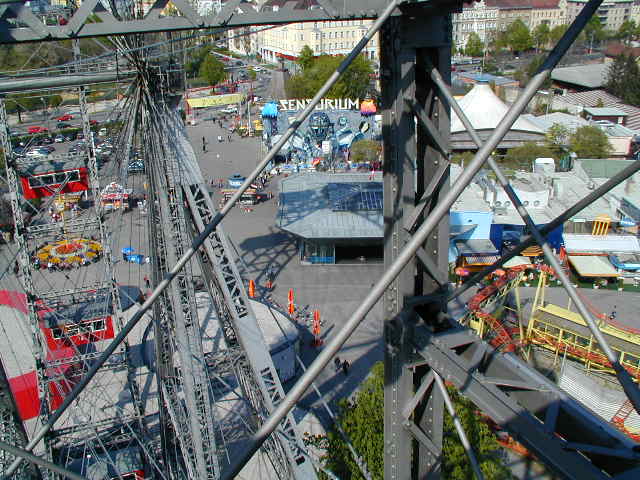
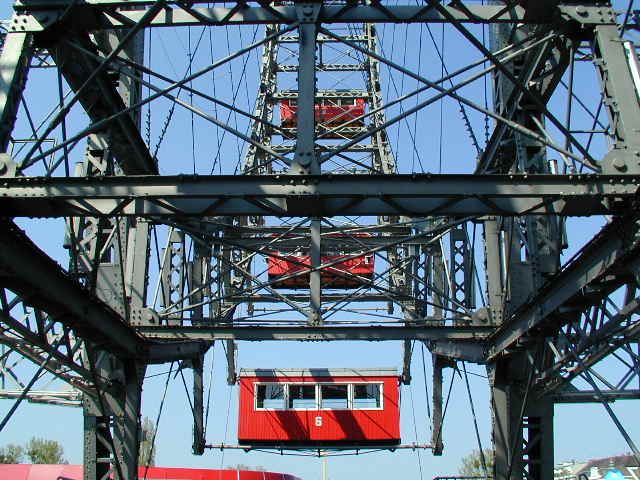
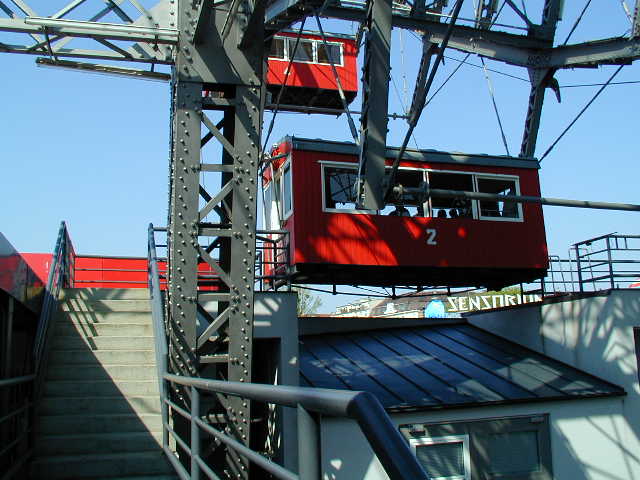
Colour photograph showing the Prater Giant Ferris Wheel in Vienna, Austria. Photograph taken by CJ Walsh. 2005-04-23. Click to enlarge.
.
Wiener Prater – the Prater in Vienna – is a large public park situated in the centre-city district of ‘Leopoldstadt’ … and located between the River Danube (German: Donau) and the Danube Canal. The Wurstelprater Amusement Park stands at one corner of the Prater and includes the Riesenrad (English: Giant Ferris Wheel).
.
Colour photograph showing the Prater Giant Ferris Wheel in Vienna, Austria. Photograph taken by CJ Walsh. 2008-03-15. Click to enlarge.
.
Colour photograph showing the Prater Giant Ferris Wheel in Vienna, Austria. Photograph taken by CJ Walsh. 2005-04-23. Click to enlarge.
.
The Prater Giant Ferris Wheel was built in 1896-97 by the engineer, Walter B. Basset … a retired British naval officer. He also built similar Wheels – very popular at the end of the 19th Century – in Chicago, London, Blackpool and Paris. Only the Prater Ferris Wheel, in Vienna, survives today.
.
Colour photograph showing the Prater Giant Ferris Wheel in Vienna, Austria. Photograph taken by CJ Walsh. 2005-04-23. Click to enlarge.
.
The Giant Ferris Wheel is 61.0 metres in diameter and turns with a speed of 0.75 m per second. On a clear day, it presents a magnificent panorama of the city from each of its 15 cabins.
.
Colour photograph showing the Prater Giant Ferris Wheel in Vienna, Austria. Photograph taken by CJ Walsh. 2005-04-23. Click to enlarge.
.
Colour photograph showing the Prater Giant Ferris Wheel in Vienna, Austria. Photograph taken by CJ Walsh. 2005-04-23. Click to enlarge.
.
Colour photograph showing the Prater Giant Ferris Wheel in Vienna, Austria. Photograph taken by CJ Walsh. 2005-04-23. Click to enlarge.
A few weeks ago … in a post dated 20 October 2010 … Japan in April & May 2010 – Accessibility-for-All ! … I discussed some of the many aspects which, together, facilitate a high level of quality in ‘real’, or actually realized, Built Environment Accessibility Performance in Japan … and I illustrated that quality with a number of photographs.
In time, I will add more photographs from my valuable ‘Accessibility in Japan’ Collection !
Note: Built Environment … Anywhere there is, or has been, a man-made or wrought (worked) intervention by humans in the natural environment, e.g. cities, towns, villages, rural settlements, roads, bridges, tunnels, transport systems, service utilities, and cultivated lands, lakes, rivers, coasts, seas, etc. … including the Virtual Environment.
Note: Social Environment … The complex network of real and virtual human interaction – at a communal or larger group level – which operates for reasons of tradition, culture, business, pleasure, information exchange, institutional organization, legal procedure, governance, human betterment, social progress and spiritual enlightenment, etc.
Note: Virtual Environment … A designed environment, electronically-generated from within the Built Environment, which may have the appearance, form, functionality and impact – to the person perceiving and actually experiencing it – of a real, imagined and/or utopian world.
However … many of these aspects are missing in European Approaches to Accessibility-for-All … and, typically, the level of Accessibility Performance which we are used to experiencing, and accepting, is inadequate, sloppy, poor … and to be direct and honest … BRUTAL !!
.
As far back as 2001 … in an Introduction to a Page on our Corporate WebSite illustrating the Inaccessibility of European Union Institutional Buildings … specifically, the European Parliaments in Brussels and Strasbourg … I wrote …
‘ Many times each year, our work takes us to Brussels, Luxembourg and Strasbourg.
In spite of all the rhetoric from European politicians, and the extensive body of European legislation actually in force at national and regional levels in every Member State … the inaccessibility of Institutional Buildings is shockingly and unacceptably bad … in some cases, dangerously so !
Yet, these buildings should represent, in built form, the ideals, values and aspirations of the peoples of Europe – as expressed in the EU Treaties.
What a bitter disappointment ! ‘
.
Today … France, in particular, continues to be a depressing experience … where Talk is far, far too cheap … and Good Accessibility Performance is still all too rare !!
Last Thursday, 25 November 2010 … I attended a Paris Meeting of the Editorial Team for the CIB W108 Report: ‘Sustainable Climate Change Adaptation in the Built Environment’. My airline flights from Dublin brought me in and out through Terminal 1 of Roissy Charles de Gaulle (CDG) Airport in Paris.
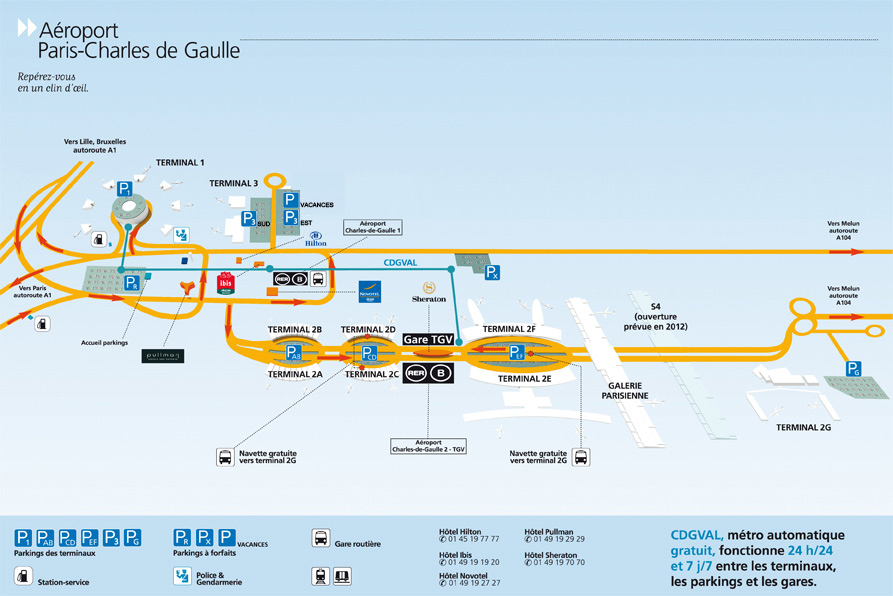
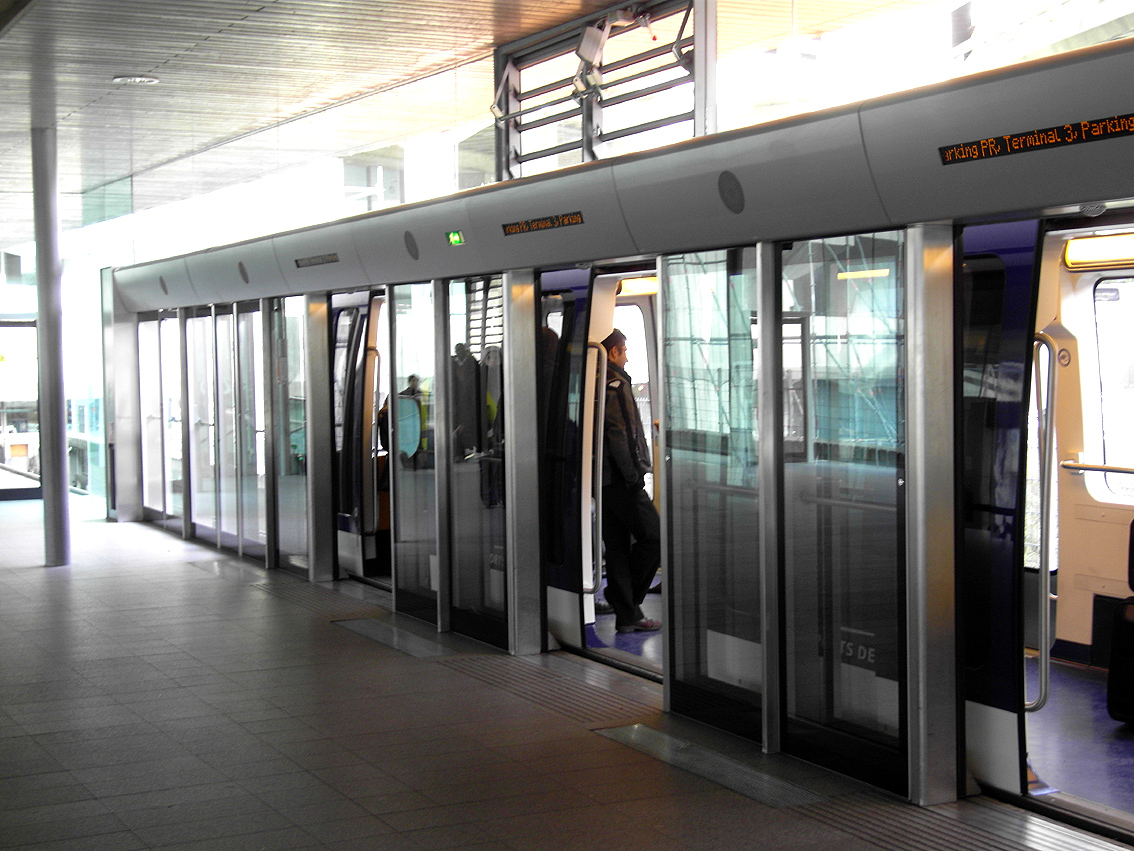
A spanking new automatically operated Métro (shuttle) … CDGVAL … connects Terminals 1, 2 & 3, various Multi-Storey Car Parks and Train Stations within the Airport Complex …
Colour image showing the Airport Complex Plan of Roissy Charles De Gaulle in Paris. Note the New CDGVAL Métro ... an important interconnecting transportation system. Click to enlarge.
.
Colour photograph showing the new, automatically operated CDGVAL Métro at Roissy Charles De Gaulle Airport in Paris. Yet another magnificent example of Sloppy French Accessibility Implementation ! Photograph taken by CJ Walsh. 2010-11-26. Click to enlarge.
.
IF … you search hard enough on the CDG Airport WebSite, you will find these three highlighted short sentences under content with the title ‘Personne à Mobilité Réduite’ … total rubbish and complete bullshit when you actually see the airport’s buildings and many facilities. And … as usual, in French, the disability-related terminology is evil … and sucks !
‘Aéroports de Paris assure l’assistance des passagers handicapés et à mobilité réduite dés leur arrivée, et tout au long de leur parcours dans le terminal.
Aéroports de Paris a depuis longtemps entamé une démarche d’équipement et d’adaptation de ses terminaux pour faciliter les déplacements de tous.
Aujourd’hui, les problématiques d’accessibilités sont systématiquement prises en compte dans l’aménagement de nos infrastructures.’
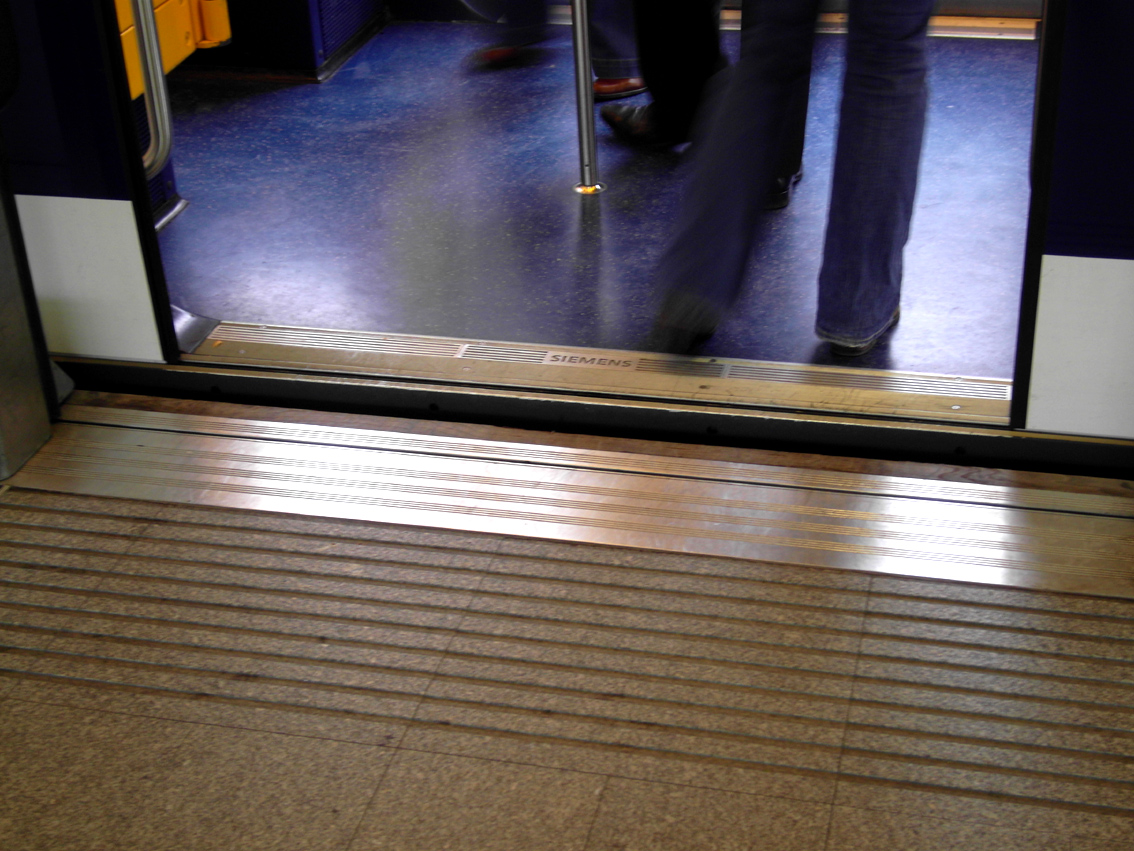
Colour photograph showing the Door Threshold Detail of the new, automatically operated CDGVAL Métro at Roissy Charles De Gaulle Airport in Paris. In totally new construction ... an unacceptably huge difference between platform height and the shuttle's floor ! This is also now a trip hazard for everyone !! Photograph taken by CJ Walsh. 2010-11-26. Click to enlarge.
.
Why is this relevant for us now … here in Ireland ?
The new scheme of Disability Access Certification, closely modelled on the existing highly problematic scheme of Fire Safety Certification … is undergoing a normal, introductory ‘teething’ process within this jurisdiction … and many questions about interpretation of the law and its operation are being asked.
Important Clarification: The Guidance Text contained in Technical Guidance Document M … is not Law … is not Prescriptive Regulation … is not ‘Deemed to Satisfy’ … and … because the guidance is so incomplete, incoherent and inadequate … does not even indicate Minimum Accessibility Performance !
Part M Functional Requirements – Access for People with Disabilities Second Schedule of the 1997 Building Regulations – As Amended by the Building Regulations (Amendment) Regulations, 2000 – Statutory Instrument No.179 of 2000
Access and UseM1 Adequate provision shall be made to enable people with disabilities to safely and independently access and use a building.
Sanitary ConveniencesM2 If sanitary conveniences are provided in a building, adequate provision shall be made for people with disabilities.
Audience or Spectator FacilitiesM3 If a building contains fixed seating for audience or spectators, adequate provision shall be made for people with disabilities.
Definition for This PartM4 In this Part, ‘people with disabilities’ means people who have an impairment of hearing or sight or an impairment which limits their ability to walk, or which restricts them to a wheelchair.
Application of This PartM5 Part M does not apply to works in connection with extensions to and the material alterations of existing dwellings, provided that such works do not create a new dwelling.
.
Today in Ireland … Talk IS too cheap … and Good Accessibility Performance IS almost non-existent !!! Yes … and that even includes the work of those mighty superheroes in the Office of Public Works (OPW).
Furthermore … the big fun will really start when the New Part M Requirements come into operation on 1 January 2012 … and we will enter a surreal Alice’s Wonderland of Accessibility Ambiguity …
Part M Functional Requirements – Access and Use Second Schedule of the 1997 Building Regulations – As Amended by the Building Regulations (Part M Amendment) Regulations, 2010 – Statutory Instrument No.513 of 2010
Access and UseM1 Adequate provision shall be made for people to access and use a building, its facilities and its environs.
Application of The PartM2 Adequate provision shall be made for people to approach and access an extension to a building.
M3 If sanitary facilities are provided in a building that is to be extended, adequate sanitary facilities shall be provided for people within the extension.
M4 Part M does not apply to works in connection with extensions to and material alterations of existing dwellings, provided that such works do not create anew dwelling.
2010-10-03: At an impressionable young age, I was exposed to the Landscape Design ‘Shock and Awe’ of the Palace Gardens at Versailles, just outside Paris in France. In Europe … we are convinced that we know it all … and that we have all the answers. Let me break the bad news … we don’t !
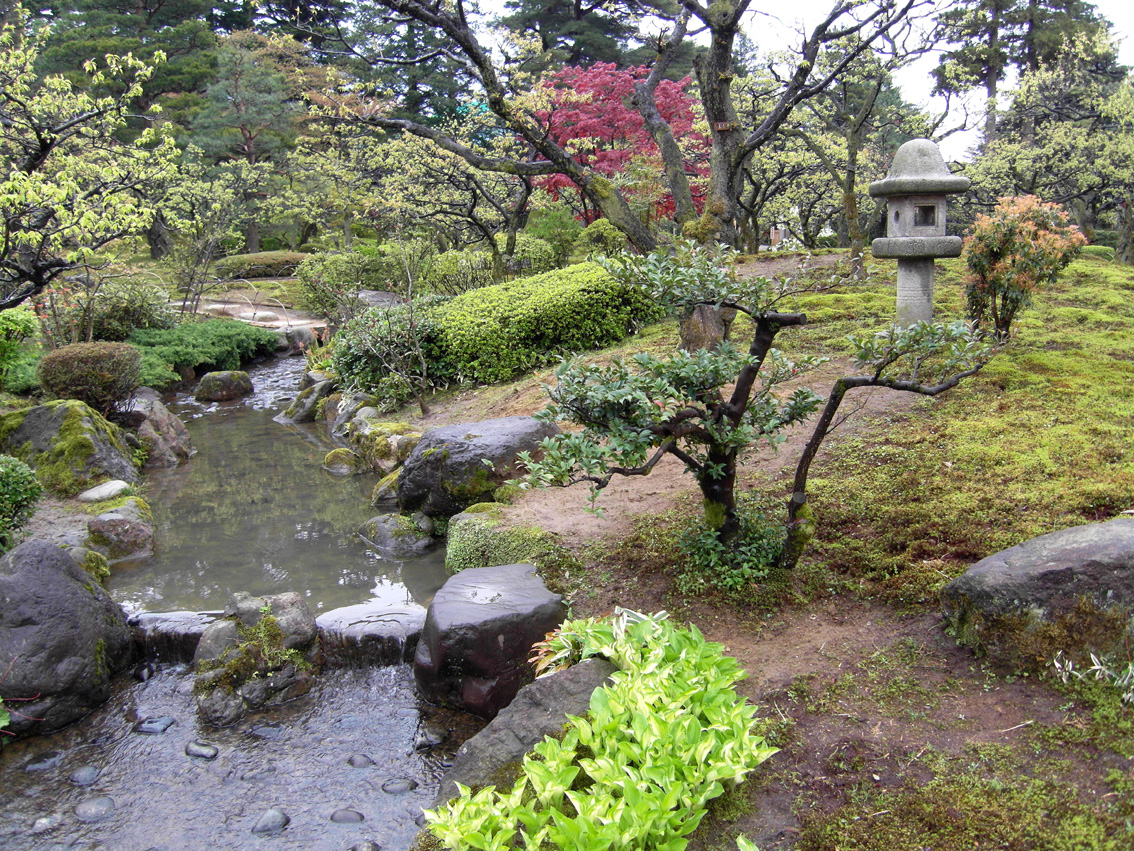
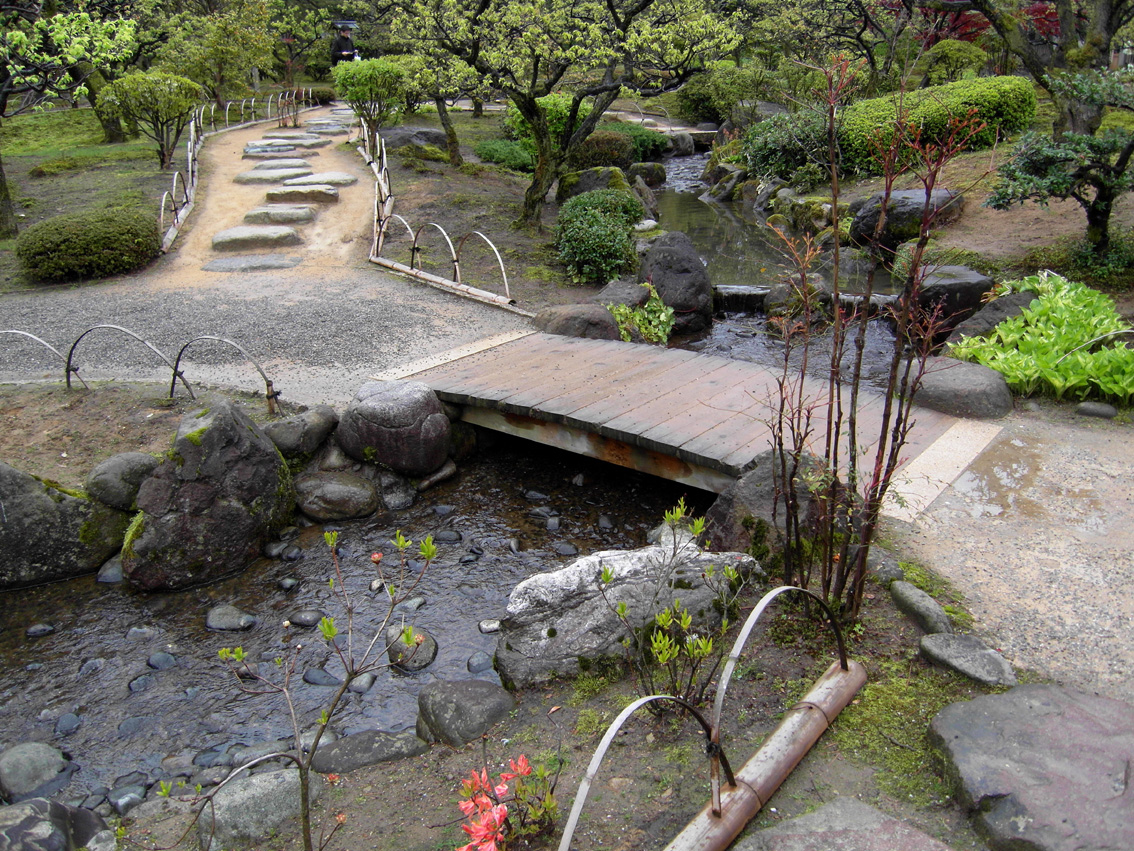
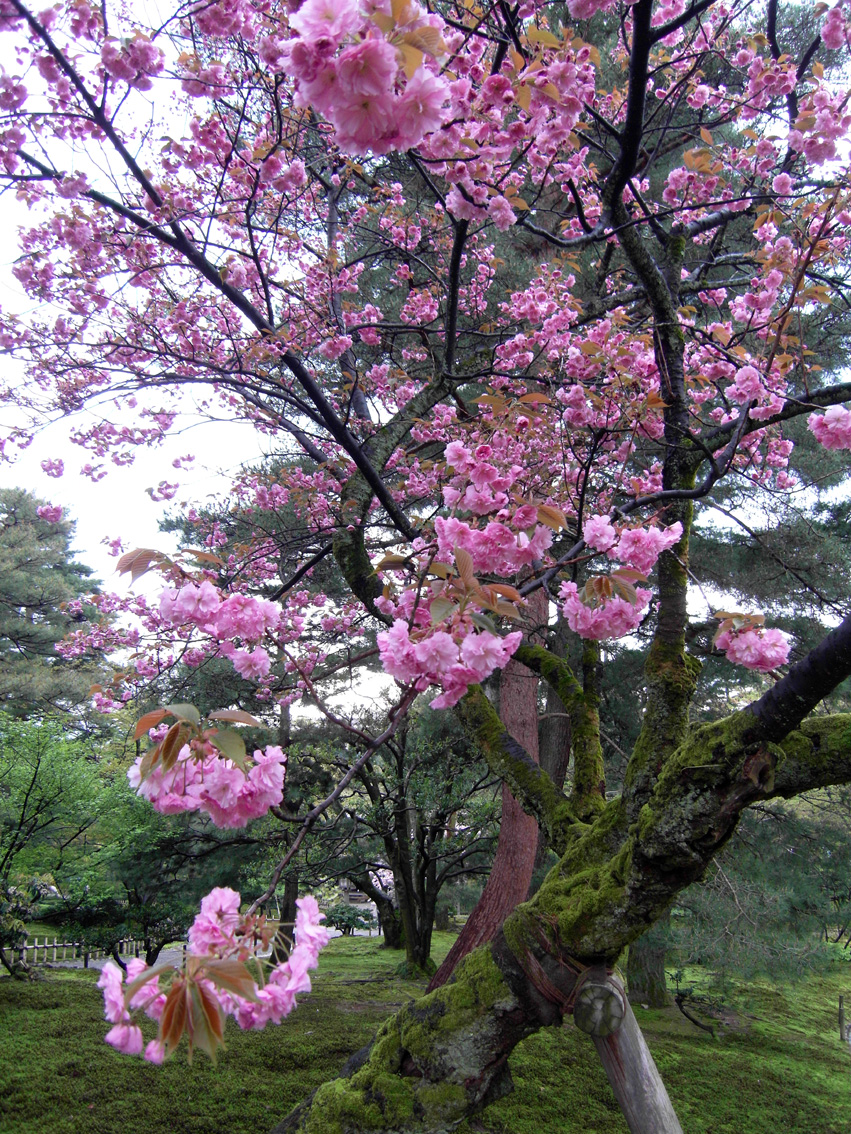
Japan is another world … another experience … jaw-dropping, eye-popping, breath-taking … a feast for the mind. Here is a very good example of a different approach … to me, a far more attractive approach … to shaping and moulding the landscape …
With an area of approximately 10 hectares … Kenroku-en Park in Kanazawa City is the largest of the three famous Gardens in Japan (the others are in Mito and Okayama). It is also considered to be the most beautiful. The Park is an informally styled landscaped garden with characteristics typical of the Edo Period. Originally the outer garden of Kanazawa Castle, it is located on the slope facing the castle’s Main Gate … Ishikawa-mon. A busy road now separates the two !
This Park embodies the unification of the six qualities: honour, ceremony, expanse, artistic design, coolness, and scenic harmony.
Completed in 1837, the Park was first opened to the public on 7 May 1874. It was designated a National Site of Special Scenic Beauty on 20 March 1985.
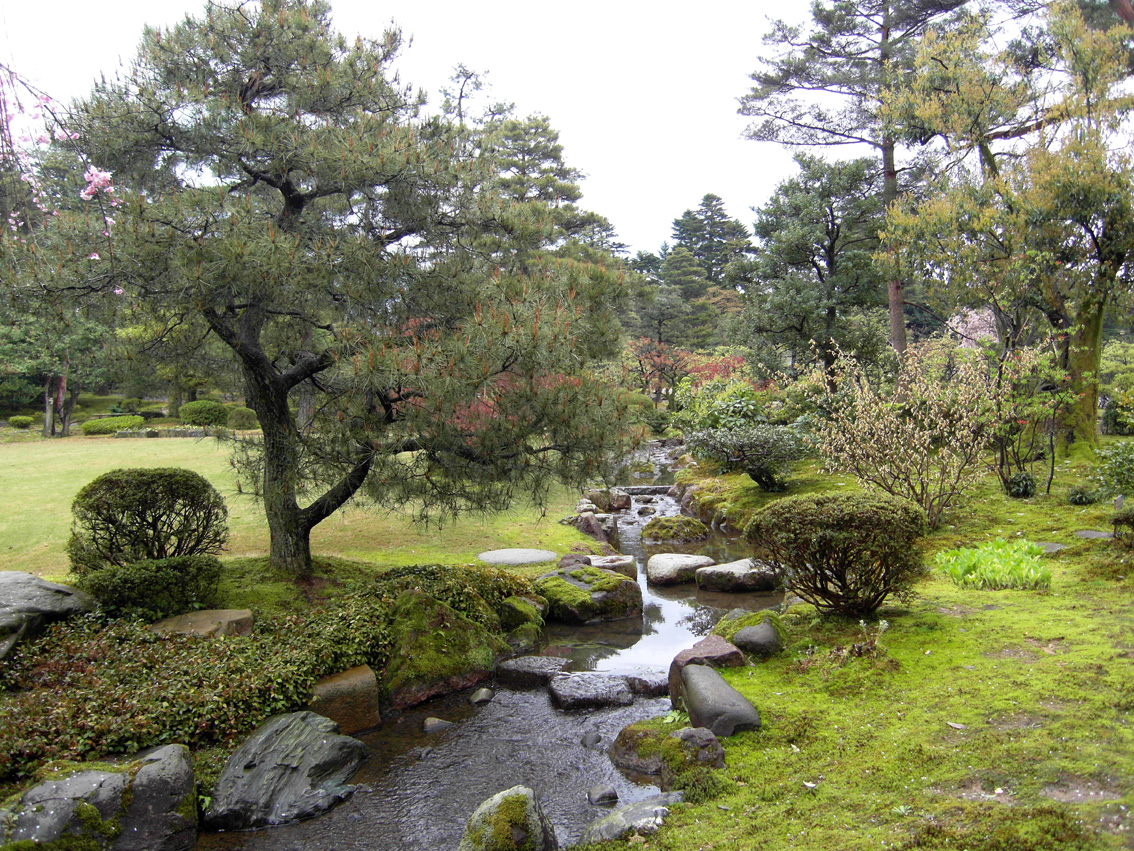
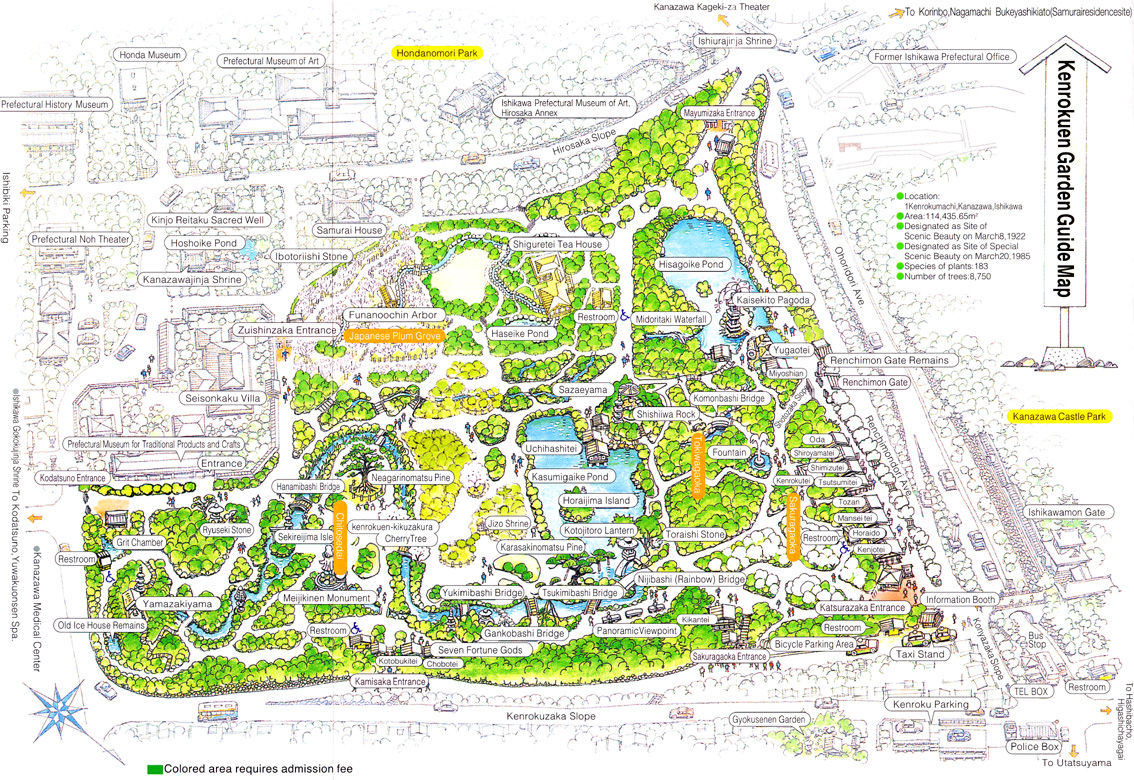
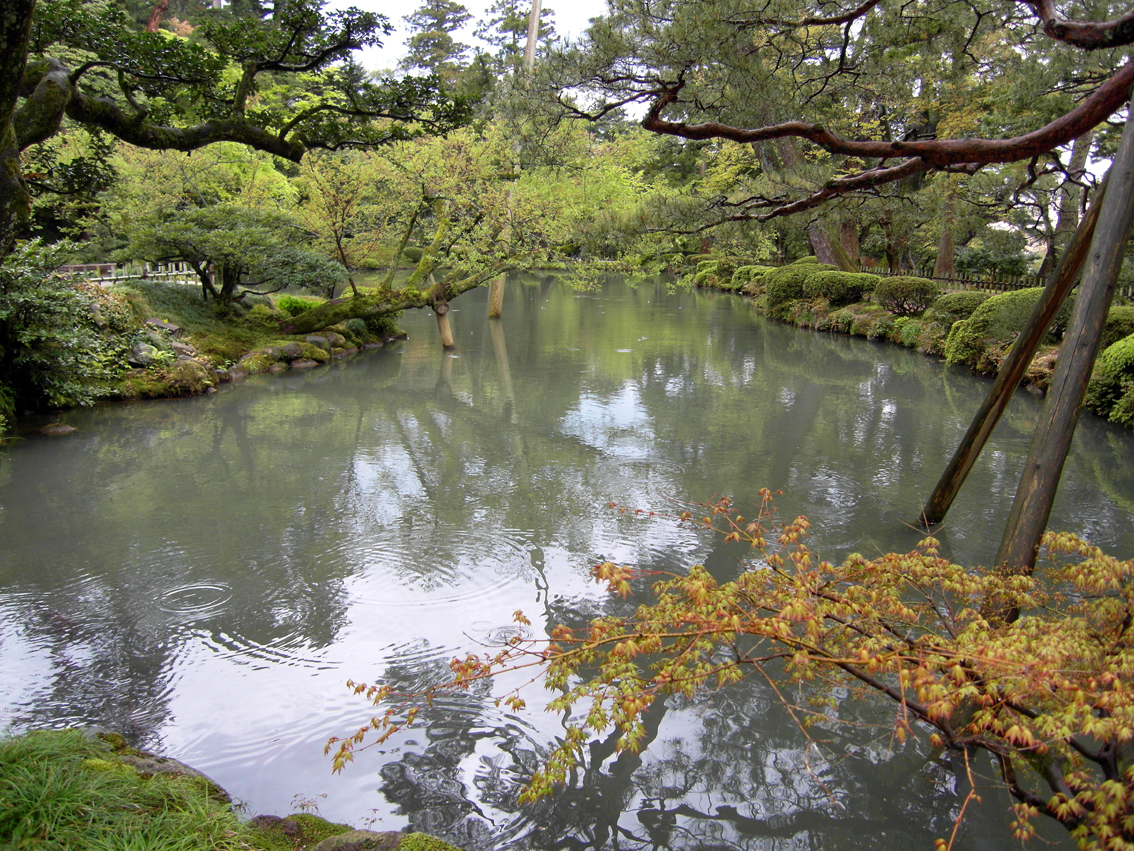
Here are some random scenes … and a plan. Enjoy … and please notice the details …
.
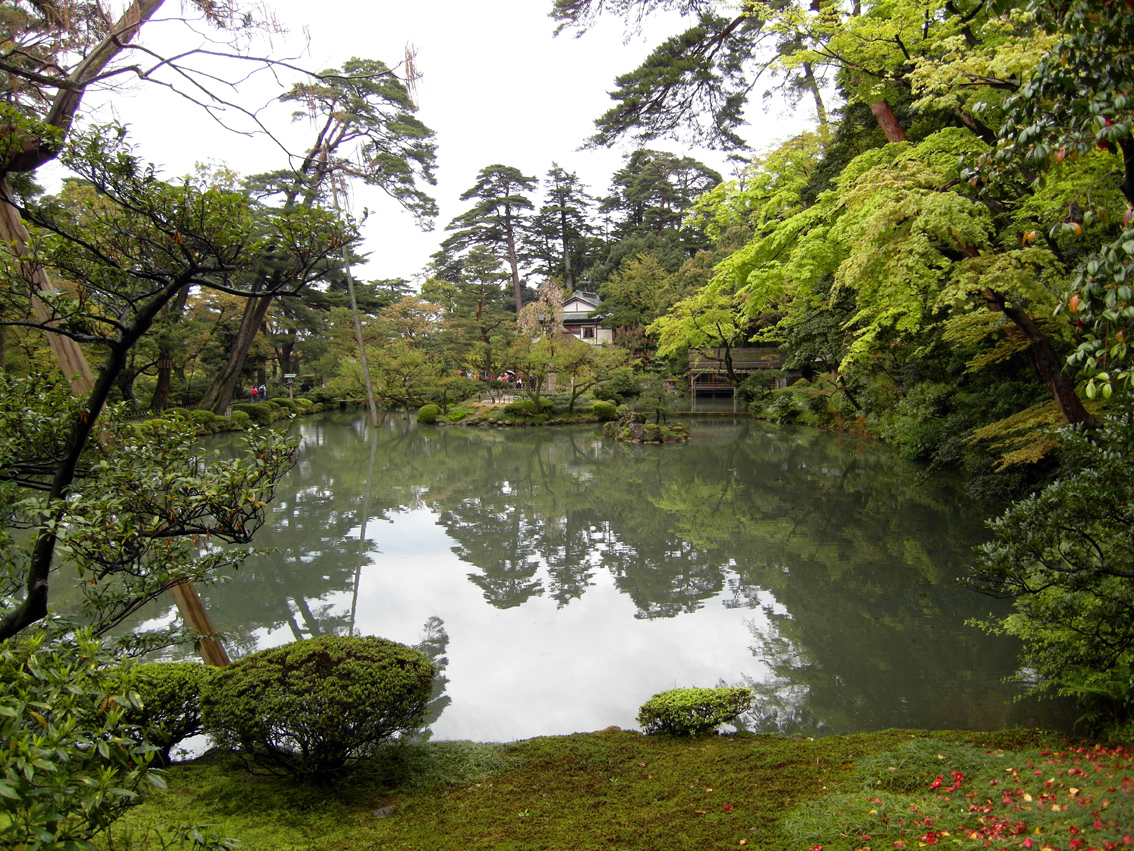
Colour photograph showing a scene in Kenroku-en Park in Kanazawa, Japan. Photograph taken by CJ Walsh. 2010-04-27. Click to enlarge.
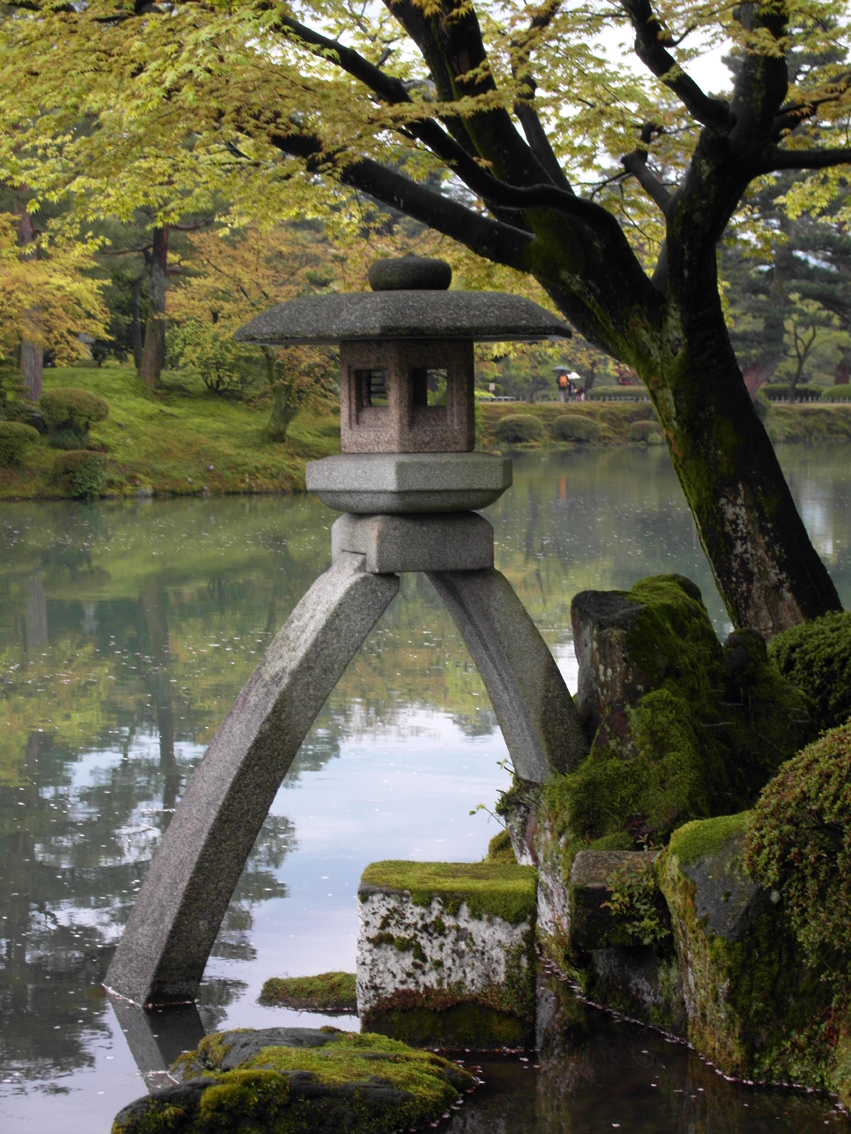
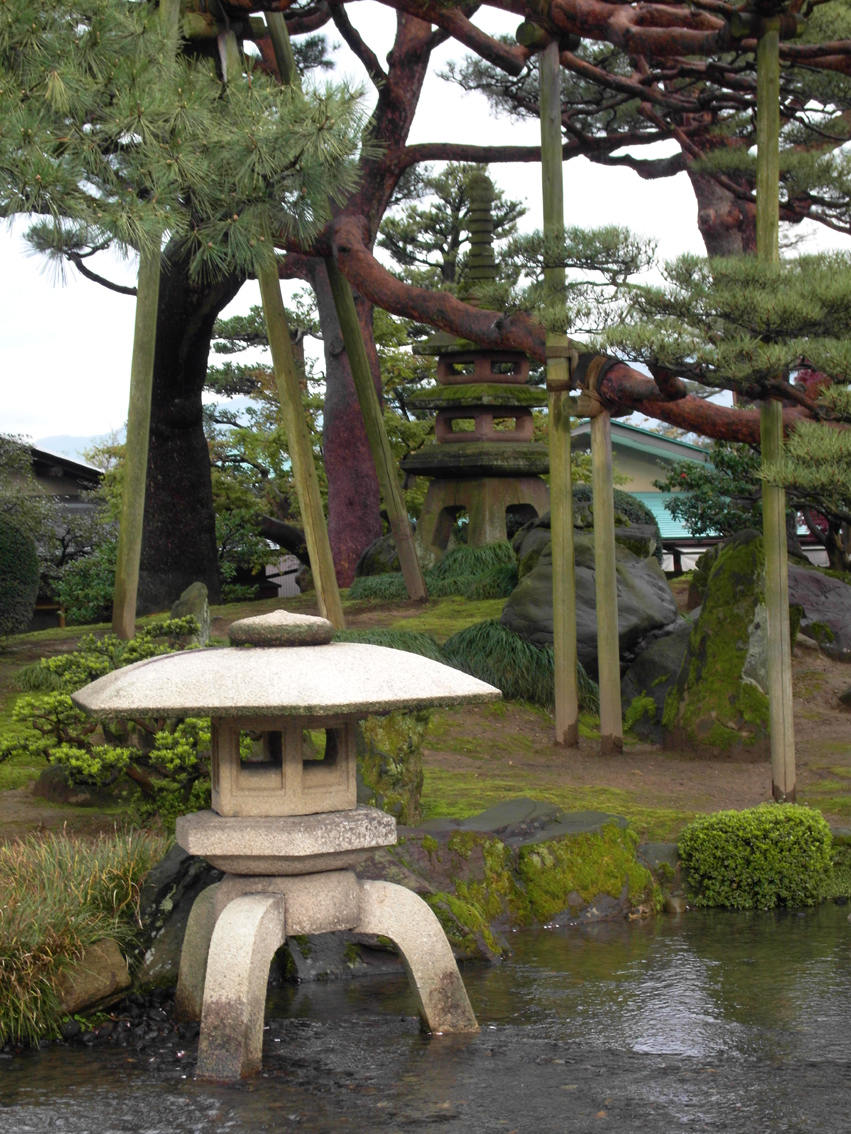
Kotojitoro Lantern …
Colour photograph showing a scene in Kenroku-en Park in Kanazawa, Japan. Photograph taken by CJ Walsh. 2010-04-27. Click to enlarge.
.
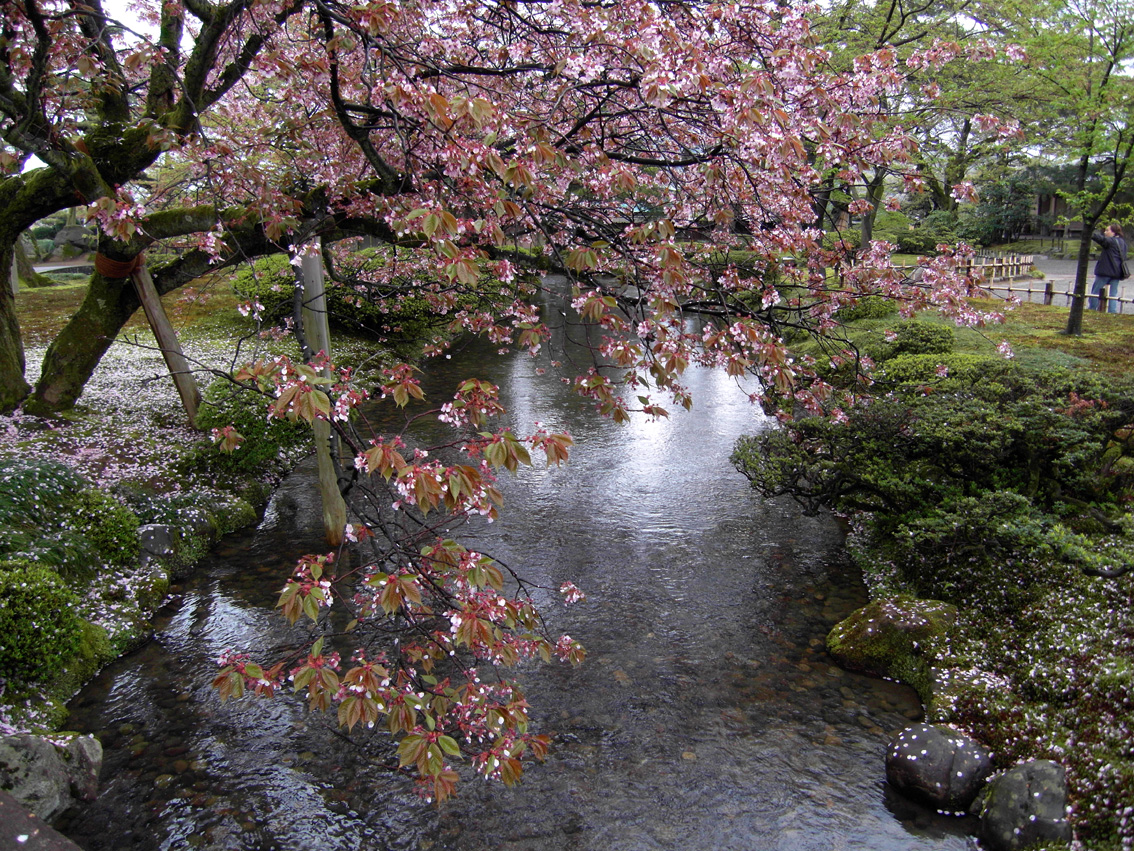
Colour photograph showing a scene in Kenroku-en Park in Kanazawa, Japan. Photograph taken by CJ Walsh. 2010-04-27. Click to enlarge.
.
Colour photograph showing a scene in Kenroku-en Park in Kanazawa, Japan. Photograph taken by CJ Walsh. 2010-04-27. Click to enlarge.
.
Colour image showing the plan of Kenroku-en Park in Kanazawa, Japan. Click to enlarge.
.
Colour photograph showing a scene in Kenroku-en Park in Kanazawa, Japan. Photograph taken by CJ Walsh. 2010-04-27. Click to enlarge.
.
Colour photograph showing a scene in Kenroku-en Park in Kanazawa, Japan. Photograph taken by CJ Walsh. 2010-04-27. Click to enlarge.
.
Colour photograph showing a scene in Kenroku-en Park in Kanazawa, Japan. Photograph taken by CJ Walsh. 2010-04-27. Click to enlarge.
.
Colour photograph showing a scene in Kenroku-en Park in Kanazawa, Japan. Photograph taken by CJ Walsh. 2010-04-27. Click to enlarge.
.
Colour photograph showing a scene in Kenroku-en Park in Kanazawa, Japan. Photograph taken by CJ Walsh. 2010-04-27. Click to enlarge.
2010-06-07: People who visited this Post during the summer … some, many times … want more of an explanation. In this case … ‘Less was not More’ ! Apologies.
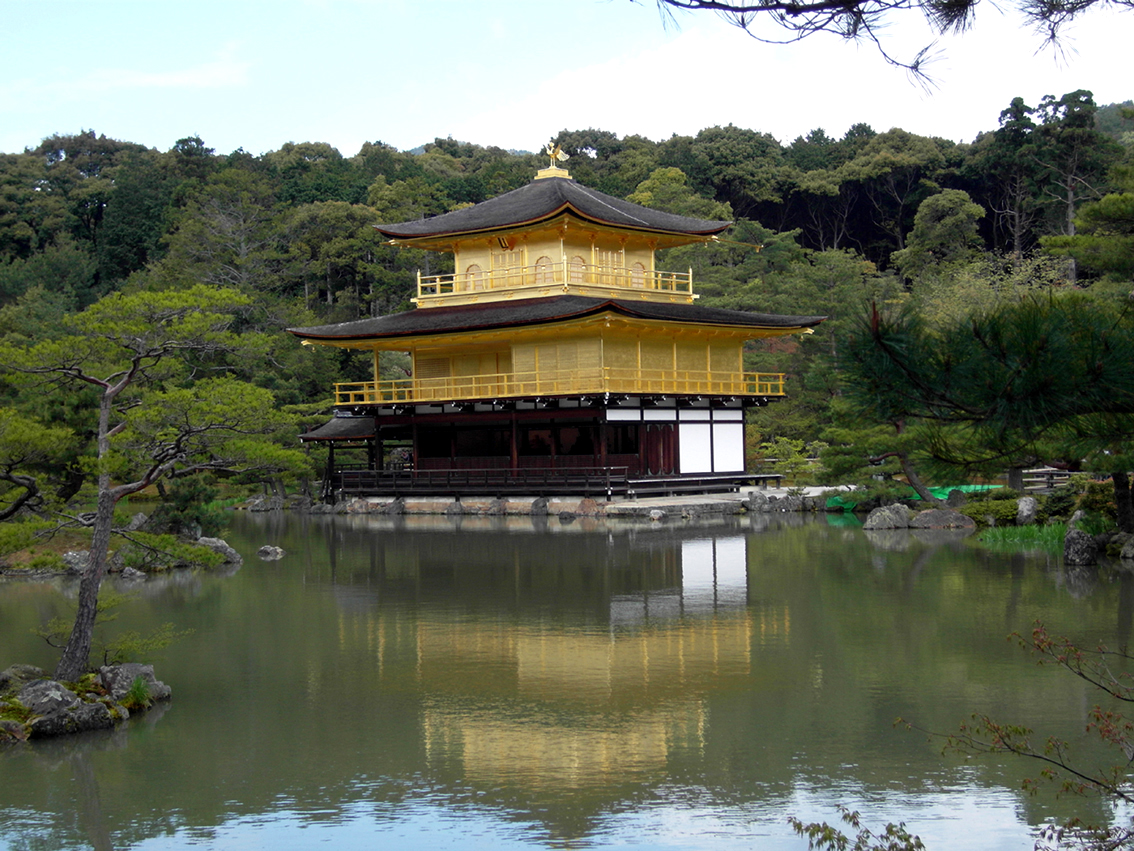
In the North of Kyoto City … Rokuon-Ji Temple – The Golden Pavilion … a very elegant three storey building, harmoniously integrated into the landscape … and clearly intended to be reflected in the water of Kyōko-chi (Mirror Pond).
Colour photograph showing The Golden Pavilion in Kyoto, Japan. Photograph taken by CJ Walsh. 2010-04-24. Click to enlarge.
.
Looking more closely at the Pavilion, each of the Three Floors has a different Architectural Style:
1.Hō-sui-in … the Name of the First/Ground Floor … built in the palace style, known as Shinden-zukuri.
2.Chō-on-dō … the Name of the Second Floor … built in the style of samurai houses, known as Buke-zukuri.
3.Kukkyō-chō … the Name of the Third Floor … built in the style of Karayō, or Zen Temple.
Both the 2nd and 3rd Floors are covered with gold leaf on Japanese lacquer. The roof covering, throughout, is cedar wood shingle. The Phoenix, at the top, promises good fortune.
This is very personal … family, friends and I myself … have all been caught, twisted and mangled by the current air travel havoc in Europe. Catching a plane is stressful enough … the long queues … the security screening … the silly, ineffective regulations about liquids … the unbelievably high prices for everything at an airport (every airport !) … the marathon walks to departure gates … without having to endure the additional stress of not knowing whether the flight is on or off … and even IF you then get to your destination … not knowing whether the return flight will be on or off.
HOWEVER … to Know and Claim Your Rights, under European Union Law, during the volcanic ash crisis … go to this Page on the European Commission (DG SANCO) WebSite … http://ec.europa.eu/dgs/health_consumer/icelandic-volcanic-cloud/index_en.htm It’s time to kick ass with the airlines ! And … that is exactly what happened with Ryanair in Italy, when it was fined €3 Million on 15th May 2010 !!!
.
IMPORTANT UPDATE … IATA Press Release #20, dated 18th May 2010 …
[ IATA (International Air Transport Association) represents approximately 230 airlines, comprising 93% of scheduled international air traffic.]
Geneva – The International Air Transport Association (IATA) called on European governments and air navigation service providers to urgently develop more precise procedures to identify ash contaminated air space and allow more flights. The call came in the wake of 1,000 flight cancellations on Monday (17 May) as a result of the continued volcanic eruptions in Iceland.
“This problem is not going away any time soon. The current European-wide system to decide on airspace closures is not working. We welcome the operational refinements made by the Volcanic Ash Advisory Centres (VAAC) in their theoretical model, but we are still basically relying on one-dimensional information to make decisions on a four-dimensional problem. The result is the unnecessary closure of airspace. Safety is always our number one priority. But we must make decisions based on facts, not on uncorroborated theoretical models”, said Giovanni Bisignani, IATA’s Director General and CEO.
Bisignani noted some successful exceptions which provide examples to follow. “France has been able to safely keep its airspace open by enhancing the VAAC Data with operational expertise to more precisely determine safe fly zones. Today, the UK Civil Aviation, working with the UK NATS (the air navigation service provider), announced another step forward by working with airlines and manufacturers to more accurately define tolerance levels while taking into account special operational procedures. Both are examples for other European governments to follow”, said Bisignani.
Bisignani called for (1) more robust data collection and analysis; (2) a change in the European decision-making process; and (3) urgency in addressing the issues.
Data Collection & Analysis: “Numbers show that the current system is flawed. Over 200,000 flights have operated in European airspace identified by the VAAC as having the potential presence of ash. Not one aircraft has reported significant ash presence and this is verified by post-flight aircraft and engine inspections. We must back the theory with facts gathered by aircraft to test ash concentration. France and the UK are showing that this is possible. If European civil aviation does not have the resources, it should look to borrow the test aircraft from other countries or military sources”, said Bisignani.
Changing the European Decision-Making Process: “We have lost confidence in the ability of Europe’s governments to make effective and consistent decisions. Using the same data, different countries have come to different conclusions on opening or closing airspace”, said Bisignani.
“Ultimately the industry needs a decision-making process for ash clouds similar to the one used for all other operational disruptions. Every day, airlines make decisions whether to fly or not to fly in various weather conditions. Airlines collate the information available and make informed decisions placing safety first and with full access to all the latest weather reporting. Why should volcanic ash be any different ?”, said Bisignani.
In the US, which has a lot of experience with volcanic activity, the government identifies a no-fly zone where ash concentration is the highest. For all other areas, it is the responsibility of the airline to decide to fly or not based on the various data sources available. “The US has well-established, safe and effective procedures for tracking the hazards of volcanic ash. In recent years, the industry had no recorded safety incidents from volcanic activity in US airspace. Europe has a lot to learn”, said Bisignani.
Urgency: “Volcanic ash is a new challenge for European aviation. We can understand that systems need to be developed to cope. But, what is absolutely inexcusable is the failure of Europe’s governments to act urgently and collectively to provide real leadership in a crisis. We have vast amounts of data from over 200,000 safe flights ready for analysis to support an urgent review of the current processes. The UK is finally moving in the right direction. But what about the other affected European governments ? The next transport ministers meeting is scheduled for 24th June 2010. What kind of leadership waits more than a month to make crisis decisions ? European businesses are dependant on air travel and passengers certainly cannot wait that long for initiatives like the UK’s to be implemented continent-wide”, said Bisignani.
To enhance the industry’s long-term ability to address volcanic ash issues, Bisignani is travelling to Montreal for urgent meetings with the International Civil Aviation Organization (ICAO). “IATA and ICAO have been working intensely on this issue since the crisis first struck in April, 2010. IATA is strongly supporting the ICAO Task Force which is reviewing ash tolerance thresholds with states, operators, manufacturers and the scientific community. The responsibility of manufacturers is critical in providing performance information to back decisions”, said Bisignani.
Tomorrow, Bisignani will meet Roberto Kobeh-Gonzales, President of the ICAO Council and Raymond Benjamin, ICAO Secretary-General. “It is important that we act urgently and globally to better deal with this crisis and to lay a solid foundation for better decision making in future eruptions. Even as Europe stumbles with its fragmented approach, IATA is working with the global community through ICAO and by tapping into the experience of leading regulators like the U.S. Federal Aviation Administration (FAA) to facilitate harmonized solutions”, said Bisignani.
.
Earlier Information Which Is Now Very Interesting ! … EEA Press Release, dated 23rd April 2010 …
Volcanic Ash is Having Little Impact on Europe’s Air Quality
Copenhagen – The European Environment Agency (EEA) is closely following the impacts of recent volcanic eruptions in Iceland, in particular assessing changes in ground-level air pollution. According to preliminary monitoring data, ground-level air quality across Europe has not deteriorated significantly as a result of the volcanic activity.
Volcanic eruptions have the potential to inject substantial amounts of sulphur dioxide (SO2) and ash into the atmosphere. Volcanic aerosol, a suspension of fine solid particles or liquid droplets in the air, is created during eruptions and can be transported thousands of kilometres. Particles in the volcanic aerosol may carry pollutants with the potential to harm human health and ecosystems.
So far, monitoring stations in Europe have only detected a few episodes of ambient air concentrations of particulate matter and sulphur dioxide of volcanic origin, in particular at elevated mountainous locations, for example at Zugspitze in Germany (2,659 m). The threat to public health in the European Union is therefore considered minimal at present.
On Iceland, however, the situation is different: concentrations of particulate matter are markedly higher than usual in some areas. That potentially represents a significant threat to humans and farm animals, according to the Icelandic Directorate of Health, which closely monitors pollution levels.
In Europe, rain and snowfall are expected to remove volcanic debris from the atmosphere. Detecting this process requires the chemical content of precipitation to be analysed, which takes time. Should these data indicate high pollutant levels, the current assessment of risk for human health and ecosystems may need to be reassessed.
The EEA maintains a public air quality information system, Air Watch, within its Eye on Earth Portal. It displays near real-time measurements of concentrations of three air pollutants (ground-level ozone O3, particulate matter and nitrogen dioxide NO2) from approximately 1,000 monitoring stations in 32 countries, as well as updates from citizens.
Because ambient air concentrations and fallout can vary across short ranges within Europe, the EEA also advises the public to refer to national or local air quality authorities, which may have additional or new information on local conditions. Detailed information on national and local data providers is also available via Eye on Earth.