China
SDI Practice Announcement – New 32 Storey Hotel in China
2013-04-02: Sustainable Design International Ltd. (SDI) is pleased to announce that its Managing Director, C.J. Walsh, has been invited to be ‘Project Design Architect’ / ‘Design Professional in Responsible Charge’ for a New 32 Storey Hotel in Yunnan Province, People’s Republic of China (PRC).
He will have responsibility for the Project’s Architectural Concept Design and General Schematic Design … including the overall architectural character and profile of primary exterior surfaces.
Project Total Value = € 65 Million (Euros) … excluding interior design, finishes and furnishing (which could end up doubling, or even tripling, the overall project value).
Sustainable Design International Ltd. maintains a strict practice policy of Client Confidentiality.
[ If this Type of Professional Design Service Appeals to You, or Your Organization - Contact Us Immediately ! ]
.
.
2012 ‘Understanding China’ Policy Briefing - Friends of Europe & EuroChambres
An estimated One Billion People will be living in China’s cities by 2030. This large-scale and very rapid urbanization demands that a sustainable transformation of their urban built, social, economic and institutional environments commences Today – not at some notional point in a far distant future.
Furthermore … replicating a European approach to sustainable design and construction in other regions of the world is doomed to failure. Urban Transformation in China must be adapted to Local Geography, Climate, Climate Change, Social Needs, Cultures, Economy, and Local Severe Events (e.g. earthquakes, flooding). With European support and collaboration … China must, and will, find its own way.
.
Greening China’s Cities of Tomorrow (Spring 2012)
Click the Link Above to read and/or download a PDF File (4.42 Mb)
Report on a One-Day China Advisory Council Roundtable, co-organized by Friends of Europe and EuroChambres, which was held in Brussels on 8 March 2012. This event was part of an ‘Understanding China’ Programme (mid-2009 to mid-2012), co-funded by the European Commission.
.
.
THIS TALL BUILDING PROJECT IN YUNNAN PROVINCE, PRC
Working within the professional constraints of ‘client confidentiality’ … it is possible to have a general discussion about current building design, construction and operation issues in an international sector which is operating, more and more, beyond national borders … without adequate, or very often any, national and local regulation. By ‘regulation’, I mean a flexible system of building-related legislation which is operated in conjunction with mandatory and effective technical control.
In order to cope with today’s complex built environment and the enormous variation in the size and scale of construction projects … a ‘flexible’ mix of functional, performance and prescriptive legal requirements is the sharpest and most appropriate instrument.
Forget the hype about performance-based codes coming out of the USA … hot air, and much ado about little !
Of course, the biggest issue of all is the competence of those individuals who work in Authorities Having Jurisdiction (AHJ’s). Even in the most developed economies of the world … there are many occasions when the level of individual incompetence in an AHJ is astounding … and institutional arrangements within the AHJ are a mess, i.e. the AHJ is not fit for purpose.
.
1. Building Information Modelling (BIM)
A tremendous amount of waste is associated with and generated by the processes of conventional building design, construction and operation. There is a more up-to-date and efficient way of doing things … an essential way … and it’s called Building Information Modelling (BIM) ! Pause … for you to search the Internet.
Furthermore … consider, for a moment, just the initial list of Specialist Consultants who will be engaged directly by the Client when the project’s conceptual design has reached a sufficiently developed stage. How can all of these individuals and organizations – listed in the revised Project Design Agreement – obtain accurate and reliable ‘real time’ information about the rapidly evolving project from a central design library / information database … then feed their new work back into the centre without unnecessary delay ? How, next, can everyone else who needs to know, be updated with the new design input … again, without delay ? And perhaps, these consultants may also be based in different countries … working in very different time zones …
- Building Information Modelling (BIM) Consultant
- Local Design Institute (LDI) … a local architectural practice which will produce the project’s working drawings, handle local spatial planning and building code approvals, carry out site inspections, and deal directly with construction organization(s), etc., etc.
- Interior Design Consultant
- Traffic / Parking Analysis Consultant
- Curtain Wall Consultant (Curtain Wall, Skylights & Special Roof Structures)
- Retail Market Analysis Consultant
- Landscape Design Consultant
- Quantity Surveying & Cost Estimating Consultant
- Furniture Design Consultant
- Geotechnical, Civil Engineering & Structural Engineering Consultant (including structural performance under fire and earthquake conditions, resistance to fire-induced progressive damage and disproportionate damage … and also including climate resilience)
- Acoustic & Audio-Visual Design Consultant
- Mechanical, Electrical & Plumbing (MEP) Engineering Consultant
- Integrated Building Automation & Management / Telecom / Security / Networking Consultant
- Fire & Life-Safety Engineering Consultant
- Water Feature Consultant
- Wind Tunnel Test Consultant
- Kitchen Equipment and Layout Design Consultant
- Art, Artefact and Accessories Consultant & Procurement Services for Art, Artefacts, and Accessories
- Tenant Storefront Design Consultant
- Helicopter Landing Pad Design Consultant
- Universal Design / Accessibility for All Consultant [including access to the building, electronic, information and communication technologies (EICT's), and services offered at the hotel ... and including fire safety, protection and evacuation for all]
.
2. Design Professional in Responsible Charge
The revised Project Design Agreement requests that the Client receive advice on who might be the different Specialist Consultants listed above. In addition, it will be necessary to demarcate the boundaries within which each Consultant will operate … and, where appropriate, to prescribe a design performance target for each speciality … which must be ‘realized’ in the completed and occupied building (!).
Recalling the many previous posts here concerning NIST’s 2005 & 2008 Recommendations on the 9-11 World Trade Centre Building Collapses in New York City … somebody must ensure that the many individuals and organizations listed above – Members of the Larger Design Team – use consistent design data and assumptions … somebody must co-ordinate design documents and specifications to identify overlaps and eliminate gaps … somebody must serve as ultimate liaison between the Client, the Local Design Institute, AHJ officials, and the Construction Organization(s) … and somebody must ensure that everybody is on the same wavelength, and working towards the same objective in a trans-disciplinary manner.
That ‘Somebody’ … the Design Professional in Responsible Charge … is the Project Design Architect !
.
… to be continued …
.
.
END
‘Sustainability’ – New Part 11 in India’s National Building Code !
2013-03-17: Happy Saint Patrick’s Day !!
Submissions on India’s Draft Amendment No.1 to the 2005 National Building Code (SP 7:2005) concerning the Proposed Incorporation of a New Part 11: ‘Approach to Sustainability’ had to arrive at the Bureau of Indian Standards (BIS), in Dilli … by e-mail … no later than Friday last, 15 March 2013 …
Indian NBC, Proposed Part 11 on ‘Sustainability’ – December 2012 Consultation
.
Extract From Foreword (Page 7):
‘ Developed nations’ approach to sustainability generally concentrates on energy conservation through high technology innovations, and use of products, materials and designs with lower embodied energy. Their green ratings are based on intent, which implies expert inputs and simulation. The Indian construction industry will do better using our traditional wisdom and practices, building in harmony with nature through regional common knowledge, consuming as little as necessary, applying low cost technology innovations, using recycled materials, and recognizing performance (not intent) through easily measurable parameters wherever feasible.’
How Right They Are About Prioritizing ‘Real’ Performance !!
.
And Just Before That Extract Above:
‘ The authentic (my insert !) Indian way of life is aparigraha (minimum possessions), conservation (minimum consumption), and recycling (minimum waste). These three attributes are the guiding principles for sustainable buildings as well. With these attributes and its rich heritage, India can make a substantial contribution in this field and eventually lead the world on the path of sustainability.’
An Overly Ambitious Target ? Perhaps Not.
.
SDI Supporting India’s National Sustainable Buildings Strategy …
We very much welcome this opportunity to make a Submission on India’s Draft Amendment No.1 to the 2005 National Building Code (SP 7:2005) concerning the Proposed Inclusion of a New Part 11 ‘Approach to Sustainability’.
This IS an important development for India … and it DOES mark a substantial contribution to this field, at international level. We wish that other countries would follow your example … particularly China, the other mushrooming economies in South-East Asia, and the Arab Gulf States.
You may not be aware that Sustainable Design International (SDI) has been specializing in the theory and implementation of a Sustainable Human Environment (social, built, virtual, and economic) since the mid-1990′s.
And, for example … in September 2007, we were invited to make a series of Keynote Presentations to 20 Senior National Decision-Makers, from both the public and private sectors, at a 2-Day Workshop which was organized for us in Lisboa, Portugal. If invited, we would be delighted to repeat this valuable exercise in Dilli, Bengaluru, and other suitable venues in India.
.
IF India is to lead the world on this particular track, i.e. Sustainable Buildings, a coherent philosophy must be outlined in the Proposed New Part 11 of the National Building Code, and a clear direction must also be given there to decision-makers, e.g. clients/client organizations, and designers.
Certain essential content must be included in Part 11. With regard to an improved layout of Part 11, please review the attached SDI Document: ‘SEED Building Life Cycle’ (PDF File, 55 Kb) .
.
Because you have prioritized ‘real’ building performance over pre-construction design ‘intent’, it is appropriate to begin our comments here …
1. Sustainability Performance Indicators
In order to prioritize ‘real’ performance, the monitoring of actual sustainability performance in completed and occupied buildings must be comprehensive, accurate and reliable. Indicators of sustainability performance must, therefore, be included in all sections of the Proposed New Part 11.
Sustainability Performance Indicators provide important signposts for decision-making and design in many ways. They can translate physical and social science knowledge into manageable units of information which facilitate the decision-making and design processes. They can help to measure and calibrate progress towards sustainable development goals, and sectoral sustainability targets. They can provide an early warning to prevent economic, social and environmental damage and harm. They are also important tools to communicate ideas, thoughts and values because, as statisticians say: “We measure what we value, and value what we measure”.
Performance Indicators may be both quantitative and qualitative … but must cover all stages of the building process, i.e. project feasibility and performance specification, spatial planning, design, construction, management, operation, maintenance and servicing, de-construction, disposal, final site clean-up and sustainable repair.
While many, though not all, types of building performance can be successfully monitored using lightweight portable equipment … a certain number of monitoring devices must also be permanently installed in the building during construction. A facility to reliably feed the output from these devices back to data collection points, on site and remote, must also be incorporated in the Building’s Intelligent Management System.
Management and collation of sustainability performance data must be reliable. Uncertainty is always present. Therefore, Statements of Uncertainty should always be attached to ‘reliable’ data.
Safety Factors should always be included when targeting critical ‘health and safety’ related types of performance.
Sustainability Performance Indicators must be directly comparable across different Global Regions … within Asia, across different countries … and within India, across different States. A Balanced, Harmonized Core Set of Indian Performance Indicators should be quickly developed. A Balanced ‘Local’ Set of Performance Indicators will always be necessary.
People tasked with monitoring sustainable building performance must be competent … and independent, i.e. be unconnected to client, design and construction organizations.
Specifically in relation to Energy Performance, the targets to be achieved in new buildings must be far more ambitious. Please review the attached SDI Document: ‘SEED Positive Energy Buildings’ (PDF File, 29 Kb) .
.
2. Properly Defining ‘Sustainable Development’
As currently drafted … Definition 2.26 Sustainable Development, on Page 13 of the Proposed New Part 11, is not only ambiguous, it is inadequate for India’s needs … and it is barely the first half of the full, correct definition …
Sustainable Development is development that meets the needs of the present without compromising the ability of future generations to meet their own needs. It contains within it two key concepts:
- the concept of ‘needs’, in particular the essential needs of the world’s poor, to which overriding priority should be given ; and
- the idea of limitations imposed by the state of technology and social organization on the environment’s ability to meet present and future needs.
[ Please refer to the 1987 Report of the World Commission on Environment & Development (WCED): 'Our Common Future' - Chapter 2, Paragraph 1.]
This original definition in the 1987 WCED Report IS appropriate for India … and it must become the core definition at the heart of India’s National Sustainable Buildings Strategy !
A careful reading of the full definition makes it clear that there are Many Aspects to this intricate, open, dynamic and still evolving concept … the most important of which are: Social, Economic, Environmental, Institutional, Political, and Legal.
It is a Fundamental Principle of Sustainability, and one of its Primary Values … that Implementation must be Synchronous, Balanced and Equitable across All Aspects of Sustainability.
The ‘Green Agenda’ merely considers Environmental Aspects of Sustainability … in isolation from all of the other Aspects ! This is a fatal flaw which must be avoided in the Proposed New Part 11 !!
[ I made many references to this issue during the FSAI Conferences in India ! ]
.
3. Sustainability Impact Assessment (SIA) for India !
Rather than Environmental Impact Assessment … surely the Proposed New Part 11: ‘Approach to Sustainability’ must now use, explain and discuss Sustainability Impact Assessment instead !?!
Sustainability Impact Assessment (SIA)
A continual evaluation and optimization assessment – informing initial decision-making, or design, and shaping activity/product/service realization, useful life and termination, or final disposal – of the interrelated positive and negative social, economic, environmental, institutional, political and legal impacts on the synchronous, balanced and equitable implementation of Sustainable Human & Social Development.
.
4. A Robust Legal Foundation for ‘Sustainable Human & Social Development’
Paragraph 4 (Chapter 2, 1987 WCED Report) states …
‘ The satisfaction of human needs and aspirations is the major objective of development. The essential needs of vast numbers of people in developing countries – for food, clothing, shelter, jobs – are not being met, and beyond their basic needs these people have legitimate aspirations for an improved quality of life. A world in which poverty and inequity are endemic will always be prone to ecological and other crises. Sustainable development requires meeting the basic needs of all and extending to all the opportunity to satisfy their aspirations for a better life.’
Trying to list the essential needs of people / the basic needs of all is a very difficult task … but it is work which has been on-going, at international level, since just after the Second World War.
The essential needs of people / the basic needs of all … are specified as being Human Rights and Fundamental Freedoms, and are already fully described within the extensive framework of International Legal Rights Instruments.
Which is why, many years ago, SDI developed this definition for Sustainable Human & Social Development … in order:
- to give this concept a robust legal foundation ; and
- (because of widespread confusion in media, political and academic circles) … to clearly establish that we are talking about sustainable human and social development, and not sustainable economic development, or any other type of development !
Sustainable Human & Social Development
Development which meets the responsible needs, i.e. the Human & Social Rights*, of this generation – without stealing the life and living resources from future generations … especially our children, and their children … and the next five generations of children.
*As defined in the 1948 Universal Declaration of Human Rights.
.
5. Climate Change Adaptation & Resilient Buildings in India ?
Atmospheric Ozone Depletion and Climate Change are mentioned, here and there, in the Proposed New Part 11. The important implications of these phenomena for Sustainable Building Design in India are not explained … at all. Why not ?
To properly respond to these phenomena, both must be integrated into India’s National Sustainability Strategies & Policies.
At the very least … we strongly recommend that Design Guidance on Climate Resilient Buildings be immediately drafted. This guidance must be appropriate for implementation in each of the different climatic regions of India.
.
6. A Sustainable Indian Built Environment which is Accessible for All !
Barrier Free is mentioned, here and there, in the Proposed New Part 11. This is to be warmly welcomed and congratulated. Under Social Aspects of Sustainable Human & Social Development … this is an essential attribute of a Sustainable Built Environment ! However, no guidance on this subject is given to decision-makers or designers. Why not ?
However, you should be aware that India ratified the United Nations Convention on the Rights of Persons with Disabilities (UN CRPD) on 1 October 2007. For your convenience, I have attached copies of the Convention in English, Hindi and Tamil.
You should also be aware that, in December 2011, the International Standards Organization (ISO) published ISO 21542: ‘Building Construction – Accessibility & Usability of the Built Environment’. In its Introduction, ISO 21542 is directly linked to the U.N. Convention … almost like an umbilical cord. The scope of this Standard currently covers public buildings. As the Accessibility Agenda in the U.N. Convention is very broad … much standardization work remains to be finished at international level.
The correct term … Accessibility for All … has been defined in ISO 21542 as including … ‘access to buildings, circulation within buildings and their use, egress from buildings in the normal course of events, and evacuation in the event of an emergency’.
A note at the beginning of the standard also clarifies that Accessibility is an independent activity, i.e. assistance from another person should not be necessary … and that there should be an assurance of individual health, safety and welfare during the course of those (accessibility-related) activities.
In order to fulfil India’s legal obligations as a State Party to the U.N. Convention on the Rights of Persons with Disabilities … adequate Design Guidance on Accessibility must be included in the Proposed New Part 11, supported by ISO 21542.
In addition, the Bureau of Indian Standards (BIS) should immediately adopt ISO 21542 as the Indian National Standard on Accessibility for All … IS / ISO 21542.
[ I made many references to this issue during the FSAI Conferences in India ! ]
.
7. Fire Safety & Protection for All in Sustainable Indian Buildings ?
Yes … there is 1 mention of ‘fire safety’ and 40 other references to ‘fire’ in the Proposed New Part 11 … but no design guidance. Why not ?
You should be aware that there is a fundamental conflict between Sustainable Building Design Strategies and the current state-of-the-art in Fire Engineering Design. As a good example … for cooling, heating and/or ventilation purposes in a sustainable building, it is necessary to take advantage of natural patterns of air movement in that building. On the other hand, fire engineers in private practice, and fire prevention officers in Authorities Having Jurisdiction (AHJ’s), will demand that building spaces be strictly compartmented in order to limit the spread of fire and smoke … thereby dramatically interfering with those natural patterns of air movement.
In everyday practice, there is a vast chasm in understanding and communication between these two very different design disciplines. As a result, serious compromises are being enforced on Sustainability Building Performance. If, on the other hand, adequate independent technical control is absent on the site of a Sustainable Building … it is the fire safety and protection which is being seriously compromised.
A range of critical fire safety issues (fatal, in the case of firefighters) are also arising with the Innovative Building Products and Systems being installed in Sustainable Buildings.
Because the emphasis is on pre-construction design ‘intent’ rather than the ‘real’ performance of the completed and occupied building … all of these problems are being conveniently ignored, and they remain hidden from everybody’s view.
This must be addressed in the Proposed New Part 11.
[ I made many references to this issue during the FSAI Conferences in India ! ]
.
C. J. Walsh – Consultant Architect, Fire Engineer & Technical Controller – Managing Director, Sustainable Design International Ltd. – Ireland, Italy & Turkey.
.
.
END
Mainstream Good Design & Accessibility for All Signage ?
2013-03-06: Further to an earlier Post, dated 30 November 2012 … on Sustainable Accessibility for All …
Accessibility IS a Fundamental Human Right !
‘ For many Weak and Vulnerable People, today’s Complex Human Environment is inaccessible and unsafe … a hostile ‘reality’ which prevents independent functioning and participation in a local community; it is a blatant denial of their human rights.’
Relevant Human Environment (social – built – virtual - institutional) Factors … factors which are external, or extrinsic, to the context of a person’s life and living situation … include policies and standards, negative attitudes and stigma, lack of services, problems with service delivery, inadequate funding, lack of accessibility in the built environment and to electronic, information and communication technologies, lack of consultation and involvement, and an absence of reliable data and evidence.
Accessibility for All …
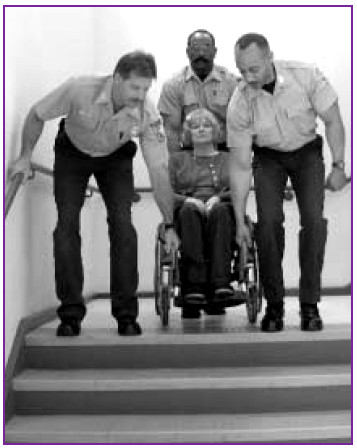
Take a really close look at the photograph below … and see a staircase which, in spite of all the legislation in the EU Member States, contravenes almost every accessibility-related design guideline. It is far from being an unusual scene in our European Built Environment …
Now, imagine the consequences of one, tiny slip …
Which is why our concern must be with Accessibility for All … which includes consciously thinking about children under the age of 5 years, women in the later stages of pregnancy, and frail older people (not all older people !) … and how they use and interact with their surroundings.
In addition, however … our attention must also turn to the large numbers of people, in all of our societies, with health conditions which result in serious impairments, activity limitations and participation restrictions. As a prime example, consider the Big-4 Non-Communicable Diseases (NCD’s): Cardiovascular Diseases (e.g. heart attacks and stroke), Cancers, Diabetes, and Chronic Lung Diseases.
These 4 NCD’s – targeted in a World Health Organization (WHO) Global NCD Campaign - share health risk factors (tobacco use, unhealthy diet, lack of physical activity, harmful alcohol use) … cause more than 36 million deaths annually (almost 80 % of deaths, from such diseases, occur in low and middle-income countries) … and result in a high proportion of disability (66.5 % of all years lived with disability in low and middle income countries).
NCD’s can limit one or more of a person’s major life and living activities … such as walking, eating, communicating, and caring-for-oneself. Examples of common NCD-related impairments include paralysis due to stroke, and amputation as a result of diabetic neuropathy.
When Easily Assimilated Signage IS Essential in Buildings …
Good Architectural Design IS ‘intuitive and obvious’ for building users … design characteristics which are critical in the case of Fire Engineering Design. However, what is intuitive and obvious in Ireland may not be so intuitive and obvious in Turkey … and what is intuitive and obvious in Europe will certainly not be intuitive and obvious in Africa, India, or China.
Architectural & Fire Engineering Design must, therefore, be adapted to Local conditions … culture, social need, etc., etc.
When a building is NOT ‘intuitive and obvious’ for the broad range of potential building users … easily assimilated signage IS essential …
International Standard ISO 21542: ‘Building Construction – Accessibility & Usability of the Built Environment’ was published in December 2011, as a full standard. In its Introduction, ISO 21542 is linked to the U.N. Convention on the Rights of Persons with Disabilities (CRPD) … almost like an umbilical cord.
The scope of ISO 21542 covers public buildings. The Accessibility Agenda in the U.N. Convention is very broad … so much standardization work remains to be completed at international level.
Concerning Accessibility Symbols and Signs … reference should be made to ISO 21542: Clause 41 – Graphical Symbols … and on Pages 106, 107, 108, and 109 … the following will be found:
- Figure 66 – Accessible Facility or Entrance ;
- Figure 67 – Sloped or Ramped Access ;
- Figure 68 – Accessible Toilets (male & female) ;
- Figure 69 – Accessible Toilets (female) ;
- Figure 70 – Accessible Toilets (male) ;
- Figure 71 – Accessible Lift / Elevator ;
- Figure 72 – Accessible Emergency Exit Route.
I use the word ‘accessibility’, and not ‘access’ … because Accessibility has been defined in ISO 21542 as including … ‘access to buildings, circulation within buildings and their use, egress from buildings in the normal course of events, and evacuation in the event of an emergency’.
A note at the beginning of the standard also clarifies that Accessibility is an independent activity, i.e. assistance should not be necessary … and that there should be an assurance of individual health, safety and welfare during the course of those (accessibility-related) activities.
During the very long gestation of ISO 21542, an overwhelming consensus emerged in favour of using the term Accessibility for All … thereby sidestepping the thorny issue of different design philosophies which are described as being accessibility-related but, in practice, are limited and/or no longer fit-for-purpose.
The Accessibility Symbol used throughout ISO 21542 is shown above. I know that a small group of people from different countries worked very hard on this particular part of the standard. My only contribution was in relation to the inclusion of Figure 72, concerning Fire Evacuation.
This ‘accessibility’ symbol is an attractive, modern and, of course, abstract representation of a concept … a person with an activity limitation using a wheelchair. The symbol succeeds very well in communicating that concept.
However … as an Accessibility for All Symbol … encompassing people with other than functional impairments, e.g. hearing and visual impairments … and children under the age of 5 years, women in the later stages of pregnancy, frail older people … and people with the four main types of non-communicable disease discussed above … is this symbol, also, limited and no longer fit-for-purpose ??
.
.
Shown next, above, is the proposal for a new Area of Rescue Assistance Sign … which is contained in ISO 7010:2011 / FDAM 115 (2013). While it is nice to finally see this Safety Sign appear in the mainstream of safety signage … the title being proposed for the sign and the explanatory texts which accompany it are very problematic …
- The technical term being proposed – Evacuation Temporary Refuge – is too long and too difficult to understand ;
- The explanatory texts which accompany this Sign are very confusing and misleading.
This problem has arisen because the people who drafted ISO 7010:2011 / FDAM 115 (2013) hadn’t a bull’s notion that ISO 21542 even existed !
In ISO 21542, we use the term Area of Rescue Assistance … which is easy for everybody to understand, including building users, building managers and firefighters, etc., etc.
We also explained, in ISO 21542, that a Place of Safety is a remote distance from the building … not anywhere inside the building !
.
Mainstreaming Disability …
U.N. CRPD – Preamble
(g) Emphasizing the importance of mainstreaming disability issues as an integral part of relevant strategies of sustainable development,
As ‘disability’ moves closer towards … and is integrated and fully included in the ‘mainstream’ of sustainable community life and living … it is absolutely imperative that individuals and organizations who make up the Disability Sector become much more cohesive (far less fractious within) … that they begin to fully understand the practices and procedures of the mainstream … and actively and robustly engage with that mainstream.
It is ridiculous, for example, that a large amount of the Sector’s energy is still being diverted into meaningless meditations and endless tracts on whether it is ‘universal design’, or ‘design-for-all’, or ‘inclusive design’, or ‘facilitation design’, etc … when an entirely new design paradigm is being demanded by a world (our small planet when seen from the moon !), which is experiencing enormous levels of human poverty, natural resource shortages, human rights violations, and severe weather events. The overriding priority must be ‘real’ implementation … Effective Accessibility for All !
.

Colour photograph – ‘Earthrise’ – taken from the Apollo 14 Spacecraft … showing a bright colourful Earth, in a dense black ‘sky’, rising above the pale surface of the Moon. Click to enlarge.
NASA’s Gateway to Astronaut Photography of Earth
.
And … Effective Accessibility for All is but one component of …
‘Social Wellbeing for All in a Sustainable Built Environment’
Refer also to …
2004 Rio de Janeiro Declaration on Sustainable Social Development, Disability & Ageing
.
.
END
HASHI (Chopsticks) – Aspects of Japan’s Fascinating Culture (I)
2013-02-20: Japan … so far from Western Europe … is at a critical juncture in its history. Soon to be overshadowed by a very large neighbour, China … it is still occupied by the United States of America (a fading imperialistic entity), which is quietly insisting that it become a nuclear power in the region … a story without a happy ending !
However … ‘Real’ Japan is a complete culture shock … both interesting and fascinating at the same time.
This is a bluffer’s guide to Japanese Chopsticks … ‘HASHI‘, in Japanese …

Colour image showing the proper size for Japanese Chopsticks (Hashi), which is related to the size of the user’s hand … and the Grip to be used with Chopsticks … which should be firm, but gentle and flexible. Click to enlarge.

Colour photograph showing an array of Japanese Chopsticks (Hashi), with Accessories. A simple way to differentiate between Japanese Chopsticks and Chinese Chopsticks … Japanese Chopsticks have pointed tips. Click to enlarge.
.
END
‘Sustainable Fire Engineering for All’ – SDI’s Professional Service
2012-12-14 & 2012-12-30: Further to this distressing incident … which exposed a profound lack of awareness, care and competence within the general fire safety industrial sector …
Recent Fatal Fire at a Disabled Workshop in SW Germany
… this is how we would like to help you … whether you are an individual, or an organization … whether you are located in Ireland, Italy or Turkey … some other part of Europe, the Arab Gulf Region, India, Japan, China … or wherever !
And … we can, if requested or necessary, work in collaboration with local partners in those different geographical regions.
- FireOx International is the Fire Engineering Division of Sustainable Design International Ltd. (SDI) -
.

Colour photograph showing the 2 World Trade Center Towers, in New York City, immediately after the second plane impact. The mechanical damage arising from such a plane impact had been considered in the Initial Building Design Process; incredibly, any type of Fire Incident had not ! In the case of both towers and within a short period of time, Fire-Induced Progressive Damage resulted in Disproportionate Damage, and eventual Total Building Collapse. The horror and carnage at the World Trade Center Complex also caused enormous long-term damage to the economy of Manhattan … and had a very significant adverse impact on Global Financial Markets. Click to enlarge.
.
Introduction
Fundamentally, the 9-11 World Trade Center Incident in New York (2001) was an Extreme ‘Real’ Fire Event. It presented the International Fire Engineering Community with a catastrophic failure in conventional practices and procedures related to:
- Fire Engineering, Structural Engineering, and Architectural Design ;
- Human Building Management Systems ;
- Emergency Response by Firefighters, Rescue Teams, and Medical Personnel ;
- National and Local Organizations Having Authority or Jurisdiction (AHJ’s) ;
… and with the serious problem of entirely inadequate Fire Safety Objectives in the building legislation, model codes and design standards of the most economically advanced countries in the world.
Those people who understand the building design process, and have experience as construction practitioners, have long realised that the lessons from 9-11 must be applied across the full spectrum of building types … not just to tall buildings. Right up to the present day, unfortunately, many people in the International Fire Engineering Community are either unwilling, or unable, to do this.
Furthermore … Fire Engineering, Architectural Design and Structural Engineering must, of urgent necessity, be seamlessly conjoined … with the aim of removing misunderstandings and the wide gaps in client service delivery between the different disciplines.
In 2002, a series of Long-Term 9-11 Survivor Health Studies commenced in the USA … and in 2005 and 2008, the U.S. National Institute of Standards and Technology (NIST) issued a series of Post 9-11 Critical Recommendations concerning the design, construction, management and operation of buildings.
At FireOx International … we have fully integrated this essential design guidance into our frontline fire engineering and architectural practice … we have developed unique and practical solutions for worldwide application, some of which appear in International Standard ISO 21542: ‘Building Construction – Accessibility & Usability of the Built Environment’, published in December 2011.
.

Colour photograph showing an armed assailant during the November 2008 ‘Hive-Attack’ on Mumbai … an extraordinarily violent, co-ordinated assault on the largest (and wealthiest) city in India, which involved the strategic targeting of built environment Places of Public Resort, Iconic Buildings, High-Rise Buildings, Buildings having a Critical Function, Transport Infrastructure and Service Utilities … with the aim of causing widespread terror among the general population, including tourists, and disruption to the city’s important economic environment. Click to enlarge.
.
FireOx International’s Commitment to You
As a necessary response to the New 21st Century Paradigm of Real Extreme Event in a Built Environment which is becoming more and more complex … is subject to climate change and severe weather events … and is vulnerable to malign and malevolent disruption -
WE are committed to … the implementation of a Sustainable Human Environment which is Fire Safe and Secure for All, meaning that an ‘appropriate project-specific fire safety level’ is our fire engineering objective, with ‘human health protection’ targeted as a priority … through the use of innovative, reliability-based and person-centred sustainable design practices and procedures.
.
What is an ‘Appropriate Fire Safety Level’ in Your Building or Facility ?
It is rarely, if ever, explained to clients/client organizations that the Minimal Fire Safety Objectives in building legislation are focused solely on protecting the ‘interests’ of society, not those of the individual … are, quite often, inadequate and/or flawed … and are, always, revised only after the latest tragedy !
To properly protect Your Interests as a client/client organization … we strongly advise that the Appropriate Level of Fire Safety in Your Building or Facility should exceed the minimal level of safety required by building legislation. We would also caution that, in many jurisdictions (e.g. India), compliance with national building legislation is voluntary.
Which raises the issues of whether or not you will actually get what you pay for, and whether or not the Fire Protection Measures in Your Building or Facility are reliable (in other words, will they perform as intended at the time of a ‘real’ fire, which may occur at any time in a building’s long life cycle) !?! Competent Technical Control of Design and Construction, independent of the design and construction organization(s), is essential.
You should carefully consider the following spectrum of issues which may be directly relevant to Your Project. Following a process of consultation with you, we then develop Project-Specific Fire Engineering Design Objectives … bearing in mind that you must also comply with safety at work, anti-discrimination, and environmental legislation, etc … maintain business continuity, etc … be energy efficient, etc … and be socially responsible, etc …
- Protection of the Health of All Building Users … including People with Activity Limitations (2001 WHO ICF), Visitors to the building or facility who may be unfamiliar with its layout, and Contractors or Product/Service Suppliers temporarily engaged in work or business transactions on site ;
- Protection of Property from Loss or Damage … including the Building or Facility, its Contents, and Adjoining or Adjacent Properties ;
- Safety of Firefighters, Rescue Teams and Other Emergency Response Personnel ;
- Ease and Reasonable Cost of ‘Effective’ Reconstruction, Refurbishment or Repair Works after a Fire ;
- Sustainability of the Human Environment (social - built - virtual - economic) … including Fitness for Intended Use and Life Cycle Costing of fire engineering related products and systems, etc … fixed, installed or otherwise incorporated in the building or facility ;
- Protection of the Natural Environment from Harm, i.e. Adverse or Damaging Impacts.
.
FireOx International – Our Fire Engineering Services
-
WE will advise you on Fire Safety Policy, Fire Safety Strategy Development, Fire Safety Implementation … and, whether you are within or from outside the European Union, on CE Marking of Fire Protection Related Construction Products ;
-
WE understand the process of Design, particularly the new language of Sustainable Design … and we will produce Creative Fire Engineering Solutions for Your Project ;
-
WE are thoroughly familiar with the intricacies of Building Sites … and we will verify and/or validate Design Compliance during construction, and at project completion … and, if requested or necessary, as a completely Independent Technical Controller ;
-
WE communicate easily and effectively with other Professional Design Disciplines, including architects and structural engineers … and we will act as fully participating members of Your Project Design & Construction Team … and, if requested or necessary, as the Design Professional in Responsible Charge ** ;
-
WE practice in accordance with a comprehensive Professional Code of Ethics.
.
Sustainable Fire Engineering Solutions ?
- Are adapted to Local Geography, Climate/Climate Change, Social Need, Culture, Economy … and Severe Events (e.g. earthquakes, flooding) ;
- Are ‘Reliability-Based’, i.e. that design process based on practical experience, competence and an examination of real extreme events, e.g. 2001 WTC 9-11 & 2008 Mumbai Attacks, and 2011 Fukushima Nuclear Incident … rather than theory alone ;
- Are ‘Person-Centred’, i.e. that design process which places ‘real’ people at the centre of creative endeavours and gives due consideration to their responsible needs, and their health, safety, welfare and security in the Human Environment.
.
FireOx International’s Contact Information
E-Mail: cjwalsh@sustainable-design.ie
International Phone: +353 1 8386078 / National Phone: (01) 8386078
.
.
Important Note: This Post should be read in conjunction with an earlier Post …
Sustainable Design International Ltd. – Our Practice Philosophy
It is there, not here, that we define Sustainable Human & Social Development … and describe how our Practice is responding to this open, intricate, dynamic, and still evolving concept. The resulting transformation in how frontline services are provided to our Clients/Client Organizations ensures a much more comfortable ‘fit’ to their needs … and a greater level of protection, safety and security for society !
.
[ ** 2005 NIST(USA) Final Report on 9-11 World Trade Center 1 & 2 Tower Collapses
- Footnote 49 -
... the Design Professional in Responsible Charge - usually the lead architect - ensures that the (Design) Team Members use consistent design data and assumptions, co-ordinates overlapping specifications, and serves as the liaison with enforcement and review officials, and with the client or client organization. ]
.
.
END
‘Sustainable Accessibility for All’ – An SDI Professional Service
2012-11-30: Related specifically to my 2 Previous Posts on 27 November 2012 & 28 November 2012 … this is how we would like to help you … whether you are an individual, or an organization … whether you are located in Ireland, Italy or Turkey … some other part of Europe, the Arab Gulf Region, India, Japan, China … or wherever !
And … we can, if requested or necessary, work in collaboration with local partners in those different geographical regions.
Introduction
For many Weak and Vulnerable People, today’s Complex Human Environment is inaccessible and unsafe … a hostile ‘reality’ which prevents independent functioning and participation in a local community; it is a blatant denial of their human rights.
Restrictions on Social Participation, e.g. physical barriers, sloppy user-unfriendly management procedures, discrimination, stigma, etc … also limit the Use Potential of buildings, transportation systems, public spaces and other facilities … shortening product life cycles.
These factors impose a large, negative cost burden on society generally … and on you, as an individual … or as an organization, whether private or public. It is bad business !
.

Colour photograph showing a main circulation route at a Railway Station in Kyoto, Japan … with combined staircase and elevators. Notice, in particular, the dual height staircase handrails, for adults and children … the strong contrast of the floor tactile information (a ‘directional’ indicator leading to a ‘hazard’ indicator, at the top of the staircase) compared to the rest of the floor, with its broad non-slip strips … and, finally, arrows used to control staircase circulation flows at peak periods (down to the right, up on the left). Photograph taken by CJ Walsh. 2010-04-27. Click to enlarge.
.
SDI’s Commitment to You
As a necessary response to the New Paradigm of ‘Accessibility’ mandated by the United Nations Convention on the Rights of Persons with Disabilities (CRPD), and elaborated in greater detail by International Standard ISO 21542 : 2011 -
WE are committed to … the implementation of a Sustainable Human Environment which is Effectively Accessible for All … through the use of innovative, person-centred and reliability-based sustainable design practices and procedures.
.

Colour photograph showing a Large Tactile Floor Plan at one of the entrances to the terminal building at Ciampino Airport in Rome, Italy. Notice, in particular, the use of an easily understandable type font combined with the high contrast between white characters and blue background … the presentation of information in three different languages: Italian, English and Braille … and, finally, the panel is mounted at a convenient height and angle. Photograph taken by CJ Walsh. 2011-10-26. Click to enlarge.
.
SDI’s Accessibility Services
- WE will advise you on Accessibility Policy, Accessibility Strategy Development, Accessibility Implementation … and, whether you are within or from outside the European Union, on CE Marking of Accessibility Related Construction Products ;
- WE understand the process of Design, particularly the new language of Sustainable Design … and we will produce Creative Accessibility Solutions for Your Project ;
- WE are thoroughly familiar with the intricacies of Building Sites … and we will verify and/or validate Design Compliance during construction, and at project completion … and, if requested or necessary, as a completely Independent Technical Controller ;
- WE communicate easily and effectively with other Professional Design Disciplines, including fire engineers … and we will act as fully participating members of Your Project Design & Construction Team ;
- WE practice in accordance with a comprehensive Professional Code of Ethics.
.
Sustainable Accessibility Solutions ?
- Are adapted to Local Geography, Climate/Climate Change, Social Need, Culture, Economy … and Severe Events (e.g. earthquakes and flooding) ;
- Are ‘Person-Centred’, i.e. that design process which places ‘real’ people at the centre of creative endeavours and gives due consideration to their responsible needs, and their health, safety, welfare and security in the Human Environment ;
- Are ‘Reliability-Based’, i.e. that design process based on practical experience, competence and an examination of real extreme events, e.g. 2001 WTC 9-11 & 2008 Mumbai Attacks, and 2011 Fukushima Nuclear Incident … rather than theory alone.
.
SDI’s Contact Information
E-Mail: cjwalsh@sustainable-design.ie
International Phone: +353 1 8386078 / National Phone: (01) 8386078
.
.
Important Note: This Post should be read in conjunction with an earlier Post …
Sustainable Design International Ltd. – Our Practice Philosophy
It is there, not here, that we define Sustainable Human & Social Development … and describe how our Practice is responding to this open, intricate, dynamic, and still evolving concept. The resulting transformation in how frontline services are provided to our Clients/Client Organizations ensures a much more comfortable ‘fit’ to their needs … and a greater level of protection, safety and security for society !
.
.
END
Accessibility-for-All … New Context … Same Old Problems !
2012-04-21: The context for considering and properly implementing Accessibility-for-All has changed … changed utterly … but some old problems persist, and stubbornly remain …
NEW INTERNATIONAL CONTEXT
A. At the time of writing, the United Nations Convention on the Rights of Persons with Disabilities (UN CRPD) has been ratified by 111 Countries and the European Union.
Concerning Accessibility of the Built Environment … UN CRPD Preamble Paragraph (g), and Articles 9 - 11 - 12 are the most immediately relevant. These texts can be easily found elsewhere on this BLOG … please use the ‘search’ facility at the top, right-hand corner of the WebPage.
With the innovative, and internationally accepted, understanding of ‘Accessibility’ – as distinct from ‘Access’ – contained in ISO 21542 : 2011 … the concept meaning: approach and entry to a building, circulation within and use of all the building’s facilities, egress from and removal from the building’s vicinity during normal circumstances, or evacuation in the event of an emergency and movement – via a safe and accessible route – to a place of safety which is remote from the building … it is now possible to deal with Fire Evacuation of Buildings through Article 9 (Accessibility) of the UN CRPD, where it is more in scale … more at home, so to speak … rather than through Article 11 (Situations of Risk & Humanitarian Emergencies), which had to be the case before.
B. ISO 21542: ‘Building Construction – Accessibility & Usability of the Built Environment’ … is the important new International Standard mentioned above. It was published in December 2011.
Ireland has no National Standard (or Code of Practice) on Accessibility. So, in the absence of an appropriate Harmonized European Standard, ISO 21542 must take precedence over the National Standards of any other European Union Member State.
Here, however, there is a very large fly in the ointment … the guidance text in the 2010 Technical Guidance Document M has been ‘lifted’, almost en masse, from a British National Standard on ‘Access’ … not ‘Accessibility’. And this flawed process has imported some serious errors into Irish Accessibility Design and Construction Practice … despite my warnings to the relevant authorities. Please refer back to this post , dated 2009-06-14.
Scope of ISO 21542 : 2011
ISO 21542:2011 specifies a range of requirements and recommendations for many of the elements of construction, assemblies, components and fittings which comprise the built environment. These requirements relate to the constructional aspects of access to buildings, to circulation within buildings, to egress from buildings in the normal course of events and evacuation in the event of an emergency. It also deals with aspects of accessibility management in buildings.
ISO 21542:2011 contains provisions with respect to features in the external environment directly concerned with access to a building or group of buildings from the edge of the relevant site boundary or between such groups of buildings within a common site. It does not deal with those elements of the external environment, such as public open spaces, whose function is self-contained and unrelated to the use of one specific building, nor does it deal with single family dwellings, other than those circulation spaces and fittings that are common to two or more such dwellings.
C. Of direct commercial interest within the European Union (and in any countries outside the EU who wish to trade with the EU and the European Economic Area) … Accessibility-Related Construction Products are now included in the framework of the (relatively) new European Union Regulation No.305/2011 of the European Parliament and of the Council, of 9 March 2011, laying down Harmonized Conditions for the Marketing of Construction Products and Repealing Council Directive 89/106/EEC. [The old EU Directive 89/106/EEC has been repealed ... it is finished, it is gone, it is no more ! There will, however, be a suitable transition period from old to new.]
Construction Product (EU Reg.305/2011) means any product or kit which is produced and placed on the market for incorporation in a permanent manner in construction works or parts thereof and the performance of which has an effect on the performance of the construction works with respect to the basic requirements for construction works.
Construction Works (EU Reg.305/2011) means buildings and civil engineering works.
Basic Requirement for Construction Works No. 4 in Annex I of the new EU Regulation 305/2011, states the following …
Safety and Accessibility in Use
The construction works must be designed and built in such a way that they do not present unacceptable risks of accidents or damage in service or in operation such as slipping, falling, collision, burns, electrocution, injury from explosion and burglaries. In particular, construction works must be designed and built taking into consideration accessibility and use for disabled persons.
This is a suitable location for ‘Accessibility’ in Annex I … intimately connected to ‘Safety in Use’. However, there is one potential drawback. Specifying the level of safety in an EU Member State is the sole responsibility of the Authorities Having Jurisdiction (AHJ’s) in that Member State.
An Accessible Building is a Safer Building … but a Safe Building is not necessarily ‘Accessible’. ‘Accessibility’ is a completely different concept to ‘Safety’. EU Member States have no basis in EU Law … no justification whatever … for arbitrarily deciding on which level of ‘Accessibility’ is appropriate within their territories !
.
SAME OLD PROBLEMS
With all of this New International Context on Accessibility finally in place … I continue to encounter the same old problems …
1. Bad Product Design
An enormous quantity of cheap, atrociously designed … you could almost use the word ‘ugly’ … Accessibility-Related Construction Products are imported every year into Ireland, from Britain. This is one good reason, although not a very satisfactory reason, why architects hate ‘accessibility’ in buildings. Building users notice fittings and fixtures … and if the fittings and fixtures are ugly … the building is ugly ! But occupational therapists, for example, are also specifying these types of products every day of the week here.
This has got to stop. Proper attention must be paid to Good Design of Accessibility-Related Construction Products. An Accessible Building does not have to look like a Hospital Ward ! And Good Design does not have to mean ‘expensive’ !!
I have seen many well designed Accessibility-Related Construction Products, available in the EU marketplace, which have been manufactured in countries such as France, Germany, Italy, and China.
Why can we not access these products in Ireland ??
2. No Product Approval
The National Building Regulations/Codes of EU Member States … and all EU Safety at Work legislation … demand that building products and systems must be properly shown to be ‘fit for their intended use in the location of use’. End of story … very simple ! Regrettably, few people take any notice of this legal requirement.
Late last year, however, I encountered a Chinese Company which manufactured some nicely designed Accessibility-Related Construction Products. I suggested to one of their sales personnel that, in order to place their products on the market anywhere in the European Union (or the European Economic Area) … there was an urgent need to update their existing ‘CE Mark’ Product Approval Documentation. When I checked more closely, this Documentation was dubious. I then suggested that they should place a correct, up-to-date and relevant CE Mark on their construction products … as a matter of priority. And I received the following reply …
” i’d like to suggest that maybe you can pay for the cost to do this CE, and after you place orders in our factory, we promise return that back to you, and if you like, maybe you can act as our agency in Ireland, will you ? “
[ The sum of money being discussed here was €1,000.]
This proposal was off-the-wall, as we say here in Ireland. But, I found it impossible to get annoyed … because this strange and weird understanding of the CE Mark, particularly in relation to Accessibility-Related Construction Products, is rife among European Manufacturers also … and European Notified Bodies. How crazy is that ?
Perhaps my most unusual experience, back in the mid-1990′s, was having to explain to a Manager in a TÜV Laboratory, in Germany, that a Full Test Report must be issued to a Test Sponsor … after the test(s) has/have been completed. This task required two to three hours of heated discussion !
And … in the absence of any reference to ‘Accessibility’ in the now repealed EU Directive 89/106/EEC … I have encountered some European Manufacturers of Accessibility-Related Construction Products … who, being fully aware of the value of a CE Mark, have used the backdoor method of the EU Medical Devices Directive in order to obtain a CE Mark. And these were definitely not medical devices !
There is no effective control over the CE Marking of Construction Products within the European Union. This is no reason to ignore the system … or to abuse the system.
However … if many more people paid attention to the legal requirement, and necessity, of Proper Product Approval and the CE Marking of Accessibility-Related Construction Products … and the professional duty and responsibility to check that compliance/conformity is properly shown … we would have a more Accessible and much Safer Built Environment !!!
.
.
END
OVE ARUP & Hong Kong’s New Fire Safety Code of Practice
2012-02-18: It will be of interest to people in this part of the world that Hong Kong has introduced a New Code of Practice on Fire Safety in Buildings, which will come into effect from 1 April 2012. The reason for this interest will be strange and unusual …
Hong Kong Buildings Department
2011 Hong Kong Code of Practice for Fire Safety in Buildings
Click the Link Above to read and/or download PDF File (3.96 Mb)
The following extract from the Foreward (paragraph #3) to this Code of Practice explains how it came to be developed … and then issued back in September 2011 …
This Code of Practice may be cited as the Code of Practice for Fire Safety in Buildings. It is prepared and issued by the Buildings Department on the basis of the consultancy study on fire engineering approach and fire safety in buildings. The consultancy study was conducted by Ove Arup & Partners Hong Kong Ltd., commissioned by the Buildings Department, and was supervised by a Steering Committee comprising representatives of professional institutions and other stakeholders of the building industry, as well as other Government Departments.
.
It so happens that, here, a few weeks ago … I was wondering how the United Nations Convention on the Rights of Persons with Disabilities (CRPD) was being implemented in a number of countries which had ratified it. China ratified the Convention on 1 August 2008. Once again, this is Article 11 …
UN CRPD Article 11 – Situations of Risk & Humanitarian Emergencies
States Parties shall take, in accordance with their obligations under international law, including international humanitarian law and international human rights law, all necessary measures to ensure the protection and safety of persons with disabilities in situations of risk, including situations of armed conflict, humanitarian emergencies and the occurrence of natural disasters.
[ Note: An outbreak of fire in a building is a situation of serious risk for all vulnerable building users ! ]
So … what has been the response of Hong Kong to this issue … and to the voluntary obligation which China has accepted, under International Law, to comply with Article 11 of the UN CRPD ?
The issue has been completely ignored in the New Code of Practice !
.
.
END
Post-9/11 & Post-Mumbai Fire Engineering – What Future ?
Previous Posts in This Series …
2011-10-25: NIST’s Recommendations on the 9-11 WTC Building Collapses … GROUP 1. Increased Structural Integrity – Recommendations 1, 2 & 3 (out of 30)
2011-11-18: NIST WTC Recommendations 4-7 > Structural Fire Endurance … GROUP 2. Enhanced Fire Endurance of Structures – Recommendations 4, 5, 6 & 7
2011-11-24: NIST WTC Recommendations 8-11 > New Design of Structures … GROUP 3. New Methods for Fire Resisting Design of Structures – Recommendations 8, 9, 10 & 11
2011-11-25: NIST WTC Recommendations 12-15 > Improved Active Protection … GROUP 4. Improved Active Fire Protection – Recommendations 12, 13, 14 & 15
2011-11-30: NIST Recommendations 16-20 > Improved People Evacuation … GROUP 5. Improved Building Evacuation – Recommendations 16, 17, 18, 19 & 20
2011-12-04: NIST WTC Recommendations 21-24 > Improved Firefighting … GROUP 6. Improved Emergency Response – Recommendations 21, 22, 23 & 24
2011-12-07: NIST WTC Recommendations 25-28 > Improved Practices … GROUP 7. Improved Procedures and Practices – Recommendations 25, 26, 27 & 28
2011-12-08: NIST WTC Recommendations 29-30 > Improved Fire Education … GROUP 8. Education and Training – Recommendations 29 & 30 (out of 30)
.

Colour image showing 'The Cloud' Residential Tower Project, in Seoul (South Korea) ... which will be completed in 2015. Design by MVRDV Architects, The Netherlands. Click to enlarge.
.
2011-12-15: You know what is coming soon … so Merry Christmas & Happy New Year to One and All !!
.
1. There were 2 Important Reasons for undertaking this Series of Posts …
(a) The General Public, and particularly Client Organizations, should be facilitated in directly accessing the core content of the 2005 NIST WTC Recommendations. Up to now, many people have found this to be a daunting task. More importantly, I also wanted to clearly show that implementation of the Recommendations is still proceeding far too slowly … and that today, many significant aspects of these Recommendations remain unimplemented. Furthermore, in the case of some recent key national standards, e.g. British Standard BS 9999, which was published in 2008 … the NIST Recommendations were entirely ignored.
As a golden rule … National Building Codes/Regulations and National Standards … cannot, should not, and must not … be applied without informed thought and many questions, on the part of a building designer !
(b) With the benefit of hindsight, and our practical experience in FireOx International … I also wanted to add a necessary 2011 Technical Commentary to the NIST Recommendations … highlighting some of the radical implications, and some of the limitations, of these Recommendations … in the hope of initiating a much-needed and long overdue international discussion on the subject.

Colour photograph showing the Taipei 101 Tower, in Taiwan ... which was completed in 2004. Designed by C.Y. Lee & Partners Architects/Planners, Taiwan. Click to enlarge.
” Architecture is the language of a culture.”
” A living building is the information space where life can be found. Life exists within the space. The information of space is then the information of life. Space is the body of the building. The building is therefore the space, the information, and the life.”
C.Y. Lee & Partners Architects/Planners, Taiwan
[ This is a local dialect of familiar Architectural Language. However, the new multi-aspect language of Sustainable Design is fast evolving. In order to perform as an effective and creative member of a Trans-Disciplinary Design & Construction Team ... can Fire Engineers quickly learn to communicate on these wavelengths ?? Evidence to date suggests not ! ]
.
2. ‘Climate Change’ & ‘Energy Stability’ – Relentless Driving Forces for Sustainable Design !
Not only is Sustainable Fire Engineering inevitable … it must be ! And not at some distant point in the future … but now … yesterday !! There is such a build-up of pressure on Spatial Planners and Building Designers to respond quickly, creatively, intuitively and appropriately to the relentless driving forces of Climate Change (including climate change mitigation, adaptation, and severe weather resilience) and Energy Stability (including energy efficiency and conservation) … that there is no other option for the International Fire Science and Engineering Community but to adapt. Adapt and evolve … or become irrelevant !!
And one more interesting thought to digest … ‘Green’ is not the answer. ’Green’ looks at only one aspect of Sustainable Human & Social Development … the Environment. This is a blinkered, short-sighted, simplistic and ill-conceived approach to realizing the complex goal of a Safe and Sustainable Built Environment. ‘Green’ is ‘Sustainability’ for innocent children !!

Colour image showing the Shanghai Tower Project, in China ... which will be completed in 2014. Design by Gensler Architects & Planners, USA. Click to enlarge.
.
(a) Organization for Economic Co-Operation & Development (OECD) – 2012′s Environmental Outlook to 2050
Extract from Pre-Release Climate Change Chapter, November 2011 …
‘ Climate change presents a global systemic risk to society. It threatens the basic elements of life for all people: access to water, food production, health, use of land, and physical and natural capital. Inadequate attention to climate change could have significant social consequences for human wellbeing, hamper economic growth and heighten the risk of abrupt and large-scale changes to our climatic and ecological systems. The significant economic damage could equate to a permanent loss in average per capita world consumption of more than 14% (Stern, 2006). Some poor countries would be likely to suffer particularly severely. This chapter demonstrates how avoiding these economic, social and environmental costs will require effective policies to shift economies onto low-carbon and climate-resilient growth paths.’
(b) U.N. World Meteorological Organization (WMO) Greenhouse Gas Bulletin No.7, November 2011
Executive Summary …
The latest analysis of observations from the WMO Global Atmosphere Watch (GAW) Programme shows that the globally averaged mixing ratios of Carbon Dioxide (CO2), Methane (CH4) and Nitrous Oxide (N2O) reached new highs in 2010, with CO2 at 389.0 parts per million (ppm), CH4 at 1808 parts per billion (ppb) and N2O at 323.2 ppb. These values are greater than those in pre-industrial times (before 1750) by 39%, 158% and 20%, respectively. Atmospheric increases of CO2 and N2O from 2009 to 2010 are consistent with recent years, but they are higher than both those observed from 2008 to 2009 and those averaged over the past 10 years. Atmospheric CH4 continues to increase, consistent with the past three years. The U.S. National Oceanic & Atmospheric Administration (NOAA) Annual Greenhouse Gas Index shows that from 1990 to 2010 radiative forcing by long-lived Greenhouse Gases (GHG’s) increased by 29%, with CO2 accounting for nearly 80% of this increase. Radiative forcing of N2O exceeded that of CFC-12, making N2O the third most important long-lived Greenhouse Gas.
(c) International Energy Agency (IEA) – World Energy Outlook, November 2011
Extract from Executive Summary …
‘ There are few signs that the urgently needed change in direction in global energy trends is underway. Although the recovery in the world economy since 2009 has been uneven, and future economic prospects remain uncertain, global primary energy demand rebounded by a remarkable 5% in 2010, pushing CO2 emissions to a new high. Subsidies that encourage wasteful consumption of fossil fuels jumped to over $400 billion. The number of people without access to electricity remained unacceptably high at 1.3 Billion, around 20% of the world’s population. Despite the priority in many countries to increase energy efficiency, global energy intensity worsened for the second straight year. Against this unpromising background, events such as those at the Fukushima Daiichi Nuclear Power Plant and the turmoil in parts of the Middle East and North Africa (MENA) have cast doubts on the reliability of energy supply, while concerns about sovereign financial integrity have shifted the focus of government attention away from energy policy and limited their means of policy intervention, boding ill for agreed global climate change objectives.’

Colour image showing the One World Trade Center Project, in New York City (USA) ... which will be completed in 2013. Design by Skidmore Owings & Merrill, Architects/Planners, USA. Click to enlarge.
[ Not just in the case of Tall, Super-Tall and Mega-Tall Buildings ... but the many, many Other Building Types in the Built Environment ... are Building Designers implementing the 2005 & 2008 NIST WTC Recommendations ... without waiting for Building and Fire Codes/Regulations and Standards to be properly revised and updated ?? Evidence to date suggests not ! ]
.
3. Separate Dilemmas for Client Organizations and Building Designers …
As discussed earlier in this Series … the Fire Safety Objectives of Building and Fire Codes/Regulations are limited to:
- The protection of building users/occupants ; and
- The protection of property … BUT only insofar as that is relevant to the protection of the users/occupants ;
… because the function of Building and Fire Codes is to protect Society. Well, that is supposed to be true ! Unfortunately, not all Codes/Regulations are adequate or up-to-date … as we have been observing here in these posts.
.
Just taking the Taipei 101 Tower as an example, I have very recently sent out three genuine, bona fide e-mail messages from our practice …
2011-12-08
Toshiba Elevator & Building Systems Corporation (TELC), Japan.
To Whom It May Concern …
Knowing that your organization was involved in the Taipei 101 Project … we have been examining your WebSite very carefully. However, some important information was missing from there.
For our International Work … we would like to receive technical information on the Use of Elevators for Fire Evacuation in Buildings … which we understand is actually happening in the Taipei Tower, since it was completed in 2004.
The Universal Design approach must also be integrated into any New Elevators.
Can you help us ?
C.J. Walsh
[2012-01-10 ... No reply yet !]
.
2011-12-12
Mr. Thomas Z. Scarangello P.E. – Chairman & CEO, Thornton Tomasetti Structural Engineers, New York.
Dear Thomas,
Knowing that your organization was involved in the structural design of the Taipei 101 Tower, which was completed in 2004 … and in the on-going design of many other iconic tall, super-tall and mega-tall buildings around the world … we have been examining your Company Brochures and WebSite very carefully. However, some essential information is missing.
As you are certainly aware … implementation of the 2005 & 2008 National Institute of Standards & Technology (NIST) Recommendations on the Collapse of WTC Buildings 1, 2 & 7, in New York, on 11 September 2001 … is still proceeding at a snail’s pace, i.e. very slowly. Today, many significant aspects of NIST’s Recommendations remain unimplemented.
For our International Work … we would like to understand how you have responded directly to the NIST Recommendations … and incorporated the necessary additional modifications into your current structural fire engineering designs.
Many thanks for your kind attention. In anticipation of your prompt and detailed response …
C.J. Walsh
[2012-01-10 ... No reply yet !]
.
2011-12-14
Mr. C.Y. Lee & Mr. C.P. Wang, Principal Architects – C.Y. Lee & Partners Architects/Planners, Taiwan.
Dear Sirs,
Knowing that your architectural practice designed the Taipei 101 Tower, which was completed in 2004 … and, later, was also involved in the design of other tall and super-tall buildings in Taiwan and China … we have been examining your Company WebSite very carefully. However, some essential information is missing.
As you are probably aware … implementation of the 2005 & 2008 U.S. National Institute of Standards & Technology (NIST) Recommendations on the Collapse of WTC Buildings 1, 2 & 7, in New York City, on 11 September 2001 … is still proceeding at a snail’s pace, i.e. very slowly. Today, many significant aspects of NIST’s Recommendations remain unimplemented.
For our International Work … we would like to understand how you have responded directly to the NIST Recommendations … and incorporated the necessary additional modifications into your current architectural designs.
Many thanks for your kind attention. In anticipation of your prompt and detailed response …
C.J. Walsh
[2012-01-10 ... No reply yet !]
.
So … how many Clients, or Client Organizations, are aware that to properly protect their interests … even, a significant part of their interests … it is vitally necessary that Project-Specific Fire Engineering Design Objectives be developed which will have a much wider scope ? The answer is … not many !
How many Architects, Structural Engineers, and Fire Engineers fully explain this to their Clients or Client Organizations ?
And how many Clients/Client Organizations either know that they should ask, or have the balls to ask … their Architect, Structural Engineer and Fire Engineer for this explanation … and furthermore, in the case of any High-Rise Building, Iconic Building, or Building having an Important Function or an Innovative Design … ask the same individuals for some solid reassurance that they have responded directly to the 2005 & 2008 NIST WTC Recommendations … and incorporated the necessary additional modifications into your current designs … whatever current Building and Fire Codes/Regulations do or do not say ?? A big dilemma !
.
A common and very risky dilemma for Building Designers, however, arises in the situation where the Project Developer, i.e. the Client/Client Organization … is the same as the Construction Organization. The Project Design & Construction Team - as a whole - now has very little power or authority if a conflict arises over technical aspects of the design … or over construction costs. An even bigger dilemma !!

Colour image showing the Kingdom Tower Project, in Jeddah (Saudi Arabia) ... which will be completed in 2018. Design by Adrian Smith & Gordon Gill Architecture, USA. Click to enlarge.
.
4. The Next Series of Posts – 2008 NIST WTC Recommendations
In the new year of 2012 … I will examine the later NIST Recommendations which were a response to the Fire-Induced Progressive Collapse of World Trade Center Building No.7.

Colour image showing the Signature Tower Project, in Jakarta (Indonesia) ... which will be completed in 2016. Design by Smallwood Reynolds Stewart Stewart Architects & Planners, USA. Click to enlarge.
.
5. Please … Your Comments, Views & Opinions ?!?
The future of Conventional Fire Engineering ended on the morning of Tuesday, 11 September 2001, in New York City … an engineering discipline constrained by a long heritage deeply embedded in, and manacled to, an outdated and inflexible prescriptive approach to Codes/Regulations and Standards … an approach which is irrational, ignores the ‘real’ needs of the ‘real’ people who use and/or occupy ‘real’ buildings … and, quite frankly, no longer makes any scientific sense !!
On the other hand … having confronted the harsh realities of 9/11 and the Mumbai ‘Hive’ Attacks, and digested the 2005 & 2008 NIST WTC Recommendations … Sustainable Fire Engineering … having a robust empirical basis, being ‘person-centred’, and positively promoting creativity … offers the International Fire Science and Engineering Community a confident journey forward into the future … on many diverse routes !
This IS the only appropriate response to the exciting architectural innovations and fire safety challenges of today’s Built Environment.
BUT … what do you think ?
.
.
END
NIST Recommendations 16-20 > Improved People Evacuation
Previous Posts in This Series …
2011-10-25: NIST’s Recommendations on the 9-11 WTC Building Collapses … GROUP 1. Increased Structural Integrity – Recommendations 1, 2 & 3 (out of 30)
2011-11-18: NIST WTC Recommendations 4-7 > Structural Fire Endurance … GROUP 2. Enhanced Fire Endurance of Structures – Recommendations 4, 5, 6 & 7
2011-11-24: NIST WTC Recommendations 8-11 > New Design of Structures … GROUP 3. New Methods for Fire Resisting Design of Structures – Recommendations 8, 9, 10 & 11
2011-11-25: NIST WTC Recommendations 12-15 > Improved Active Protection … GROUP 4. Improved Active Fire Protection – Recommendations 12, 13, 14 & 15
.
2011-11-30: SOME PRELIMINARY COMMENTS …
1. In the First Post of this Series, I wrote …
” As such a high level of performance is expected … indeed demanded … of a Sustainable Building … Sustainable Fire Engineering must be ‘reliability-based’ … in other words, it must have a rational, empirical and scientifically robust basis … “
Sustainable Fire Engineering must also be ‘person-centred’ … i.e. a design process (in whatever architectural or engineering discipline) which places ‘real’ people at the centre of creative endeavours and gives due consideration to their responsible needs, and their health, safety, welfare and security in the Human Environment.
In order to prolong, and if at all possible, significantly extend the Life Cycle of a Sustainable Building beyond 100 years … Fire Engineers must begin to feel at ease … and be comfortable … with the following mainstream Sustainable Design Concepts …
Flexibility: The extent to which a building interior is designed, when new, to be capable of being easily modified at any later stage during the life cycle of that building – with minimal cost and user inconvenience – because of a person’s changing living or working needs.
Adaptability: The extent to which a building, or a building component, is designed when new, or capable of being easily modified at any later stage, to meet the changing life and living needs of the broad range of potential users, who may or may not have activity limitations, or may develop a health condition during the life cycle of that building or component.
Accessibility of a Building: Ease of independent approach, entry, egress (during normal ambient conditions), evacuation (in the event of an emergency) and/or use of a building and its services and facilities, by all of the building’s potential users - with an assurance of individual health, safety and welfare during the course of those activities.
2. Group 5 of the 2005 NIST WTC Recommendations is, by far, the most important … introducing some innovative concepts of ‘real’ evacuation … with nothing too startling. Contrary to the impression given by NIST … these Recommendations are equally valid for complex building types and, in reality, for all but the most simple of low-rise buildings. It is interesting to note, however, that when discussing fire behaviour or structural performance in fire, for example … the NIST texts are confident and direct. Here, when dealing with ‘people’ issues … not so confident, prone to some rambling … and lacking clarity.
Shortly after the 2005 NIST Report (NCSTAR 1) was published, I stated the following on the SDI Corporate WebSite … at this FireOx International Page … http://www.sustainable-design.ie/fire/structdesfire.htm …
” In its treatment of ‘disability’ and ‘people with activity limitations’, the Report does not go far enough, and is seriously flawed.”
Let me explain why …
As you go scan down through NIST’s Recommendations 16-20, you will encounter 1 reference to ‘mobility impaired occupants’ and 2 references to the impersonal ‘mobility impaired’. IF (and that is still a very big ‘if’, because there is still so much rabid resistance to this topic !) … a New Post-9/11 Evacuation Model, or Construct, Dealing with ‘Disability’ is being developed … all of the major impairment groupings (i.e. visual impairment, hearing impairment, physical function impairment, mental/cognitive impairment, and psychological impairment) must be added to the mix from the beginning. In other words, our proper focus of attention must be ‘people with activity limitations’ … not just people with disabilities, but also frail older people (not all older people !), children under the age of 5 years, women in the later stages of pregnancy, people with a health condition, etc.
And … because of the social stigma still firmly attaching to ‘disability’ … many building occupants/users will not self-identify … not even if their lives depend on it !
Concentrating on one group only, i.e. people with mobility impairments, is simplistic and entirely inadequate … and we will all end up, in a few years time, having to graft on a consideration of the other impairment groups.
This is exactly what has already gone wrong with the development of Accessibility Design Guidance during the last 30 years … where ‘people with visual or hearing impairments’ received merely token attention … and ‘people with cognitive or psychological impairments’ received no attention at all ! And … we are now grappling with the challenge of having to graft on additional texts to try to re-balance International Design Guidance on Accessibility of the Built Environment. Been there – done that – I have all of the t-shirts !!
People with Activity Limitations (English) / Personnes à Performances Réduites (French): Those people, of all ages, who are unable to perform, independently and without aid, basic human activities or tasks – because of a health condition or physical/mental/cognitive/psychological impairment of a permanent or temporary nature.
The above Terms (in English and French) include …
- wheelchair users ;
- people who experience difficulty in walking, with or without a facilitation aid, e.g. stick, crutch, calliper or walking frame ;
- frail, older people ;
- the very young (people under the age of 5 years) ;
- people who suffer from arthritis, asthma, or a heart condition ;
- the visually and/or hearing impaired ;
- people who have a cognitive impairment disorder, including dementia, amnesia, brain injury, or delirium ;
- women in the later stages of pregnancy ;
- people impaired following the use of alcohol, other ‘social’ drugs e.g. cocaine and heroin, and some medicines ;
- people who suffer any partial or complete loss of language related abilities, i.e. aphasia ;
- people impaired following exposure to environmental pollution and/or other irresponsible human activities, e.g. war and terrorism ;
and …
- people who experience a panic attack in a fire situation or other emergency ;
- people, including firefighters, who suffer incapacitation as a result of exposure, during a fire, to poisonous or toxic substances, and/or elevated temperatures.
3. So … what provision should be made for ‘people with activity limitations’ in typical Fire Engineering Design Projects ?
Equivalent to the concept of Maximum Credible Fire Scenario, which has already been discussed in this Series … at FireOx International, some years ago, we developed the concept of …
Maximum Credible User Scenario
Representing building user conditions which are also severe but reasonable to anticipate …
a) 10% of People Using the Building (occupants, visitors and other users) have an Impairment (visual or hearing, physical function, mental or cognitive, psychological, with some impairments not being identifiable) ;
[ This performance indicator appears in ISO FDIS 21542: 'Building Construction - Accessibility & Usability of the Built Environment', which will soon be published.]
b) The Number of People Using a Building increases, on occasions which cannot be specified, to 120% of designed/calculated maximum building capacity.
[ Generally ... the fire safety related texts contained in ISO 21542 are based on the 2005 & 2008 NIST WTC Recommendations.]
4. With regard to Recommendation 17 below, and NIST’s reference to the widths of evacuation staircases and door openings, etc … fire codes and regulations, fire authorities having jurisdiction (AHJ’s), and even the fire services themselves … still have a crazy mixed-up approach to defining the width of these building features … an approach which I am not even going to attempt to repeat ! Forget it !!
Without Exception … all understandings of Evacuation Route Width, Evacuation Staircase Width and Evacuation Door Opening Width … must be harmonized with the following definitions of Unobstructed Width …
Unobstructed Width – General
Free, unobstructed space – clear of all obstacles below a height of 2.1 metres above finished floor level – necessary for passage along a circulation route, or other route component, e.g. a staircase.
[ For example ... the Unobstructed Width of a Staircase is the clear dimension from the edge of one handrail to the edge of the opposite handrail ... and there is always a continuous handrail on each side of an evacuation staircase ! ]
Unobstructed Width – Door Opening
Free, unobstructed space – clear of all obstacles below a height of 2.0 metres above finished floor level – necessary for passage through a door opening, measured when the door leaf is opened to an angle of 90°, or when a sliding or folding door leaf is opened to its fullest extent.
[ For example ... the Unobstructed Width of a Door Opening is the dimension from the edge of the door leaf (when open at an angle of 90°) to the nearest edge of the door frame.]
This FireOx International Page on the SDI Corporate WebSite provides more guidance … http://www.sustainable-design.ie/fire/appendixd.htm
5. With regard to Recommendation 20 below, and NIST’s reference to allowing “all occupants an equal opportunity for evacuation” … this is not just a ‘nice idea’, or an ‘idealistic notion’ … this is now a Human and Social Right which is backed up and supported by International Law ! And … it is no longer acceptable for the Fire Science and Engineering Community to continue its stubborn resistance in the face of this fact !!
For the benefit of my fire engineering colleagues … I will, once again here, reproduce the most relevant extracts from the United Nations Convention on the Rights of Persons with Disabilities …
UN CRPD Preamble Paragraph (g)
Emphasizing the importance of mainstreaming disability issues as an integral part of relevant strategies of sustainable development, …
UN CRPD Article 9 – Accessibility
1. To enable persons with disabilities to live independently and participate fully in all aspects of life, States Parties shall take appropriate measures to ensure to persons with disabilities access, on an equal basis with others, to the physical environment, to transportation, to information and communications, including information and communications technologies and systems, and to other facilities and services open or provided to the public, both in urban and in rural areas. These measures, which shall include the identification and elimination of obstacles and barriers to accessibility, shall apply to, inter alia:
(a) Buildings, roads, transportation and other indoor and outdoor facilities, including schools, housing, medical facilities and workplaces ;
(b) Information, communications and other services, including electronic services and emergency services.
2. States Parties shall also take appropriate measures:
(a) To develop, promulgate and monitor the implementation of minimum standards and guidelines for the accessibility of facilities and services open or provided to the public ;
(b) To ensure that private entities that offer facilities and services which are open or provided to the public take into account all aspects of accessibility for persons with disabilities ;
(c) To provide training for stakeholders on accessibility issues facing persons with disabilities ;
(d) To provide in buildings and other facilities open to the public signage in Braille and in easy to read and understand forms ;
(e) To provide forms of live assistance and intermediaries, including guides, readers and professional sign language interpreters, to facilitate accessibility to buildings and other facilities open to the public ;
(f) To promote other appropriate forms of assistance and support to persons with disabilities to ensure their access to information ;
(g) To promote access for persons with disabilities to new information and communications technologies and systems, including the Internet ;
(h) To promote the design, development, production and distribution of accessible information and communications technologies and systems at an early stage, so that these technologies and systems become accessible at minimum cost.
UN CRPD Article 11 – Situations of Risk & Humanitarian Emergencies
States Parties shall take, in accordance with their obligations under international law, including international humanitarian law and international human rights law, all necessary measures to ensure the protection and safety of persons with disabilities in situations of risk, including situations of armed conflict, humanitarian emergencies and the occurrence of natural disasters.
[ Note: An outbreak of fire in a building is a situation of serious risk for all vulnerable building occupants/users.]
.
At the time of writing, 153 Countries had signed the UN CRPD … while 106 Countries have ratified the Convention and are, therefore, the ‘State Parties’ referred to above.
These are just a few of the State Parties to the UN CRPD …
- Argentina (ratified the UN CRPD, 2008-09-02)
- Australia (ratified the UN CRPD, 2008-07-17)
- Brazil (ratified the UN CRPD, 2008-08-01)
- Canada (ratified the UN CRPD, 2010-03-11)
- China (ratified the UN CRPD, 2008-08-01)
- Cuba (ratified the UN CRPD, 2007-09-06)
- European Union (ratified the UN CRPD, 2010-12-23)
- India (ratified the UN CRPD, 2007-10-01)
- Malaysia (ratified the UN CRPD, 2010-07-19)
- Mexico (ratified the UN CRPD, 2007-12-17)
- Philippines (ratified the UN CRPD, 2008-04-15)
- South Africa (ratified the UN CRPD, 2007-11-30)
- Turkey (ratified the UN CRPD, 2009-09-28)
- United Arab Emirates (ratified the UN CRPD, 2010-03-19)
I wonder how implementation is proceeding in these countries !?!
.
2005 NIST WTC RECOMMENDATIONS
GROUP 5. Improved Building Evacuation
Building evacuation should be improved to include system designs that facilitate safe and rapid egress, methods for ensuring clear and timely emergency communications to occupants, better occupant preparedness regarding their roles and duties for evacuation during emergencies, and incorporation of appropriate egress technologies.*
[ * F-36 This effort should include standards and guidelines for the development and evaluation of emergency evacuation plans, including best practices for both partial and full evacuation, and the development of contingency plans that account for expected conditions that may require adaptation, including the compromise of all or part of an egress path before or during evacuation, or conditions such as widespread power failure, earthquake, or security threat that restrict egress from the building. Evacuation planning should include the process from initial notification of the need to evacuate up to the point when occupants arrive at a place where their safety is ensured. These standards and guidelines should be suitable for assessing the adequacy of evacuation plans submitted for approval, and should require occupant training through the conduct of regular drills.]
NIST WTC Recommendation 16.
NIST recommends that public agencies, non-profit organizations concerned with building and fire safety, and building owners and managers develop and carry out public education and training campaigns, jointly and on a nationwide scale, to improve building occupants’ preparedness for evacuation in case of building emergencies. This effort should include better training and self-preparation of occupants, an effectively implemented system of floor wardens and building safety personnel, and needed improvements to standards. Occupant preparedness should include:
a. Improved training and drills for building occupants to ensure that they know evacuation procedures for a variety of emergency scenarios (e.g. including evacuation and shelter in place), are familiar with the egress route, and are sufficiently aware of what is necessary if evacuation is required with minimal notice (e.g. footwear consistent with the distance to be travelled, a flashlight/glow stick for pathway illumination, and dust masks).
b. Building owners and managers should educate tenants on the life safety systems present in their building(s), provide training materials explaining egress routes and stairwell and elevator information, and develop educational programmes explaining the most appropriate responses in emergency situations. It is further recommended that the owners and managers of office buildings implement the necessary systems for collecting and storing the training history of each building occupant.
c. Improved training and drills that routinely inform building occupants that roof rescue is not (or is) presently feasible as a standard evacuation option, that they should evacuate down the stairs in any full-building evacuation unless explicitly instructed otherwise by on-site incident commanders, and that elevators can be used if they are still in service and haven’t been recalled or stopped.
d. Improved codes, laws, and regulations that do not restrict or impede building occupants during evacuation drills from familiarizing themselves with the detailed layout of alternative egress routes for a full building evacuation.*
[ * F-37 New York City Local Law 5 prohibits requiring occupants to practice stairwell evacuation during drills.]
Affected Standard: ICC/ANSI A117-1. Model Building and Fire Codes: The standard should be adopted in model building and fire codes by mandatory reference to, or incorporation of, the latest edition of the standard. Affected Organizations: NFPA, NIBS, NCSBCS, BOMA, and CTBUH.
NIST WTC Recommendation 17.
NIST recommends that tall buildings be designed to accommodate timely full building evacuation of occupants when required in building-specific or large-scale emergencies such as widespread power outages, major earthquakes, tornadoes, hurricanes without sufficient advance warning, fires, explosions, and terrorist attack. Building size, population, function, and iconic status should be taken into account in designing the egress system. Stairwell capacity and stair discharge door opening width* should be adequate to accommodate contraflow due to emergency access by responders.
[ * F-38 Egress capacity should be based on an all-hazards approach that considers the number and width of stairs (and door openings) as well as the possible use of scissor stairs credited as a single stair.]
a. Improved egress analysis models, design methodology, and supporting data should be developed to achieve a target evacuation performance (e.g. time for full building evacuation*) for the design building population by considering the building and egress system designs, and human factors such as occupant size, mobility status, stairwell tenability conditions, visibility, and congestion.
[ * F-39 Use of egress models is required to estimate the egress capacity for a range of different evacuation strategies, including full building evacuation. NIST found that the average surviving occupant in the WTC towers descended stairwells at about half the slowest speed previously measured for non-emergency evacuations.]
b. To the degree possible, mobility impaired occupants should be provided a means for self-evacuation in the event of a building emergency. Current strategies (and law) generally require the mobility impaired to shelter in place. New procedures, which provide redundancy in the event that the floor warden system or co-worker assistance (i.e. a buddy system) fails, should consider full building evacuation, and may include use of fire-protected and structurally hardened elevators,* motorized evacuation technology (e.g. a battery-operated evacuation chair), and/or dedicated communication technologies for the mobility impaired.
[ * F-40 Elevators should be explicitly designed to provide protection against large, but conventional, building fires. Fire-protected elevators also should be structurally hardened to withstand the range of foreseeable building-specific or large-scale emergencies. While progress has been made in developing the requirements and technologies for fire-protected elevators, similar criteria and designs for structurally hardened elevators remain to be developed.]
c. If protected/hardened elevators are provided for emergency responders but become unusable during an emergency, due to a malfunction or a conventional threat whose magnitude exceeds the magnitude considered in design, sufficient stairwell capacity should be provided to ensure timely emergency responder access to buildings that are undergoing full evacuation. Such capacity could be provided either via dedicated stairways for fire service use or by building sufficient stairway capacity (i.e. number and width of stairways and/or use of scissor stairs credited as a single stair) to accommodate the evacuation of building occupants while allowing access to emergency responders with minimal hindrance from occupant contraflow.
d. The egress allowance in assembly use spaces should be limited in state and local laws and regulations to no more than a doubling of the stairway capacity for the provision of a horizontal exit on a floor, as is the case now in the national model codes.* The use of a horizontal exit creates an area of refuge with a 2 hour fire rated separation, at least one stair on each side, and sufficient space for the expected occupant load.
[ * F-41 The New York City Building Code permits a doubling of allowed stair capacity when one area of refuge is provided on a floor, and a tripling of stair capacity for two or more areas of refuge on a floor. In the world after 11 September 2001, it is difficult to predict: (1) if, and for how long, occupants will be willing to wait in a refuge area before entering an egress stairway; and (2) what the impact would be of such a large group of people moving down the stairs on the orderly evacuation of lower floors.]
Affected Standards: NFPA 101, ASME A 17. Model Building and Fire Codes: The standards should be adopted in model building and fire codes by mandatory reference to, or incorporation of, the latest edition of the standard.
NIST WTC Recommendation 18.
NIST recommends that egress systems be designed: (1) to maximize remoteness of egress components (i.e. stairs, elevators, exits) without negatively impacting on average travel distances; (2) to maintain their functional integrity and survivability under foreseeable building-specific or large-scale emergencies; and (3) with consistent layouts, standard signage, and guidance so that systems become intuitive and obvious to building occupants during evacuations.
a. Within a safety-based design hierarchy that should be developed, highest priority should be assigned to maintain the functional integrity, survivability, and remoteness of egress components and active fire protection systems (sprinklers, standpipes, associated water supply, fire alarms, and smoke management systems). The design hierarchy should consider the many systems (e.g. stairs, elevators, active fire protection, mechanical, electrical, plumbing, and structural) and system components, as well as functional integrity, tenant access, emergency responder access, building configuration, security, and structural design.
b. The design, functional integrity, and survivability of the egress and other life safety systems (e.g. stairwell and elevator shafts, and active fire protection systems) should be enhanced by considering accidental structural loads such as those induced by overpressures (e.g. gas explosions), impacts, or major hurricanes and earthquakes, in addition to fire separation requirements. In selected buildings, structural loads due to other risks such as those due to terrorism may need to be considered. While NIST does not believe that buildings should be designed for aircraft impact, as the last line of defence for life safety, the stairwells and elevator shafts individually, or the core if these egress components are contained within the core, should have adequate structural integrity to withstand accidental structural loads and anticipated risks.
c. Stairwell remoteness requirements should be met by a physical separation of the stairwells that provide a barrier to both fire and accidental structural loads. Maximizing stairwell remoteness, without negatively impacting on average travel distances, would allow a stairwell to maintain its structural integrity independent of any other stairwell that is subject to accidental loads, even if the stairwells are located within the same structural barrier such as the core. The current ‘walking path’ measurement allows stairwells to be physically next to each other, separated only by a fire barrier. Reducing the clustering of stairways that also contain standpipe water systems provides the fire service with increased options for formulating firefighting strategies. This should not preclude the use of scissor stairs* as a means of increasing stair capacity – provided the scissor stair is only credited as a single stair.
[ * F-42 Two separate stairways within the same enclosure and separated by a fire rated partition.]
d. Egress systems should have consistent layouts with standard signage and guidance so that the systems become intuitive and obvious to all building occupants, including visitors, during evacuations. Particular consideration should be given to unexpected deviations in the stairwells (e.g. floors with transfer hallways).
Affected Standard: NFPA 101. Model Building and Fire Codes: The standard should be adopted in model building and fire codes by mandatory reference to, or incorporation of, the latest edition of the standard.
NIST WTC Recommendation 19.
NIST recommends that building owners, managers, and emergency responders develop a joint plan and take steps to ensure that accurate emergency information is communicated in a timely manner to enhance the situational awareness of building occupants and emergency responders affected by an event. This should be accomplished through better co-ordination of information among different emergency responder groups, efficient sharing of that information among building occupants and emergency responders, more robust design of emergency public address systems, improved emergency responder communication systems, and use of the Emergency Broadcast System (now known as the Integrated Public Alert and Warning System) and Community Emergency Alert Networks.
a. Situational awareness of building occupants and emergency responders in the form of information and event knowledge should be improved through better co-ordination of such information among emergency responder groups (9-1-1 dispatch, fire department or police department dispatch, emergency management dispatch, site security, and appropriate federal agencies), efficient sharing and communication of information between building occupants and emergency responders, and improved emergency responder communication systems (i.e. including effective communication within steel and reinforced concrete buildings, capacity commensurate with the scale of operations, and interoperability among different communication systems.
b. The emergency communications systems in buildings should be designed with sufficient robustness and redundancy to continue providing public address announcements or instructions in foreseeable building-specific or large-scale emergencies, including widespread power outage, major earthquakes, tornadoes, hurricanes, fires, and accidental explosions. Consideration should be given to placement of building announcement speakers in stairways in addition to other standard locations.
c. The Integrated Public Alert and Warning System (IPAWS) should be activated and used, especially during large-scale emergencies, as a means to rapidly and widely communicate information to building occupants and emergency responders to enhance their situational awareness and assist with evacuation.
d. Local jurisdictions (cities and counties or boroughs) should seriously consider establishing a Community Emergency Alert Network (CEAN), within the framework of IPAWS, and make it available to the citizens and emergency responders of their jurisdictions to enhance situational awareness in emergencies.* The network should deliver important emergency alerts, information and real time updates to all electronic communication systems or devices registered with the CEAN. These devices may include e-mail accounts, cell/mobile phones, text pagers, satellite phones, and wireless PDA’s.
[ * F-43 Types of emergency communications could include life safety information, severe weather warnings, disaster notifications (including information on terrorist attacks), directions for self-protection, locations of nearest available shelters, precautionary evacuation information, identification of available evacuation routes, and accidents or obstructions associated with roadways and utilities.]
Affected Standard: NFPA 101, and/or a new standard. Model Building and Fire Codes: The standard should be adopted in model building and fire codes by mandatory reference to, or incorporation of, the latest edition of the standard to the extent it is within the scope of building and fire codes.
NIST WTC Recommendation 20.
NIST recommends that the full range of current and next generation evacuation technologies should be evaluated for future use, including protected/hardened elevators, exterior escape devices, and stairwell descent devices, which may allow all occupants an equal opportunity for evacuation and facilitate emergency response access. Affected Standards: NFPA 101, ASME A 17, ASTM E 06, ANSI A117.1. Model Building and Fire Codes: The standards should be adopted in model building and fire codes by mandatory reference to, or incorporation of, the latest edition of the standard.
.
.
END
Search
Recent Comments
- Farrokh Rostami Kia on Health & Safety at a Construction Site in Osaka, Japan
- Brandi on ‘Sustainable Accessibility for All’ – An SDI Professional Service
- therese on Accessible Toilet Room in a Japanese Public Place – Kanazawa
- noel on Fixing ‘Priory Hall’ in Dublin – Practical Solutions Needed Now !
- dt on Beautiful Sunset – Turgutreis, Bodrum Peninsula, Turkey
Categories
- architecture
- art
- built environment
- cinema
- climate change
- design
- economic environment
- eu law
- european union
- fire
- human & social rights
- human environment
- human health & safety
- institutional environment
- international law
- judicial
- media
- national law
- natural environment
- photography
- political environment
- regulations & standards
- social environment
- sustainability
- technical control
- travel
- virtual environment
Links
- 'Spirit of Ireland' Project – National Energy Independence. At last … some 'real' Innovation in this country !
- 2bscene Web Design & Development – Dublin, Ireland.
- AL JAZEERA – News & Views from the ARAB WORLD (1431 H)
- ALBA – Alianza Bolivariana para los Pueblos de Nuestra América / Bolivarian Alliance for the Peoples of Our America
- Amnesty International – Irish Section
- CJ Walsh: Architectural, Design & Technical Control Practice (Ireland, Italy & Turkey)
- Contact Us – Sustainable Design International Ltd. (Ireland, Italy & Turkey)
- Cuba Support Group – Ireland
- Department of the Environment, Heritage & Local Government (DEHLG) – Ireland
- E-PRTR – European Pollutant Release and Transfer Register … a Europe-wide register providing easily accessible key environmental data from industrial facilities in EU Member States and in Iceland, Liechtenstein & Norway.
- EL NACIONAL – News & Views from VENEZUELA
- EU Fundamental Rights Agency – The Agency focuses on the situation of fundamental rights in the European Union (EU) and its 27 Member States.
- EUR-Lex – Full, direct and free access to all European Union (EU) Legislation
- European Consumer Centres' Network (ECC-Net) – European Union (EU) wide network of Consumer Protection Centres, co-sponsored by the European Commission and the Member States. The network comprises 29 Centres … one in each of the 27 EU Member States
- EUROPEANA – Access to Europe’s Cultural & Scientific Heritage though a Cross-Domain Digital Portal
- FireOx International: Fire Engineering Consultancy, Research & Design Practice (Ireland, Italy & Turkey)
- GRANMA INTERNACIONAL – News & Views from CUBA
- HÜRRİYET – News & Views from TURKEY
- Ireland – Information about our Public Institutions, including Pretty Pictures of our green countryside !
- Irish Seed Savers Association … Working to Conserve Irish Biodiversity. They research, locate, preserve & use traditional varieties, cultivars of fruit, vegetables, potatoes & grains.
- James Taylor – Singer & Songwriter
- JOURNAL DE BRASÍLIA – News & Views from BRAZIL
- Kanchi (Ireland) – Changing Society's View of Disability for the Better
- NAVBHARAT TIMES – News & Views (in Hindi) from INDIA
- PRAVDA – News & Views from RUSSIA
- Robert F Kennedy Centre for Justice & Human Rights (USA)
- Rocky Mountain Institute (USA) – Super Energy Efficiency by Design
- RTE Lyric FM – Classical (in its widest meaning !) Music on Irish Radio
- Senator Shane Ross – Ireland's Principal Economics Troubleshooter. What happened to George ?
- Survivors of Institutional Abuse Ireland [SOIAI] – WE (collectively) did not cherish all the children of OUR nation equally !
- Sustainable Design International: Experts in the Theory & Implementation of Sustainable Human & Social Development (Ireland, Italy & Turkey)
- Tom Doyle's Blog :: TALK
- UNFCCC (United Nations Framework Convention on Climate Change) + Kyoto Protocol + COP-15
- United Nations Human Rights Council – Established 15 March 2006
- WikiLeaks – A non-profit media organization dedicated to bringing important news and information to the public.
- WISE – Water Information System for Europe … a single location (portal) where geographically-mapped information on water-related issues can be found for the whole of Europe.
- XINHUA News Agency – News & Views from CHINA
Archives
- May 2013
- April 2013
- March 2013
- February 2013
- January 2013
- December 2012
- November 2012
- October 2012
- September 2012
- July 2012
- June 2012
- May 2012
- April 2012
- March 2012
- February 2012
- January 2012
- December 2011
- November 2011
- October 2011
- September 2011
- July 2011
- May 2011
- April 2011
- March 2011
- February 2011
- January 2011
- December 2010
- November 2010
- October 2010
- June 2010
- May 2010
- April 2010
- March 2010
- February 2010
- January 2010
- December 2009
- November 2009
- October 2009
- September 2009
- July 2009
- June 2009
- May 2009
- April 2009
- March 2009
- February 2009
- January 2009
- December 2008