Archive for January, 2009

Ireland’s Recycled Waste Statistics – Rubbish ?

On Wednesday last, 28th January 2009, Ireland’s Environmental Protection Agency (EPA) launched the ‘National Waste Report 2007′. As usual, a Press Release accompanied the launch … and the contents of this Release are still beginning to appear in our national media.


You may also have caught some interesting waste-related newspaper articles just after Christmas. It was those which really started my mental wheels turning. Congratulations to Ms. Sylvia Thompson in The Irish Times (2008-12-30) !


Between 2001 and 2007, the total amount of waste (in tonnes) produced by this country – all of us together – under each of the ‘selected’ four categories shown in Appendix A – Indicators on Page 33 of the recent EPA Report, i.e. municipal, household, commercial and packaging … has increased dramatically. Not only are we dirty, messy creatures on this beautiful island, but it is also clear that a much heavier, and more effective, regulatory hand is required to get to grips with this increasing problem. We suffer from too many national marketing campaigns and too many national voluntary schemes … which “don’t amount to a hill of beans”, as John Wayne grunted many years ago.


But, just how ‘useful’ are the numbers we were presented with on 28th January ?


- It took 13 Months to produce the National Waste Report for 2007. Having had a brief conversation with a key person in the EPA (who shall remain nameless), I know that there are all sorts of reasons why this continues to happen year after year. But, the time lag is ridiculous, and unacceptable. To be ‘useful’, we need Reliable Waste Data and Statistics far, far sooner. For example, if this Report had been ready for mid-September 2008 … National/Local Waste Policies and Budgets could have been adjusted in time for the start of 2009. Does that make sense ?


- In 2007, we did not recycle 36.5% of household and commercial waste. We recovered this percentage of waste. If, however, you were then to apply the following criterion … how much of this waste was actually processed for recycling within the island of Ireland and in a location no farther than 75 Km from the point of recovery … how quickly do you think the figure of 36.5% would nosedive into the ground ??? To be ‘useful’, we need a more developed Waste Indicator Set which will reveal the complete picture on national performance.


- With Tables 5 & 6, on Page 7, firmly in the back of your minds … how ‘sustainable’ is it to be exporting our waste to countries as distant as China, India and the USA ? This forces me to ask a strongly-linked question … does anybody within the EPA, or at the higher levels of any of our National Institutions, really understand the word ‘sustainable’ ? Looking at the Environmental Aspects of Sustainable Human & Social Development, alone, is a pointless exercise. In the long-term, it is actually counterproductive. To be ‘useful’, we need Waste-related Environmental Indicators which are properly integrated into a Multi-Dimensional Matrix which also contains Waste-related Social, Economic, Institutional, Political and Legal Indicators.


Put very simply … our Aim should be to use as close to ‘real time’ Performance Indicators as practicable, with Benchmarking at Year 1990 … to target ‘real’ improvements in Ireland’s Sustainability, verify Target Attainment, and to continually re-adjust those targets at appropriate intervals thereafter.


Have a nice weekend !


Tags: , , , , , , , , , , , , , , , , , , ,

High-Rise Buildings – Inadequate Fire Safety ?

On Tuesday, 6th January 2009, The Irish Times carried two articles by Mr. Frank McDonald, Environment Editor, on the current review of Dublin City Council’s Future High-Rise Development Strategy for the City.  Two high-rise types are identified in the strategy:

-         8-16 storeys ;

-         over 16 storeys.


As a quick aside … I have told Frank, on more than a few occasions, that he has really mellowed over the years !


To widen out the discussion on high-rise development beyond Dublin … depending on local culture, approach to urban planning and fire service support infrastructure, to name but some relevant factors … there are contrasting interpretations of what the following building classifications mean in different parts of the world:

-         ‘high-rise’ ;

-         ‘tall’ ;

-         ‘very tall’ ;

-         ‘iconic’.


My serious concern, at this time of critical introspection within a depressed, deflated and demoralized International Building Sector, relates to the Inadequate Fire Engineering Design of High-Rise Buildings above 7 or 8 storeys and Iconic Buildings above 2 storeys … in whatever part of the world you care to consider.  And … in regions where the Building Sector has been in extreme ‘over-heat’ mode, e.g. Ireland for the last 3-4 years or Dubayy (United Arab Emirates) for the last 8-10 years, and there is a consequent issue of poor quality of technical control over project design and construction … this concern increases even more.


Many of you reading this post will not easily forget the shocking television images of the 9-11 World Trade Center Incident in New York (2001).


Such was the catastrophic failure exposed on that fateful day – at every level – in common architectural, engineering, construction, technical control and regulatory practices and procedures … that a Critical New Benchmark for International Fire Engineering had to be immediately carved in stone … in all of our countries !   It is as if we, building design professionals, had passed through a black hole and there was no return.


Unfortunately, many in the Fire Engineering Community stuck their heads in the sand and tried to ignore what had happened … faces to save, and sacred cows to protect.  Many Greedy Vested Interests, to their continuing shame, have attempted to blatantly deny 9-11 … and are still stalling vital revisions to national fire regulations and standards around the world.


Eventually – and many of you may not know this – the National Institute of Standards and Technology (NIST), in the United States of America, issued 2 Technical Reports after 9-11 which each contain important Recommendations:


This Report introduced three important keywords for fire engineering design: ‘reality’ – ‘reliability’ – ‘redundancy’ … and a new key phrase in relation to fire evacuation from buildings: ‘intuitive and obvious’.


Its Recommendations have further special relevance, for the following reasons:

-         On 11th September 2001, approximately 8% of World Trade Center building users were people with activity limitations, with 6% having mobility impairments ;

-         NIST found that the average surviving occupant in the WTC Towers descended stairwells at about half the slowest speed previously measured for non-emergency or test evacuations.  This calls into serious question the concept of standard movement times for people evacuating ;

-         NIST strongly recommended that fire-protected and structurally hardened lifts (elevators) should be installed in buildings to allow evacuation of building users with activity limitations, and to improve emergency response activities by providing timely emergency access to firefighters ;

-         NIST recommended that evacuation routes should have consistent layouts, and be ‘intuitive and obvious’ for all building users, including visitors who may be unfamiliar with the building, during evacuations ;

-         NIST recommended that staircase capacity and stair discharge door widths should be adequate to accommodate contraflow in circulation spaces, i.e. the simultaneous emergency access by firefighters into a building and towards a fire, while building users are still moving away from the fire and evacuating the building.  This has implications for the minimum clear width of all staircases in all buildings.  Wider staircases facilitate the assisted evacuation and rescue of people with activity limitations.


  • August 2008 – NIST NCSTAR 1A ‘Final Report on the Collapse of World Trade Center Building 7′.  13 Recommendations can be found in Chapter 5 (one Recommendation is new, with the remaining 12 being a more robust restatement of the earlier 2005 Recommendations).


NCSTAR 1A is the more stark report, from the point of view of the everyday fire engineering design of all buildings.


According to Mr. Shyam Sunder, Lead Investigator with NIST, at a Press Briefing for the launch of this Report on 21st August 2008 …


” The collapse of WTC 7 has been a source of extensive speculation.  No planes hit the building.  There was damage to the building from the collapse of World Trade Center Tower 1, which was approximately 110 metres to the south.  But despite damage that severed seven exterior columns, Building 7 remained standing.


The debris from Tower 1, however, started fires on at least 10 floors of the building.  The fires burned out of control on six of these ten floors for about seven hours.


The New York City water main had been cut by the collapse of the two WTC Towers (WTC 1 & 2), so the sprinklers in Building 7 did not function for much of the bottom half of the building.  Nevertheless, other tall office buildings have burned for as long or longer in similar fires without collapsing – when sprinklers either did not exist or were not functional.”


His main message of the day was …


” World Trade Center Building 7 collapsed because of fires fuelled by common office furnishings.  It did not collapse from explosives or from diesel fuel fires.


Building 7 collapsed because fires – similar to those experienced in other tall buildings – burned in the absence of water supply to operate the sprinklers, and burned beyond the ability of firefighters to control fires.  It fell because thermal expansion, a phenomenon not considered in current building design practice, caused a fire-induced progressive collapse.”


Unless a Building Design Team has effectively responded (directly, or indirectly through the reference of properly updated national fire regulations and standards), or is responding, to the 2005 NIST Recommendations (NIST NCSTAR 1) – and particularly the more recent 2008 Recommendations (NIST NCSTAR 1A) – in full and in detail – a question mark must be placed over the fire safety in any new High-Rise Building above 7 or 8 storeys, and any new Iconic Building above 2 storeys.


Furthermore … on 31st October 2008, the British Standards Institute published British Standard BS 9999 – Code of Practice for Fire Safety in the Design, Management and Use of Buildings.  Unless it can be clearly shown that this Standard has taken adequate account of the 2005 & 2008 NIST Recommendations … a very, very big question mark must also be placed over its value as a practice reference document in Ireland.


Clients and Client Organizations please take note !


Tags: , , , , , , , , , , , , , , , , , , , , ,

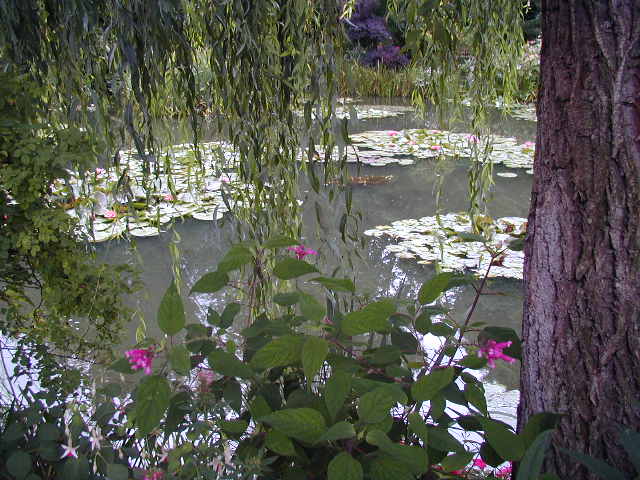
Water Lilies & Willow Tree – Monet’s Garden at Giverny

Claude Monet (14 November 1840 – 26 December 1926) devoted the last twenty five years of his life to painting the water lilies which floated on the large pond at the bottom of his garden at Giverny … in Normandy, France. There are approximately 250 ‘Water Lilies’ in this series.


Colour Photograph of 'Water Lilies & Willow Tree' in Claude Monet's Garden at Giverny, Normandy.  Taken by CJ Walsh.  2004-08-29.

Colour Photograph of 'Water Lilies & Willow Tree' in Claude Monet's Garden at Giverny, Normandy. Click to enlarge. Photograph taken by CJ Walsh. 2004-08-29.


This photograph was taken on 29 August 2004. It shows those same water lilies on the pond, and that same willow tree by the bank. Please enjoy.


Tags: , , , , ,

Sunday, January 11th, 2009 art, built environment, sustainability, travel No Comments

Israel a Criminal State ? Guantánamo Bay an Illegal Occupation ?

Sustainable Human & Social Development is much more than an academic theory.  It is a necessary concept for our troubled times … in our global community.  Intricate, open, dynamic and still evolving … it is very much intended for practical implementation.


A robust understanding of this social catalyst is critically underpinned by human and social rights.  Specifically, initial reference is made to the following International Legal Instruments:

-         1948 Universal Declaration of Human Rights (UN OHCHR) ;

-         2001 Universal Declaration on Cultural Diversity (UNESCO) ;

-         2006 Convention on the Rights of Persons with Disabilities (UN).


Sustainable Design is the ethical response, in built and wrought form, to Sustainable Human & Social Development.  As our understanding of ‘sustainability’ develops, so too must ‘design’ (spatial planning, architectural/engineering/industrial design, and e-design).


At a macro-level … issues causing untold social, environmental, economic, institutional, political and legal damage, destruction and harm:


We see on our television screens and hear from our radios that the Israeli Defence Forces (IDF) are again committing criminal acts in Gaza.  These acts are authorized by the Government of Israel.  The country’s population continues to vote these Governments into power.


The USA’s treatment of prisoners in Guantánamo Bay was, and still is, degrading, inhumane and criminal.  Beyond that, however … the annexation of the bay area remains, to this day, an international act of piracy (refer to the 1901 Platt Amendment and later ‘treaties’ with Cuba procured by the threat or use of force).


The USA and British fundamentalist western crusade against the regime and peoples of Iraq was a cynical act of barbarism and a crime against humanity.  We look forward to the day when George W Bush and Tony Blair will be brought before the International Criminal Court (ICC).


At a micro-level … every designer can act, and make his/her positive contribution:


Accessibility of buildings for people with disabilities, to take just one example, is now a legitimate social right which must be protected and nurtured, i.e. properly resourced, by all States Parties to the 2006 UN Disability Rights Convention.  People must be able to independently approach, enter, use, egress (under normal conditions) and evacuate (in a fire emergency) any building in our built environment.


Two Immediate Requirements for Sustainability Implementation:

  1. A radical overhaul of the Education and Training of any person connected, directly or indirectly, with the design, construction, operation, management, servicing or maintenance of our Human Environment.
  2. The widespread introduction of Sustainability Impact Assessment (SIA) at all levels of our Public and Private Institutions.  SIA is a continual evaluation and optimization process – informing initial decision-making, or design, and shaping activity/product/service realization, useful life and termination, or final disposal – of the interrelated positive and negative social, environmental, economic, institutional, political and legal impacts on balanced and equitable implementation of Sustainable Human & Social Development.


Happy New Year !


Tags: , , , , , , , , , , , , , , ,

Search


January 2009
S M T W T F S
« Dec   Feb »
 123
45678910
11121314151617
18192021222324
25262728293031

Links