national law

‘Priory Hall’, Fire Engineering & Protecting Society’s Interests ??

2011-10-23:  Further to my post, dated 18 October 2011 …

Has anybody’s interests been protected by what has happened at the ‘Priory Hall’ Apartment Development, in Donaghmede, Dublin 13 ?   NO.

Now that the buildings there have been completed … will it be possible to effectively repair the most serious fire protection, sound transmission and energy conservation problems with the buildings ??   NO.

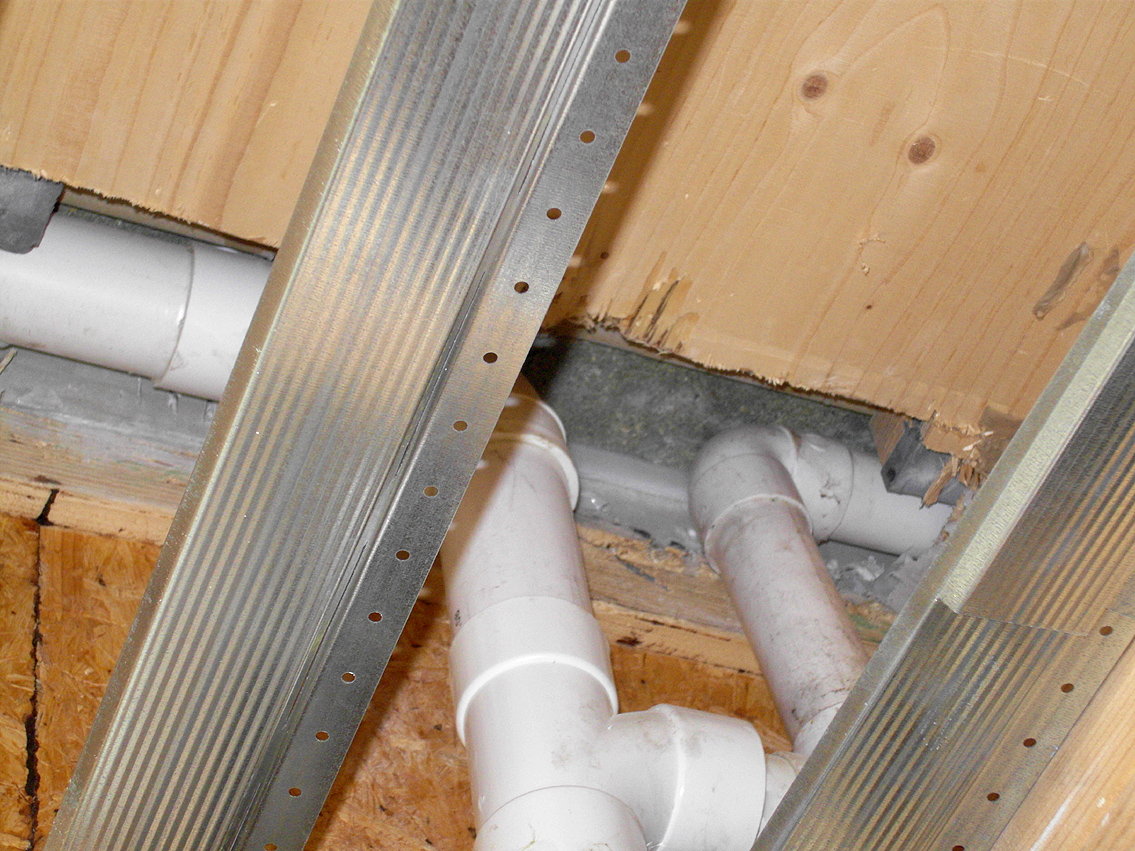
At the heart of these problems lie Fundamental Design and Construction Flaws … because, back in the 1990′s and early 2000′s, indigenous builders of simple two storey semi-detached houses suddenly became ‘developers’ of apartment complexes … and these were very different building animals altogether, requiring a degree of technical competence well beyond their reach.  And, of course, during the actual construction process everything had to be finished ‘yesterday’, and as cheaply as possible (a policy of cheap product substitution was the un-stated national norm !).  In fact, so many corners were cut on Irish Building Sites, at the time, that we should refer to almost the entire construction output from this era as: The Celtic Tiger Round Towers !

And guess who is going to carry out the Corrective/Repair/Refurbishment Works at ‘Priory Hall’ ?   The very same Construction Organization which created the mess in the first place !!   Can you believe it ??

Furthermore … once these Corrective/Repair/Refurbishment Works are eventually finished … the performance of the Fire Protection Measures in ‘Priory Hall’ will still be compromised, because you can only do so much, physically, when a building is completed.  BUT … it would be possible to achieve a Proper Level of Fire Safety in ‘Priory Hall’ … by installing a Fire Suppression System (sprinklers or mist) throughout the development.  That’s what it will take !!

.

Tremendous fire damage was caused to the local environment in Buncefield ... but SOCIETY can no longer suffer this scale of damage ... and these Criminal Human Acts! Click to enlarge.

Tremendous fire damage was caused to the local environment in Buncefield ... but SOCIETY can no longer suffer this scale of damage ... and these Criminal Human Acts! Click to enlarge.

.

WHO IS PROTECTING SOCIETY ?

So extensive is the damage caused by fire … throughout Europe … that not all of the Direct and Indirect Fire Losses have yet been identified.

Pause, to consider this definition …

Environmental Impact:  Any effect caused by a given activity on the environment, including human health, safety and welfare, flora, fauna, soil, air, water, and especially representative samples of natural ecosystems, climate, landscape and historical monuments or other physical structures, or the interactions among these factors; it also includes effects on accessibility, cultural heritage or socio-economic conditions resulting from alterations to those factors.

And this means, of course, that our current Fire Loss Data and Statistics are unreliable.

.

It is not well known, or widely publicised, that the Fire Safety Objectives of Building Regulations are limited to protecting building occupants.  The Objectives are only concerned with protecting property, insofar as it is relevant to the protection of those building occupants.

Can you image the look of astonishment on the face of a Managing Director, after his/her factory has been entirely destroyed by a fire, when told by a fire consultant …

” We complied with Part B of the Building Regulations, and here is your Fire Safety Certificate to prove it”  ??

.

What should be happening instead ?

     1.  Fire Engineering Design & Practice cannot … and must not … be concerned merely with the ‘cost-effective’ compliance with minimal (which they most certainly are !) Fire Safety Objectives mandated by Building Legislation.

     2.  To properly protect the interests of Society and Clients/Client OrganizationsFire Engineering Design & Practice must also take into account: Safety at Work Legislation; Rights, Equality & Anti-Discrimination Legislation; Environmental Impact Legislation; Public Procurement Legislation; Product Liability Legislation; etc., etc.

     3.  There is an evolving realization in Ethical Fire Engineering Design & Practice, however, that there is still a significant gap to be bridged.  There is no legislation (effective, or otherwise) yet in place, anywhere, which deals with such issues as …

  • Resistance to Fire-Induced Progressive Collapse – as very strongly recommended in the 2005 & 2008 U.S. NIST Final Reports on the 9-11 World Trade Center Building 1, 2 & 7 Collapses ;
  • Protection of Vulnerable Building Users in ‘Situations of Risk’ – as required, for example, by Article 11 of the UN Convention on the Rights of Persons with Disabilities (CRPD) ;
  • Safety of Firefighters/Rescue Teams – as specified in Basic Requirement for Construction Works No.2, in Annex I of European Union Construction Product Regulation 305/2011 ;
  • Adaptation to Climate Change and Severe Weather Events – the Developed World Economies appear to have no interest, whatsoever, in these issues ;
  • Sustainable Human & Social Development !

     4.  We must clearly distinguish, therefore, between the Fire Safety Objectives of Building Regulations/Codes … and Project-Specific Fire Engineering Design Objectives.  This difference must be fully understood by the Fire Engineer himself/herself … and then, in all circumstances, properly explained to the Client/Client Organization.

.

In designing a Building for conditions of fire, and its aftermath … which may take place at any time during the Life Cycle of that Building … Project-Specific Fire Engineering Design Objectives should cover the following spectrum of concerns … in order to properly protect the interests of Society and our Clients/Client Organizations

  -   Protection of the Health & Safety of All Building Users … including People with Activity Limitations (2001 WHO ICF), visitors to the building who may be unfamiliar with its layout, and contractors or product/service suppliers temporarily engaged in work or business transactions on the premises ;

  -   Protection of Property … including the building, its contents, and adjoining or adjacent properties … from loss or damage ;

  -   Protection of the Health & Safety of Firefighters, Rescue Teams & Other Emergency First Response Personnel ;

  -   Facility, Ease & Efficient Cost of Carrying Out Effective Reconstruction, Refurbishment or Repair Works after a Fire ;

  -   Sustainability of the Human Environment (social, built, virtual, economic, …) – including Fitness for Intended Use and Life Cycle Costing of fire engineering related products, components, systems, etc., fixed, installed or incorporated in the building ;

  -   Protection of the Natural Environment from Harm, i.e. Adverse Impacts.

.

.

CRIMINAL RESPONSE TO 1981 DUBLIN STARDUST TRAGEDY !

As I write … a stampede has just commenced by the various Construction-Related Professional Institutes and Organizations … to demand closer independent monitoring of what is happening on Irish Building Sites.  Far too little … and definitely, far too late !   Back in the early 1990′s, everybody stood by … and co-operated with the installation of an entirely ineffective and dysfunctional system of National Building Control in Ireland … which, let us not forget, survives intact to this day … while, at the same time, the strong long-established and well-resourced Building Control Sections in Dublin and Cork were being quietly dismantled.

The Minister for the Environment, Community & Local Government, Mr. Phil Hogan T.D. … is also chirping in from his ivory tower !

Crocodile Tears !!

.

Take a Fire Safety Certificate for a Building, for example …

With or Without Conditions … this document confirms that the Local Building Control/Fire Authority is satisfied that the Design Documentation for that building shows proper compliance with the Legal Requirements of Part B of the Irish Building Regulations.

Focus in on the relevant wording of a Fire Safety Certificate, which is as follows …

‘ … hereby certify that the works or building to which the application relates, will, if constructed in accordance with the plans, calculations, specifications and particulars submitted, comply with the requirements of Part B of the Second Schedule to the Building Regulations 1997 to 2008.’

Fire Safety Related Inspections of Construction Projects are not carried out by Competent Local Authority Personnel, or by Competent Independent Technical Controllers.  Therefore … a Fire Safety Certificate cannot give, and is not intended to give, any indication with regard to Fire Safety in the Completed Building.  The ‘Fire’ Establishment in Ireland knows full well that this is the situation !

Is this any sort of a reasonable, caring or competent response to the 1981 Stardust Discotheque Fire Tragedy in Dublin ??

.

.

END

Tags: , , , , , , , , , , , , , , , , , , , , , , , , , , , , , , , , , , , , , , , , , , , , , , , , , , , , , , , , , , , , , , , , , , , , , , , , , , , , , , , , , , , , , , , , , , , , , , , , , , , ,

Fixing ‘Priory Hall’ in Dublin – Practical Solutions Needed Now !

2011-10-18:  A large ‘can of worms’ has recently been opened in Ireland …

For the last few days, including today, I have been listening intently to Joe Duffy on the RTE Radio ‘Liveline’ Programme at lunchtime.  Joe is being very cautious because he cannot quite believe his ears … either about the unfolding harrowing events for occupants in ‘Priory Hall’, Donaghmede, Dublin 13 – a Private, Multi-Storey Apartment Development – or the tales and anecdotes about Irish Building Sites during the Celtic Tiger Years.

This will be of no consolation to anybody … but the big surprise, for me, is that there is so much public shock.  ‘Priory Hall’ is the Tip of the Iceberg !   Ireland’s current dysfunctional approach to the development of Our(!) Built Environment … has been designed (for want of a better word) in a chaotic, haphazard and malevolent way … to end up in exactly the sort of mess which we are all now witnessing in North County Dublin.

Just to be clear … what has been happening in the Irish Construction Industry, during the boom years, has been happening for twenty years all over the country … more precisely, since the introduction of Legal National Building Regulations, with NO Effective Building Control, in 1991 … and, before that again, in those parts of this jurisdiction, outside of the major urban areas having Legal Building Bye-Laws, and Effective Building Control, i.e. mandatory inspections by competent local authority personnel at the foundation level and drainage level of all building sites … and, depending on the type of project, occasional or frequent inspections above ground level.

[ 1991:  Statutory Instrument No.304 of 1991 - Building Control Act, 1990 (Commencement Order), 1991;  Statutory Instrument No.305 of 1991 - Building Control Regulations, 1991;  Statutory Instrument No.306 of 1991 - Building Regulations, 1991 ]

And the biggest joke of all … is that the sum of the many resources, both human and material, required to repair sub-standard construction throughout Ireland … will count as a positive contribution towards the economic indicator of GDP (Gross Domestic Product) !   FUBAR

.

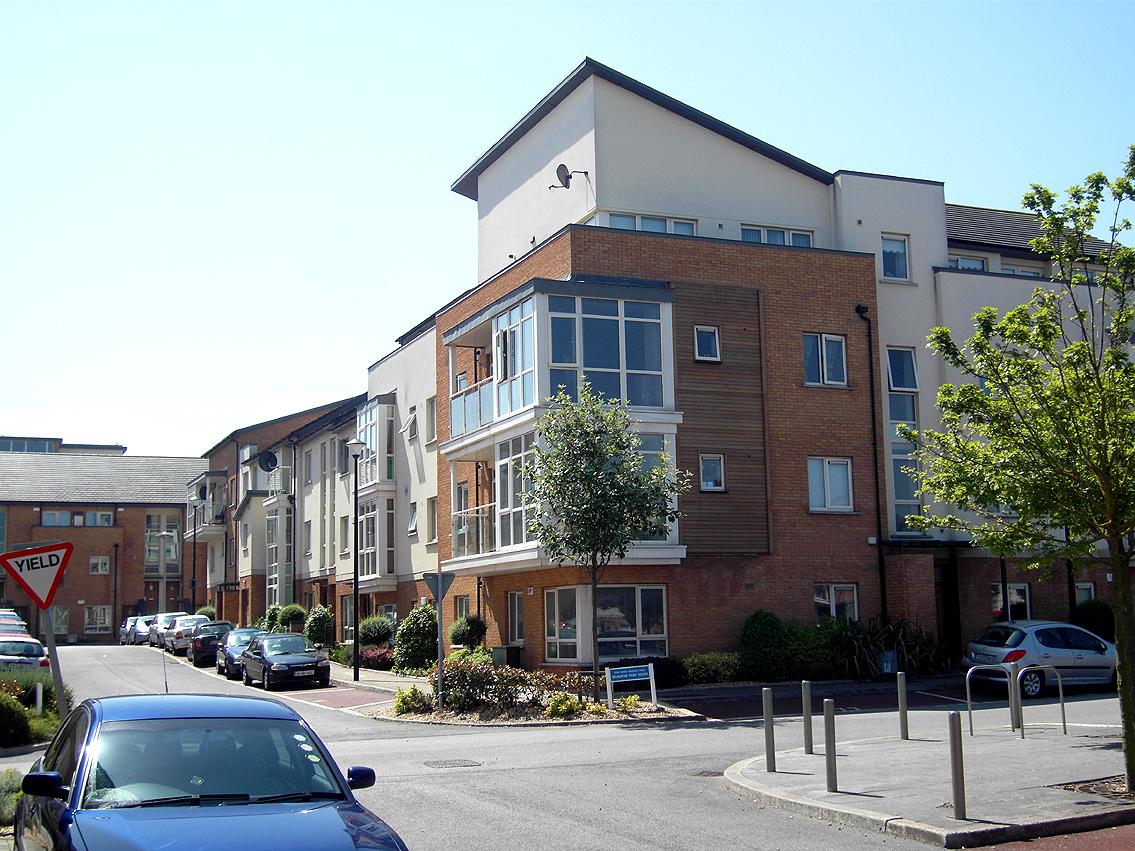
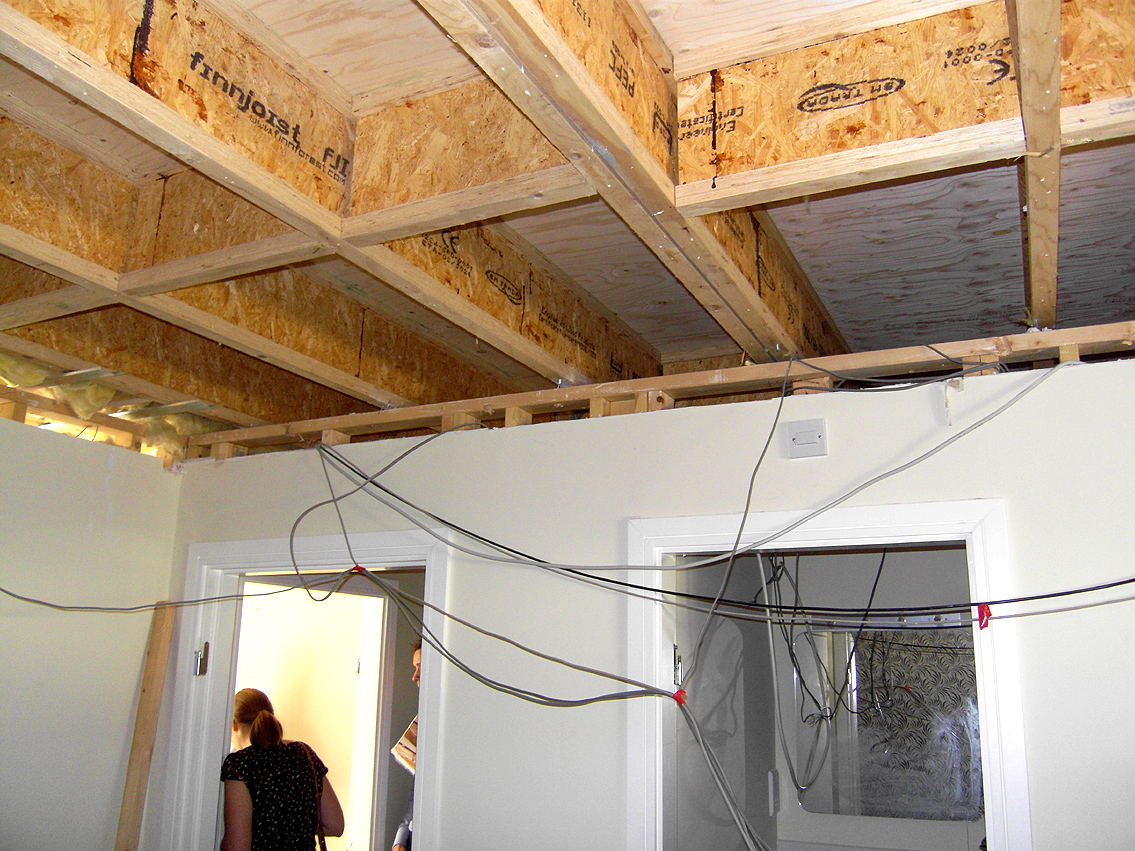
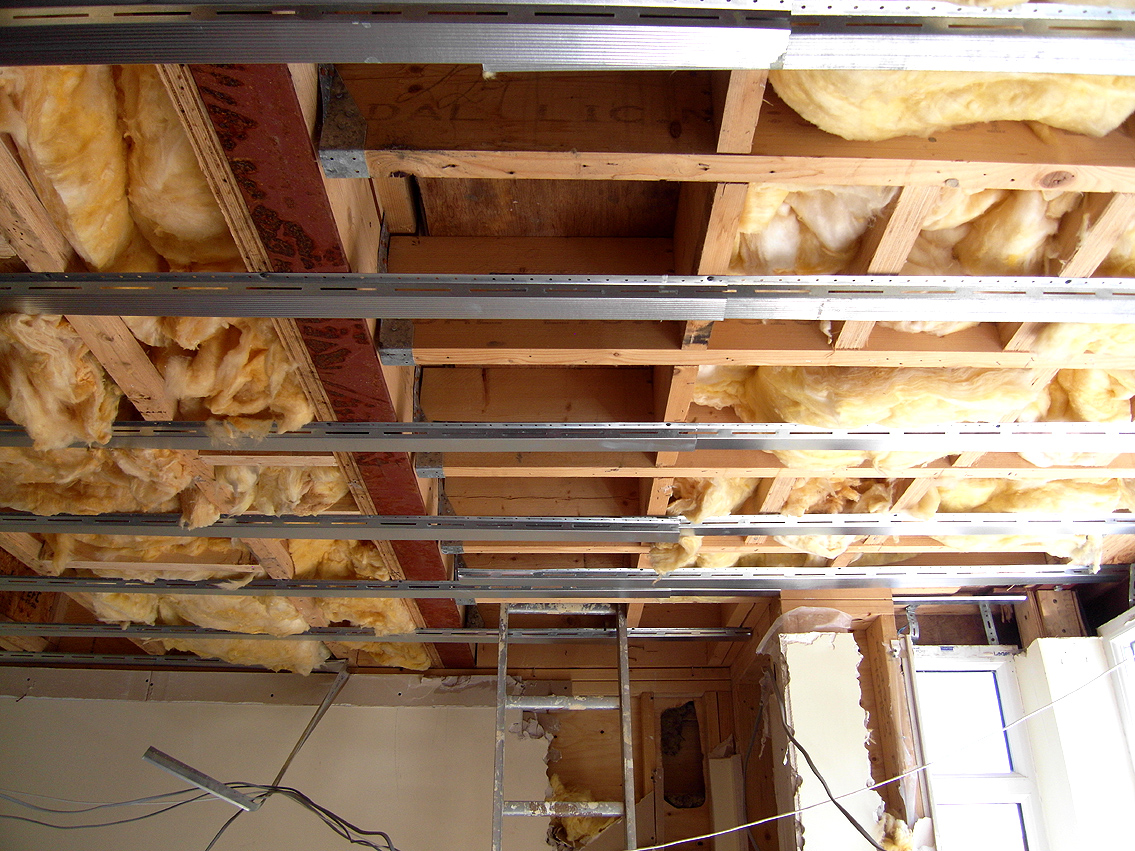
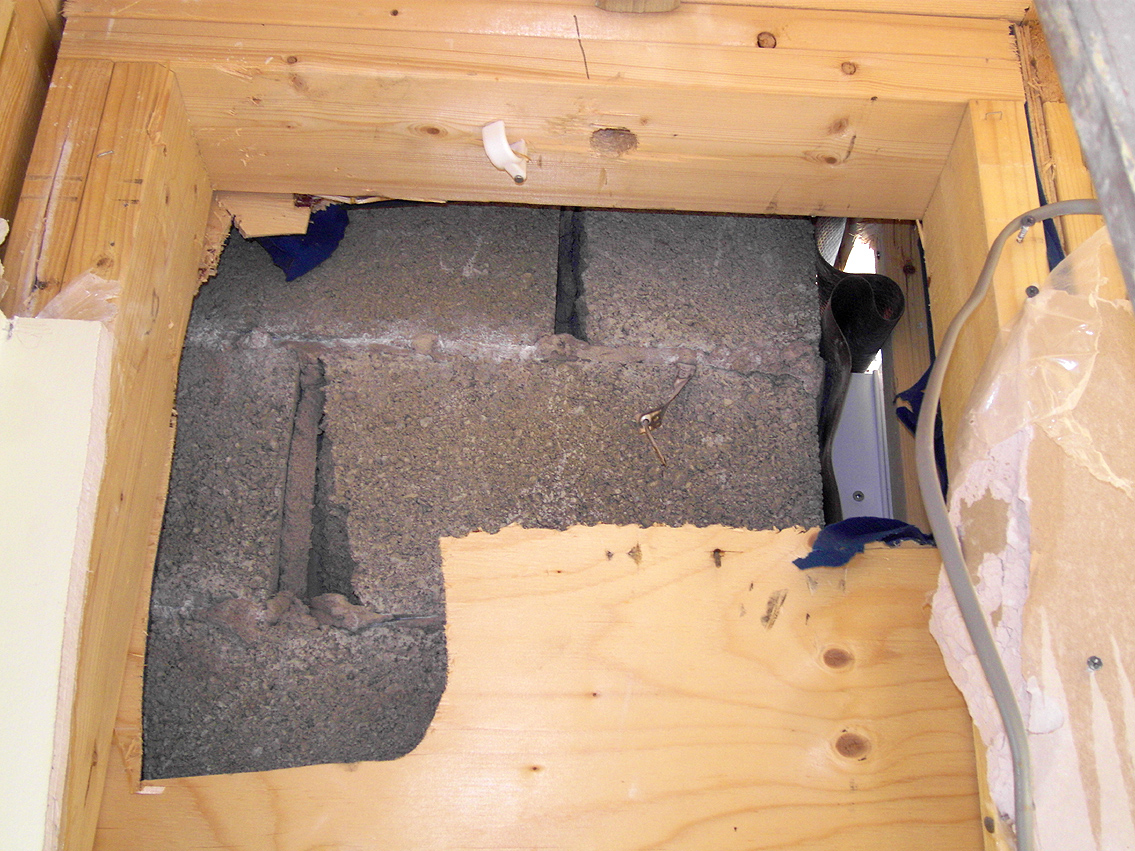
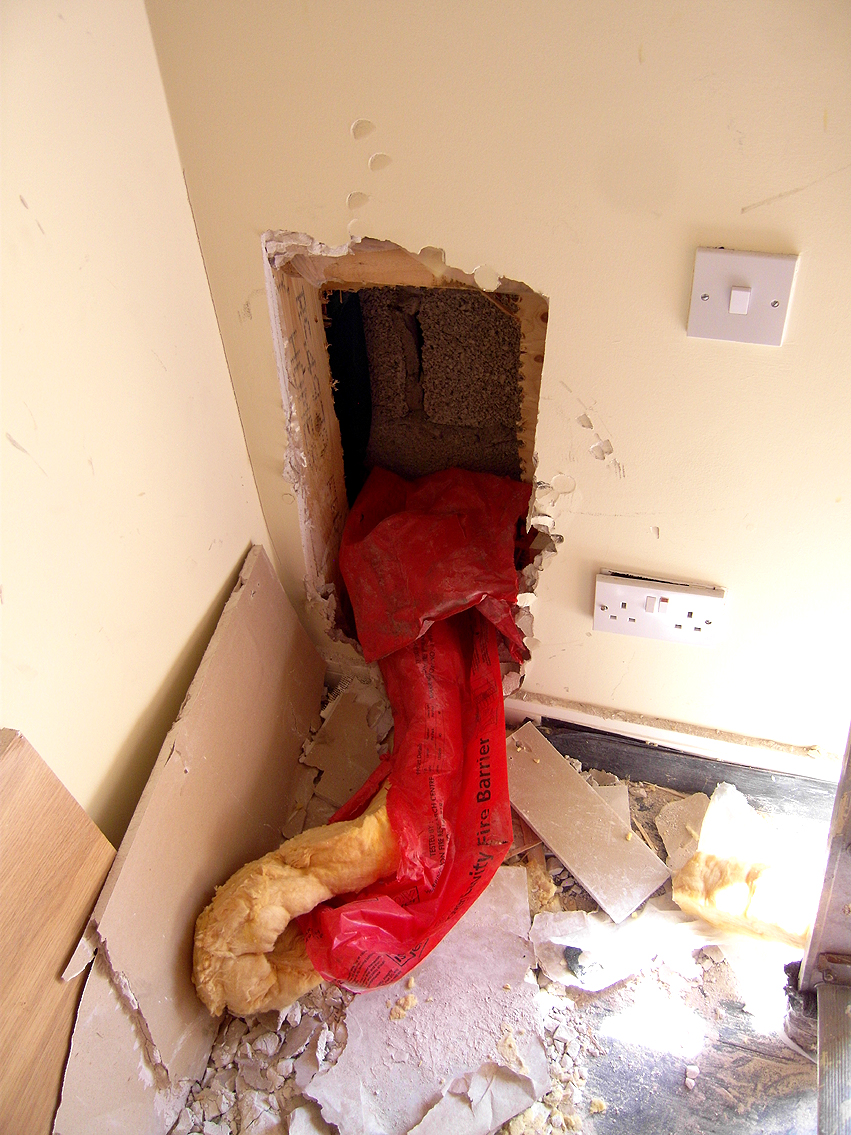
Colour photograph showing 'Priory Hall' ... a private, multi-storey apartment development located in North County Dublin, Ireland. Click to enlarge.

Colour photograph showing 'Priory Hall' ... a private, multi-storey apartment development located in North County Dublin, Ireland. Click to enlarge.

.

PRACTICAL SOLUTIONS NEEDED NOW

What I have not been hearing from the radio, or reading in the newspapers, is practical solutions.

Lest there be any doubt … this is one of the professional services we provide at Sustainable Design International !

So … how do we fix Priory Hall as the situation now presents itself … in such a way that, as soon as it is practicable, a satisfactory level of long-term safety, protection, convenience and comfort will be provided for the occupants of Priory Hall … and the social wellbeing of the local community, there, can be restored.

Afterwards … we can worry about who’s responsible, and about the reasons for the many ‘system’ failures in Ireland.

.

FIXING ‘PRIORY HALL’ IN DUBLIN

The following list of practical suggestions … a simple roadmap … is addressed to the Owners and Occupants of Apartments in Priory Hall.

As they have a large vested interest in the problems of Priory Hall … either directly or indirectly … no assurances or undertakings should be accepted, on face value, from either Dublin City Council (DCC) or the Department of the Environment, Community & Local Government (DECLG) … or their representatives.

     1.  Informed Consent of Apartment Owners and Occupants

Demand that the Informed Consent of the Owner/Occupant of an Apartment is required, in writing, before any necessary Corrective/Repair/Refurbishment Works are carried out …

Informed Consent:  Consent freely obtained – without threats or improper inducements – after appropriate disclosure to a person of relevant, adequate and easily assimilated information in a form and language understood by that person.

     2.  ‘As Constructed’ Drawings & Specification of Entire Development

If they exist … we’re on the way !   But, if they don’t exist … and they may not … demand that an ‘As Constructed’ Survey of the Entire Development be carried out immediately.

Demand to see a copy of the Detailed ‘As Constructed’ Drawings, and Specification, for the Entire Development.

CHECK the adequacy of the Detailed Drawings and Specification !

At this stage, remember … all of the emphasis must now be placed on actual construction … not on paperwork !   The ‘As Constructed’ Survey Drawings and Specification are only a means towards a satisfactory end … that’s all !!

     3.  Failures to Properly Comply with Current Building Regulation Requirements A to M (Second Schedule to Irish Building Regulations)

Demand to see a Detailed Schedule of the many failures to properly comply with current Building Regulation Requirements, i.e. Parts A to M in the Second Schedule to the Building Regulations, as amended.

Do not entertain, even for a moment, any discussion about past legal building regulation requirements, which were in force at the time of initial design or construction !

An important point to note !   The Guidance Texts in, for example, Technical Guidance Document B: ‘Fire Safety’ are merely that … GUIDANCE !   This guidance is not infallible … and in a few respects, is entirely inadequate … for example, when dealing with the structural performance of buildings during conditions of fire, and the ‘cooling phase’ immediately afterwards … and the fire evacuation of people with activity limitations, in which case the guidance actually ensures that fire evacuation is made extremely difficult, if not prevented altogether !

Do not be sucked in to any conversations about what is stated, or not stated, in the Technical Guidance Documents.  This is irrelevant.  The Law mandates proper compliance with the Requirements !

Some people may even attempt to quote from the Building Regulation Approved Documents for England & Wales.  Just tell them to take a long jump off a short pier … suggest Howth Harbour !

Become very, very suspicious whenever there is a use of, or reference to, the term ‘Substantial Compliance’ !!

CHECK the adequacy of this Detailed Schedule !   And … ensure that it is Comprehensive !!

     4.  The Necessary Corrective/Repair/Refurbishment Works

Demand to see Full Detailed Information, in the form of annotated drawings and descriptive texts, etc., etc … on the exact nature, timetable and phasing of all of the Corrective/Repair/Refurbishment Works which are necessary to effectively solve the serious problems in the Development.

Beware of decorative solutions, which look good to a superficial visual inspection in ambient conditions … but don’t actually solve anything !

CHECK the adequacy of this Full Detailed Information !

     5.  Independent Technical Control of Construction Works

Demand only Category A Construction Execution of the necessary Corrective/Repair/Refurbishment Works …

Category A Construction Execution:

(a)  Supervision of the works is exercised by appropriately qualified and experienced personnel from the principal construction organization ;

(b)  Regular inspections, by appropriately qualified and experienced personnel familiar with the design and independent of the construction organization(s) … and other vested interests … are carried out to verify that the works are being executed in accordance with the design.

Demand receipt of a clear undertaking, in writing, that this will be the case … before any Corrective/Repair/Refurbishment Works commence.

And remember these words from the 2005 Final Report of the U.S. National Institute of Standards & Technology (NIST) on the 9-11 World Trade Center Tower Collapses …

” NIST urges state and local agencies to rigorously enforce building codes and standards since such enforcement is critical to ensure the expected level of safety.  Unless they are complied with, the best codes and standards cannot protect occupants, emergency responders, or buildings.”

CHECK the adequacy of the Proposed Method of Independent Technical Control during execution of the Corrective/Repair/Refurbishment Works !

     6.  Meeting & Discussion with Other Owners/Occupants

Do not act alone … meet the other Owners/Occupants, and discuss issues with them.  Share and collate all available information together.  Try to identify information gaps.  If you do not understand something … ask !

When, and only when, you are happy … signal your Informed Consent that works should commence.

     7.  Commencement of Corrective/Repair/Refurbishment Works

Visit the Construction Site Office regularly … to show that you are taking a keen interest in what is happening.  Keep your eyes and ears wide open.

Expect that you will not be permitted to just wander around the Site.  Construction Sites are one of the most hazardous ‘workplaces’ in this country !

CHECK the adequacy of the Independent Technical Control actually being undertaken.

Demand to be updated, regularly, and at the very least on the progress of Corrective/Repair/Refurbishment Works at your Apartment … in the Common Areas of your Block … and throughout the full extent of the Approach Routes to your Block Entrances and Exits.

.

.

Advisory Note:  Should you, or the Residents’ Committee of your Building or Development, be concerned about any matter discussed in this Post … please contact C.J. Walsh  by e-mail: cjwalsh@sustainable-design.ie  or by phone: (01) 8386078 / +353 1 8386078.

.

.

END  (for now, but to be continued soon !)

Tags: , , , , , , , , , , , , , , , , , , , , , , , , , , , , , , , , , , , , , , , , , , , , , , , , , , , , , , , , , , , , , , , , , , , , , , , , , , , , , , , , ,

Public Procurement & ‘Design for All’ – It’s Crunch Time, Folks !

2011-10-12 & 2011-10-17:  Close your eyes … and imagine, for a split second, the value and material extent of all the Public Procurement Contracts being tendered for and awarded each week, throughout Europe.  ‘Enormous’ is the only appropriate word which must spring to your mind !   If you don’t believe me, check out the statistics for yourself !!   And that value is going to keep increasing !!!

The European Commission has recently proposed that suitable instruments be developed which will permit the operation of the Accessibility / Design for All Requirements in EU Public Procurement Directives to commence, with full effect.  This process is proving to be problematic … and it is certainly not as open and transparent as it should be.

Leaving aside the utilities sectors (water, energy, transport and postal services) … recall that EU Directive 2004/18/EC of the European Parliament and of the Council, of 31 March 2004, on the Co-Ordination of Procedures for the Award of Public Works Contracts, Public Supply Contracts and Public Service Contracts had to be implemented, at national level in all of the EU Member States, no later than 31 January 2006.  This Directive was amended, in a minor way, by Directives 2005/51/EC and 2005/75/EC.  In spite of these amendments, 31 January 2006 remained the target date for national implementation.

[ Ireland's national implementing legislation ... European Communities (Award of Public Authorities' Contracts) Regulations 2006 ... came into operation on 22 June 2006.]

In addition, each Member State had to ensure that Directive 2004/18/EC was properly implemented by using effective, available and transparent Monitoring Mechanisms.

With regard to specific rules governing specifications and contract documents … Article 23.1 of Directive 2004/18/EC stated, and still does state …

‘ The technical specifications as defined in point 1 of Annex VI shall be set out in the contract documentation, such as contract notices, contract documents or additional documents.  Whenever possible these technical specifications should be defined so as to take into account accessibility criteria for people with disabilities or design for all users.’

Not the strongest possible language to encourage ‘accessibility’ … there’s nothing quite like a shall to concentrate minds !

[ However, in Ireland ... with regard to the same specific rules governing specifications and contract documents ... Section 23 (2) of the European Communities (Award of Public Authorities' Contracts) Regulations 2006 states ...

' In awarding a public contract, a contracting authority shall, as far as practicable, ensure that the technical specifications for the contract take account of the need to prescribe accessibility criteria for all persons who are likely to use the relevant works, products or service, particularly those who have disabilities.' ]

As already discussed in my post, dated 2 November 2010 … many people in the European Union Institutions would prefer to steer completely away from the Social Aspects of Sustainable Human and Social Development … fuzzy areas, not capable of easy quantification … leaving small, peripheral groups in the Institutions (neither well connected to the mainstream, nor fully aware of the ‘ins’ and ‘outs’ of that mainstream) to look after the Social Aspects.

.

Public Procurement in the European Union (EU)

The Award of Public Works Contracts, Public Supply Contracts and Public Service Contracts concluded in the EU Member States on behalf of State, Regional or Local Authorities and other bodies governed by public law entities, is subject to the respect of Principles enshrined in the EU Treaties and, in particular, to …

  • the principle of freedom of movement of goods ;
  • the principle of freedom of establishment ;
  • the principle of freedom to provide services ;   and
  • the principles deriving therefrom, such as the principle of equal treatment, the principle of non-discrimination, the principle of mutual recognition, the principle of proportionality and the principle of transparency.

For Public Contracts Above A Certain Value … it has been deemed necessary to draw up provisions of Community Co-Ordination of National Procedures for the award of such contracts, which are based on these principles so as to ensure the effects of them and to guarantee the opening-up of public procurement to competition.

- Adapted from Preamble Paragraph #2, EU Directive 2004/18/EC

.

Is Europe Serious about Implementing the Public Procurement Accessibility / Design for All Requirements ?

Before looking at how Accessibility / Design for All is being handled within the fast evolving European Public Procurement Framework … it is sobering to compare and contrast how DG Environment (ENV), in the European Commission, is promoting and actively supporting Green Public Procurement, i.e. Public Procurement which is environment-friendly … http://ec.europa.eu/environment/gpp/index_en.htm … no messing about there !

If we (speaking as a European) are serious, therefore, about the ‘real’ implementation of Accessibility for All / Design for All / Inclusive Design / Universal Design / Barrier-Free Design in the Built Environment … it is of fundamental importance that an easily assimilated Standard (as defined in Paragraph #2, ANNEX VI of Directive 2004/18/EC) be produced ‘on the table’ for reference by Public Contracting Authorities … NOW !!!

Built Environment:  Anywhere there is, or has been, a man-made or wrought (worked) intervention in the natural environment, e.g. cities, towns, villages, rural settlements, service utilities, transport systems, roads, bridges, tunnels, and cultivated lands, lakes, rivers, coasts, and seas, etc … including the Virtual Environment.

Virtual Environment:  A designed environment, electronically generated from within the built environment, which may have the appearance, form, functionality and impact – to the  person perceiving and actually experiencing it – of a real, imagined and/or utopian world.

The Built and Virtual Environments continue to merge into a new Augmented Reality.

A comprehensive document capable of answering a major portion of Europe’s current needs in this area is on the verge of being published as a full International Standard … ISO 21542: ‘Building Construction – Accessibility & Usability of the Built Environment’.  And … as is the case with hundreds of ISO Standards in other sectors, this standard could easily be approved by CEN, one of Europe’s Standards Organisations, as an EN (European Standard) … under the Vienna Agreement on Technical Co-Operation between ISO and CEN, which was confirmed by both organizations in 2001 … and the period to practical application of ISO 21542 on the ground would be relatively swift.

Every delay represents not only a precious opportunity missed to improve the Accessibility of the Built Environment … but another blatant Denial of Human and Social Rights to vulnerable groups of people in all our communities !

Yes, this document was badly managed at the beginning of its very long gestation period, and its contents were a bit of a mess for the first few years … AND European countries were indignant, then, at the prospect of it becoming a European Standard.  However, walking around any major city in any country in Europe today, and witnessing the universally appalling and miserable efforts at Accessibility Implementation … you would have to be outraged at the level of hypocrisy and blatant self-delusion practiced by Europeans !

BUT NOW … ISO FDIS 21542 … the Final Draft of the International Standard which was issued for voting, beginning on 22 September 2011 … is a very respectable looking document altogether.  It makes important statements about ‘creating a sustainable built environment which is accessible’.  Its purpose is ‘to define how the built environment should be designed, constructed and managed to enable people to approach, enter, use, egress from and evacuate a building independently, in an equitable and dignified manner and to the greatest extent possible’ … ‘principles which are supported by Preamble (g) and Articles 9, 10 and 11 of the United Nations Convention on the Rights of Persons with Disabilities’.  I could go on, and on … but I will resist the temptation, since I was heavily involved in the development of this ISO Standard !

The point is … there is no longer any reason for European countries to complain about the inadequacy of this International Standard … and it should be the preferred instrument of choice to facilitate the immediate operation of the Accessibility / Design for All Requirements in EU Public Procurement Directive 2004/18/EC.

Unfortunately, this may not happen !

.

Years too late, near the end of 2007 … DG Employment, Social Affairs & Inclusion (EMPL), in the European Commission, issued the following Mandate …

M/420 EN – Brussels, 21 December 2007

Standardization Mandate 420 to CEN, CENELEC and ETSI in Support of European Accessibility Requirements for Public Procurement in the Built Environment

Click the Link Above to read and/or download PDF File (67.4 kb)

.

This Mandate covers 2 Phases of Work.  Phase I deals with compiling an inventory of existing accessibility-related standards and an analysis of any gaps … as well as with issues of accessibility implementation monitoring and conformity assessment.  Phase II is the actual accessibility standard(s) development phase.

However … Mandate M/420 EN is a flawed document, and it should have received much closer scrutiny from the European Standards Organizations named in the document title … before any work in Phase I commenced.  Failing that … the first work item on the Phase I Agenda should certainly have been a critical examination of the mandate.

In a post, dated 15 January 2011 … I wrote …

The European Union’s Accessibility Strategy, related Policies and Programmes … and the monitoring, targeting and independent verification of Accessibility Implementation … all require a radical overhaul !

All those Officials in the European Commission who are involved, in any way, shape or form, with Accessibility of the ‘Human Environment’ would do well to RE-READ AND MEDITATE DEEPLY on the contents of the 2003 Final Report from the Group of Accessibility Experts, which was established by the European Commission itself … “

The Final Report from the 2003 EU Group of Accessibility Experts, of which I was a Member, can be downloaded towards the end of that post.

The Officials who drafted Commission Mandate M/420 EN paid little, if any, attention to that 2003 Expert Group Report.

.

At the end of Phase I … in response to the European Commission’s Mandate M/420 EN … a long, rambling CEN Joint Report (document ref. CEN/BT/WG 207 N 29) of 425 Pages was issued, dated 8 August 2011, for general discussion and comment.

Some Comments on the CEN Joint Report …

1.  Terminology

CEN Joint Report – CEN/BT/WG 207 N 29

3.4     Conclusions View, Findings and Recommendations

3.4.1  Overview

Terms such as ‘procurement’, ‘inclusion’, ‘accessibility’ and ‘compliance’ are difficult to define precisely, and they are often not fully understood by those responsible for managing or providing the products or environments people use.  They are also not readily understood by those administrating and triggering the procurement process.

It is strange, therefore … and unacceptable … that this Report does not attempt to reduce and/or remove the ambiguity surrounding these terms … by providing a clear definition, with a supporting explanatory text, for each of the terms listed above.

I’m not even sure that the large numbers of people who helped to draft the CEN Joint Report fully understand those terms !

Most importantly, the Report is not at all precise about … and in fact appears to be completely confused by … the clear distinction which must be made between ‘accessibility’ and ‘access’.

2.  ‘Accessibility’ & UN CRPD

Accessibility does not begin and end with Article 9 of the United Nations 2006 Convention on the Rights of Persons with Disabilities (CRPD) !!!   See my post, dated 15 January 2011 … and #6 below.

3.  EU Ratification of UN CRPD

The full implications arising from European Union (EU) Ratification, on 23 December 2010, of the United Nations 2006 Convention on the Rights of Persons with Disabilities (CRPD) … for both EU Institutions, and the EU Member States (whether or not they have individually ratified the UN Convention) … have not been properly examined in the CEN Joint Report.

See my post, dated 5 February 2011 .

4.  Mainstreaming ‘Accessibility’

For the majority of people involved in the spatial planning, design and development of the European Built Environment, Accessibility is all about transport issues … for example, how far a proposed new building is from a transportation node.

We are communicating such a confused message (is it Accessibility for All, Design for All, Inclusive Design, Universal Design, or Barrier-Free Design ?) … that many policy and decision makers just could not be bothered.  And who, in Europe, is really concerned with the quality of Accessibility Implementation ???

In addition … the CEN Joint Report neglected to deal adequately … or at all … with a major body of EU Legislation which has been implemented at national level, in the Member States, many years ago … Safety at Work Legislation !   All of the EU Directives require that workplaces be accessible.  Yet, I know for a fact that, in Ireland, the Health & Safety Authority (HSA) is doing absolutely nothing to check whether this requirement is being complied with or not.

A Sustainable Built Environment is Accessible for All !   So many different types of International/European/National Legislation mandate that the Built Environment shall be Accessible for All !!   Good Design demands that the Built Environment is Accessible for All !!!

So why is Accessibility not being properly integrated into the operation of Environmental Impact Assessment (EIA) Legislation ?

Environmental Impact:  Any effect caused by a given activity on the environment, including human health, safety and welfare, flora, fauna, soil, air, water, and especially representative samples of natural ecosystems, climate, landscape and historical monuments or other physical structures, or the interactions among these factors; it also includes effects on accessibility, cultural heritage or socio-economic conditions resulting from alterations to those factors.

No case need be made for the integration of Accessibility into Sustainability Impact Assessment (SIA) … it self-evidently must be !

Sustainability Impact Assessment:  A continual evaluation and optimization process – informing initial decision-making, or design, and shaping activity/product/service realization, useful life and termination, or final disposal – of the interrelated positive and negative social, environmental, economic, institutional, political and legal impacts on balanced and equitable implementation of Sustainable Human and Social Development.

5.  What Is The Overriding European Social Priority ?

The overriding European Social Priority is to commence operation, with full effect, of the Accessibility / Design for All Requirements within the fast evolving European Public Procurement Framework … as quickly as possible.

Do we have to wait another 2 or 3 years, at least, for the production of an ‘acceptable’ European Accessibility Standard ??   Instead, why not approve ISO 21542 as the European Standard when it is published as a full standard … which will be very soon ?   ISO 21542 is already being used as the benchmark in the CEN Joint Report !

AND … do we have to wait, for who knows how long … before Effective Monitoring Procedures … and Independent Verification Procedures … are put in place at European and National/Regional/Local Levels ???

Quality of European Accessibility Implementation … is critical !

.

2011-10-17 …

6.  Post UN CRPD – A More Demanding Scope & Quality of Implementation

Not unexpected … but it has still been a most enlightening experience to read the recent UN CRPD Committee Report on Spain … selected extracts from which are reproduced below.  The language used by the Committee is strong and direct … finally !

This is not a good report and, in places, it makes for unpleasant reading … a concrete example of the ‘hypocrisy and blatant self-delusion practiced by Europeans’, which I talked about earlier.

In accordance with Article 36.3 of the UN Convention on the Rights of Persons with Disabilities (CRPD) … the UN Secretary-General will be making this Report available to all States Parties.

.

United Nations Committee on the Rights of Persons with Disabilities

Sixth Session – 19 to 23 September 2011

Concluding Observations on Initial Report of Spain

(Article 35 of UN CRPD)

The Committee considered the initial report of Spain (CRPD/C/ESP/1) at its 56th and 57th meetings, held on 20 September 2011, and adopted the following concluding observations at its 62nd meeting, held on 23 September 2011.

. 

III.  Principal Areas of Concern & Recommendations

A.  General Principles & Obligations (Articles 1 & 4)

11.  The Committee takes note of the adoption of Act 26/2011 which introduces the concept of ‘person with disabilities’ as defined in the Convention and expands the protection of persons with disabilities.  However, it is concerned that not all persons with disabilities are covered by the law.

12.  The Committee urges the State Party to ensure that all persons with disabilities enjoy protection against discrimination and have access to equal opportunities irrespective of their level of disability.

13.  The Committee welcomes Act 49/2007, dated 26 December 2007, establishing the Permanent Specialized Office to deal with offences and sanctions in equal opportunities, non-discrimination and universal accessibility by persons with disabilities.  However, it is concerned by the slow development and lack of promotion of this arbitration system at the regional government level; by the lack of information on the number of sanctions submitted and resolved; and by the failure of the State Party to report on actions undertaken to implement this law.  The Committee is concerned about the overall effectiveness of the system.

14.  The Committee recommends that the State Party raise awareness among persons with disabilities about the system of arbitration; increase the level of free legal aid; and ensure the regulation of offences and sanctions at the regional government level.

15.  The Committee regrets the lack of information on the meaningful participation of persons with disabilities and their representative organisations at the regional level in designing, and evaluating the implementation of legislation, policy and decision-making processes; and the participation of children with disabilities at all levels.

16.  The Committee recommends that the State Party take specific measures to: ensure the active participation of persons with disabilities in public decision-making processes at the regional level; and to include children with disabilities at all levels.

17.  The Committee takes note of Act 2/2010 of 3 March 2010 on sexual and reproductive health decriminalizing voluntary termination of pregnancy, allowing  pregnancy to be terminated up to 14 weeks and including two specific cases in which abortion is allowed for longer time limits due to the fact that the foetus has a disability:  until 22 weeks of gestation, provided there is ‘a risk of serious anomalies in the foetus’, and beyond week 22 when, inter alia, ‘an extremely serious and incurable illness is detected in the foetus’.  It also notes the explanations provided by the State Party for maintaining this distinction.

18.  The Committee recommends that the State Party abolish the distinction made in Act 2/2010 in the period allowed under law within which a pregnancy can be terminated, based solely on disability.

B. Specific Rights (Articles 5-30)

Equality and non-discrimination (Article 5)

19.  The Committee welcomes the adoption of Act 26/2011 amending regulations which will abolish the need to have a disability certificate to bring a discrimination claim before a judicial body.  However, it regrets the lack of information on cases of discrimination, and it is concerned that persons with disabilities will still be marginalized.  The Committee is further concerned by the lack of information on reasonable accommodation.  It is also concerned that in practice disability affects parents’ guardianship or custody of their children and that legal protection against discrimination on the grounds of disability is not enforceable in cases of discrimination due to perceived disability or association with a person with a disability.

20.  The Committee urges the State Party to expand the protection of discrimination on the grounds of disability to explicitly cover multiple disability, perceived disability and association with a person with a disability, and to ensure the protection from denial of reasonable accommodation, as a form of discrimination, regardless of the level of disability.  Moreover guidance, awareness raising and training should be given to ensure a better comprehension by all stakeholders, including persons with disabilities, of the concept of reasonable accommodation and prevention of discrimination.

Article 8 – Awareness-Raising

25.  The Committee commends the many initiatives taken by the State Party to implement the Convention.  However, it notes that more needs to be done to increase awareness in society, in the media and amongst persons with disabilities themselves of the right of persons with disabilities.

26.  The Committee calls upon the State Party to take proactive measures to enhance awareness of the Convention and its Optional Protocol at all levels, in particular among the judiciary and the legal profession, political parties, Parliament and Government officials, civil society, media, persons with disabilities, as well as the general public.

Article 9 – Accessibility

27.  The Committee takes note that Act 26/2011 amends regulations which will shorten the timelines for meeting accessibility requirements in public facilities; and goods and services available to the public.  However, it remains concerned at the low level of compliance with these requirements, in particular, at regional and local levels, in the private sector, and in relation to existing facilities.  The Committee is aware of situations of discrimination faced by air passengers with disabilities, including situations of denial of boarding.  The Committee reminds the State Party that Article 9 of the Convention also demands access to information and communication.

28.  The Committee recommends that sufficient financial and human resources be allocated as soon as possible to implement, promote and monitor compliance with accessibility legislation through national measures as well as through international cooperation.

Article 11 – Situations of Risk & Humanitarian Emergencies

31.  The Committee is concerned at the insufficiency of specific protocols for persons with disabilities in emergency situations.

32.  The Committee calls upon the State Party to review its laws and policies related to emergency situations with a view to including provisions guaranteeing the security and protection of persons with disabilities.

[ My Comment:  This is a gross understatement of a serious problem which continues to fester not only in Spain but, more generally, in Europe ! ]

Article 19 – Living Independently & Being Included in the Community

39.  The Committee is concerned at the lack of resources and services to guarantee the right to live independently and to be included in the community, in particular in rural areas.  It is further concerned that the choice of residence of persons with disabilities is limited by the availability of the necessary services, and that those living in residential institutions are reported to have no alternative to institutionalization.  Finally, the Committee is concerned about linking eligibility of social services to a specific grade of disability.

40.  The Committee encourages the State Party to ensure that an adequate level of funding is made available to effectively enable persons with disabilities to: enjoy the freedom to choose their residence on an equal basis with others; access a full range of in-home, residential and other community services for daily life, including personal assistance; and to enjoy reasonable accommodation so as to better integrate into their communities.

41.  The Committee is concerned that the law for the promotion of autonomy limits the resources to hire personal assistants only to those persons who have level 3 disabilities and only for education and work.

42.  The Committee encourages the State Party to expand resources for personal assistants for all persons with disabilities in accordance with their requirements.

Article 24 – Education

43.  The Committee welcomes the fact that the principle of inclusion governs the schooling of pupils with special educational needs; that discrimination in education is prohibited; and that most children with disabilities are included in the regular education system.  It commends the enactment of Organic Act 2/2006 on Education, which obliges the education authorities to provide specialist teachers, qualified professionals and the necessary materials and resources, as well as the laws that oblige schools to make necessary curricular adjustments and diversifications for pupils with disabilities.  However, the Committee is concerned by the implementation of these laws in practice, in view of reported cases of failure to provide reasonable accommodation, of continued segregation and exclusion, of financial arguments used as justification for discrimination, and of the cases of children enrolled in special education against their parents’ will.  The Committee notes with concern that parents challenging the placement of their children with disabilities in special education have no possibility of appeal and that their only alternative is to educate them at their own expense or pay for the reasonable accommodation of their child in the regular education system.

44.  The Committee reiterates that denial of reasonable accommodation constitutes discrimination and the duty to provide reasonable accommodation is immediately applicable and not subject to progressive realisation.  It recommends the State Party to:

     (a)  Increase its efforts to provide reasonable accommodation in education, allocating sufficient financial and human resources to implement the right to inclusive education; paying particular attention to assessing the availability of teachers with specialist qualifications; and ensuring that educational departments of local governments understand their obligations under the Convention and act in conformity with its provisions ;

     (b)  Ensure that the decisions to place children with a disability in a special school or in special classes, or to offer them solely a reduced standard curriculum, are taken in consultation with the parents ;

     (c)  Ensure that the parents of children with disabilities are not obliged to pay for the education or for the measures of reasonable accommodation in mainstream schools ;

     (d)  Ensure that decisions on placing children in segregated settings can be appealed swiftly and effectively.

C.  Specific Obligations (Articles 31-33)

Statistics and data collection (Article 31)

49.  The Committee regrets the low level of disaggregated data on persons with disabilities.  The Committee recalls that such information is indispensable to: understanding the situations of specific groups of persons with disabilities in the State Party who may be subject to varying degrees of vulnerability; developing laws, policies and programmes adapted to their situations; and assessing the implementation of the Convention.

50.  The Committee recommends that the State party systematize the collection, analysis and dissemination of data, disaggregated by sex, age and disability; enhance capacity building in this regard; and develop gender-sensitive indicators to support legislative developments, policymaking and institutional strengthening for monitoring and reporting on progress made with regard to the implementation of the various provisions of the Convention.

51.  The Committee regrets that the situation of children with disabilities is not reflected in the data on the protection of children.

52.  The Committee recommends that the State Party systematically collect, analyse and disseminate data, disaggregated by sex, age and disability, on abuse and violence against children.

.

.

END

Tags: , , , , , , , , , , , , , , , , , , , , , , , , , , , , , , , , , , , , , , , , , , , , , , , , , , , , , , , , , , , , , , , , , , , , , , , , , , , , , , , , , , , , , , , , , , , , , , , , , , , , , , , , , , , , , , , , , , , , , , , , , , , , , , ,

Check Now for Child Safe Window Blinds & Other Coverings !

2011-09-27:  A recent child fatality in Ireland has alerted our population to the common danger of  Window Blinds, Shades and Other Window Coverings which are not Child Safe.

Colour photograph showing a small child reaching for the control wand of a Vertical Window Blind in familiar surroundings, for example, at home. This is just one of a range of Child Safe Window Covering Solutions.

Colour photograph showing a small child reaching for the control wand of a Vertical Window Blind in familiar surroundings, for example, at home. This is just one of a range of Child Safe Window Covering Solutions.

.

In Ireland … our Consumer Protection Laws are weak … our National Consumer Protection Organizations are even weaker … and the National Standards Authority of Ireland (NSAI) is under-resourced, and not fit for purpose.

In the European Union (EU) … a work programme, having the aim of eliminating the risk of strangulation and internal asphyxiation due to child accessible window covering cords and small parts, only commenced in the early part of 2011.  Refer to this Page on the WebSite of the European Commission’s Directorate General for Health & Consumers (DG SANCO)http://ec.europa.eu/dgs/health_consumer/dyna/enews/enews.cfm?al_id=1109

.

HOWEVER, back on 15 December 2009 the United States Consumer Product Safety Commission (CPSC)  issued the following Press Release …

CPSC Announces Voluntary Recalls to Repair Millions of Roman Shades and Roll-Up Blinds by Multiple Firms

WASHINGTON, D.C. – The U.S. Consumer Product Safety Commission (CPSC) is announcing that multiple firms are recalling millions of units of Window coverings, including Roman shades and roll-up blinds.  These window coverings present a serious risk of strangulation to young children.

Colour photograph showing a common type of Window Blind, in Europe, which has caused Child Fatalities.

Colour photograph showing a common type of Window Blind, in Europe, which has caused Child Fatalities.

CPSC has received reports of five deaths and 16 near-strangulations in Roman shades since 2006, and three deaths in roll-up blinds since 2001.  Strangulations in Roman shades occur when a child places his/her neck between the exposed inner cord and the fabric on the back side of the blind or when a child pulls the cord out and wraps it around his/her neck.  Strangulations in roll-up blinds occur when the lifting loop slides off the side of the blind and a child’s neck becomes entangled on the free-standing loop or if a child places his/her neck between the lifting loop and the roll-up blind material.

The recalled Roman shades and roll-up blinds were sold by a variety of manufacturers and retailers, including major discount department stores, home improvement stores and window covering manufacturers and retailers.  Remedies vary among firms from repair kits to refunds.

“Parents need to make sure there are no accessible cords on the front, side, or back of their window coverings”, said CPSC Chairperson Inez Tenenbaum.  ”Avoid these deadly dangers by getting the repair kit or installing cordless window coverings in all homes where small children live or visit.”

To help prevent child strangulation in window coverings, CPSC and the  Window Covering Safety Council  urge parents and caregivers to follow these guidelines:

  • Examine all shades and blinds in the home.  Make sure there are no accessible cords on the front, side or back of the product.  CPSC recommends the use of cordless window coverings in all homes where children live or visit.
  • Do not place cribs, beds and furniture close to windows with corded window coverings because children can climb on them and gain access to the cords.
  • Make loose cords inaccessible.
  • If the window shade has looped bead chains or nylon cords, install tension devices to keep the cord taut.

.

A Table at the end of the CPSC Press Release (15 December 2009) indicated that  IKEA was ‘voluntarily’ recalling 3,360,000 Roman Shades, Roller Blinds and Roll-Up Blinds from its stores, nationwide in the USA.  Don’t worry … I blinked, and then re-checked that number !

What has IKEA done in its stores, continent wide in Europe ??

.

.

END

Tags: , , , , , , , , , , , , , , , , , , , , , , , , , , , , , , , , , , , , , , , , , , ,

Buildings & Firefighters Not Yet Safer ! – 10 Years After 9-11 (II)

2011-09-20:  Continuing on from where I left off on 11 September 2011

Applying the Recommendations contained in the 2005 & 2008 National Institute of Standards & Technology (NIST – USA) Reports on the 9-11 WTC Buildings 1, 2 & 7 Collapses to the everyday practice of Architecture and Fire Engineering has been a central part of our work for many years.  Long discussions on this subject have taken place within CIB (International Council for Building Research) Working Commission 14: ‘Fire Safety’ … and I also chair Commission 14′s Research Working Group IV on ‘Fire-Induced Progressive Collapse’.

My particular interest in Disproportionate Damage and Progressive Collapse reaches back as far as the late 1980′s !

So I was intrigued, amused … and at the same time, highly concerned … to read the following Letter to the Editor of the Irish Times Newspaper, on Saturday 10 September 2011 …

Recalling 9/11

Sir, – One of the most important factors in the tragedy of 9/11, and one that has received scant attention, was the mode of failure of the towers.

They were struck high up on their structures and failed via progressive collapse.  Had they been designed this side of the Atlantic, they would not have collapsed.  These were flimsy structures. -

Yours, etc,

Jim Ryan, Chartered Structural Engineer,

Waterfall, Cork.

.

JIM …  If the WTC Towers (which were not flimsy structures !) had been designed on this side of the Atlantic … they would have collapsed.

Furthermore …  If the Towers had only been completed last week in the USA, Ireland, England & Wales, India or China … they would still collapse, if a similar event were to occur next year.

To be crystal clear …  What we witnessed, on Tuesday 11 September 2001, was a Collapse Level Event (CLE) which exposed, very harshly and cruelly, a catastrophic failure in all of our common Design and Construction Practices and Procedures used in/by/as …

  • Architectural Design | (Ambient) Structural Engineering | Fire Engineering ;
  • Building Management Systems ;
  • Emergency Responders | Firefighters | Rescue Teams ;
  • Technical Control Organizations Having Authority (AHJ’s) or Jurisdiction ;
  • Fire Safety Objectives in Building Legislation, Codes and Standards.

To the average ‘person in the street’ …  Whether he/she lives in Manhattan or Chicago in the USA, Dublin or Cork in Ireland, Cardiff or London in Britain, Dilli or Mumbai in India, Beijing or Shanghai or Hong Kong in China … it is unacceptable that buildings collapse … entirely unacceptable !!

.

COLLAPSE OF WTC BUILDINGS 1, 2 & 7

JIM …  Unless you believe in conspiracy theories, please study the 2005 & 2008 NIST(USA) Reports on the 9-11 WTC Buildings 1, 2 & 7 Collapses.  The 2 Final Reports can be downloaded from this Page on Sustainable Design International’s Corporate WebSitehttp://www.sustainable-design.ie/fire/structdesfire.htm … along with other key documents and links.

Some indication of the enormous quantity of 9-11 WTC Incident Documentation issued by NIST(USA) can be seen below …

Colour photograph showing the enormous quantity of 9-11 WTC Incident Documentation, issued by the U.S. National Institute of Standards & Technology, which is still readily available for the public to access and download.

Colour photograph showing the enormous quantity of 9-11 WTC Incident Documentation, issued by the U.S. National Institute of Standards & Technology, which is still readily available for the public to access and download.

.

PUBLIC SAFETY 10 YEARS AFTER 9-11 ?

If it is entirely unacceptable to the Public that buildings collapse … in how many National Building Codes does the following Critical Public Safety Equation appear today ?   The answer is NONE !

Colour image showing Page 21 from my Overhead Presentation on 'Sustainable Fire Engineering' ... scheduled for this Thursday, 22 September 2011, at the ASFP Ireland Fire Seminar & Workshop ... to be held at the RDS, in Ballsbridge, Dublin. Click to enlarge.

Colour image showing Page 21 from my Overhead Presentation on 'Sustainable Fire Engineering' ... scheduled for this Thursday, 22 September 2011, at the ASFP Ireland Fire Seminar & Workshop ... to be held at the RDS, in Ballsbridge, Dublin. Click to enlarge.

.

Is there some fundamental reason why Levels of Safety for the Public should vary so much from one country to another ?   NO, there is not !

Within Europe, and in relation to the New EU Construction Product Regulation 305/2011, which I discussed here a few days ago … the European Commission, in a discussion document dating back to the mid-1980′s, suggested that the only way to effectively realize a Single Market for Construction Products would be to introduce Harmonized EU Building Regulations in all of the EU Member States.  Of course the Member States, at the time, went ballistic at the very mention of this idea … and it was quickly withdrawn.  I take great pleasure in repeating that important idea today.

Jim …  The Critical Public Safety Statement above is fully consistent with … and meets … the ‘Basic Requirements for Construction Works’ in Annex I of EU Regulation 305/2011.

.

However, in relation to any one EU Member State … let’s take Ireland as an example … compare a situation where, in a remote rural location, it might take almost an hour for a sufficient fire service presence to arrive at the scene of a building fire emergency … with a similar situation in the middle of a city, or large town, where the time required will not be greater than 15 minutes … then, although the Level of Safety for the Public can be / should be / must be the same in both situations … I would expect, in the remote rural location having a poor fire service support infrastructure, that the range of Fire Protection Measures to be employed in a typical building would be more extensive, and the performance expected of those Measures would be higher … in order to achieve an Equivalent Level of Safety in both rural and urban locations.  Is that not a rational idea ??

Unfortunately, that’s not how the present systems work … National or European !   Levels of Public Safety differ from one country to the next … and from one region, within any one country, to the next … without any good reason … and without meaningful consultation and the full understanding of the Public.

.

BUILDINGS & FIREFIGHTERS ARE NOT YET SAFER

JIM …  In spite of all of the spin coming from the other side of the Atlantic … and discounting criminality and fraud in construction practices … Buildings and Firefighters are not yet safer … because the large, difficult, complex flaws and failures in Conventional Fire Engineering have not yet been aggressively confronted … and properly solved.

In a post last year, on 18 October 2010 … I referred to the Cul-de-Sac of Current Fire Engineering … and illustrated a typical architectural detail in a Dublin Building – a common detail also to be found in India, China, USA, England & Wales, etc., etc – which demonstrates a Fundamental Flaw at the very core of conventional thinking and practice.

On Thursday next … 22 September 2011 … at the ASFP Ireland Fire Seminar and Workshop in the RDS, Dublin … I will present this flawed detail … and a solution which is fully compatible with … and answers … the NIST Recommendations !

BUT … would anybody like to show me where any National Building Codes have been revised and updated to solve this Fundamental Flaw ?

Colour image showing Page 33 from my Overhead Presentation on 'Sustainable Fire Engineering' ... scheduled for this Thursday, 22 September 2011, at the ASFP Ireland Fire Seminar & Workshop ... to be held at the RDS, in Ballsbridge, Dublin. Click to enlarge.

Colour image showing Page 33 from my Overhead Presentation on 'Sustainable Fire Engineering' ... scheduled for this Thursday, 22 September 2011, at the ASFP Ireland Fire Seminar & Workshop ... to be held at the RDS, in Ballsbridge, Dublin. Click to enlarge.

. 

Colour image showing Page 35 from my Overhead Presentation on 'Sustainable Fire Engineering' ... scheduled for this Thursday, 22 September 2011, at the ASFP Ireland Fire Seminar & Workshop ... to be held at the RDS, in Ballsbridge, Dublin. Click to enlarge.

Colour image showing Page 35 from my Overhead Presentation on 'Sustainable Fire Engineering' ... scheduled for this Thursday, 22 September 2011, at the ASFP Ireland Fire Seminar & Workshop ... to be held at the RDS, in Ballsbridge, Dublin. Click to enlarge.

.

Colour image showing Page 36 from my Overhead Presentation on 'Sustainable Fire Engineering' ... scheduled for this Thursday, 22 September 2011, at the ASFP Ireland Fire Seminar & Workshop ... to be held at the RDS, in Ballsbridge, Dublin. Click to enlarge.

Colour image showing Page 36 from my Overhead Presentation on 'Sustainable Fire Engineering' ... scheduled for this Thursday, 22 September 2011, at the ASFP Ireland Fire Seminar & Workshop ... to be held at the RDS, in Ballsbridge, Dublin. Click to enlarge.

.

Colour image showing Page 37 from my Overhead Presentation on 'Sustainable Fire Engineering' ... scheduled for this Thursday, 22 September 2011, at the ASFP Ireland Fire Seminar & Workshop ... to be held at the RDS, in Ballsbridge, Dublin. Click to enlarge.

Colour image showing Page 37 from my Overhead Presentation on 'Sustainable Fire Engineering' ... scheduled for this Thursday, 22 September 2011, at the ASFP Ireland Fire Seminar & Workshop ... to be held at the RDS, in Ballsbridge, Dublin. Click to enlarge.

.

Colour image showing Page 38 from my Overhead Presentation on 'Sustainable Fire Engineering' ... scheduled for this Thursday, 22 September 2011, at the ASFP Ireland Fire Seminar & Workshop ... to be held at the RDS, in Ballsbridge, Dublin. Click to enlarge.

Colour image showing Page 38 from my Overhead Presentation on 'Sustainable Fire Engineering' ... scheduled for this Thursday, 22 September 2011, at the ASFP Ireland Fire Seminar & Workshop ... to be held at the RDS, in Ballsbridge, Dublin. Click to enlarge.

.

A CASE STUDY OF ENGLAND & WALES

10 years after 9-11 … there are two reasons for taking a closer look at England & Wales (Britain)

  • The Building Regulations for England & Wales were used as the model for the Irish Building Regulations, which were first introduced here in the early 1990′s.  And, in the absence of Harmonized European Standards … British National Standards tend, with only a few exceptions, to become the default Irish National Standard ;
  • British National Standards are being applied in many different parts of the world outside England & Wales … in most cases, without any proper consideration of content … or adaptation to local conditions.

.

Colour image showing the Cover Page of Approved Document B: 'Fire Safety' ... Volume 2 - Buildings Other Than Dwellinghouses ... from the Building Regulations for England & Wales. Click to enlarge.

Colour image showing the Cover Page of Approved Document B: 'Fire Safety' ... Volume 2 - Buildings Other Than Dwellinghouses ... from the Building Regulations for England & Wales. Click to enlarge.

.

The Institution of Fire Engineers (Ireland) Annual Fire Conference, which was held last year, on Wednesday 20th October 2010 … in the Dublin Fire Brigade Training Centre, Marino, Dublin … threw up some interesting ‘notions’ for consideration by a diverse range of participants.

One curious proposition … repeated quite often during the day … was that Approved Document B, in the British System of Building Regulations, was basically still a sound document … and that it should pass an upcoming major review with little difficulty.

I don’t agree … Approved Document B is inadequate and dysfunctional !

With regard to Structural Performance in Fire … instead of referring to Approved Document A – Structure … the reader is referred to Appendices at the back of Approved Document B, which only reinforce the erroneous concept of Single Structural Element Fire Protection …

And along with its many other major problems … see my post, dated 2009-06-14 … British Standard BS 9999 takes no account of any of the 2005 & 2008 NIST Recommendations, Fire-Induced Progressive Collapse or Disproportionate Damage … and, in fact, directly conflicts with aspects of the Building Regulations for England & Wales …

Colour image showing Page 51 in the Appendix of my Overhead Presentation on 'Sustainable Fire Engineering' ... scheduled for this Thursday, 22 September 2011, at the ASFP Ireland Fire Seminar & Workshop ... to be held at the RDS, in Ballsbridge, Dublin. Click to enlarge.

Colour image showing Page 51 in the Appendix of my Overhead Presentation on 'Sustainable Fire Engineering' ... scheduled for this Thursday, 22 September 2011, at the ASFP Ireland Fire Seminar & Workshop ... to be held at the RDS, in Ballsbridge, Dublin. Click to enlarge.

.

In order to take a close look at Approved Document B … I used the vehicle of a Notional Hotel Project in Cardiff, Wales … similar to the Early 1990′s Dublin Hotel Project shown above …

Colour image showing Page 52 in the Appendix of my Overhead Presentation on 'Sustainable Fire Engineering' ... scheduled for this Thursday, 22 September 2011, at the ASFP Ireland Fire Seminar & Workshop ... to be held at the RDS, in Ballsbridge, Dublin. Click to enlarge.

Colour image showing Page 52 in the Appendix of my Overhead Presentation on 'Sustainable Fire Engineering' ... scheduled for this Thursday, 22 September 2011, at the ASFP Ireland Fire Seminar & Workshop ... to be held at the RDS, in Ballsbridge, Dublin. Click to enlarge.

.

With regard to properly showing Fitness for Intended Use of Fire Protection related Products and Building Systems … instead of referring to Regulation 7 … the reader is again referred to Appendices at the back of Approved Document B … which explains why we have such serious problems, i.e. lack of Durability and very low Resistance to Mechanical Damage, with the Thermal Insulation Products used for the Fire Protection of Structural Steelwork …

I also had to quote from Part D of the Irish Building Regulations to fill a gap in the British Regulation 7

Colour image showing Page 53 in the Appendix of my Overhead Presentation on 'Sustainable Fire Engineering' ... scheduled for this Thursday, 22 September 2011, at the ASFP Ireland Fire Seminar & Workshop ... to be held at the RDS, in Ballsbridge, Dublin. Click to enlarge.

Colour image showing Page 53 in the Appendix of my Overhead Presentation on 'Sustainable Fire Engineering' ... scheduled for this Thursday, 22 September 2011, at the ASFP Ireland Fire Seminar & Workshop ... to be held at the RDS, in Ballsbridge, Dublin. Click to enlarge.

.

.

END

Tags: , , , , , , , , , , , , , , , , , , , , , , , , , , , , , , , , , , , , , , , , , , , , , , , , , , , , , , , , , , , , , , , , , , , , , , , , , , , , , , , , , , , , , , , , , , , , , , , , , , , , , , , , , , , ,

BER Certificates & New Improvements to French DPE System

2011-09-15:  Further to my post, dated  8 June 2009 …

On 13 September 2011 … the French Ministère de l’Écologie, du Développement Durable, des Transports et du Logement announced 6 measures to improve their National DPE (Diagnostic de Performance Energétique) System … equivalent to our BER (Building Energy Rating) System in Ireland.

In the context of my earlier post, you will find these improvements interesting …

Colour image showing the recently announced revision to the National DPE (Diagnostic de Performance Energétique) Building Rating System in France. The new system will enter into force on 1 January 2012.

Colour image showing the recently announced revision to the National DPE (Diagnostic de Performance Energétique) Building Rating System in France. The new system will enter into force on 1 January 2012.

.

Nathalie Kosciusko-Morizet et Benoist Apparu, Secrétaire d’Etat chargé du Logement, ont présenté, Mardi 13 Septembre 2011, 6 Mesures pour Améliorer et Fiabiliser le Diagnostic de Performance Energétique (DPE).  Pour plus de transparence, une amélioration des méthodes de calcul, une meilleure formation des diagnostiqueurs et un contrôle plus efficace de la profession.

Rendu obligatoire depuis le 1er Janvier 2011 par le Grenelle Environnement, le  Diagnostic de Performance Energétique (DPE)  est amené à jouer un rôle de plus en plus important dans les décisions d’acquisition ou de location de logements.

Un Outil Apprécié des Français

La Performance Energétique des Bâtiments représente un double enjeu: elle permet d’améliorer le pouvoir d’achat des Français par une meilleure maitrise des dépenses d’énergie, et par ailleurs, elle participe à la lutte contre le changement climatique.

[ Aujourd’hui, le secteur du bâtiment représente 42.5 % des dépenses d’énergie.  Il est le plus gros consommateur d’énergie en France parmi l’ensemble des secteurs économiques. ]

Désormais connu du grand public, le dispositif bénéficie d’une image positive auprès des Français puisqu’en Mars 2011, 80% des ménages considèrent la consommation énergétique du logement comme un critère de choix très important, et 60% déclarent que s’ils étaient appelés à mettre leur appartement en vente, ils envisageraient de faire des travaux pour en améliorer la performance énergétique.

« Le DPE a été très rapidement adopté par les Français et est devenu un critère essentiel pour guider leur choix d’acquisition et location de logement.  Il était donc important d’en faire un outil dans lequel ils ont une entière confiance.  Les mesures qui vont être mises en place ont pour but de faire de l’étiquette énergétique un outil de référence incontestable, permettant aux Français d’améliorer leur pouvoir d’achat en évaluant et en maitrisant mieux leur consommation d’énergie » ont souligné les Ministres.

6 Mesures pour une Etiquette Energétique Fiabilisée

Ce programme s’axe autour de 6 mesures portant sur plus de transparence, une amélioration des méthodes de calcul, une meilleure formation des diagnostiqueurs ou encore un contrôle plus efficace de la profession.

     1. Une Meilleure Transparence vis-à-vis des Particuliers:  Le diagnostiqueur devra à présent expliciter les données qu’il renseigne auprès du particulier à travers un relevé détaillé.  Cela permettra au particulier d’être entièrement informé sur la façon dont a été réalisé son document.  La remise d’un document officiel limitera également le risque de DPE ‘frauduleux’.

     2. Amélioration de la Méthode de Calcul:  Pour un résultat plus fiable, il s’agit d’augmenter le nombre de données à analyser afin de faire un calcul plus précis de la performance énergétique.

     3. Utilisation de Logiciels Validés par le Ministère:  Pour un meilleur encadrement des logiciels utilisés, il s’agit de limiter la liste de logiciels autorisés à générer des DPE aux logiciels ayant été soumis à une procédure d’évaluation menée entre 2008 et 2010 par le ministère et l’Agence de l’Environnement et de la Maîtrise de l’Energie (ADEME).

     4. Une Base de Données des DPE sera Mise en Ligne:  Les statistiques permettront, entre autre, de nourrir l’élaboration des stratégies nationales et locales.

     5. Une Montée en Compétence des Diagnostiqueurs, en augmentant le niveau de difficulté des examens.  Jusqu’à aujourd’hui, un seul examen existait, à présent 2 niveaux de difficulté seront mis en place selon la mention (mention « bâtiments d’habitation » ou « tous types de bâtiments » – tertiaires, publics, privés, etc.).

     6. Un Contrôle plus Efficace, avec pour les particuliers, un annuaire des diagnostiqueurs mis en ligne par le ministère, et la mise en place d’une enquête de la Direction Générale de la Concurrence, de la Consommation et de la Répression des Fraudes (DGCCRF) dans le secteur du diagnostic immobilier dans le cadre de sa mission de protection économique du consommateur …

L’ensemble de ces mesures, qui entreront en vigueur dès le 1er Janvier 2012, permettront l’amélioration d’un outil encore récent, mais dont l’utilité et l’efficacité sont déjà démontrées.

.

.

END

Tags: , , , , , , , , , , , , , , , , , , , , , , , , , , , , , , , , , , , , , , , , , , , , , , ,

Disability Access Certificates (DAC’s) in Ireland – Confused ??

2011-09-01:  To say, bluntly, that there is confusion out there … at every level … would be a mild understatement !   Yes, the Disability Access Certificate (DAC) & Revised DAC Process is new … but that cannot explain what is happening … or, more precisely, what is not happening.

BUT … before jumping in at the deep end and examining the existing and operative Part M of the Irish Building Regulations … let me just mention, very briefly, two wider legal ‘niceties’ concerning Accessibility of Buildings for People with Disabilities

     1.  The Black Hole between Building Regulations and Equality Law

The definition of People with Disabilities in the existing Part M is limited.  It is inadequate.  Compare, now, that definition with the definition of Disability in Irish Equality Legislation … which is the complete opposite, being very wide in scope.  A deep chasm exists between the two.  Check each of them out for yourself !   And because few people are aware of this chasm … a better description of that large space might be a Black Hole.

However, the clear consequence of the Black Hole for building owners … and building designers alike … is that the ‘act’ of merely going through the motions with regard to compliance with Part M … and being satisfied with getting ‘the’ piece of paper, i.e. a Disability Access Certificate … will, without any shadow of a doubt, open the building owner to a complaint under Equality Law.  And when a building owner encounters this sort of problem … who will he, or she, hunt down for an explanation ??

Client Organizations beware … prevention is a far better strategy !!   Check out the Level of Accessibility Performance required to avoid complaints under Equality Legislation.

[ You should also consider the following ... the Health & Safety Authority in Ireland is doing absolutely nothing to ensure that Workplaces are Accessible ... a requirement contained in all of the European Union (EU) Safety at Work Directives and the Irish National Legislation implementing those Directives.  So, also cross check the Level of Accessibility Performance required to comply with Safety at Work Legislation.  Compliance with Part M is not sufficient ! ]

     2.  European Union Ratification of the 2006 United Nations Convention on the Rights of Persons with Disabilities (CRPD)

For a sizeable group of vulnerable people in every EU Member State, the sole route of access to many, if not most, of the Human and Social Rights set down in the 1948 Universal Declaration of Human Rights (UDHR) is the UN Convention on the Rights of Persons with Disabilities (CRPD) … which became an International Legal Instrument on 3 May 2008, and was ratified by the European Union on 23 December 2010.  That is precisely why Accessibility is such a critical component of the 2006 UN Convention !

Articles 31 & 33 of the 2006 UN Convention on the Rights of Persons with Disabilities – together – mandate that Accessibility Implementation is taken seriously … that it is competent and effective … and, most importantly, that independent monitoring and verification is a fundamental part of the process.

Ireland has not yet ratified the UN CRPD.  And, as far as our National Authorities Having Jurisdiction (AHJ’s) are concerned … everything in the garden is beautiful … Ireland is doing just great and nothing much needs to be altered in our laws, administrative provisions or resourcing … to allow Ireland to ratify the Convention, and then properly implement it.  Nothing could be further from the truth !

In Order to Protect your Organization and its many interests … Your Policy and Decision Makers, in Ireland, should study the implications flowing directly from EU Ratification of the UN CRPD … and then, the various Articles of the UN Convention should be examined and properly implemented … insofar as those Articles are relevant to you and your organization’s activities.  See my earlier post, dated 5 February 2011.

To date … the quality of Accessibility Implementation in Irish Buildings has been dreadful !!   For important reasons … which all parties involved should fully understand … this situation is longer acceptable.

.

Colour photograph showing the front entrances to dwelling units in a New Inner City Housing Scheme in Dublin ... User Unfriendly ... Inaccessible for Many Vulnerable People in Our Society ... Dreadful Accessibility Implementation ! Photograph taken by CJ Walsh. 2003-09-13. Click to enlarge.

Colour photograph showing the front entrances to dwelling units in a New Inner City Housing Scheme in Dublin ... User Unfriendly ... Inaccessible for Many Vulnerable People in Our Society ... Dreadful Accessibility Implementation ! Photograph taken by CJ Walsh. 2003-09-13. Click to enlarge.

.

Disability Access Certificates (DAC’s) & Part M

The submission of sufficient, quality information, i.e. detailed design documentation, at Disability Access Certificate (DAC) Application Stage typically signals the following to an experienced technical controller …

  • The intent of the Applicant, and the Agent(s) acting on his/her/their behalf, with regard to properly and satisfactorily complying with the relevant building legislation, i.e. Part M: ‘Access for People with Disabilities’ of the Second Schedule to the Irish Building Regulations ;  and
  • In the absence of an inspection by the Building Control Authority (BCA) during actual construction … whether or not it is likely that the completed works will match the DAC certified design documentation with regard to Accessibility Performance.

From the beginning, it is necessary to distinguish between Access and Accessibility.

To be written in stone when International Standard ISO 21542 is soon published … the components of Building Accessibility comprise …

  • Approach to the building ;
  • Entry ;
  • Use of the building, its services and facilities ;
  • Egress from the building (during normal conditions) ;
  • Removal from the vicinity of the building (during normal conditions) ;

and

  • Evacuation from the building (during, for example, a fire emergency) ;
  • Safe Movement to a ‘place of safety’ (during, for example, a fire emergency), which is remote from the building.

This is also a useful guideline with regard to segregating those aspects of Accessibility Design which relate to Part M: ‘Access for People with Disabilities’ of the Second Schedule to the Irish Building Regulations, and which should be considered in any application for a Disability Access Certificate (DAC) … and those, after ‘and‘ … which relate to Part B: ‘Fire Safety’, and which should be considered in every application for a Fire Safety Certificate (FSC).

.

The 2000 Building Regulations (Amendment) Regulations … Statutory Instrument No. 179 of 2000 … elaborate the relevant Irish Building Legislation concerning building access, i.e. Part M: ‘Access for People with Disabilities’ of the Second Schedule to the Building Regulations …

Access and Use

M1     Adequate provision shall be made to enable people with disabilities to safely and independently access and use a building.

Sanitary Conveniences

M2     If sanitary conveniences are provided in a building, adequate provision shall be made for people with disabilities.

Audience or Spectator Facilities

M3     If a building contains fixed seating for audience or spectators, adequate provision shall be made for people with disabilities.

Definition for This Part

M4     In this Part, ‘people with disabilities’ means people who have an impairment of hearing or sight or an impairment which limits their ability to walk, or which restricts them to a wheelchair.

Application of This Part

M5     Part M does not apply to works in connection with extensions to and the material alterations of existing dwellings, provided that such works do not create a new dwelling.”

My Note 1:  In order to safely and independently use a building … it is also necessary, under normal conditions, to use the egress routes of a building.

My Note 2:  The limited definition of ‘people with disabilities’ in Requirement M4 does not include, for example, a person without arms … or those people with a mental, cognitive or psychological impairment.

.

Technical Guidance Document M (2000, re-printed in 2005) provides guidance in relation to Part M: ‘Access for People with Disabilities’ of the Second Schedule to the Irish Building Regulations.  TGD M was issued by the Department of the Environment, under Article 7 of the 1997 Building Regulations … Statutory Instrument No. 497 of 1997 … which states …

” 7.     (1)  The Minister may publish, or arrange to have published on his behalf, documents to be known as ‘technical guidance documents’ for the purpose of providing guidance with respect to compliance with the requirements of any of the provisions of the Second Schedule.

          (2)  Subject to the provisions of sub-article (3), where works or a building to which these Regulations apply is or are designed and constructed in accordance with any guidance contained in a technical guidance document, this shall, prima facie, indicate compliance with the relevant requirements of these Regulations.

          (3)  The provisions of any guidance contained in a technical guidance document published under sub-article (1) concerning the use of a particular material, method of construction or specification, shall not be construed as prohibiting compliance with a requirement of these Regulations by the use of any other suitable material, method of construction or specification.”

My Note 3:  Since the introduction of national legal building legislation in the early 1990′s, the Irish Building Regulations have a Functional Format, as required by European Union (EU) Law.  In other words, satisfactory compliance with short functional statements is mandated by law … and provided the requirements of those short statements are properly shown to be complied with, it is entirely optional as to which materials, methods of construction, standards and other specifications (including technical specifications) are used.  In this way, the free movement of products and services within the EU is facilitated and encouraged while, at the same time, technical barriers to trade are avoided.

My Note 4:  For the convenience of readers, the short functional statements mandated by law are reproduced, in a shaded box, at the beginning of each of the Technical Guidance Documents.  The Guidance Texts in each Technical Guidance Document, however, are not Prescriptive Regulations.  These texts are merely an indicator of what is likely to be suitable for the purposes of compliance with the Regulations … they are, prima facie (i.e. on ‘first appearance’ only), an indication of compliance ;  they are not ‘deemed-to-satisfy’ the Requirements of Part M.

My Note 5:  Where gaps are identified in the guidance texts of Technical Guidance Document M … and in the absence of an Irish National Standard on Building Access or Accessibility … a suggested hierarchy of approach should be to source an appropriate European Standard (EN) or, if such a standard does not yet exist, then an appropriate International Standard (ISO), or then a National Standard of any country which is a contracting party to the Agreement on the European Economic Area (EEA) which provides in use an appropriate level of Access/Accessibility Performance (refer to Part D of the Second Schedule to the Building Regulations).  In the unlikely absence of any of the above, an appropriate Design Guidance Document – national or otherwise – should be referenced which provides in use an appropriate level of Access/Accessibility Performance.

.

Our Organization – Sustainable Design International – provides an independent (and confidential) Accessibility Monitoring and Verification Service.

.

.

END

Tags: , , , , , , , , , , , , , , , , , , , , , , , , , , , , , , , , , , , , , , , , , , , , , , , , , , , , , , , , , , , , , , , , , , , , , , , , , , , , , , , , , , , , , ,

2011 IFE International Fire Conference & AGM in Cardiff, Wales

2011-07-17:  On 6th & 7th July last … in Cardiff, the Capital City of Wales … the Institution of Fire Engineers (IFE) held its Annual General Meeting (AGM), followed by a very well attended 1½ Day International Fire Conference.  Participants came from as far away as Australia, New Zealand, Malaysia, Taiwan, Hong Kong (in China), Canada, U.S.A., Nigeria and Switzerland.  A large, vocal group of delegates from The Netherlands also attended … and of course, there were many people from these islands … Ireland and Great Britain … the Irish Isles !

For me, it was an enjoyable few days in Cardiff.

The Immediate Past President of the IFE, Mr John Woodcock, had initiated an important programme of activities during his 2010/2011 Term of Office on the theme of ‘Fire Engineering & Sustainability’.  The New IFE President for 2011/2012, Mr. H.G. (Hao-Giang) Tay, has stated that he will continue this work with enthusiasm.

This brings me very neatly to the reason for my attendance at the Cardiff ‘Gig’.  I had been invited by HG Tay to make a presentation on ‘Sustainable Fire Engineering’.  This, I was very pleased and honoured to do.

.

” The audience found the conference extremely valuable and I had many delegates who spoke to me specifically about how good the conference was and the high standard of the presentations.  The number of questions on each presentation was a testament to the interest of the audience.

The subject is of such importance that we really need to make sure the voice of the profession is firmly planted in all decision-making on design, protection and management of buildings.”

[Short Extract, Letter from HG Tay, International IFE President, dated 27 July 2011]

.

Tremendous Injury was caused to the Local Environment in Buncefield ... but Our Planet can no longer suffer these Criminal Human Acts !

Tremendous Injury was caused to the Local Environment in Buncefield ... but Our Planet can no longer suffer these Criminal Human Acts !


2011 IFE Cardiff Overhead Presentation

CJ Walsh: “Sustainable Fire Engineering IS THE FUTURE !”

Click the Link Above to read and/or download PDF File (3.98 Mb)

.

In order to properly protect the interests of Society and our Clients/Client Organizations … and to effectively realize a Safe and Sustainable Built Environment in the 21st Century … it is necessary, in designing a building for fire and its immediate aftermath, for the Fire Engineer to develop Project-Specific Fire Engineering Design Objectives … which must never be confused with the minimal Fire Safety Objectives mandated in Building and Fire Regulations and Codes.

Sustainable Fire Engineering is concerned with far more than compliance with Legislation !   For this reason, a Fire Engineering Code of Ethics is essential.

.

Ethically Based Sustainable Fire Engineering must also consider the following issues, which are relevant to Today’s Human Environment :

  1. Sustainable Human & Social Development.
  2. Adaptation to Climate Change and Severe Weather Events … not less than a recurrence interval of 100 years should be used in design, always bearing in mind that the minimum Building Life Cycle for a Sustainable Building is 100 years.
  3. Resistance to Fire-Induced Progressive Building Collapse and Disproportionate Damage.
  4. Sufficient attention and care for Vulnerable Building Users in ‘situations of risk’ – refer to Article 11 of the 2006 United Nations Convention on the Rights of Persons with Disabilities.
  5. Safety of Firefighters & Rescue Teams – refer to Essential Requirement 2 of the European Union’s Construction Products Directive 89/106/EEC.

.

In this Overhead Presentation …

  • Clearly outlined is a Holistic Perspective of the much wider scope for Sustainable Fire Engineering in the Future … Fire Engineering which has an empirical and scientifically robust foundation … Fire Engineering which is not afraid to confront and absorb the lessons of the 9-11 WTC Incident (2001) in New York, or the 2008 Mumbai ‘Hive Attacks’ … Fire Engineering which discards its outrageously shameful disregard for People with Activity Limitations … Fire Engineering which understands Fire-Induced Progressive Collapse and Disproportionate Damage in Buildings and, most importantly, understands the difference between these two related structural concepts … Fire Engineering which is capable of full integration with the Mainstream Construction Sector ;
  • Sustainable Human & Social Development is clearly defined, and the current widespread confusion about the far more limited concept of ‘Green’ is removed ;
  • The UNESCO WFEO/FMOI Model Code of Ethics, updated by CJ Walsh in 2011, is proposed as a suitable and very necessary template for the Institution of Fire Engineers (IFE) ;
  • As Sustainable Design Solutions are appropriate to Local Geography, Culture, Climate (and Climate Change), Economy, Social Need, Language/Dialect, etc … it is strongly recommended that the IFE should develop Global Regional Guidance Documents on Sustainable Fire Engineering, i.e. separate documents for Africa, Asia, Europe, South America, etc ;
  • Finally … this Presentation initiates a fresh and entirely new dialogue within the International Fire Science and Engineering Community.

.

What are your views and comments ?

.

.

END

Tags: , , , , , , , , , , , , , , , , , , , , , , , , , , , , , , , , , , , , , , , , , , , , , , , , , , , , , , , , , , , , , , , , , , , , , , , , ,

Fantasy Climate Change Policies, Landfill Gases & Water ?!?

2011-07-15:  The recent failure by European Union Environment Ministers to increase, unconditionally, the EU 2020 GHG Emission Reduction Target from 20% below 1990 levels to 30% … and the even more recent vote in the European Parliament against such an unconditional increase … leaves a stench in the nostrils.  Something stinks … and it’s the EU’s Climate Change Policy.  Too many alterations to the European Lifestyle … too many sacrifices … are required to effectively implement a ‘real’ climate change policy !

Taken as a whole … this is also a reliable indicator with regard to what is not happening in a strongly related policy area … the implementation of EU Sustainability Policy.

.

The next BIG United Nations International Climate Change Conference in 2011COP 17 – will take place from 28 November to 9 December, 2011 … in Durban, South Africa.  Let’s not get our hopes up for the long-awaited, very necessary and urgent Global, Legally Binding Consensus Agreement on Climate Change Mitigation to be finalized there … but let’s not be too negative either !

And how are the UNFCCC Annex I Countries doing so far ?   For an answer, please follow the link below to the United Nations Framework Convention on Climate Change (UNFCCC) WebSite …

Official UNFCCC Map – All Annex I Countries

I wrote ‘an answer’ … as this is not ‘the answer’ … because the Climate Change Numbers produced by each country are not yet sufficiently accurate, precise and reliable.  In fact, there is so much massaging of numbers that it might be better just to imagine this whole process as the Climate Change Red Light District !

BUT … we do know enough to be able to identify the worst offenders:

  • 34 – IRELAND !
  • 35 – Iceland
  • 36 – Greece
  • 37 – Portugal
  • 38 – New Zealand
  • 39 – Spain
  • 40 – Canada
  • 41 – Australia
  • 42 – Malta
  • 43 – Turkey

.

Looking back to when the Climate Change ‘Train’ began to come off the rails … the 2009 Copenhagen Accord was a political agreement between a small number of Heads of State, Heads of Government, Ministers, and Heads of Delegation from Brazil, South Africa, India and China (BASIC) and the USA … who attended the UNFCCC Climate Change Summit in December 2009.  Many countries have made voluntary submissions, i.e. not legally binding, to Appendices I and II of the Accord.

A general overview of the submissions made by the Developed Economies, however, reveals the following about the emissions targets being undertaken …

     -   they are highly conditional on the performance of other countries ;

     -   they are very disappointing … being far below what is required to cap the planetary temperature rise at 1.5 degrees Celsius ;   and

     -   there is no consistent emission base year … varying, for example, from 1990, 1992, 2000 to 2005.

This is very far from being a signal of serious intent from these countries … and is not … in any way, shape or manner … an acceptance of historical responsibilities.  It would be reasonable, therefore, to surmise that the process of achieving a global, legally binding, consensus agreement on greenhouse gas (GHG) emission reduction targets will be long and difficult.  The Climate Change Mitigation Agenda is fraught with difficulty … and is going absolutely nowhere at present !

Some Conclusions about Copenhagen and Since:

  1. The Danish Organizers were entirely responsible for the 2009 Climate Change Train Wreck !   And … this incompetent bungling continues to contaminate events since then.
  2. All Sectors of Europe’s Social Environment must now take seriously, i.e. pro-actively engage with, the Climate Change Adaptation Agenda … and prepare for a planetary temperature rise of at least 3-4 degrees Celsius before the end of this century !!

. 

Meanwhile, at national level in Ireland … and further to my post, dated 23 February 2011 … the Environmental Protection Agency (EPA) issued the following Press Release on 4 July 2011 …

‘ Kerdiffstown Landfill Remediation Project – Community Update Number No. 4

Gas flares at the Kerdiffstown Landfill are now installed and fully operational.  The flares burn off odorous gas that is collected by gas wells in two areas at the site – the lined landfill cell, and the North-West corner.

The lined landfill cell has now been fully covered with a heavy plastic membrane that will prevent gas escaping into the air.  This membrane will also stop rainwater getting into the waste and creating ‘leachate’ – the residual liquid that seeps through waste after rainfall.

These temporary gas control measures should result in a reduction in odour coming from the site.  Odour will continue to be encountered on occasion until the full remediation is completed and, in particular, there is a risk of odour during work phases where wastes will be disturbed.

The next major remedial works to occur on site will be the demolition of a number of unsafe buildings. The buildings are scheduled to be demolished in August, and the EPA will communicate the specific dates before the works commence.

On Friday, 1 July 2011, the EPA welcomed a number of TDs, councillors, council officials and members of the local community to the site for a briefing, and tour of the site works done to date.  The EPA would like to thank deputies Emmet Stagg, Anthony Lawlor, and Catherine Murphy, and Councillors Anne Breen, Emer McDaid, and Ger Dunne, for attending.

The EPA then met with members of the Local Community for the first Community Liaison Group meeting.  This group was formed to ensure that those people affected by the site can communicate directly with the people who will clean the site.  The Liaison Group includes EPA staff, Kildare County Council officials, members of CAN (Clean Air Naas), a representative from Kerdiffstown House, and local residents and business people.  The group took a tour of the site to review ongoing remedial works.

The EPA will continue to issue Community Updates as remedial works on the site take place.  For information about works at the site, go to … www.kerdiffstowncleanup.ie .’

.

Please read, again, that first paragraph of the Press Release above … and pinch yourself !

Ireland’s EPA has an onerous legal responsibility with regard to the development and implementation of this country’s National Climate Change Policy.  Furthermore … the EPA, on its own WebSite ( http://www.epa.ie/ ) states the following …

‘ The Environmental Protection Agency (EPA) aims to be a leader in the climate change debate in Ireland, and to be the first port of call for information on climate change.  We hope that the information we provide on these WebPages will keep you informed on the latest news, research and events in the climate change area, not only in Ireland but internationally.’

.

I ask: “Why are those Landfill Gases at Kerdiffstown being burned off ???”

Because Ireland’s National Climate Change Policy is a ‘paper’ policy … an ‘Alice in Wonderland’ policy … a policy not intended for ‘real’ implementation.  Surely we have a right to expect that, within the same national organization … somebody, somewhere … is able to think laterally ?

Climate Change Time is running out … and there is an immediate and desperate need for simple, direct and honest talk, consultation, awareness raising, training and education … across all sectors of our Social Environment !

. 

At European level … an example, to follow below, of the continuing weak and feeble Climate Change Language still being used by EU Institutions and Official Organizations … where individual employees, of all ranks, are more fearful of offending national and/or EU politicians than they are in doing their jobs properly and protecting EU Citizens and the Environment …

A recently published European Environment Agency (EEA) Technical Report 7: ‘Safe Water & Healthy Water Services in a Changing Environment’ … summarises existing knowledge of Climate Change Impacts on water services and health; the nature and effectiveness of the policy responses; and the coverage and gaps in existing assessments of these themes.

To download the Full Technical Report, go to the EEA’s WebSite … http://www.eea.europa.eu/ .

.

‘ Climate Change, Water & Health

Millennium Development Goal 7 (MDG7) is to halve the proportion of the global population without sustainable access to safe drinking water and basic sanitation by 2015.  A World Health Organization (WHO) assessment in 2010 finds that access to improved water sources, sanitation and wastewater treatment has increased over the past two decades.  In many countries in the Eastern European Region, however, progress is slow.  More than 50% of the rural population in ten countries have no access to improved water, giving rise to important health inequalities.

• It is important to understand how Climate Change and Extreme Weather Events will affect the achievement of MDG7.  Drinking water supplies and sanitation systems will have to be made resilient to Climate Change, and drinking water and sanitation must be fully incorporated into integrated water resource management.

Climate Change is projected to cause major changes in yearly and seasonal precipitation and water flow, flooding and coastal erosion risks, water quality, and the distribution of species and ecosystems.

Climate Change will impact all areas of water services – the quality and availability of water sources, infrastructure, and the type of treatment needed to meet quality standards.  We will also see more frequent and severe droughts, flooding and weather events.

• Countries of Eastern Europe, the Caucasus and Central Asia face the greatest threats to safe water.  The infrastructure in many towns and rural areas is in poor condition, and water provision is erratic and of unsatisfactory quality.

• Heavy rainfall events may also lead to flooding, especially in urban areas, and this can have serious impacts on the performance and efficiency of water supply and wastewater treatment systems, which may potentially lead to health risks.  Waterborne diseases arise predominantly from contamination of water supplies after heavy rainfall and flooding.

• Low river flows and increased temperatures during droughts reduce dilution of wastewater effluent, and drinking water quality could be compromised, increasing the need for extra treatment of both effluent and water supplies.

Water Management Policies & Extreme Weather Events

• Water management policies at European and EU Levels are being made increasingly adaptable to Climate Change, which should help safeguard public health and ecosystem services in the future.

• There are numerous guidelines for the design of water and human health policies across Europe (e.g. WHO Guidelines on drinking water quality, Protocol on Water and Health, and draft guidance on water supply and sanitation in extreme weather).  Recently, such Guidance has focused on how policy design and implementation might be affected by and adapted to Climate Change Events.

The WHO Vision 2030 Study assesses how and where Climate Change will affect drinking water and sanitation in the medium term, and what can be done to maximise the resilience of drinking water and sanitation systems.

• Several existing EU Policies address water management issues (the Urban Wastewater Treatment Directive, the Water Framework Directive, Floods Directive and the EU Water Scarcity and Droughts Strategy) and others deal more directly with potential water-related impacts on human health (e.g. the Drinking Water Directive, and Bathing Water Directive).

• There is a clear recognition that Climate Change creates a need for coherent, sustainable, cross-sectoral policy and regulation; sharing of available tools; facilitating mechanisms for partnerships and financing; and readiness to optimise across sectors during implementation.

• The water utility sector faces a unique set of challenges.  A primary challenge will be enhancing its capacity to cope with Climate Change Impacts and Other Human Pressures on water systems, while fostering greater resiliency to extreme hydrological events.

• With more frequent higher-intensity storms projected, utilities face the need to update infrastructure design practices.  This necessitates investments – not necessarily only in larger structures but also smarter (using better process control technologies) or local measures on storm water run-off.

Assessment Knowledge Base

• At international, national and local levels … much information is produced for assessments of the state of water and related health impacts.  Overall, both the current international and national water and health assessments have limited focus on extreme weather events and their effects on water services.

• In national assessments and programmes, countries appear to be aware of the adverse consequences of Climate Change on water and health.  However, sometimes assessments appear to be based on ‘expert knowledge’, largely qualitative in scope, and not going further than identifying likely scenarios.  The evidence‑base is lacking to make reliable estimates of the health effects of Climate Change resulting from impacts on water resources.

• Much effort is now focused on the impact of Climate Change on water and the environment, including health-related impacts.  Many international and European organisations have mapped out future Climate Change Impacts on water-related issues, identifying vulnerable groups and vulnerable sub-regions.

• The vast majority of the assessments of drought and water scarcity have focused on the impact of water scarcity, water use by sectors and strategies for meeting demand.  Very little consideration has been given to the health effects or consequences of future extreme weather events.

• The health effects of flooding do not feature significantly in national assessments.  The main focus is identifying regions most at risk of flooding and preparing plans for responding and mitigating the main consequences.

• Sufficient public health competences exist to cope with the health effects of Climate Change.  However, no (comprehensive) assessment has been undertaken to predict the severity or extent of future health risks related to the impact of Climate Change on water services.

• Irrespective of an assessment of the disease burden, actions being taken on the wider scale to respond to water scarcity, drought and flooding will help to reduce the health effects associated with Climate Change and water.’

.

If you were a Key Decision-Maker … would this language spur you into action … or make you yawn, and put you to sleep ???

.

.

END

Tags: , , , , , , , , , , , , , , , , , , , , , , , , , , , , , , , , , , , , , , , , , , , , , , , , , , , , , , , , , , , , , , , , , , , , , , , , , , , , , , , , , ,

Building Design Must Improve Firefighter Safety in Fire Incidents !

2011-07-05 … 
It has been a harsh experience to leave the last post undisturbed for a few weeks !   It was necessary … and I feel better as a result.
 

Back to the present … and in any jurisdiction, news of  Firefighter Fatalities and/or Injuries is very distressing.  It has been remarkable to note, however, how some countries, e.g. Japan, are expending significant time and resources on developing innovative ways to improve firefighter safety in buildings … while most countries are not.  Over many years, I have formed the clear impression that, generally, firefighters are regarded in much the same way as soldiers, i.e. they are a disposable asset … ‘Theirs not to reason why / Theirs but to do and die’ … etc., etc.  This situation is entirely unacceptable, and in need of urgent resolution !

On 6th & 7th July … in Cardiff, Wales … I have been invited by the International President of the Institution of Fire Engineers (IFE), Mr. HG Tay, to make a presentation on ‘Sustainable Fire Engineering’ at the 2011 IFE International Fire Conference and Annual General Meeting.  I am greatly honoured by this invitation.

During the course of that presentation, I will be referring to Firefighter Safety … but much more needs to be said, beforehand, in relation to the untapped contribution of building design to greater levels of firefighter safety …

INTRODUCTION

It may be obvious for some (but, believe me, not for all !) that with regard to fighting fires in buildings … Firefighters have 2 Basic Functions :

  • to rescue people who are trapped in a Fire Building (i.e. a building which is on fire) … or people who, for some reason, cannot independently evacuate the building (e.g. people with activity limitations) ;   and
  • to fight those fires, and ensure that they are properly extinguished.

Note:  Extinction of a fire is confirmed only after a thorough visual inspection by a competent person.

.

DESIGN & CONSTRUCTION

In a previous post, dated 13 December 2010 I said that it was no longer ethically acceptable to ignore the issue of Firefighter Safety in the design and construction of buildings … because design can make a major contribution to their safety.

Unfortunately, Firefighter Safety must continue to remain an ethical issue because Building Regulations in most countries rarely, if ever, refer to this important aspect of design and construction.  Safety at Work Legislation has a related, but different, intent.

Regrettably, most of the building design professions either have no Code of Ethics … or there is a Code which is ‘lite-lite-lite’, i.e. very weak on ethics … or, worse still, they have a Code … but it is called a Code of Professional Conduct, the principal intent of which is to preserve and protect the profession and its vested interests.

At European Level …

Essential Requirements 1 & 2 (of 6 … for the time being) … in Annex I of European Union (EU) Council Directive 89/106/EEC, of 21 December 1988, on the approximation of laws, regulations and administrative provisions of the Member States relating to Construction Products … state the following …

1. Mechanical Resistance & Stability

The construction works must be designed and built in such a way that the loadings that are liable to act on it during its construction and use will not lead to any of the following:

(a) collapse of the whole or part of the works ;

(b) major deformations to an inadmissible degree ;

(c) damage to other parts of the works or to fittings or installed equipment as a result of major deformation of the load-bearing construction ;

(d) damage by an event to an extent disproportionate to the original cause.

2. Safety in Case of Fire

The construction works must be designed and built in such a way that in the event of an outbreak of fire:

- the load-bearing capacity of the construction can be assumed for a specific period of time ;

- the generation and spread of fire and smoke within the works are limited ;

- the spread of the fire to neighbouring construction works is limited ;

- occupants can leave the works or be rescued by other means ;

- the safety of rescue teams is taken into consideration.

.

Sweden … has incorporated all 6 Essential Requirements of EU Construction Products Directive 89/106/EEC into its National Building Regulations … but has omitted the reference to the ‘safety of rescue teams’, i.e. Firefighter Safety.  Why is that ?

Ireland, along with England & Wales, has not incorporated the EU CPD Essential Requirements into its National Building Regulations.  There is no requirement, in Part B of the Building Regulations of either of these two separate jurisdictions, to consider Firefighter Safety in the design and construction of buildings.

In these three specific cases, taken as a simple example, this is a serious legal flaw … especially since the European Template, above, has existed since the late 1980′s !

.

Let me illustrate how Building Design & Construction can make a major contribution to improved levels of Firefighter Safety …

     A.  Accessible Internal Staircases Having Sufficient Unobstructed Width

From a building user’s point of view … the success of a building depends, to a large extent, on the ‘quality’ of its circulation spaces.  During the design process, however, an architect is typically concerned with the relationship between different functions and spaces … while, at the same time, he/she is shaping and moulding the internal and external forms of the building.

The full range of tasks and activities in these circulation spaces is rarely, if ever, considered by the building designer.  The subject is not covered in Architectural Schools … and in later professional life, a reluctance to carry out Building Post-Occupation Evaluations (POE’s) reinforces this low level of awareness.

Some Tasks & Activities in Building Circulation Spaces …

  • Access to the building’s spaces and use of its services and facilities ;
  • Egress from the building during normal, everyday circumstances ;
  • Independent Evacuation, in the event of an emergency ;
  • Assisted Evacuation by others, or Rescue by Firefighters, for those building users who cannot independently evacuate the building, e.g. people with activity limitations ;
  • Firefighter Access & Reconnaissance, in the event of an emergency ;
  • Firefighter Attack, as they approach the proximity of the fire scene ;
  • Firefighter Removal from the building, by colleagues, in the event of injury, impairment, or a fire event induced health condition ;
  • Firefighter Withdrawal at the successful conclusion of firefighting operations.

.

Colour photograph showing an injured, or impaired, firefighter being assisted by two colleagues in an upward staircase removal exercise. For reasons outlined in a previous post (2010-12-13) ... all three firefighters must continue to wear full Personal Protection Equipment (PPE) ... and use Self-Contained Breathing Apparatus (SCBA). Click to enlarge.

Colour photograph showing an injured, or impaired, firefighter being assisted by two colleagues in an upward staircase removal exercise. For reasons outlined in a previous post (2010-12-13) ... all three firefighters must continue to wear full Personal Protection Equipment (PPE) ... and use Self-Contained Breathing Apparatus (SCBA). Click to enlarge.

.

The photograph above was extracted from this  2010 Poster Presentation

Daniel DiRenzo, Cherry Hill Fire Department, New Jersey, USA

Building Fires – Personal Harness Use – Firefighter Removals

Click the Link Above to read and/or download PDF File (1.73 Mb)

No matter what the jurisdiction … no matter what Building Regulations do or do not require … it is clear that, during a ‘real’ fire emergency, patterns of circulation are not simple … and they cannot easily be segregated into categories with simple titles.  They are complex … and, quite often, they overlap.

In the case of the firefighter removal on a staircase (shown above) … there is a necessity to consider another type of ‘Contraflow’ … where the injured, or impaired, firefighter with two of his/her colleagues rendering assistance are together moving away from the scene of the fire … while other firefighters are moving in the opposite direction, towards the fire.

In all but the most simple and smallest building types, this is what a Fire Evacuation Staircase should look like below … having a clear unobstructed staircase width, between handrails, of 1500 mm … with a stair going/tread of 300 mm, and a stair riser of 150 mm.  Proper attention by the designer to Accessibility Design Criteria will also make the staircase far, far easier … and safer … for Firefighter Movement …

Colour drawing taken from International Standard ISO FDIS 21542, and associated inset photographs ... showing a Fire Evacuation Staircase suitable for All Building Types, which is designed for Firefighter Safety. The staircase is also designed to accommodate Building User Evacuation/Firefighter Contraflow, illustrated with an inset colour photograph ... the Rescue/Assisted Evacuation of People with Activity Limitations, also illustrated with an inset colour photograph ... and the Use of a Stretcher. The staircase design is based on the work of CJ Walsh. Click to enlarge.

Colour drawing taken from International Standard ISO FDIS 21542, and associated inset photographs ... showing a Fire Evacuation Staircase suitable for All Building Types, which is designed for Firefighter Safety. The staircase is also designed to accommodate Building User Evacuation/Firefighter Contraflow, illustrated with an inset colour photograph ... the Rescue/Assisted Evacuation of People with Activity Limitations, also illustrated with an inset colour photograph ... and the Use of a Stretcher. The staircase design is based on the work of CJ Walsh. Click to enlarge.

.

     B.  Accessible Façade Walkways in High-Rise Buildings

With today’s powerful drivers of greater energy conservation and efficiency in buildings, adaptation to climate change, and a paradigm shift in thinking on the reduction of adverse environmental impact by buildings … External Façade Design is rapidly evolving … becoming far more complex and, in many cases, comprising multiple ‘skins’.

Just check out this architectural feature, below, in an Osaka (Japan) High-Rise Hotel … which not only serves as an accessible route for evacuation and/or rescue in the event of a fire incident … but also permits much easier access for maintenance and window cleaning.

This architectural feature should be mandatory in the case of high-rise buildings with a single, central core …

Colour photograph showing the High-Rise Swissôtel Nankai in Osaka, Japan. Photograph by CJ Walsh. 2010-04-20. Click to enlarge.

Colour photograph showing the High-Rise Swissôtel Nankai in Osaka, Japan. Photograph by CJ Walsh. 2010-04-20. Click to enlarge.

.

Colour photograph showing the External Walkway on the Building Façade of the High-Rise Swissôtel Nankai in Osaka, Japan. Photograph by CJ Walsh. 2010-04-19. Click to enlarge.

Colour photograph showing the External Walkway on the Building Façade of the High-Rise Swissôtel Nankai in Osaka, Japan. Photograph by CJ Walsh. 2010-04-19. Click to enlarge.

.

Colour photograph showing the Hotel Room Evacuation Panel to the External Façade Walkway, which can also facilitate rescue by firefighters during a fire incident. Photograph by CJ Walsh. 2010-04-19. Click to enlarge.

Colour photograph showing the Hotel Room Evacuation Panel to the External Façade Walkway, which can also facilitate rescue by firefighters during a fire incident. Photograph by CJ Walsh. 2010-04-19. Click to enlarge.

.

Building Design can make a substantial contribution to greater Firefighter Safety !!

BUT … who is raising the awareness of building designers about this issue ???

.

.

END

Tags: , , , , , , , , , , , , , , , , , , , , , , , , , , , , , , , , , , , , , , , , , , , , , , , , , , , , , , , , , , , , , , , , , , , , , , , , , , , , ,

Search


May 2012
S M T W T F S
« Apr    
 12345
6789101112
13141516171819
20212223242526
2728293031  

Links