United States of America

NIST WTC Recommendations 12-15 > Improved Active Protection

Previous Posts in This Series …

2011-10-25:  NIST’s Recommendations on the 9-11 WTC Building CollapsesGROUP 1. Increased Structural Integrity – Recommendations 1, 2 & 3 (out of 30)

2011-11-18:  NIST WTC Recommendations 4-7 > Structural Fire EnduranceGROUP 2.  Enhanced Fire Endurance of Structures – Recommendations 4, 5, 6 & 7

2011-11-24:  NIST WTC Recommendations 8-11 > New Design of StructuresGROUP 3.  New Methods for Fire Resisting Design of Structures – Recommendations 8, 9, 10 & 11

.

2011-11-25:  SOME PRELIMINARY COMMENTS …

  1.     Reliability has always been an issue with Active Fire Protection Systems … but, it is neither acknowledged, nor fully understood, that … Reliability Is Equally An Issue With Passive Fire Protection Measures !

Furthermore, the following should always be taken into account when considering the Safety Factors to be applied in calculating the level of satisfactory fire safety and protection which is provided in a specific project … one of the design objectives in Ethical Fire Engineering.

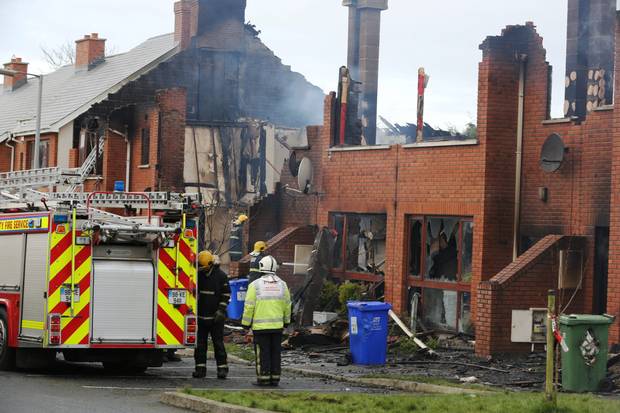
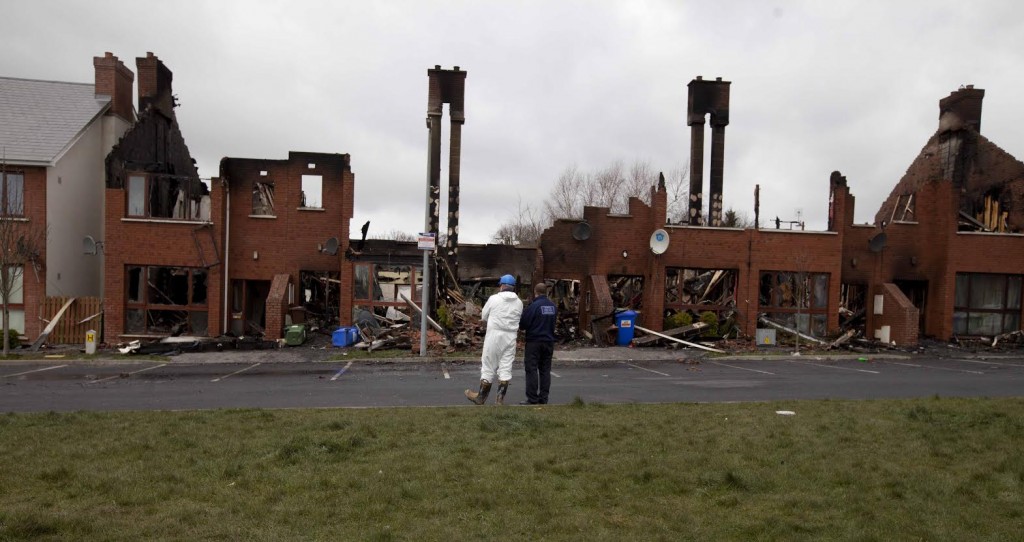
For example, if Category C below is indicative of the design and construction quality on a particular building site … just think of the Priory Hall Apartment Development in Dublin (!) … the Safety Factors to be applied in the design should be high … and with regard to actual construction, it should be expected that the Reliability of both Active Fire Protection Systems and Passive Fire Protection Measures will be initially low … with Life Cycle Reliability being entirely non-existent.

Quality of Fire Engineering Design & Related Construction 

Category A

(a)   Design of the works is exercised by an independent, appropriately qualified and experienced architect/engineer/fire engineer, with design competence relating to fire safety and protection in buildings … and, most importantly, that he/she interacts directly with the Project Design Professional in Responsible Charge ;

(b)   Installation/fitting of related construction products/systems is exercised by appropriately qualified and experienced personnel, with construction competence relating to fire safety and protection in buildings ;

(c)   Supervision of the works is exercised by appropriately qualified and experienced personnel from the principal construction organization ;

(d)   Regular inspections, by appropriately qualified and experienced personnel familiar with the design, and independent of the construction organization(s), are carried out to verify that the works are being executed in accordance with the fire engineering design.

Category B

(a)   Design of the works is exercised by an independent, appropriately qualified and experienced architect/engineer/fire engineer ;

(b)   Installation/fitting of fire-related construction products/systems is exercised by appropriately qualified and experienced personnel ;

(c)   Supervision of the works is exercised by appropriately qualified and experienced personnel from the principal construction organization.

Category C

This level of design and construction execution is assumed when the requirements for Category A or Category B are not met.

  2.     With regard to Recommendations 12 & 13 below … in an earlier post in this series, and elsewhere, I have defined Disproportionate Damage … and differentiated that structural concept from the related concept of Fire-Induced Progressive Collapse.

A significant number of countries include a requirement on Resistance to Disproportionate Damage in their national building codes.  Often, it is only necessary to consider this requirement in the case of buildings having 5 Storeys, or more … a completely arbitrary height threshold.  I would consider that adequately tying together the horizontal and vertical structural elements of a building … any building … is a fundamental principle of good structural engineering !!

Putting it simply … for the purpose of showing compliance with this structural requirement … it is necessary to demonstrate that a building will remain structurally stable if a portion of the building’s structure is removed … always remembering that every building comprises both structure and fabric, i.e. non-structure.

In reality this may happen, and quite often does happen, when, for example, a large truck runs into the side of a building, which can happen anywhere … or there is a gas explosion in some part of the building, which happened in Dublin’s Raglan House back in 1987, and many times in other countries … or a plane hits a high-rise building, which happened to Milan’s iconic Pirelli Tower in 2002, and to New York’s Empire State Building way back in 1945 … etc., etc.  Raglan House collapsed … the Pirelli Tower and the Empire State Building did not.

[ The World Trade Center Towers were originally designed to absorb the impact of a large plane and to remain structurally stable afterwards ... in ambient conditions.  However, what was not considered in the ambient structural design was 'fire', i.e. the fuel tanks were empty and no fire in the building would be initiated as a result of the mechanical damage caused by the plane impact ... which, on 11 September 2001, proved to be a ridiculous basis for any structural design !   This is why 9-11 should be regarded, at its core, as being a very serious 'real' fire incident.]

What I am leading up to is this … the concept of removing a portion of a building, and it remaining structurally stable afterwards … should now – logically and rationally – also be incorporated into the fire engineering design of Active Fire Protection Systems.  In other words, if a portion of a building is removed, will any particular Active Fire Protection System continue to operate effectively in the rest of the building ?   This has implications for the location and adequate protection of critical system components in a building … and for the necessary redundancy, zoning and back-up alternative routeing which must be designed into the system from the beginning !

.

2005 NIST WTC RECOMMENDATIONS

GROUP 4.  Improved Active Fire Protection

Active fire protection systems (i.e. sprinklers, standpipes/hoses, fire alarms, and smoke management systems) should be enhanced through improvements to the design, performance, reliability, and redundancy of such systems.

NIST WTC Recommendation 12.

NIST recommends that the performance and possibly the redundancy of active fire protection systems (sprinklers, standpipes/hoses, fire alarms, and smoke management systems) in buildings be enhanced to accommodate the greater risks associated with increasing building height and population, increased use of open spaces, high-risk building activities, fire department response limits, transient fuel loads, and higher threat profile.  The performance attributes should deal realistically with the system design basis, reliability of automatic/manual operations, redundancy, and reduction of vulnerabilities due to single point failures.  Affected Standards:  NFPA 13, NFPA 14, NFPA 20, NFPA 72, NFPA 90A, NFPA 92A, NFPA 92B, and NFPA 101.  Model Building Codes:  The performance standards should be adopted in model building codes by mandatory reference to, or incorporation of, the latest edition of the standard.

NIST WTC Recommendation 13.

NIST recommends that fire alarm and communications systems in buildings be developed to provide continuous, reliable, and accurate information on the status of life safety conditions at a level of detail sufficient to manage the evacuation process in building fire emergencies;  all communication and control paths in buildings need to be designed and installed to have the same resistance to failure and increased survivability above that specified in present standards.  This should include means to maintain communications with evacuating occupants that can both reassure them and redirect them if conditions change.  Pre-installed fire warden telephone systems can serve a useful purpose and may be installed in buildings and, if so, they should be made available for use by emergency responders.  All communication and control paths in buildings need to be designed and installed to have the same resistance to failure and increased survivability above that specified in present standards.  Affected Standards:  NFPA 1, NFPA 72, and NFPA 101.  Model Building and Fire Codes:  The performance standards should be adopted in model building and fire codes by mandatory reference to, or incorporation of, the latest edition of the standard.

NIST WTC Recommendation 14.

NIST recommends that control panels at fire/emergency command stations in buildings be adapted to accept and interpret a larger quantity of more reliable information from the active fire protection systems that provide tactical decision aids to fire ground commanders, including water flow rates from pressure and flow measurement devices, and that standards for their performance be developed.  Affected Standards:  NFPA 1, NFPA 72, and NFPA 101.  Model Building and Fire Codes:  The performance standards should be adopted in model building and fire codes by mandatory reference to, or incorporation of, the latest edition of the standard.

NIST WTC Recommendation 15.

NIST recommends that systems be developed and implemented for:  (1) real time off-site secure transmission of valuable information from fire alarm and other monitored building systems for use by emergency responders, at any location, to enhance situational awareness and response decisions, and maintain safe and efficient operation;*  and (2) preservation of that information either off-site, or in a black box that will survive a fire or other building failure, for purposes of subsequent investigations and analysis.  Standards for the performance of such systems should be developed, and their use should be required.  Affected Standards:  NFPA 1, NFPA 72, and NFPA 101.  Model Building and Fire Codes:  The performance standards should be adopted in model building and fire codes by mandatory reference to, or incorporation of, the latest edition of the standard.

[ * F-35  The alarm systems in the WTC towers were only capable of determining and displaying: (a) areas that had at some time reached alarm point conditions; and (b) areas that had not.  The quality and reliability of information available to emergency responders at the Fire Command Station was not sufficient to understand the fire conditions.  The only information transmitted outside the buildings was the fact that the buildings had gone into alarm.  Further, the fire alarm system in WTC Building 7, which was transmitted to a monitoring service, was on 'test mode' during the morning of 11 September 2001, because routine maintenance was being performed.  Under test mode conditions: (1) the system is typically disabled for the entire building, not just for the area where work is being performed; and (2) alarm signals typically do not show up on an operator console.]

.

.

END

Tags: , , , , , , , , , , , , , , , , , , , , , , , , , , , , , , , , , , , , , , , , , , , , , , , , , , , , , , , , , , , , , , , , , , , , , , , , , , , , , , , , , , , , , , , , , , , , , , , , , , , , , , , , , , , , , , , , ,

NIST WTC Recommendations 8-11 > New Design of Structures

Previous Posts in This Series …

2011-10-25:  NIST’s Recommendations on the 9-11 WTC Building CollapsesGROUP 1. Increased Structural Integrity – Recommendations 1, 2 & 3 (out of 30)

2011-11-18:  NIST WTC Recommendations 4-7 > Structural Fire EnduranceGROUP 2.  Enhanced Fire Endurance of Structures – Recommendations 4, 5, 6 & 7

.

2011-11-24:  SOME PRELIMINARY COMMENTS …

  1.     The first of two NIST Publications being referenced in this Series of Posts is as follows …

NIST (National Institute of Standards and Technology).  September 2005.  Federal Building and Fire Safety Investigation of the World Trade Center Disaster: Final Report on the Collapse of the World Trade Center Towers.  NIST NCSTAR 1.  Gaithersburg, MD, USA.

The 2005 NIST Report concludes, in Chapter 9, with a list of 30 Recommendations for Action, grouped together under the following 8 Subject Headings

i)        Increased structural integrity ;

ii)       Enhanced fire endurance of structures ;

iii)      New methods for fire resisting design of structures ;

iv)      Enhanced active fire protection ;

v)       Improved building evacuation ;

vi)      Improved emergency response ;

vii)     Improved procedures and practices ;   and

viii)    Education and training.

NIST has clearly stated that “the numerical ordering (of the Recommendations) does not reflect any priority”.

From my point of view, the 2005 NIST Report is especially noteworthy for the emphasis placed on:

(a)     The 3 R’s … Reality – Reliability – Redundancy ;

(b)     Evacuation Way Finding … should be ‘intuitive and obvious’ … a major challenge for building designers, since buildings are still typically designed for ‘access’ only.  In order to find the evacuation routes in a building, it is usually necessary to have a compass, a map, a magnifying glass, a torch … and a prayer book !!!   More about this in later posts …

  2.     However, following on from NIST’s emphasis on Reality … and just between you, me and the World Wide Web … there is a lot of misunderstanding in the International Fire Science and Engineering Community about what exactly is the Realistic End Condition.  But, here it goes …

Realistic End Condition:  A ‘real’ fire in a ‘real’ building, which is used by ‘real’ people with varying abilities in relation to self-protection, independent evacuation to a ‘place of safety’, and participation in the Fire Defence Plan for the building.

It is strange, therefore … and quite unacceptable … to have to point out that the Realistic End Condition IS NOT … a test fire or an experimental fire in a laboratory … or a design fire in a computer model, even IF it is properly validated !

  3.     With regard to Recommendation 8 below … NIST’s contention that “Current methods for determining the fire resistance of structural assemblies do not explicitly specify a performance objective” is not strictly the case.

If we examine Technical Guidance Document B (Ireland) and Approved Document B (England & Wales) once again, as examples close to home … Part B: ‘Fire Safety’ in both jurisdictions should be read in conjunction with its associated Part A: ‘Structure’, which contains a requirement on Disproportionate Damage.

In everyday practice, however, this never happens.  Instead, people dealing with Part B in both jurisdictions enter a sort of bubble … a twilight zone … and, if there is anything to do with structural performance in fire, they immediately refer to the Appendices at the back of both Guidance Documents (ignoring Part A altogether) … where we find a ‘single element’ approach to design, no consideration of connections, etc., etc., etc.

And … this fundamental error is further reinforced in Ireland because, under the national system of Fire Safety Certification for buildings, it is only Part B which is relevant.

At European Level, I would make the same point … under EU Regulation 305/2011 on Construction Products … Basic Requirement for Construction Works 2: ‘Safety in Case of Fire’ must be read in conjunction with Basic Requirement 1: ‘Mechanical Resistance & Stability’ … where we will again find a direct reference to Disproportionate Damage … and an indirect, but explicit, reference to Serviceability Limit States under normal conditions of use … including fire !

A major gap … the missing link at international level … is the failure, still, to elaborate and flesh out the structural concept of Fire-Induced Progressive Collapse.  More about this in later posts …

  4.     With regard to Recommendation 10 below … and amplifying my earlier comments concerning Recommendation 6 … the manufacturers of all Lightweight Structural Fire Protection Systems … not just the Sprayed Systems … have a lot to answer for.

Major question marks concerning Life Cycle Durability, and Resistance to Mechanical Damage at any stage in a building’s life cycle, hang over all of these systems.

Fire testing, alone, does not show that a Lightweight Structural Fire Protection System is ‘fit for its intended use’ !   And manufacturers well know this !!!

And as for the Installation of Lightweight Structural Fire Protection Systems on site … it’s a hornets’ nest that nobody wants to touch !

Vested interests … vested interests … vested interests !!!

.

2005 NIST WTC RECOMMENDATIONS

GROUP 3.  New Methods for Fire Resisting Design of Structures

The procedures and practices used in the fire resisting design of structures should be enhanced by requiring an objective that uncontrolled fires result in burnout without partial or global (total) collapse.  Performance-based methods are an alternative to prescriptive design methods.  This effort should include the development and evaluation of new fire resisting coating materials and technologies, and evaluation of the fire performance of conventional and high-performance structural materials.

NIST WTC Recommendation 8.

NIST recommends that the fire resistance of structures be enhanced by requiring a performance objective that uncontrolled building fires result in burnout without partial or global (total) collapse.  Such a provision should recognize that sprinklers could be compromised, non-operational, or non-existent.  Current methods for determining the fire resistance of structural assemblies do not explicitly specify a performance objective.  The rating resulting from current test methods indicates that the assembly (component or sub-system) continued to support its superimposed load (simulating a maximum load condition) during the test exposure without collapse.  Model Building Codes:  This Recommendation should be included in the national model building codes as an objective, and adopted as an integral pert of the fire resistance design for structures.  The issue of non-operational sprinklers could be addressed using the existing concept of Design Scenario 8 of NFPA 5000, where such compromise is assumed and the result is required to be acceptable to the Authority Having Jurisdiction (AHJ).  Affected Standards:  ASCE-7, AISC Specifications, ACI 318, and ASCE/SFPE 29.

NIST WTC Recommendation 9.

NIST recommends the development of:  (1) performance-based standards and code provisions, as an alternative to current prescriptive design methods, to enable the design and retrofit of structures to resist real building fire conditions, including their ability to achieve the performance objective of burnout without structural or local fire collapse;  and (2) the tools, guidelines, and test methods necessary to evaluate the fire performance of the structure as a whole system.  Standards development organizations, including the American Institute of Steel Construction, have already begun developing performance-based provisions to consider the effects of fire in structural design.

This performance-based capability should include the development of, but not be limited to:

a.     Standard methodology, supported by performance criteria, analytical design tools, and practical design guidance;  related building standards and codes for fire resistance design and retrofit of structures, working through the consensus process for nationwide adoption;  comprehensive design rules and guidelines;  methodology for evaluating thermo-structural performance of structures;  and computational models and analysis procedures for use in routine design practice.

b.     Standard methodology for specifying multi-compartment, multi-floor fire scenarios for use in the design and analysis of structures to resist fires, accounting for building-specific conditions such as geometry, compartmentation, fuel load (e.g. building contents and any flammable fuels such as oil and gas), fire spread, and ventilation;  and methodology for rating the fire resistance of structural systems and barriers under realistic design-basis fire scenarios.

c.     Publicly available computational software to predict the effects of fires in buildings – developed, validated, and maintained through a national effort – for use in the design of fire protection systems and the analysis of building response to fires.  Improvements should include the fire behaviour and contribution of real combustibles;  the performance of openings, including door openings and window breakage, that controls the amount of oxygen available to support the growth and spread of fires and whether the fire is fuel-controlled or ventilation-controlled;  the floor-to-floor flame spread;  the temperature rise in both insulated and un-insulated structural members and fire barriers;  and the structural response of components, sub-systems, and the total building system due to the fire.

d.     Temperature-dependent thermal and mechanical property data for conventional and innovative construction materials.

e.     New test methods, together with associated conformance assessment criteria, to support the performance-based methods for fire resistance design and retrofit of structures.  The performance objective of burnout without collapse will require the development of standard fire exposures that differ from those currently used.

Affected National and International Standards:  ASCE-7, AISC Specifications, ACI 318, and ASCE/SFPE 29 for fire resistance design and retrofit of structures;  NFPA, SFPE, ASCE, and ISO TC92 SC4 for building-specific multi-compartment, multi-floor design basis fire scenarios;  and ASTM, NFPA, UL, and ISO for new test methods.  Model Building Codes:  The performance standards should be adopted as an alternative method in model building codes by mandatory reference to, or incorporation of, the latest edition of the standard.

NIST WTC Recommendation 10.

NIST recommends the development and evaluation of new fire resisting coating materials, systems, and technologies with significantly enhanced performance and durability to provide protection following major events.  This could include, for example, technologies with improved adhesion, double-layered materials, intumescent coatings, and more energy absorbing SFRM’s.*  Consideration should be given to pre-treatment of structural steel members with some type of mill-applied fire protection to minimize the uncertainties associated with field application and in-use damage.  If such an approach were feasible, only connections and any fire protection damaged during construction and fit-out would need to be field-treated.  Affected Standards:  Technical barriers, if any, to the introduction of new structural fire resisting materials, systems and technologies should be identified and eliminated in the AIA MasterSpec, AWCI Standard 12 and ASTM standards for field inspection, conformance criteria, and test methods.  Model Building Codes:  Technical barriers, if any, to the introduction of new structural fire resisting materials, systems, and technologies should be eliminated from the model building codes.

[ * F-34  Other possibilities include encapsulation of SFRM by highly elastic energy absorbing membranes or commodity grade carbon fibre or other wraps.  The membrane would remain intact under shock, vibration, and impact but may be compromised in a fire, yet allowing the SFRM to perform its thermal insulation function.  The carbon wrap would remain intact under shock, vibration, and impact, and possibly under fire conditions as well.]

NIST WTC Recommendation 11.

NIST recommends that the performance and suitability of advanced structural steels, reinforced and pre-stressed concrete, and other high-performance material systems be evaluated for use under conditions expected in building fires.  This evaluation should consider both presently available and new types of steels, concrete, and high-performance materials to establish the properties (e.g. yield and ultimate strength, modulus, creep behaviour, and failure) that are important for fire resistance, establish needed test protocols and acceptance criteria for such materials and systems, compare the performance of newer systems to conventional systems, and the cost-effectiveness of alternative approaches.  Technical and standards barriers to the introduction and use of such advanced steels, concrete, and other high-performance material systems should be identified and eliminated, or at least minimized, if they are found to exist.  Affected Standards:  AISC Specifications and ACI 318.  Technical barriers, if any, to the introduction of these advanced systems should be eliminated in ASTM E 119, NFPA 251, UL 263, ISO 834.  Model Building Codes:  Technical barriers, if any, to the introduction of these advanced systems should be eliminated from the model building codes.

.

.

END

Tags: , , , , , , , , , , , , , , , , , , , , , , , , , , , , , , , , , , , , , , , , , , , , , , , , , , , , , , , , , , , , , , , , , , , , , , , , , , , , , , , , , , , , , , , , , , , , , , , , , , , , , , , , , , , , , , , , , , , , , , , , , , , , , ,

NIST WTC Recommendations 4-7 > Structural Fire Endurance

First Post in This Series …

2011-10-25:  NIST’s Recommendations on the 9-11 WTC Building Collapses … GROUP 1. Increased Structural Integrity – Recommendations 1, 2 & 3 (out of 30)

.

2011-11-18:  SOME PRELIMINARY COMMENTS …

  1.     Before launching into the next Group of NIST WTC Recommendations, it would be useful to distinguish between the following technical terms … which have been adapted from ISO/TR 10158: ‘Principles and Rationale Underlying Calculation Methods in Relation to Fire Resistance of Structural Elements’

Real Fire:  A fire which develops in a building and which is influenced by such factors as the type of building and its occupancy;  the combustible content (fire load);  the ventilation, geometry and thermal properties of the fire compartment, or building space (should no fire compartmentation exist);  the fire suppression systems in the building and the actions of the fire services.

Real Fires are complex phenomena.  Consequently, in structural fire engineering, idealized versions of ‘real fires’ are employed.

Experimental Fire:  A full or reduced scale fire with specified and controlled characteristics.

Design Fire:  A fire with specified exposure data intended for use in connection with structural fire engineering calculations.

A Design Fire may either be representative of the thermal exposure described by the standard time-temperature-pressure relationship in an International/European/National Standard, or some non-standard exposure intended to simulate particular fire exposure conditions.

However, in SDI Technical Guidance Note 95/102: ‘Proper Evidence of a Fire Test Result within the European Economic Area (EEA)’, issued on 22 May 1995, I included the following caution …

#1.7  A Fire Test in a Fire Test Laboratory, involving exposure of a test specimen or prototype to ‘test fire’ conditions, gives only a limited indication of:  (a) the likely performance of a particular product, material or component when exposed to ‘real fire’ conditions;  and (b) the suitability of a product, material or component for a particular end use.

  2.     In conventional fire engineering, much confusion arises because of a failure to properly distinguish between these two concepts …

Fire Resistance

The inherent capability of a building assembly, or an ‘element of construction’, to resist the passage of heat, smoke and flame for a specified time during a fire.

Structural Reliability

The ability of a structural system to fulfil its design purpose, for a specified time, under the actual environmental conditions encountered in a building.

[ In structural fire engineering, the concern must be that the structure will fulfil its purpose, both during the fire - and for a minimum period afterwards, during the 'cooling phase'.]

  3.     Therefore, with regard to Recommendation 6 … it is more correct and precise to refer to ‘Steel Fire Protection Systems’, rather than to ‘steel fire resisting materials’ !   AND … the same questions must be asked about All Lightweight Steel Fire Protection Systems … not just the sprayed systems.

Lightweight Fire Protection Systems are also used to protect concrete in buildings and tunnels.

  4.     These 2005 NIST Recommendations will later be confirmed, and further reinforced, by the 2008 NIST Recommendations.  Bringing Recommendation 7, below, closer to home … it is interesting to note that a very necessary discussion on the technical adequacy of the approach taken to structural performance in fire … in both Technical Guidance Document B (Ireland) and Approved Document B (England & Wales) … has yet not even commenced !

.

2005 NIST WTC RECOMMENDATIONS

GROUP 2.  Enhanced Fire Endurance of Structures

The procedures and practices used to ensure the fire endurance of structures should be enhanced by improving the technical basis for construction classifications and fire resistance ratings, improving the technical basis for standard fire resistance testing methods, use of the ‘structural frame’ approach to fire resistance ratings, and developing in-service performance requirements and conformance criteria for sprayed fire resisting materials.

NIST WTC Recommendation 4.

NIST recommends evaluating, and where needed improving, the technical basis for determining appropriate construction classifications and fire rating requirements (especially for tall buildings) – and making related code changes now, as much as possible – by explicitly considering factors including: *

[ * F-23  The construction classification and fire rating requirements should be risk-consistent with respect to the design-basis hazards and the consequences of those hazards.  The fire rating requirements, which were originally developed based on experience with buildings less than 20 storeys in height, have generally decreased over the past 80 years since historical fire data for buildings suggest considerable conservatism in those requirements.  For tall buildings, the likely consequences of a given threat to an occupant on the upper floors are more severe than the consequences to an occupant on the first floor or the lower floors.  For example, with non-functioning elevators, both of the time requirements are much greater for full building evacuation from upper floors and emergency responder access to those floors.  It is not clear how the current height and areas tables in building codes consider the technical basis for the progressively increasing risk to an occupant on the upper floors of tall buildings that are much greater than 20 storeys in height.]

  • timely access by emergency responders and full evacuation of occupants, or the time required for burnout without partial collapse ;
  • the extent to which redundancy in active fire protection systems (sprinklers and standpipe, fire alarm, and smoke management) should be credited for occupant life safety ; *

[ * F-24  Occupant life safety, prevention of fire spread, and structural integrity are considered separate safety objectives.]

  • the need for redundancy in fire protection systems that are critical to structural integrity ; *

[ * F-25  The passive fire protection system (including fire protection insulation, compartmentation, and fire stopping) and the active sprinkler system each provide redundancy for maintaining structural integrity in a building fire, should one of the systems fail to perform its intended function.]

  • the ability of the structure and local floor systems to withstand a maximum credible fire scenario* without collapse, recognizing that sprinklers could be compromised, not operational, or non-existent ;

[ * F-26  A maximum credible fire scenario includes conditions that are severe, but reasonable to anticipate, conditions related to building construction, occupancy, fire loads, ignition sources, compartment geometry, fire control methods, etc., as well as adverse, but reasonable to anticipate operating conditions.]

  • compartmentation requirements (e.g. 1,200 sq.m *) to protect the structure, including fire rated doorsets and automatic enclosures, and limiting air supply (e.g. thermally resisting window assemblies) to retard fire spread in buildings with large, open floor plans ;

[ * F-27  Or a more appropriate limit, which represents a reasonable area for active fire fighting operations.]

  • the effect of spaces containing unusually large fuel concentrations for the expected occupancy of the building ;   and
  • the extent to which fire control systems, including suppression by automatic or manual means, should be credited as part of the prevention of fire spread.

Adoption of this Recommendation will allow building codes to distinguish the risks associated with different building heights, fuel concentrations, and fire protection systems.  Research is needed to develop the data and evaluate alternative proposals for construction classifications and fire ratings.  Model Building Codes:  A comprehensive review of current construction classifications and fire rating requirements and the establishment of a uniform set of revised thresholds with a firm technical basis that considers the factors identified above should be undertaken.*

[ * F-28  The National Fire Protection Association (NFPA) 5000 model code and the International Building Code (IBC) both recognize the risks associated with different building heights and accepted changes in 2001 and 2004, respectively.  Both model codes now require that buildings 126 metres and higher have a minimum 4 hour structural fire resistance rating.  The previous requirement was 2 hours.  The change provides increased fire resistance for the structural system leading to enhanced tenability of the structure and gives firefighters additional protection while fighting a fire.  While NIST supports these changes as an interim step, NIST believes that it is essential to complete a comprehensive review that will establish a firm technical basis for construction classifications and fire rating requirements.]

NIST WTC Recommendation 5.

NIST recommends that the technical basis for the century-old standard for fire resistance testing of components, assemblies and systems be improved through a national effort.  Necessary guidance also should be developed for extrapolating the results of tested assemblies to prototypical building systems.  A key step in fulfilling this Recommendation is to establish a capability for studying and testing components, assemblies, and systems under realistic fire and load conditions.

This effort should address the technical issues listed below: *

[ * F-29  The technical issues were identified from the series of four fire resistance tests of the WTC Floor system, and the review and analysis of relevant documents that were conducted as part of this Investigation.]

a.     Criteria and test methods for determining:

  • structural limit states, including failure, and means for measurement ;
  • effect of scale of test assembly versus prototype application, especially for long-span structures that significantly exceed the size of test furnaces ;
  • effect of restraining thermal expansion (end-restraint conditions) on test results, especially for long-span structures that have greater flexibility ;
  • fire resistance of structural connections, especially the fire protection required for a loaded connection to achieve a specified rating ; *

[ * F-30  There is a lack of test data on the fire resistance ratings of loaded connections.  The fire resistance of structural connections is not rated in current practice.  Also, standards and codes do not provide guidance on fire protection requirements for structural connections when the connected members have different fire resistance ratings.]

  • effect of the combination of loading and exposure (time-temperature profile) required to adequately represent expected conditions ;
  • the repeatability and reproducibility of test results (typically, results from a single test are used to determine the rating for a component or assembly) ;   and
  • realistic ratings for structural assemblies made with materials that have improved elevated temperature properties (strength, modulus, creep behaviour).

b.     Improved procedures and guidance to analyze and evaluate existing data from fire resistance tests of building components and assemblies for use in qualifying an untested building element.

c.     Relationships between prescriptive ratings and performance of the assembly in real fires.

Affected National and International Standards: * ASTM E 119, NFPA 251, UL 263, and ISO 834.  Model Building Codes:  The standards should be adopted in model building codes by mandatory reference to, or incorporation of, the latest edition of the standard.

[ * F-31  While the NIST Recommendations are focused mainly on U.S. national standards, each U.S. standard has counterpart international standards.  In a recent report (ISO/TMB AGS N 46), the International Organization for Standardization (ISO), through its Advisory Group for Security (AGS), has recommended that since many of the ISO standards for the design of buildings date back to the 1980's, they should be reviewed and updated to make use of the studies done by NIST on the World Trade Center disaster, the applicability of new technology for rescue from high buildings, natural disasters, etc.  ISO's Technical Advisory Group 8 co-ordinates standards work for buildings.]

NIST WTC Recommendation 6.

NIST recommends the development of criteria, test methods, and standards:  (1) for the in-service performance of Sprayed Fire Resisting Materials (SFRM, also commonly referred to as fire protection insulation) used to protect structural components;  and (2) to ensure that these materials, as installed, conform to conditions in tests used to establish the fire resistance rating of components, assemblies, and systems.

This should include:

  • Improved criteria and testing methodologies for the performance and durability of SFRM (e.g. adhesion, cohesion, abrasion, and impact resistance) under in-service exposure conditions (e.g. temperature, humidity, vibration, impact, with/without primer paint on steel*) for use in acceptance and quality control.  The current test method to measure the bond strength, for example, does not distinguish the cohesive strength from the tensile and shear adhesive strengths.  Nor does it consider the effect of primer paint on the steel surface.  Test requirements that explicitly consider the effects of abrasion, vibration, shock, and impact under normal service conditions are limited or do not exist.  Also, the effects of elevated temperatures on thermal properties and bond strength are not considered in evaluating the performance and durability of SFRM.

[ * F-32  NIST tests show that the adhesive strength of SFRM on steel coated with primer paint was a third to half of the adhesive strength on steel that had not been coated with primer paint.  The SFRM products used in the WTC towers were applied to steel components coated with primer paint.]

  • Inspection procedures, including measurement techniques and practical conformance criteria, for SFRM in both the building codes and fire codes for use after installation, renovation, or modification of all mechanical and electrical systems and by fire inspectors over the life of the building.  Existing standards of practice (AIA MasterSpec and AWCI Standard 12), often required by codes for some buildings need to be broadly applied to both new and existing buildings.  These standards may require improvements to address the issues identified in this Recommendation.
  • Criteria for determining the effective uniform SFRM thickness – thermally equivalent to the variable thickness of the product as it is actually applied – that can be used to ensure that the product in the field conforms to the near uniform thickness conditions in the tests used to establish the fire resistance rating of the component, assembly, or system.  Such criteria are needed to ensure that the SFRM, as installed, will provide the intended performance.
  • Methods for predicting the effectiveness of SFRM insulation as a function of its properties, the application characteristics, and the duration and intensity of the fire.
  • Methods for predicting service life performance of SFRM under in-service conditions.

Affected Standards:  AIA MasterSpec and AWCI Standard 12 for field inspection and conformance criteria; ASTM standards for SFRM performance criteria and test methods.  Model Building Codes:  The standards should be adopted in model building codes by mandatory reference to, or incorporation of, the latest edition of the standard.  (See Recommendation 10 for more on this issue.)

NIST WTC Recommendation 7.

NIST recommends the adoption and use of the ‘structural frame’ approach to fire resistance ratings.  This approach requires that structural members – such as girders, beams, trusses, and spandrels having direct connection to the columns, and bracing members designed to carry gravity loads – be fire protected to the same fire resistance rating as columns.  This approach is currently required by the International Building Code (IBC), one of the model codes, and is in the process of adoption by NFPA 5000, the other model code.  This requirement ensures consistency in the fire protection provided to all of the structural elements that contribute to overall structural stability.*  State and local jurisdictions should adopt and enforce this requirement.

[ * F-33  Had this requirement been adopted by the 1968 New York City building code, the WTC floor system, including its connections, would have had the 3 hour rating required for the columns since the floors braced the columns.]

.

.

END

Tags: , , , , , , , , , , , , , , , , , , , , , , , , , , , , , , , , , , , , , , , , , , , , , , , , , , , , , , , , , , , , , , , , , , , , , , , , , , , , , , , , , , , , , , , , , , , , , , , , , , , , , , , , , , , , , , , ,

Corporate Social Responsibility – Updated EU Strategy 2011-14

2011-11-15:  The European Commission, in Brussels, recently published a New European Union Policy Document on Corporate Social Responsibility (CSR)COM(2011) 681 final – Brussels, 2011-10-25.

To access this document … just go down to the EUR-Lex Link on the right hand side of this Page.

The Updated EU CSR Strategy for 2011-2014  signals an important change of direction … more a re-balancing of emphasis … which enterprises, of all sizes, should immediately be aware of … and whether or not these enterprises are located within Europe … or outside, as far away as China, India, Japan, South Africa, the USA or Brazil, etc.

The Updated CSR Strategy  also confirms how the merging of the different and interrelated aspects of Sustainable Human & Social Development, i.e. social, economic, environmental, institutional, political and legal … is progressing nicely, and gathering some momentum.  We have discussed this issue here many times … and promoted it elsewhere in our work, particularly during the last decade.  How time flies !

[ In this last regard, reference should also be made to the United Nations Development Programme (UNDP) 2011 Human Development Report: 'Sustainability and Equity - A Better Future for All', which was launched in Copenhagen on 2 November 2011.]

.

A New Definition for Corporate Social Responsibility (CSR)

The European Commission puts forward a new definition of CSR as ‘the responsibility of enterprises for their impacts on society’.

Respect for applicable legislation and for collective agreements between social partners are prerequisites for meeting that responsibility.  To fully meet their corporate social responsibility, enterprises should have in place a process to integrate social - environmental - ethical - human rights and consumer concerns into their business operations and core strategy in close collaboration with their stakeholders, with the aim of:

  • maximising the creation of shared value for their owners/shareholders, and for their other stakeholders and society at large ;
  • identifying, preventing and mitigating their possible adverse impacts.

The complexity of that process will depend on factors such as the size of the enterprise and the nature of its operations.  For most small and medium-sized enterprises, especially micro-enterprises, the CSR Process is likely to remain informal and intuitive.

To maximise the creation of shared value, enterprises are encouraged to adopt a long-term, strategic approach to CSR, and to explore the opportunities for developing innovative products, services and business models that contribute to Social Wellbeing and lead to higher quality and more productive jobs.

To identify, prevent and mitigate their possible adverse impacts, large enterprises, and enterprises at particular risk of having such impacts, are encouraged to carry out risk-based due diligence, including through their supply chains.

Certain types of enterprise, such as co-operatives, mutuals, and family-owned businesses, have ownership and governance structures that can be especially conducive to responsible business conduct.

.

The Updated EU CSR Strategy elaborates an Action Agenda for 2011-2014

     1.  Improving Company Disclosure of Social and Environmental Information:  the new strategy confirms the European Commission’s intention to bring forward a new legislative proposal on this issue.

     2.  Enhancing Market Reward for CSR:  this means leveraging EU Policies in the fields of consumption, investment and public procurement in order to promote market reward for responsible business conduct.

     3.  Enhancing the Visibility of CSR and Disseminating Good Practices:  this includes the creation of a European award, and the establishment of sector-based platforms for enterprises and stakeholders to make commitments and jointly monitor progress.

     4.  Improving and Tracking Levels of Trust in Business:  the European Commission will launch a public debate on the role and potential of enterprises, and organise surveys on citizen trust in business.

     5.  Better Aligning European and International Approaches to CSR:  the European Commission highlights the following …

  • OECD Guidelines for Multinational Enterprises ;
  • 10 Principles of the UN Global Compact ;
  • UN Guiding Principles on Business and Human Rights ;
  • ILO Tri-Partite Declaration of Principles on Multinational Enterprises and Social Policy ;
  • ISO 26000 Guidance Standard on Social Responsibility.

     6.  Further Integrating CSR into Education, Training and Research:  the European Commission will provide further support for education and training in the field of CSR, and explore opportunities for funding more research.

     7.  Improving Self- and Co-Regulation Processes:  the European Commission proposes to develop a short protocol to guide the development of future self- and co-regulation initiatives.

     8.  Emphasising the Importance of National and Sub-National CSR Policies:  the European Commission invites EU Member States to present or update their own plans for the promotion of CSR by mid 2012.

.

.

European Commission COM(2011) 681 final – Brussels, 2011-10-25  (PDF File, 136 kb)

.

.

END

Tags: , , , , , , , , , , , , , , , , , , , , , , , , , , , , , , , , , , , , , , , , , , , , , , , , , ,

NIST’s Recommendations on the 9-11 WTC Building Collapses

2011-10-25:  Since shortly after my visit to Lower Manhattan in mid-October 2001 … we have maintained an Archive Page on Structural Fire Engineering, World Trade Center Incident (9-11) & Fire Serviceability Limit States … at SDI’s Corporate WebSite.  And I have referenced here … many, many times … the Recommendations contained in the 2005 & 2008 Final Reports of the U.S. National Institute of Standards & Technology (NIST) on the 9-11 World Trade Center Building 1, 2 & 7 Collapses.

In this post (and a series of future posts) … I find it most necessary that the 2005 & 2008 NIST Recommendations now be presented for everyone to read.  Yes, some of Recommendations apply specifically to Tall and Very Tall Buildings … and Building Designers in India, China, Brazil, Russia & South Africa (BRICS), the Arab Gulf RegionEurope and North America, etc., should be fully aware of their contents.

BUT … I am also strongly convinced … precisely because I am an Architect, a Fire Engineer and a Technical Controller … that most of the NIST Recommendations apply to ALL Buildings … so catastrophic was the failure exposed on that fateful day (11 September 2001) … in all of our common design and construction practices … and our operation, maintenance and emergency response procedures !

.

PRELIMINARY COMMENTS

  1.     Extract from Paragraph #9.2, Chapter 9, NIST Final Report on the Collapse of the World Trade Center Towers – Report Reference NIST NCSTAR 1 (2005) …

  • NIST believes  that these Recommendations are both realistic and achievable within a reasonable period of time, and that their implementation would make buildings safer for occupants and emergency responders in future emergencies.
  • NIST strongly urges  that immediate and serious consideration be given to these Recommendations by the building and fire safety communities – especially designers, owners, developers, codes and standards development organizations, regulators, fire safety professionals, and emergency responders.
  • NIST also strongly urges  building owners and public officials to:  (i) evaluate the safety implications of these Recommendations for their existing inventory of buildings;  and (ii) take the steps necessary to mitigate any unwarranted risks without waiting for changes to occur in codes, standards, and practices.

  2.     At the time of writing … it is important to point out that although they are related Structural Concepts … and there is still, to this day, a lot of confusion about these concepts in the USA … it is important to clearly distinguish between …

Disproportionate Damage

The failure of a building’s structural system  (i) remote from the scene of an isolated overloading action;  and (ii) to an extent which is not in reasonable proportion to that action.

Fire-Induced Progressive Collapse

The sequential growth and intensification of distortion, displacement and failure of elements of construction in a building – during a fire and the ‘cooling phase’ afterwards – which, if unchecked, will result in disproportionate damage, and may lead to total building collapse.

  3.     Recommendation 2, below, would certainly need to be understood and implemented within today’s additional design constraints of Sustainable Climate Change Adaptation and Resilience to Severe Weather Events.  Therefore … Design Wind Speeds must be increased, accordingly, for ALL Buildings.

  4.     As such a high level of performance is expected … indeed demanded … of a Sustainable BuildingSustainable Fire Engineering must be ‘reliability-based’.  In other words, it must have a rational, empirical and scientifically robust basis … unlike conventional fire engineering, which is yet aimlessly wandering around in pre-historic caves !

  5.     Finally … there is no use trying to hide the fact that progress on implementing the NIST Recommendations, within the USA, has been lamentably slow.  Outside that jurisdiction, the response has ranged from mild interest, to complete apathy, and even to vehement antipathy.  The implications arising from implementation are much too hard to digest … for long established fire safety professionals and researchers who are unswervingly committed to the flawed and out-of-date practices and procedures of conventional fire engineering and, especially, for vested interests !

However … is it either in society’s interest, or in the interests of our clients/client organizations … that, to give you a simple example which is relevant close to home, British Standard 9999 (published on 31 October 2008): ‘Code of Practice for Fire Safety in the Design, Management and Use of Buildings’ takes absolutely no account of any of the NIST Recommendations ?   As far as the British Standards Institution is concerned … 9-11 never happened … which I think is an inexcusable and unforgivable technical oversight !

For this reason, the General Public in ALL of our societies and Clients/Client Organizations in ALL countries should also be fully aware of the contents of these Recommendations …

.

Colour photograph showing the two World Trade Center Towers immediately after the impact of the second plane. At a fundamental level, this was a very serious 'real' fire incident ... which was extensively, and very thoroughly, investigated by the U.S. National Institute of Standards & Technology (NIST) ... and resulted in the important 2005 & 2008 NIST Recommendations. Click to enlarge.

Colour photograph showing the two World Trade Center Towers immediately after the impact of the second plane. At a fundamental level, this was a very serious 'real' fire incident ... which was extensively, and very thoroughly, investigated by the U.S. National Institute of Standards & Technology (NIST) ... and resulted in the important 2005 & 2008 NIST Recommendations. Click to enlarge.

.

2005 NIST WTC RECOMMENDATIONS

GROUP 1.   Increased Structural Integrity

The standards for estimating the load effects of potential hazards (e.g. progressive collapse, wind) and the design of structural systems to mitigate the effects of those hazards should be improved to enhance structural integrity.

NIST WTC Recommendation 1.

NIST recommends that:  (1) progressive collapse be prevented in buildings through the development and nationwide adoption of consensus standards and code provisions, along with the tools and guidelines needed for their use in practice;  and (2) a standard methodology be developed – supported by analytical design tools and practical design guidance – to reliably predict the potential for complex failures in structural systems subjected to multiple hazards.

a.   Progressive collapse* should be prevented in buildings.

[ * F-19  Progressive collapse (or disproportionate damage) occurs when an initial local failure spreads from structural element to structural element resulting in the collapse of an entire structure or a disproportionately large part of it.]

The primary structural systems should provide alternate paths for carrying loads in case certain components fail (e.g. transfer girders or columns).  This is especially important in buildings where structural components (e.g. columns, girders) support unusually large floor areas.*

[ * F-20  While the WTC towers eventually collapsed, they had the capacity to redistribute loads from impact and fire damaged structural components and sub-systems to undamaged components and sub-systems.  However, the core columns in the WTC towers lacked sufficient redundant (alternative) paths for carrying gravity loads.]

Progressive collapse is addressed only in a very limited way in practice and by codes and standards.  For example, the initiating event in design to prevent progressive collapse may be removal of one or two columns at the bottom of the structure.  Initiating events at multiple locations within the structure, or involving other key components and sub-systems, should be analyzed commensurate with the risks considered in the design.  The effectiveness of mitigation approaches involving new system and sub-system design concepts should be evaluated with conventional approaches based on indirect design (continuity, strength and ductility of connections), direct design (local hardening), and redundant (alternate) load paths.  The capability to prevent progressive collapse due to abnormal loads should include:  (i) comprehensive design rules and practice guides;  (ii) evaluation criteria, methodology, and tools for assessing the vulnerability of structures to progressive collapse;  (iii) performance-based criteria for abnormal loads and load combinations;  (iv) analytical tools to predict potential collapse mechanisms;  and (v) computer models and analysis procedures for use in routine design practice.  The federal government should co-ordinate the existing programmes that address this need:  those in the Department of Defence;  the General Services Administration;  the Defence Threat Reduction Agency;  and NIST.  Affected Standards:  ASCE-7, AISC Specifications, and ACI 318.  These standards and other relevant committees should draw on expertise from ASCE/SFPE 29 for issues concerning progressive collapse under fire conditions.  Model Building Codes:  The consensus standards should be adopted in model building codes (i.e. the International Building Code and NFPA 5000) by mandatory reference to, or incorporation of, the latest edition of the standard.  State and local jurisdictions should adopt and enforce the improved model building codes and national standards based on all 30 WTC Recommendations (2005).  The codes and standards may vary from the WTC Recommendations, but satisfy their intent.

b.   A robust, integrated predictive capability should be developed, validated, and maintained to routinely assess the vulnerability of whole structures to the effects of credible hazards.  This capability to evaluate the performance and reserve capacity of structures does not exist and is a significant cause for concern.  This capability would also assist in investigations of building failure – as demonstrated by the analyses of the WTC building collapses carried out in this Investigation.  The failure analysis capability should include all possible complex failure phenomena that may occur under multiple hazards (e.g. bomb blasts, fires, impacts, gas explosions, earthquakes, and hurricane winds), experimentally validated models, and robust tools for routine analysis to predict such failures and their consequences.  This capability should be developed via a co-ordinated effort involving federal, private sector, and academic research organizations in close partnership with practicing engineers.

NIST WTC Recommendation 2.

NIST recommends that nationally accepted performance standards be developed for:  (1) conducting wind tunnel testing of prototype structures based on sound technical methods that result in repeatable and reproducible results among testing laboratories;  and (2) estimating wind loads and their effects on tall buildings for use in design, based on wind tunnel testing data and directional wind speed data.  Wind loads specified in current prescriptive codes may not be appropriate for the design of very tall buildings since they do not account for building-specific aerodynamic effects.  Further, a review of wind load estimates for the WTC towers indicated differences by as much as 40 % from wind tunnel studies conducted in 2002 by two independent commercial laboratories.  Major sources of differences in estimation methods currently used in practice occur in the selection of design wind speeds and directionality, the nature of hurricane wind profiles, the estimation of ‘component’ wind effects by integrating wind tunnel data with wind speed and direction information, and the estimation of ‘resultant’ wind effects using load combination methods.  Wind loads were a major factor in the design of the WTC tower structures and were relevant to evaluating the baseline capacity of the structures to withstand abnormal events such as major fires or impact damage.  Yet, there is lack of consensus on how to evaluate and estimate winds and their load effects on buildings.

a.   Nationally accepted standards should be developed and implemented for conducting wind tunnel tests, estimating site-specific wind speed and directionality based on available data, and estimating wind loads associated with specific design probabilities from wind tunnel test results and directional wind speed data.

b.   Nationally accepted standards should be developed for estimating wind loads in the design of tall buildings.  The development of performance standards for estimating wind loads should consider:  (1) appropriate load combinations and load factors, including performance criteria for static and dynamic behaviour, based on both ultimate and serviceability limit states;  and (2) validation of wind load provisions in prescriptive design standards for tall buildings, given the universally acknowledged use of wind tunnel testing and associated performance criteria.  Limitations to the use of prescriptive wind load provisions should be clearly identified in codes and standards.

The standards development work can begin immediately to address many of the above needs.  The results of those efforts should be adopted in practice as soon as they become available.  The research that will be required to address the remaining needs also should begin immediately and results should be made available for standards development and use in practice.  Affected National Standard:  ASCE-7.  Model Building Codes:  The standard should be adopted in model building codes by mandatory reference to, or incorporation of, the latest edition of the standard.

NIST WTC Recommendation 3.

NIST recommends that an appropriate criterion be developed and implemented to enhance the performance of tall buildings by limiting how much they sway under lateral load design conditions (e.g. winds and earthquakes).  The stability and safety of tall buildings depend upon, among other factors, the magnitude of building sway or deflection, which tends to increase with building height.  Conventional strength-based methods, such as those used in the design of the WTC towers, do not limit deflections.  The deflection limit state criterion, which is proposed here is in addition to the stress limit state and serviceability requirement;  it should be adopted either to complement the safety provided by conventional strength-based design or independently as an alternate deflection-based approach to the design of tall buildings for life safety.  The recommended deflection limit state criterion is independent of the criterion used to ensure occupant comfort, which is met in current practice by limiting accelerations (e.g. in the 15 to 20 milli-g range). Lateral deflections, which already are limited in the design of tall buildings to control damage in earthquake-prone regions, should also be limited in non-seismic areas.*

[ * F-22  Analysis of baseline performance under the original design wind loads indicated that the WTC towers would need to have been between 50 % and 90 % stiffer to achieve a typical drift ratio used in current practice for non-seismic regions, though not required by building codes.  Limiting drift would have required increasing exterior column areas in lower stories and/or significant additional damping.]

Affected National standards:  ASCE-7, AISC Specifications, and ACI 318.  Model Building Codes:  The standard should be adopted in model building codes by mandatory reference to, or incorporation of, the latest edition of the standard.

.

.

END

Tags: , , , , , , , , , , , , , , , , , , , , , , , , , , , , , , , , , , , , , , , , , , , , , , , , , , , , , , , , , , , , , , , , , , , , , , , , , , , , , , , , , , , , , , , , , , , , , , , , , , , , , , , , , , , , , , , , ,

Fixing ‘Priory Hall’ in Dublin – Practical Solutions Needed Now !

2011-10-18:  A large ‘can of worms’ has recently been opened in Ireland …

For the last few days, including today, I have been listening intently to Joe Duffy on the RTE Radio ‘Liveline’ Programme at lunchtime.  Joe is being very cautious because he cannot quite believe his ears … either about the unfolding harrowing events for occupants in ‘Priory Hall’, Donaghmede, Dublin 13 – a Private, Multi-Storey Apartment Development – or the tales and anecdotes about Irish Building Sites during the Celtic Tiger Years.

This will be of no consolation to anybody … but the big surprise, for me, is that there is so much public shock.  ‘Priory Hall’ is the Tip of the Iceberg !   Ireland’s current dysfunctional approach to the development of Our(!) Built Environment … has been designed (for want of a better word) in a chaotic, haphazard and malevolent way … to end up in exactly the sort of mess which we are all now witnessing in North County Dublin.

Just to be clear … what has been happening in the Irish Construction Industry, during the boom years, has been happening for twenty years all over the country … more precisely, since the introduction of Legal National Building Regulations, with NO Effective Building Control, in 1991 … and, before that again, in those parts of this jurisdiction, outside of the major urban areas having Legal Building Bye-Laws, and Effective Building Control, i.e. mandatory inspections by competent local authority personnel at the foundation level and drainage level of all building sites … and, depending on the type of project, occasional or frequent inspections above ground level.

[ 1991:  Statutory Instrument No.304 of 1991 - Building Control Act, 1990 (Commencement Order), 1991;  Statutory Instrument No.305 of 1991 - Building Control Regulations, 1991;  Statutory Instrument No.306 of 1991 - Building Regulations, 1991 ]

And the biggest joke of all … is that the sum of the many resources, both human and material, required to repair sub-standard construction throughout Ireland … will count as a positive contribution towards the economic indicator of GDP (Gross Domestic Product) !   FUBAR

.

Colour photograph showing 'Priory Hall' ... a private, multi-storey apartment development located in North County Dublin, Ireland. Click to enlarge.

Colour photograph showing 'Priory Hall' ... a private, multi-storey apartment development located in North County Dublin, Ireland. Click to enlarge.

.

PRACTICAL SOLUTIONS NEEDED NOW

What I have not been hearing from the radio, or reading in the newspapers, is practical solutions.

Lest there be any doubt … this is one of the professional services we provide at Sustainable Design International !

So … how do we fix Priory Hall as the situation now presents itself … in such a way that, as soon as it is practicable, a satisfactory level of long-term safety, protection, convenience and comfort will be provided for the occupants of Priory Hall … and the social wellbeing of the local community, there, can be restored.

Afterwards … we can worry about who’s responsible, and about the reasons for the many ‘system’ failures in Ireland.

.

FIXING ‘PRIORY HALL’ IN DUBLIN

The following list of practical suggestions … a simple roadmap … is addressed to the Owners and Occupants of Apartments in Priory Hall.

As they have a large vested interest in the problems of Priory Hall … either directly or indirectly … no assurances or undertakings should be accepted, on face value, from either Dublin City Council (DCC) or the Department of the Environment, Community & Local Government (DECLG) … or their representatives.

     1.  Informed Consent of Apartment Owners and Occupants

Demand that the Informed Consent of the Owner/Occupant of an Apartment is required, in writing, before any necessary Corrective/Repair/Refurbishment Works are carried out …

Informed Consent:  Consent freely obtained – without threats or improper inducements – after appropriate disclosure to a person of relevant, adequate and easily assimilated information in a form and language understood by that person.

     2.  ‘As Constructed’ Drawings & Specification of Entire Development

If they exist … we’re on the way !   But, if they don’t exist … and they may not … demand that an ‘As Constructed’ Survey of the Entire Development be carried out immediately.

Demand to see a copy of the Detailed ‘As Constructed’ Drawings, and Specification, for the Entire Development.

CHECK the adequacy of the Detailed Drawings and Specification !

At this stage, remember … all of the emphasis must now be placed on actual construction … not on paperwork !   The ‘As Constructed’ Survey Drawings and Specification are only a means towards a satisfactory end … that’s all !!

     3.  Failures to Properly Comply with Current Building Regulation Requirements A to M (Second Schedule to Irish Building Regulations)

Demand to see a Detailed Schedule of the many failures to properly comply with current Building Regulation Requirements, i.e. Parts A to M in the Second Schedule to the Building Regulations, as amended.

Do not entertain, even for a moment, any discussion about past legal building regulation requirements, which were in force at the time of initial design or construction !

An important point to note !   The Guidance Texts in, for example, Technical Guidance Document B: ‘Fire Safety’ are merely that … GUIDANCE !   This guidance is not infallible … and in a few respects, is entirely inadequate … for example, when dealing with the structural performance of buildings during conditions of fire, and the ‘cooling phase’ immediately afterwards … and the fire evacuation of people with activity limitations, in which case the guidance actually ensures that fire evacuation is made extremely difficult, if not prevented altogether !

Do not be sucked in to any conversations about what is stated, or not stated, in the Technical Guidance Documents.  This is irrelevant.  The Law mandates proper compliance with the Requirements !

Some people may even attempt to quote from the Building Regulation Approved Documents for England & Wales.  Just tell them to take a long jump off a short pier … suggest Howth Harbour !

Become very, very suspicious whenever there is a use of, or reference to, the term ‘Substantial Compliance’ !!

CHECK the adequacy of this Detailed Schedule !   And … ensure that it is Comprehensive !!

     4.  The Necessary Corrective/Repair/Refurbishment Works

Demand to see Full Detailed Information, in the form of annotated drawings and descriptive texts, etc., etc … on the exact nature, timetable and phasing of all of the Corrective/Repair/Refurbishment Works which are necessary to effectively solve the serious problems in the Development.

Beware of decorative solutions, which look good to a superficial visual inspection in ambient conditions … but don’t actually solve anything !

CHECK the adequacy of this Full Detailed Information !

     5.  Independent Technical Control of Construction Works

Demand only Category A Construction Execution of the necessary Corrective/Repair/Refurbishment Works …

Category A Construction Execution:

(a)  Supervision of the works is exercised by appropriately qualified and experienced personnel from the principal construction organization ;

(b)  Regular inspections, by appropriately qualified and experienced personnel familiar with the design and independent of the construction organization(s) … and other vested interests … are carried out to verify that the works are being executed in accordance with the design.

Demand receipt of a clear undertaking, in writing, that this will be the case … before any Corrective/Repair/Refurbishment Works commence.

And remember these words from the 2005 Final Report of the U.S. National Institute of Standards & Technology (NIST) on the 9-11 World Trade Center Tower Collapses …

” NIST urges state and local agencies to rigorously enforce building codes and standards since such enforcement is critical to ensure the expected level of safety.  Unless they are complied with, the best codes and standards cannot protect occupants, emergency responders, or buildings.”

CHECK the adequacy of the Proposed Method of Independent Technical Control during execution of the Corrective/Repair/Refurbishment Works !

     6.  Meeting & Discussion with Other Owners/Occupants

Do not act alone … meet the other Owners/Occupants, and discuss issues with them.  Share and collate all available information together.  Try to identify information gaps.  If you do not understand something … ask !

When, and only when, you are happy … signal your Informed Consent that works should commence.

     7.  Commencement of Corrective/Repair/Refurbishment Works

Visit the Construction Site Office regularly … to show that you are taking a keen interest in what is happening.  Keep your eyes and ears wide open.

Expect that you will not be permitted to just wander around the Site.  Construction Sites are one of the most hazardous ‘workplaces’ in this country !

CHECK the adequacy of the Independent Technical Control actually being undertaken.

Demand to be updated, regularly, and at the very least on the progress of Corrective/Repair/Refurbishment Works at your Apartment … in the Common Areas of your Block … and throughout the full extent of the Approach Routes to your Block Entrances and Exits.

.

.

Advisory Note:  Should you, or the Residents’ Committee of your Building or Development, be concerned about any matter discussed in this Post … please contact C.J. Walsh  by e-mail: cjwalsh@sustainable-design.ie  or by phone: (01) 8386078 / +353 1 8386078.

.

.

END  (for now, but to be continued soon !)

Tags: , , , , , , , , , , , , , , , , , , , , , , , , , , , , , , , , , , , , , , , , , , , , , , , , , , , , , , , , , , , , , , , , , , , , , , , , , , , , , , , , ,

Check Now for Child Safe Window Blinds & Other Coverings !

2011-09-27:  A recent child fatality in Ireland has alerted our population to the common danger of  Window Blinds, Shades and Other Window Coverings which are not Child Safe.

Colour photograph showing a small child reaching for the control wand of a Vertical Window Blind in familiar surroundings, for example, at home. This is just one of a range of Child Safe Window Covering Solutions.

Colour photograph showing a small child reaching for the control wand of a Vertical Window Blind in familiar surroundings, for example, at home. This is just one of a range of Child Safe Window Covering Solutions.

.

In Ireland … our Consumer Protection Laws are weak … our National Consumer Protection Organizations are even weaker … and the National Standards Authority of Ireland (NSAI) is under-resourced, and not fit for purpose.

In the European Union (EU) … a work programme, having the aim of eliminating the risk of strangulation and internal asphyxiation due to child accessible window covering cords and small parts, only commenced in the early part of 2011.  Refer to this Page on the WebSite of the European Commission’s Directorate General for Health & Consumers (DG SANCO)http://ec.europa.eu/dgs/health_consumer/dyna/enews/enews.cfm?al_id=1109

.

HOWEVER, back on 15 December 2009 the United States Consumer Product Safety Commission (CPSC)  issued the following Press Release …

CPSC Announces Voluntary Recalls to Repair Millions of Roman Shades and Roll-Up Blinds by Multiple Firms

WASHINGTON, D.C. – The U.S. Consumer Product Safety Commission (CPSC) is announcing that multiple firms are recalling millions of units of Window coverings, including Roman shades and roll-up blinds.  These window coverings present a serious risk of strangulation to young children.

Colour photograph showing a common type of Window Blind, in Europe, which has caused Child Fatalities.

Colour photograph showing a common type of Window Blind, in Europe, which has caused Child Fatalities.

CPSC has received reports of five deaths and 16 near-strangulations in Roman shades since 2006, and three deaths in roll-up blinds since 2001.  Strangulations in Roman shades occur when a child places his/her neck between the exposed inner cord and the fabric on the back side of the blind or when a child pulls the cord out and wraps it around his/her neck.  Strangulations in roll-up blinds occur when the lifting loop slides off the side of the blind and a child’s neck becomes entangled on the free-standing loop or if a child places his/her neck between the lifting loop and the roll-up blind material.

The recalled Roman shades and roll-up blinds were sold by a variety of manufacturers and retailers, including major discount department stores, home improvement stores and window covering manufacturers and retailers.  Remedies vary among firms from repair kits to refunds.

“Parents need to make sure there are no accessible cords on the front, side, or back of their window coverings”, said CPSC Chairperson Inez Tenenbaum.  ”Avoid these deadly dangers by getting the repair kit or installing cordless window coverings in all homes where small children live or visit.”

To help prevent child strangulation in window coverings, CPSC and the  Window Covering Safety Council  urge parents and caregivers to follow these guidelines:

  • Examine all shades and blinds in the home.  Make sure there are no accessible cords on the front, side or back of the product.  CPSC recommends the use of cordless window coverings in all homes where children live or visit.
  • Do not place cribs, beds and furniture close to windows with corded window coverings because children can climb on them and gain access to the cords.
  • Make loose cords inaccessible.
  • If the window shade has looped bead chains or nylon cords, install tension devices to keep the cord taut.

.

A Table at the end of the CPSC Press Release (15 December 2009) indicated that  IKEA was ‘voluntarily’ recalling 3,360,000 Roman Shades, Roller Blinds and Roll-Up Blinds from its stores, nationwide in the USA.  Don’t worry … I blinked, and then re-checked that number !

What has IKEA done in its stores, continent wide in Europe ??

.

.

END

Tags: , , , , , , , , , , , , , , , , , , , , , , , , , , , , , , , , , , , , , , , , , , ,

Buildings & Firefighters Not Yet Safer ! – 10 Years After 9-11 (II)

2011-09-20:  Continuing on from where I left off on 11 September 2011

Applying the Recommendations contained in the 2005 & 2008 National Institute of Standards & Technology (NIST – USA) Reports on the 9-11 WTC Buildings 1, 2 & 7 Collapses to the everyday practice of Architecture and Fire Engineering has been a central part of our work for many years.  Long discussions on this subject have taken place within CIB (International Council for Building Research) Working Commission 14: ‘Fire Safety’ … and I also chair Commission 14′s Research Working Group IV on ‘Fire-Induced Progressive Collapse’.

My particular interest in Disproportionate Damage and Progressive Collapse reaches back as far as the late 1980′s !

So I was intrigued, amused … and at the same time, highly concerned … to read the following Letter to the Editor of the Irish Times Newspaper, on Saturday 10 September 2011 …

Recalling 9/11

Sir, – One of the most important factors in the tragedy of 9/11, and one that has received scant attention, was the mode of failure of the towers.

They were struck high up on their structures and failed via progressive collapse.  Had they been designed this side of the Atlantic, they would not have collapsed.  These were flimsy structures. -

Yours, etc,

Jim Ryan, Chartered Structural Engineer,

Waterfall, Cork.

.

JIM …  If the WTC Towers (which were not flimsy structures !) had been designed on this side of the Atlantic … they would have collapsed.

Furthermore …  If the Towers had only been completed last week in the USA, Ireland, England & Wales, India or China … they would still collapse, if a similar event were to occur next year.

To be crystal clear …  What we witnessed, on Tuesday 11 September 2001, was a Collapse Level Event (CLE) which exposed, very harshly and cruelly, a catastrophic failure in all of our common Design and Construction Practices and Procedures used in/by/as …

  • Architectural Design | (Ambient) Structural Engineering | Fire Engineering ;
  • Building Management Systems ;
  • Emergency Responders | Firefighters | Rescue Teams ;
  • Technical Control Organizations Having Authority (AHJ’s) or Jurisdiction ;
  • Fire Safety Objectives in Building Legislation, Codes and Standards.

To the average ‘person in the street’ …  Whether he/she lives in Manhattan or Chicago in the USA, Dublin or Cork in Ireland, Cardiff or London in Britain, Dilli or Mumbai in India, Beijing or Shanghai or Hong Kong in China … it is unacceptable that buildings collapse … entirely unacceptable !!

.

COLLAPSE OF WTC BUILDINGS 1, 2 & 7

JIM …  Unless you believe in conspiracy theories, please study the 2005 & 2008 NIST(USA) Reports on the 9-11 WTC Buildings 1, 2 & 7 Collapses.  The 2 Final Reports can be downloaded from this Page on Sustainable Design International’s Corporate WebSitehttp://www.sustainable-design.ie/fire/structdesfire.htm … along with other key documents and links.

Some indication of the enormous quantity of 9-11 WTC Incident Documentation issued by NIST(USA) can be seen below …

Colour photograph showing the enormous quantity of 9-11 WTC Incident Documentation, issued by the U.S. National Institute of Standards & Technology, which is still readily available for the public to access and download.

Colour photograph showing the enormous quantity of 9-11 WTC Incident Documentation, issued by the U.S. National Institute of Standards & Technology, which is still readily available for the public to access and download.

.

PUBLIC SAFETY 10 YEARS AFTER 9-11 ?

If it is entirely unacceptable to the Public that buildings collapse … in how many National Building Codes does the following Critical Public Safety Equation appear today ?   The answer is NONE !

Colour image showing Page 21 from my Overhead Presentation on 'Sustainable Fire Engineering' ... scheduled for this Thursday, 22 September 2011, at the ASFP Ireland Fire Seminar & Workshop ... to be held at the RDS, in Ballsbridge, Dublin. Click to enlarge.

Colour image showing Page 21 from my Overhead Presentation on 'Sustainable Fire Engineering' ... scheduled for this Thursday, 22 September 2011, at the ASFP Ireland Fire Seminar & Workshop ... to be held at the RDS, in Ballsbridge, Dublin. Click to enlarge.

.

Is there some fundamental reason why Levels of Safety for the Public should vary so much from one country to another ?   NO, there is not !

Within Europe, and in relation to the New EU Construction Product Regulation 305/2011, which I discussed here a few days ago … the European Commission, in a discussion document dating back to the mid-1980′s, suggested that the only way to effectively realize a Single Market for Construction Products would be to introduce Harmonized EU Building Regulations in all of the EU Member States.  Of course the Member States, at the time, went ballistic at the very mention of this idea … and it was quickly withdrawn.  I take great pleasure in repeating that important idea today.

Jim …  The Critical Public Safety Statement above is fully consistent with … and meets … the ‘Basic Requirements for Construction Works’ in Annex I of EU Regulation 305/2011.

.

However, in relation to any one EU Member State … let’s take Ireland as an example … compare a situation where, in a remote rural location, it might take almost an hour for a sufficient fire service presence to arrive at the scene of a building fire emergency … with a similar situation in the middle of a city, or large town, where the time required will not be greater than 15 minutes … then, although the Level of Safety for the Public can be / should be / must be the same in both situations … I would expect, in the remote rural location having a poor fire service support infrastructure, that the range of Fire Protection Measures to be employed in a typical building would be more extensive, and the performance expected of those Measures would be higher … in order to achieve an Equivalent Level of Safety in both rural and urban locations.  Is that not a rational idea ??

Unfortunately, that’s not how the present systems work … National or European !   Levels of Public Safety differ from one country to the next … and from one region, within any one country, to the next … without any good reason … and without meaningful consultation and the full understanding of the Public.

.

BUILDINGS & FIREFIGHTERS ARE NOT YET SAFER

JIM …  In spite of all of the spin coming from the other side of the Atlantic … and discounting criminality and fraud in construction practices … Buildings and Firefighters are not yet safer … because the large, difficult, complex flaws and failures in Conventional Fire Engineering have not yet been aggressively confronted … and properly solved.

In a post last year, on 18 October 2010 … I referred to the Cul-de-Sac of Current Fire Engineering … and illustrated a typical architectural detail in a Dublin Building – a common detail also to be found in India, China, USA, England & Wales, etc., etc – which demonstrates a Fundamental Flaw at the very core of conventional thinking and practice.

On Thursday next … 22 September 2011 … at the ASFP Ireland Fire Seminar and Workshop in the RDS, Dublin … I will present this flawed detail … and a solution which is fully compatible with … and answers … the NIST Recommendations !

BUT … would anybody like to show me where any National Building Codes have been revised and updated to solve this Fundamental Flaw ?

Colour image showing Page 33 from my Overhead Presentation on 'Sustainable Fire Engineering' ... scheduled for this Thursday, 22 September 2011, at the ASFP Ireland Fire Seminar & Workshop ... to be held at the RDS, in Ballsbridge, Dublin. Click to enlarge.

Colour image showing Page 33 from my Overhead Presentation on 'Sustainable Fire Engineering' ... scheduled for this Thursday, 22 September 2011, at the ASFP Ireland Fire Seminar & Workshop ... to be held at the RDS, in Ballsbridge, Dublin. Click to enlarge.

. 

Colour image showing Page 35 from my Overhead Presentation on 'Sustainable Fire Engineering' ... scheduled for this Thursday, 22 September 2011, at the ASFP Ireland Fire Seminar & Workshop ... to be held at the RDS, in Ballsbridge, Dublin. Click to enlarge.

Colour image showing Page 35 from my Overhead Presentation on 'Sustainable Fire Engineering' ... scheduled for this Thursday, 22 September 2011, at the ASFP Ireland Fire Seminar & Workshop ... to be held at the RDS, in Ballsbridge, Dublin. Click to enlarge.

.

Colour image showing Page 36 from my Overhead Presentation on 'Sustainable Fire Engineering' ... scheduled for this Thursday, 22 September 2011, at the ASFP Ireland Fire Seminar & Workshop ... to be held at the RDS, in Ballsbridge, Dublin. Click to enlarge.

Colour image showing Page 36 from my Overhead Presentation on 'Sustainable Fire Engineering' ... scheduled for this Thursday, 22 September 2011, at the ASFP Ireland Fire Seminar & Workshop ... to be held at the RDS, in Ballsbridge, Dublin. Click to enlarge.

.

Colour image showing Page 37 from my Overhead Presentation on 'Sustainable Fire Engineering' ... scheduled for this Thursday, 22 September 2011, at the ASFP Ireland Fire Seminar & Workshop ... to be held at the RDS, in Ballsbridge, Dublin. Click to enlarge.

Colour image showing Page 37 from my Overhead Presentation on 'Sustainable Fire Engineering' ... scheduled for this Thursday, 22 September 2011, at the ASFP Ireland Fire Seminar & Workshop ... to be held at the RDS, in Ballsbridge, Dublin. Click to enlarge.

.

Colour image showing Page 38 from my Overhead Presentation on 'Sustainable Fire Engineering' ... scheduled for this Thursday, 22 September 2011, at the ASFP Ireland Fire Seminar & Workshop ... to be held at the RDS, in Ballsbridge, Dublin. Click to enlarge.

Colour image showing Page 38 from my Overhead Presentation on 'Sustainable Fire Engineering' ... scheduled for this Thursday, 22 September 2011, at the ASFP Ireland Fire Seminar & Workshop ... to be held at the RDS, in Ballsbridge, Dublin. Click to enlarge.

.

A CASE STUDY OF ENGLAND & WALES

10 years after 9-11 … there are two reasons for taking a closer look at England & Wales (Britain)

  • The Building Regulations for England & Wales were used as the model for the Irish Building Regulations, which were first introduced here in the early 1990′s.  And, in the absence of Harmonized European Standards … British National Standards tend, with only a few exceptions, to become the default Irish National Standard ;
  • British National Standards are being applied in many different parts of the world outside England & Wales … in most cases, without any proper consideration of content … or adaptation to local conditions.

.

Colour image showing the Cover Page of Approved Document B: 'Fire Safety' ... Volume 2 - Buildings Other Than Dwellinghouses ... from the Building Regulations for England & Wales. Click to enlarge.

Colour image showing the Cover Page of Approved Document B: 'Fire Safety' ... Volume 2 - Buildings Other Than Dwellinghouses ... from the Building Regulations for England & Wales. Click to enlarge.

.

The Institution of Fire Engineers (Ireland) Annual Fire Conference, which was held last year, on Wednesday 20th October 2010 … in the Dublin Fire Brigade Training Centre, Marino, Dublin … threw up some interesting ‘notions’ for consideration by a diverse range of participants.

One curious proposition … repeated quite often during the day … was that Approved Document B, in the British System of Building Regulations, was basically still a sound document … and that it should pass an upcoming major review with little difficulty.

I don’t agree … Approved Document B is inadequate and dysfunctional !

With regard to Structural Performance in Fire … instead of referring to Approved Document A – Structure … the reader is referred to Appendices at the back of Approved Document B, which only reinforce the erroneous concept of Single Structural Element Fire Protection …

And along with its many other major problems … see my post, dated 2009-06-14 … British Standard BS 9999 takes no account of any of the 2005 & 2008 NIST Recommendations, Fire-Induced Progressive Collapse or Disproportionate Damage … and, in fact, directly conflicts with aspects of the Building Regulations for England & Wales …

Colour image showing Page 51 in the Appendix of my Overhead Presentation on 'Sustainable Fire Engineering' ... scheduled for this Thursday, 22 September 2011, at the ASFP Ireland Fire Seminar & Workshop ... to be held at the RDS, in Ballsbridge, Dublin. Click to enlarge.

Colour image showing Page 51 in the Appendix of my Overhead Presentation on 'Sustainable Fire Engineering' ... scheduled for this Thursday, 22 September 2011, at the ASFP Ireland Fire Seminar & Workshop ... to be held at the RDS, in Ballsbridge, Dublin. Click to enlarge.

.

In order to take a close look at Approved Document B … I used the vehicle of a Notional Hotel Project in Cardiff, Wales … similar to the Early 1990′s Dublin Hotel Project shown above …

Colour image showing Page 52 in the Appendix of my Overhead Presentation on 'Sustainable Fire Engineering' ... scheduled for this Thursday, 22 September 2011, at the ASFP Ireland Fire Seminar & Workshop ... to be held at the RDS, in Ballsbridge, Dublin. Click to enlarge.

Colour image showing Page 52 in the Appendix of my Overhead Presentation on 'Sustainable Fire Engineering' ... scheduled for this Thursday, 22 September 2011, at the ASFP Ireland Fire Seminar & Workshop ... to be held at the RDS, in Ballsbridge, Dublin. Click to enlarge.

.

With regard to properly showing Fitness for Intended Use of Fire Protection related Products and Building Systems … instead of referring to Regulation 7 … the reader is again referred to Appendices at the back of Approved Document B … which explains why we have such serious problems, i.e. lack of Durability and very low Resistance to Mechanical Damage, with the Thermal Insulation Products used for the Fire Protection of Structural Steelwork …

I also had to quote from Part D of the Irish Building Regulations to fill a gap in the British Regulation 7

Colour image showing Page 53 in the Appendix of my Overhead Presentation on 'Sustainable Fire Engineering' ... scheduled for this Thursday, 22 September 2011, at the ASFP Ireland Fire Seminar & Workshop ... to be held at the RDS, in Ballsbridge, Dublin. Click to enlarge.

Colour image showing Page 53 in the Appendix of my Overhead Presentation on 'Sustainable Fire Engineering' ... scheduled for this Thursday, 22 September 2011, at the ASFP Ireland Fire Seminar & Workshop ... to be held at the RDS, in Ballsbridge, Dublin. Click to enlarge.

.

.

END

Tags: , , , , , , , , , , , , , , , , , , , , , , , , , , , , , , , , , , , , , , , , , , , , , , , , , , , , , , , , , , , , , , , , , , , , , , , , , , , , , , , , , , , , , , , , , , , , , , , , , , , , , , , , , , , ,

U.S. National Mesothelioma Awareness Day – 26 September !

2011-09-14:  Again … closely related to our current discussions about the Environmental Impacts of the 9-11 WTC Incident in New York …

You will find the following useful information about Mesothelioma on the Irish Lung Foundation’s WebSitehttp://www.irishlungfoundation.ie/

THE PLEURA: THE LINING OF THE LUNG  -  Both of your lungs are surrounded by two very thin layers, like ‘cling film’.  These layers are called the pleura.  The inner layer of film is attached to the lung.  It is known as the visceral pleura.  The outer layer is called the parietal pleura.  The two layers are separated by a very small amount of fluid.  This fluid keeps the pleura moistened.  The pleura are very thin.  This allows the lungs to expand and contract without difficulty.  However, the pleura can become thickened or hard.  This will prevent the lungs from expanding properly, making it difficult to breathe.  This happens with Mesothelioma.

WHAT IS MEANT BY MESOTHELIOMA ?  -  Mesothelioma is a form of cancer that grows on the pleura around the lung.  It can rarely grow in other places.  These include the lining of the abdomen, the lining of the testicle and the lining of the heart.  However, in 8 out of 10 cases of Mesothelioma, it is the pleura that is affected.

WHAT CAUSES MESOTHELIOMA ?  -  In the vast majority of cases, inhaling certain types of asbestos dust is the cause of Mesothelioma.  About 7 out of every 10 cases of Pleural Mesothelioma are due to exposure to asbestos.  A virus called SV40 has also been linked to the development of Mesothelioma.  However, this link has not yet been proven.  Exposure to a variety of other dusts may also cause this cancer.  Asbestos exposure does remain the most important factor.

Colour photograph showing a Firefighter on the day after 9-11 (2001). Photograph by Matthew McDermott / Corbis Sygma.

Colour photograph showing a Firefighter on the day after 9-11 (2001). Photograph by Matthew McDermott / Corbis Sygma.

.

A few days ago … on Wednesday, 7 September 2011 … we received the following e-mail from the other side of the pond (USA) …

Good Morning, Friends at Sustainable Design International !

After visiting the  Sustainable Design International WebSite, I was extremely impressed by the level of environmental responsibility exhibited.  My name is Jenna Cole and I represent  MesotheliomaSymptoms.com.  I am contacting you to offer our resource to further illustrate your dedication, and to inform you about an upcoming event with hopes that you would mention our WebSite.

On September 26th, we are proud to celebrate U.S. National Mesothelioma Awareness Day.  To honour this day, we are trying to spread awareness by educating as many on-line communities about the dangers of asbestos exposure and how it can lead to this terminal disease.  Asbestos was used as insulation in buildings for centuries and can be a threat to workers and homeowners making these ‘green’ improvements.

By mentioning our Mesothelioma Survival Rate Pagehttp://www.mesotheliomasymptoms.com/mesothelioma-survival-rate … on the Sustainable Design International WebSite, you have the opportunity to dispel some of the myths surrounding this environmental hazard, while promoting National Mesothelioma Awareness Day.  Please do not hesitate to contact me with any questions you may have.  I look forward to hearing back from you soon !

Many thanks,

Jenna Cole – MesotheliomaSymptoms.com

.

.

A Must-View, Must-Study Resource WebSite for Practicing Fire Engineers Worldwide … ‘Human Health’ following a Serious Real Fire Incident …

Human Health (WHO):  A state of complete physical, mental and social wellbeing, and not merely the absence of disease or infirmity.

9/11 Health

A Public Information WebSite developed by the New York City Health Department … providing the latest information about scientific research and services for people who may have health problems related to the 9-11 World Trade Center Incident.

.

.

END

Tags: , , , , , , , , , , , , , , , , , , , , , , , , , ,

10 Years After 9-11 … Are Our Buildings & Firefighters Safer ??

2011-09-11:  From the beginning of the past week, news media (printed and on-line), and the television and radio schedules have all been full of articles, stories, opinions, and interpretative and speculative pieces about the 9-11 World Trade Center (WTC) Incident in New York, and its tragic aftermathToday is the 10th Anniversary … a long ten years since that sunny Tuesday morning in Manhattan !

BUT … is anybody out there asking the questions: “Are Our Buildings Safer ?” … and … “Are Our Firefighters Safer ?”   AND … if you do ask those questions … are you able to distinguish between solid, reliable information and ‘spin’ ?

So many Irish people, and people of Irish descent, were directly involved in this traumatic event … working inside the WTC offices, as stockbrokers … or outside, as maintenance personnel, or firefighters, policemen and women, or as members of the emergency medical services …

Colour photograph showing the thick cloud of toxic dust and debris spreading rapidly throughout lower Manhattan, and beyond, after the Second Tower Collapse (WTC 1/North Tower) just before 10.30 hrs (local time) on the morning of 11 September 2001. Earlier, seismic sensors located 160 Km away had recorded the time and intensity of the First Tower Collapse (WTC 2/South Tower) at 09.59 hrs (local time). Click to enlarge.

Colour photograph showing the thick cloud of toxic dust and debris spreading rapidly throughout lower Manhattan, and beyond, after the Second Tower Collapse (WTC 1/North Tower) just before 10.30 hrs (local time) on the morning of 11 September 2001. Earlier, seismic sensors located 160 Km away had recorded the time and intensity of the First Tower Collapse (WTC 2/South Tower) at 09.59 hrs (local time). Click to enlarge.

.

REALPOLITIK

The previous post about the United Nations Gaza Flotilla Report, I hope, created an uncertainty in your mind … a worrying thought regarding political interference and the negative, and very often, destructive influence of vested interests … which is a necessary frame of mind to have, also, for an essential discussion – on the 10th Anniversary of the 9-11 WTC Incident – about the Safety of Our Buildings, particularly High-Rise Buildings, Iconic Buildings, and those Buildings having a Critical Function and/or an Innovative Design … and the Safety of Our Firefighters.

By ‘Our Buildings’ … I don’t just mean buildings in Ireland, or Europe … I mean buildings on every continent of our small planet.  And … such a discussion must be trans-disciplinary, involving the use of simple language only … because it is necessary for each discipline to clearly understand what the others are saying (this rarely happens !) … and the discussion must also be transparent to, and be easily assimilated by, the general population in all of our societies.  And by ‘Our Firefighters’ … I mean firefighters worldwide.

Concerning the Gaza Flotilla Report … we could ask …

  • Would the Findings and Recommendations have been different … if there had been 4 independent and obviously impartial people on the Panel of Inquiry instead ?   The answer is … yes, of course !   And …
  • Why did UN Secretary-General Ban Ki-moon nominate President Álvaro Uribe (Vice-Chair), an ‘ultra’ rightwing politician from Columbia … and Mr. Joseph Ciechanover Itzhar, an Israeli, to serve on the Panel ?   I will leave you to answer that for yourself …

The important point I wish to make is that the community of International Fire Science and Engineering – just like every other ‘human’ community – is not immune from these sorts of malevolent influences !

.

Colour photograph showing advanced clean up operations at the World Trade Center Complex after 11 September 2001. Fires continued to smoulder for weeks after the Incident. Click to enlarge.

Colour photograph showing advanced clean up operations at the World Trade Center Complex after 11 September 2001. Fires continued to smoulder for weeks after the Incident. Click to enlarge.

.

LONG-TERM ENVIRONMENTAL IMPACTS OF 9-11

Just five weeks after the 9-11 World Trade Center (WTC) Incident in New York … I found myself in Manhattan for the purpose of making an important presentation to a conference which was taking place not far from Madison Square Garden … while staying Down-Town in Battery Park City, at an apartment within the Security Zone.  Yes, I was worried and fearful before going … but …

Environmental Impact:  Any effect caused by a given activity on the environment, including human health, safety and welfare, flora, fauna, soil, air, water, and especially representative samples of natural ecosystems, climate, landscape and historical monuments or other physical structures, or the interactions among these factors; it also includes effects on accessibility, cultural heritage or socio-economic conditions resulting from alterations to those factors.

On first arriving in the city, by taxi from Kennedy Airport … I witnessed, at first hand, the racist hostility of a policeman towards our coloured Asian driver, who had simply asked about the procedure to pass through the Security Zone Boundary.  Later, walking near the WTC Site, I would encounter the ‘macho’ behaviour of many National Guardsmen on security duty.

At the conference, I met a person who was literally unable to speak – could not even bear to talk about – the 9-11 Incident.

Everywhere south of Canal Street was in a terrible, horrific condition.

The weather, fortunately, had remained generally very good … sunny, with a light breeze coming in from the sea.  Then, unexpectedly, one day towards the end of my stay … the sky was overcast and the air stood still … in lower Manhattan, it assaulted my eyes, nose and the back of my throat.  Many times, during that particular day, I retched … but could not vomit !   Yet, a representative of the U.S. EPA (Environmental Protection Agency) announced that there was no problem with air quality !   Meanwhile, in Mid-Town, everything ‘appeared’ normal.

10 Years Afterwards … people, communities and the country (USA) are all still suffering … physically, mentally and psychologically … from the 9-11 WTC Incident … unable to ask for help, or perhaps, too proud or ashamed to speak up.

September 2001 – World Health Organization

WHO: How to Address Psychosocial Reactions to Catastrophe

Click the Link Above to read and/or download PDF File (12.5 kb)

.

10 YEARS AFTER 9-11 – ARE OUR BUILDINGS & FIREFIGHTERS SAFER ?

Or to put it in a more technical way … how are the Critical Recommendations contained in the 2005 & 2008 NIST(USA) Reports on the 9-11 WTC Buildings 1, 2 & 7 Collapses being implemented ?   And, what is the quality of that implementation ?

At this time, two years ago … I asked …

  • Why are so many Key Institutions and Organizations in the International Building Sector still desperately trying to ignore and/or deny the Recommendations in those 2 NIST Reports ?
  • Why have National Building and Fire Codes/Regulations and Standards not yet been revised to respond, properly and satisfactorily, to the NIST Recommendations ?
  • Why can we not yet use All Lifts (Elevators) in a Building during a fire incident ?   Why are Lift (Elevator) Manufacturers still actively resisting this necessary change ?

.

Colour image showing an Ostrich with its Head in the Sand ... an accurate description of the International 'Technical' Reaction to the 9-11 WTC Incident ... "it never happened" ... or "it was a unique event, and it will never happen again" ... or "this unusual event only has implications for very, very, very tall buildings" ... blah, blah, blah !!

Colour image showing an Ostrich with its Head in the Sand ... an accurate description of the International 'Technical' Reaction to the 9-11 WTC Incident ... "it never happened" ... or "it was a unique event, and it will never happen again" ... or "this unusual event only has implications for very, very, very tall buildings" ... blah, blah, blah !!

.

The answers to the questions are NO … and NO … minor revisions (tinkering at the edges) have been made to Codes/Regulations & Standards in some countries … and, generally, progress on implementing the NIST Recommendations is proving to be very slow … too slow !   Most surprisingly, no revisions have been made to Codes/Regulations & Standards in many countries.

To illustrate tinkering at the edges … refer to the USA’s International Building Code (2012 Edition) … which, despite its grandiose title, is really just another of the USA’s National Model Building Codes … and check out this very disappointing Article: ‘Evolution of Building Code Requirements in a Post 9/11 World’, by David Drengenberg and Gene Corley, in the recently published Special Issue III (2011) of the Council on Tall Buildings and Urban Habitat (CTBUH) Journal … which is available at  http://www.ctbuh.org/

.

Progress at the National Fire Protection Association (NFPA), in the USA, is a little more apparent … but still, far too little and far too slow.  Check out this recent Special 9-11 Report: ‘A Decade of Difference’, by Fred Durso Jr … on the NFPA WebSite … http://www.nfpa.org/publicJournalDetail.asp?categoryID=2248&itemID=53000&src=NFPAJournal

And … released earlier this year, NFPA’s Third Needs Assessment of the U.S. Fire Service has identified ‘areas of ongoing concern’ !!

.

To Be Continued …

.

.

END

Tags: , , , , , , , , , , , , , , , , , , , , , , , , , , , , , , , , , , , , , , , , , , , , , , , , , , , , , , , , , , , , , , , , , , , , , , , , , , ,

Search


May 2012
S M T W T F S
« Apr    
 12345
6789101112
13141516171819
20212223242526
2728293031  

Links