fire
Evacuation Chair Devices – Fire Engineering for All in Buildings ?
This post has been running around in the back of my mind for quite some time … and I know now, for far too long ! But recently, my patience with certain manufacturers and suppliers of evacuation chair devices has reached its limit.
In relation to Building Users … previous posts have examined the technical term: Place of Safety (see the post dated 2009-10-24) … and why this concept is an essential starting point in the development of any practical … and comprehensive … fire engineering strategy for a building.
Previous posts have also explored the complex issue of Areas of Rescue Assistance in a building (see posts dated 2009-03-10 & 2009-03-17).
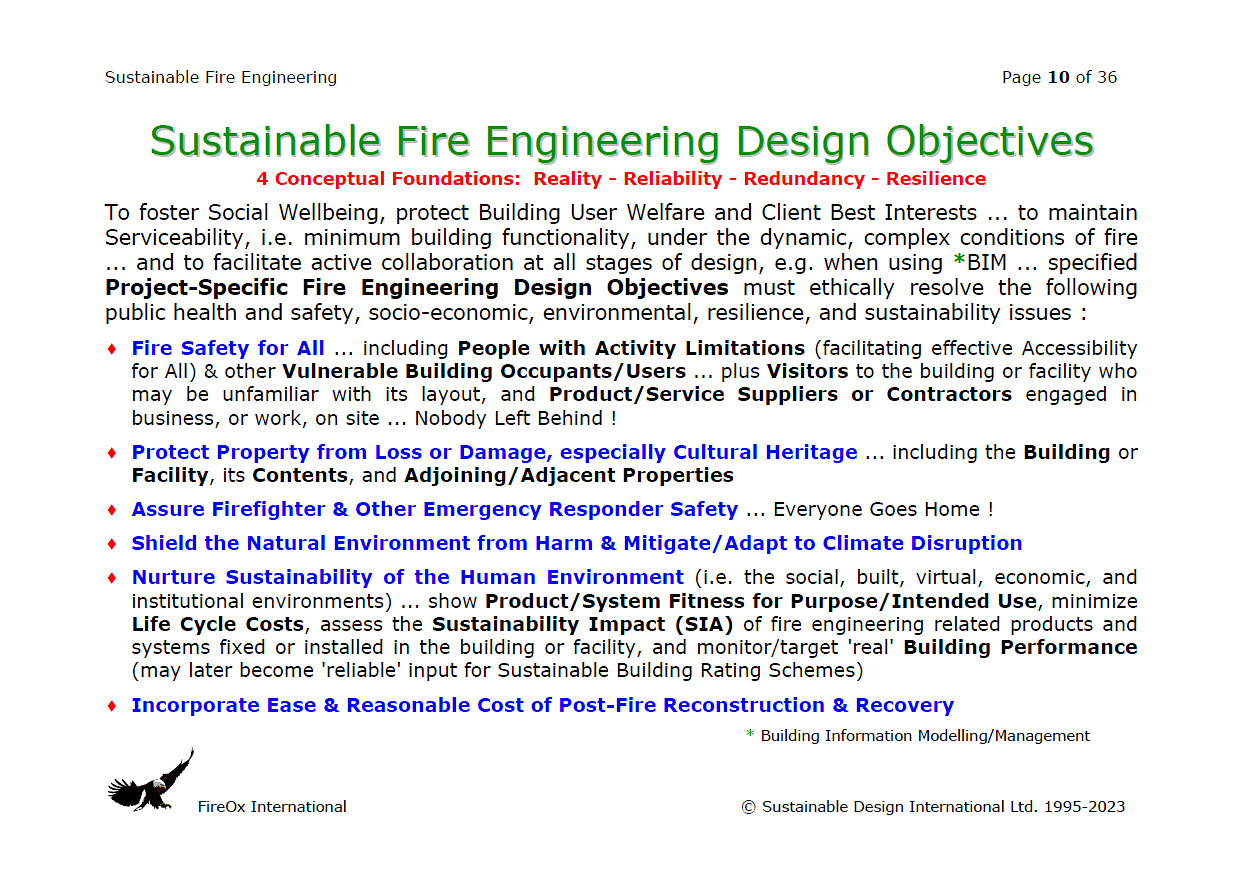
For the purposes of this discussion, now, a clear statement of Fire Engineering Design Objectives is required …
- Evacuation for All Building Users … with an assurance of health, safety and welfare protection during the course of that evacuation.
- Sustain Building Serviceability during Evacuation … at the very least, while people are waiting in Areas of Rescue Assistance … and, until all of those people can be rescued by Firefighters and can reach a Place of Safety.
.
We are rapidly approaching the day when all lifts/elevators in a building must be capable of being used during the course of a fire incident. AND … these lifts/elevators must be situated so that … alternative, safe and intuitive means of evacuation … are effectively presented to all building users.
Greedy vested interests continue to impede the onset of that inevitable day.
Another surprising barrier to the implementation of this goal, however, is the sloppy and incompetent drafting of fire engineering design standards and codes of practice. Previous posts have discussed … and shown … some of the serious problems with British Standard BS 9999 – Code of Practice for Fire Safety in the Design, Management and Use of Buildings (2008).
A ‘Restricted’ Architectural Vocabulary is yet another barrier to implementation. High-Rise and/or Complex Buildings are still typically being designed for Access … not Evacuation ! This fault very definitely lies with the architectural and engineering schools throughout Europe.
.
Until all lifts/elevators in a building are capable of being used during the course of a fire incident … there is an obvious and pressing need for a fire engineering design solution which involves the installation, maintenance and proper use of Approved Fire Evacuation Chair Devices … which need to be powered or manual depending upon the particular circumstances in a building !
AND, even when all lifts/elevators are capable of being used during the course of a fire incident … because lifts/elevators must always undergo routine servicing and maintenance and they will not, therefore, be in operation for short periods of time … there will still be an obvious need for Approved Fire Evacuation Chair Devices. So, these fire-evacuation related products should never be regarded as a wasted investment !
I have repeated the word ‘Approved’ because, unfortunately, since these are also disability related products … insufficient attention, and emphasis, is given to Product Approval in this Market Sector, i.e. showing that the product is ‘fit for its intended use, in the location of use’.
At the most basic level imaginable … National Building Regulations in the European Union Member States, and E.U. Safety at Work and Product Liability Legislation … all demand Product Approval.
.
Performance Requirements for Fire Evacuation Chair Devices: Fire Evacuation Chair Devices, powered or manual, must be capable of …
- being safely and easily operated ;
- carrying people of large weight (150 Kg minimum) ;
- going down staircases which, in existing buildings of historical, architectural and cultural importance, may be narrow and of unusual shape ;
- travelling long distances horizontally … in a robust and stable manner … both within a building … and externally, perhaps over rough ground … in order to reach a Place of Safety.
When going up a staircase is necessary in order to reach a Place of Safety, a powered evacuation chair device must be provided !
.
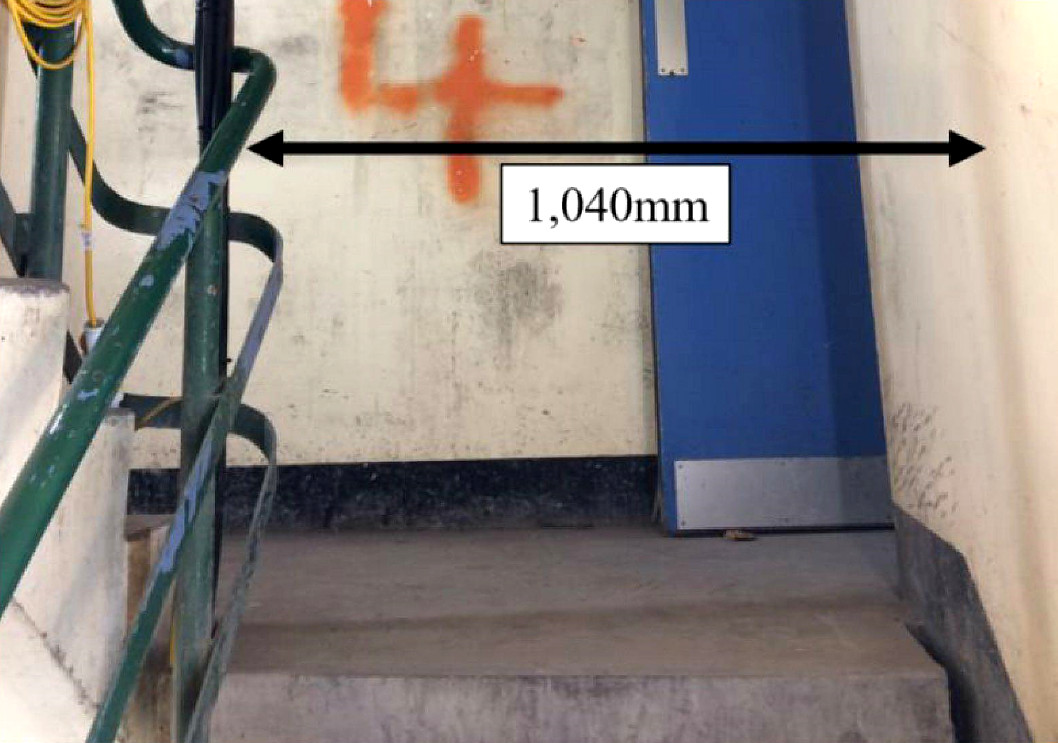
Fire Evacuation Staircases: A vivid image, with a few accompanying words, are necessary …

Unlike the incredible scene shown in the colour photograph above ... Fire Evacuation Staircases must be suitable for Safe, Intuitive and Unhampered Building User Evacuation, Firefighter Contraflow and the Assisted Evacuation of People with Activity Limitations. A Minimum Clear Width of 1.5 Metres (from edge of handrail to edge of handrail !) is required. Click to enlarge.
.
Fire Evacuation Chair Devices & What To Avoid: Can you spot the Evacuation Chair Device in the first photograph below ?

Colour photograph showing a Fire Evacuation Chair Device Installation at Dublin Airport, Ireland. On so many levels and in so many ways, this 'decorative' installation ... intended to demonstrate that an organization is complying with legislation ... will prove to be, in the event of a real fire emergency, SO wrong and unworkable. Photograph taken by CJ Walsh. 2008-04-04. Click to enlarge.
.

Colour photograph showing a Manual/Gravity Fire Evacuation Chair Device in operation. Transfer from a wheelchair to this type of device at the top of a staircase can be difficult and hazardous ... it can only travel down a staircase, using gravity (never up, against gravity !) ... and during horizontal travel, it is shaky and unstable. Click to enlarge.
.
Fire Evacuation Chair Devices & Issues To Carefully Consider: Modern wheelchairs come in all shapes, sizes and styles … are highly adapted by their owners … and can be very expensive. Why is it a surprise, therefore, to learn that most wheelchair users will not want to abandon their expensive personal property, i.e. the wheelchair, in the event of a real fire emergency.
The answer, of course, is PROPER CONSULTATION with All Building Users (where these are known !) during the preparation of a Fire Defence Plan for a Building.
The following photographs illustrate different aspects of the capability of Powered Fire Evacuation Chair Devices …

Colour photograph showing a Powered Fire Evacuation Chair Device in operation. This particular device facilitates evacuation, down and up a staircase, using the person's own manual wheelchair. Having completed its task at the bottom (or top !) of a staircase ... the device can be quickly released for use by another person who needs assistance on the staircase. Throughout this process, wheelchair users move independently to a Place of Safety. Click to enlarge.
.

Colour photograph showing another Powered Fire Evacuation Chair Device. This particular device facilitates evacuation of an adapted manual wheelchair, which may (or may not !) be the person's own wheelchair. It also facilitates travel on narrow or unusually shaped staircases. Click to enlarge.
.

Colour photograph showing a Powered Fire Evacuation Chair Device in operation. This particular device facilitates evacuation, down and up a staircase. It is also robust and stable while travelling horizontally ... both within a building ... and externally, perhaps over rough ground ... in order to reach a Place of Safety. Click to enlarge.
.
Product Approval in the European Union Single Market: Fire Evacuation Chair Devices must be permanently CE Marked … including the product itself, any cover (such as that shown in the Dublin Airport photograph above), all product literature, and any product packaging.
It is not acceptable to print the CE Mark on an adhesive label … and then stick the label to the product ! Correct informative text must always accompany a CE Mark !
Please note that the CE Mark is not a Safety Mark. A CE Mark denotes conformity with the Essential Requirements of a single, specific European Union Directive.
.
.
END
ISO/IEC Guide 71 & CEN/CENELEC Guide 6 – Flawed ?
International Guidance Document … ISO/IEC Guide 71 : Guidelines for Standards Developers to Address the Needs of Older Persons and Persons with Disabilities was issued in November 2001.
European Guidance Document … CEN/CENELEC Guide 6 : Guidelines for Standards Developers to Address the Needs of Older Persons and Persons with Disabilities … a similar document … was issued a little later, in January 2002.
These Guides provide basic guidance to people drafting International & European Standards on how to take into account the needs of people with activity limitations, particularly older persons and people with disabilities. While recognizing that some people with very extensive and complex impairments may have requirements beyond the level addressed in these documents, a very large number of people have minor impairments which can easily be addressed with a very small change of approach by people writing the Standards. Typically, the problem is solely a lack of awareness.
Unfortunately, few Standards Developers … in either organization … are paying the slightest bit of attention to these Guides.
People with Activity Limitations: Those people, of all ages, who are unable to perform, independently and without aid, basic human activities or tasks – because of a health condition or physical/mental/cognitive/psychological impairment of a permanent or temporary nature.
.
1. A full six months before the appearance of ISO/IEC Guide 71 … all of the 191 Member States of the World Health Organization endorsed, and officially adopted, the International Classification of Functioning, Disability & Health (ICF) on 22nd May 2001 … which replaced the earlier International Classification of Impairment, Disability & Handicap (ICIDH), dating from 1980.
While the previous health indicators had been based on the mortality (i.e. death) rates of populations … the new 2001 WHO ICF dramatically shifted the focus to ‘life’ and ‘living’ … in other words, how everyone is living with his/her health condition(s) and how improvements can be made to ensure a productive, fulfilling life in society.
This had important implications for medical practice; for legal, social, economic, institutional, design and spatial planning policies to improve accessibility, equal opportunity for all and inclusion; and for the protection of the rights of all individuals and groups.
Of special interest for people involved in any of the technical fields mentioned above … the 2001 WHO ICF also introduced a new disability-related language and terminology.
BUT … But … but … ISO/IEC Guide 71 and CEN/CENELEC Guide 6 do not use the 2001 WHO ICF’s innovative language and terminology. Consequently, these International & European Guides are flawed.
For a very good example of WHAT MUST BE AVOIDED (!) in the drafting of International & European Standards … please examine the following text …
ISO DIS (Draft International Standard) 21542 : Building Construction – Accessibility and Usability of the Built Environment … dated November 2009 …
Section 3 Terms & Definitions
‘ #3.36 Impairment
Limitation in body function or structure such as a significant deviation or loss which can be temporary due, for example, to injury, or permanent, slight or severe and can fluctuate over time, in particular, deterioration due to ageing.
[ISO/TR 22411:2008]
NOTE 1 Body function can be a physiological or psychological function of a body system; body structure refers to an anatomic part of the body such as organs, limbs and their components (as defined in ICIDH-2 of July 1999).
NOTE 2 This definition differs from that in ISO 9999:2002 and, slightly, from ICIDH-2/ICF: May 2001, WHO: ‘any loss or abnormality of a body function, or body structure’.
NOTE 3 The word ‘abnormality’ is strictly used here to refer to a significant deviation from an established population mean, within measured statistical norms. Impairments can be physical, mental, cognitive or psychological.’
As clear as mud … what a mess ! This does nothing only sow needless confusion in the mind of a reader.
Unless and Until … we properly harmonize, at a technical level, disability-related language and terminology … in order to improve communication … we will all continue to run around in circles and make little forward progress !!!
[ At the level of the individual, people should always be free to use whatever language they wish. ]
Our Guidance to All Standards Developers is … whether working within the International Standards Organizations (ISO & IEC) or the European Standards Organizations (CEN & CENELEC) … or both …
‘ People with Activity Limitations must be properly considered at all stages in the development of a Standard … and any disability-related terminology used … should be fully consistent with the World Health Organization’s 2001 International Classification of Functioning, Disability & Health (ICF). Confusing and contradictory texts should be avoided.’
.
2. In relation to ISO/IEC Guide 71 & CEN/CENELEC Guide 6 – Table 7 (Page 13 in both Guides) … #8.23 Fire Resistance requires a complete re-assessment. On Page 21 of ISO/IEC Guide 71 and Page 22 of CEN/CENELEC Guide 6 … the supporting text for #8.23 has the different heading of ‘Fire Safety of Materials’ ?!? Confusing, isn’t it ?
The Revised Title in Table 7 and the supporting text should read … Fire Safety. ‘Fire Resistance’ is but one of many passive fire protection concepts … a very small sub-set in the wide technical field of ‘fire safety’ in buildings. ’Fire Resistance’ is not used in connection with the ignition and fire development behaviour of materials or fabrics.
Relevant Factors for #8.23 are not properly indicated, in Table 7, under Columns #9.2, #9.3, #9.4 (a glaring omission !) & #9.5.
.
3. Pertinent to ‘fire safety’ in buildings … this text was removed from ISO CD (Committee Draft) 21542 … the previous version of the ISO Standard, dating from December 2008 …
ISO CD 21542 – Annex A.1.2 – 2nd Paragraph
‘ Building users should be skilled for evacuation to a place, or places, of safety remote from the building. In the case of people with a mental or cognitive impairment, there is a particular need to encourage, foster and regularly practice the adaptive thinking which will be necessary during a ‘real’ fire evacuation.’
The Definition for the Term Skill (#3.60) is still retained in the later ISO DIS 21542 version of the Standard …
‘ The ability of a person – resulting from training and regular practice – to carry out complex, well-organized patterns of behaviour efficiently and adaptively, in order to achieve some end or goal.’
.
4. While there are eight references to ‘Cognitive Impairment’ in both Guides … nowhere is this term defined … or distinguished from ‘Mental Impairment’ …
Cognitive Impairment: A deficiency of neuropsychological function which can be related to injury or degeneration in specific area(s) of the brain.
Mental Impairment: A general term describing a slower than normal rate in a person’s cognitive developmental maturation, or where the cognitive processes themselves appear to be slower than normal – with an associated implication of reduced, overall mental potential.
A deeper understanding, at a technical level, of the many different types of health conditions and impairments (physical/mental/cognitive/psychological) … can only result in a better designed, more facilitating Human Environment.
One final important term … when considering Fire Safety in Buildings …
Panic Attack: A momentary period of intense fear or discomfort, accompanied by various symptoms which may include shortness of breath, dizziness, palpitations, trembling, sweating, nausea, and often a fear by a person that he/she is going mad.
I have long held the view that, in Fire Engineering, dramatic breakthroughs will result from a closer study of Cognitive Psychology.
.
.
END
2009 Camberwell Fire – Today’s Fire Engineering Challenges
In Ireland, it is rarely the case that there is an opportunity to practice Rational, Evidence-Based Fire Engineering … and to apply its Principles in a manner which is both professional and project-specific. The grim reality of everyday fire consultancy revolves around playing ‘cat and mouse’ with current national building and fire regulations/codes … with ‘cost effectiveness’, i.e. to achieve a defined objective at the lowest cost, or to achieve the greatest benefit at a given cost … being the real, hidden driver behind such dangerous games ! Who wants to hear that the Irish Fire Safety Certification System is little more than a charade … an elaborate, resource consuming paper exercise … made all the more meaningless because Part B: ‘Fire Safety’ (of the Second Schedule to the 1997 Building Regulations, as amended) is isolated from a necessary and vital consideration of the other Parts, particularly Parts A: ‘Structure’; D: ‘Materials & Workmanship’; K: ‘Stairways, Ladders, Ramps & Guards’; and M: ‘Access for People with Disabilities’ ?
.

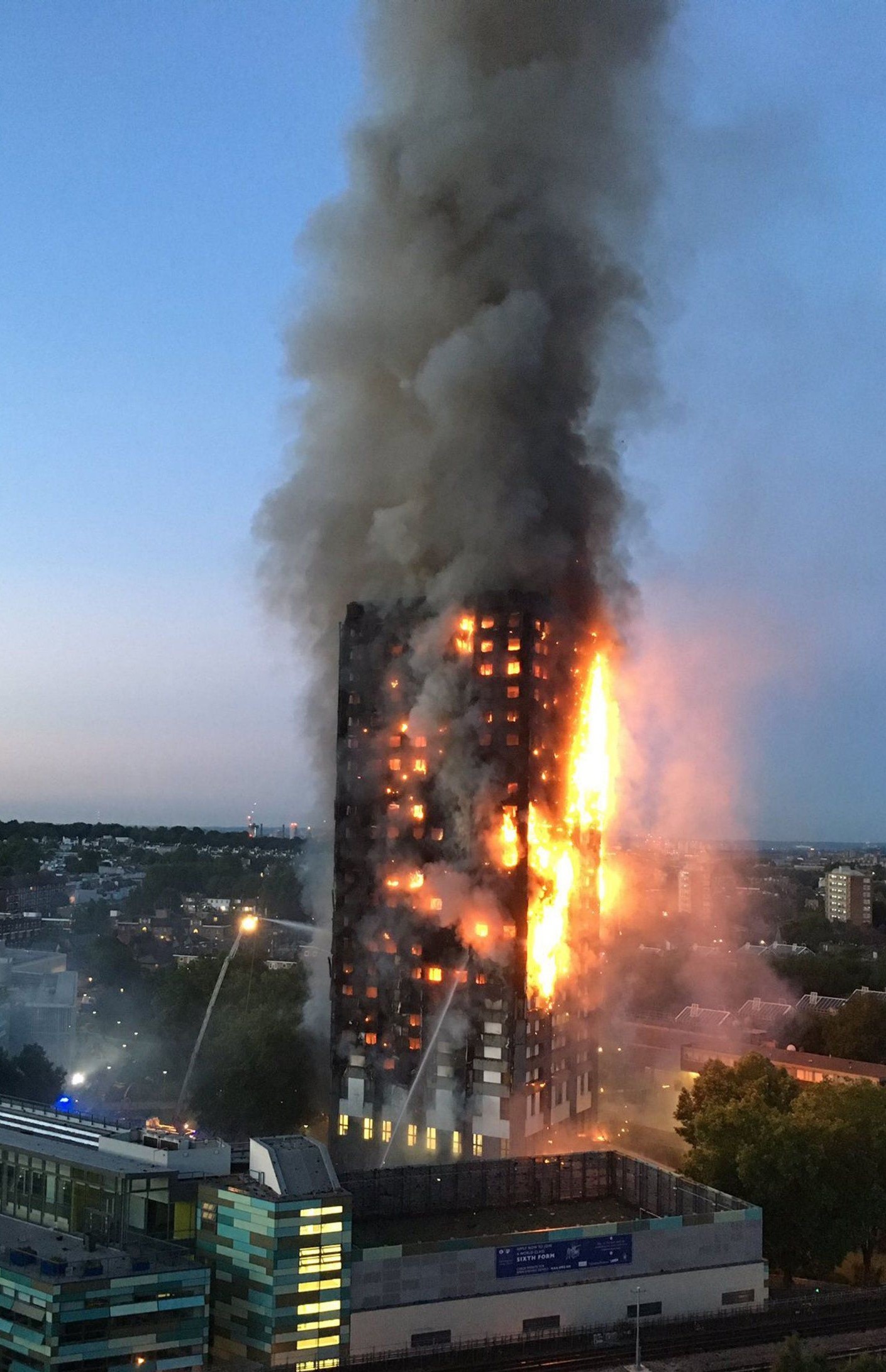
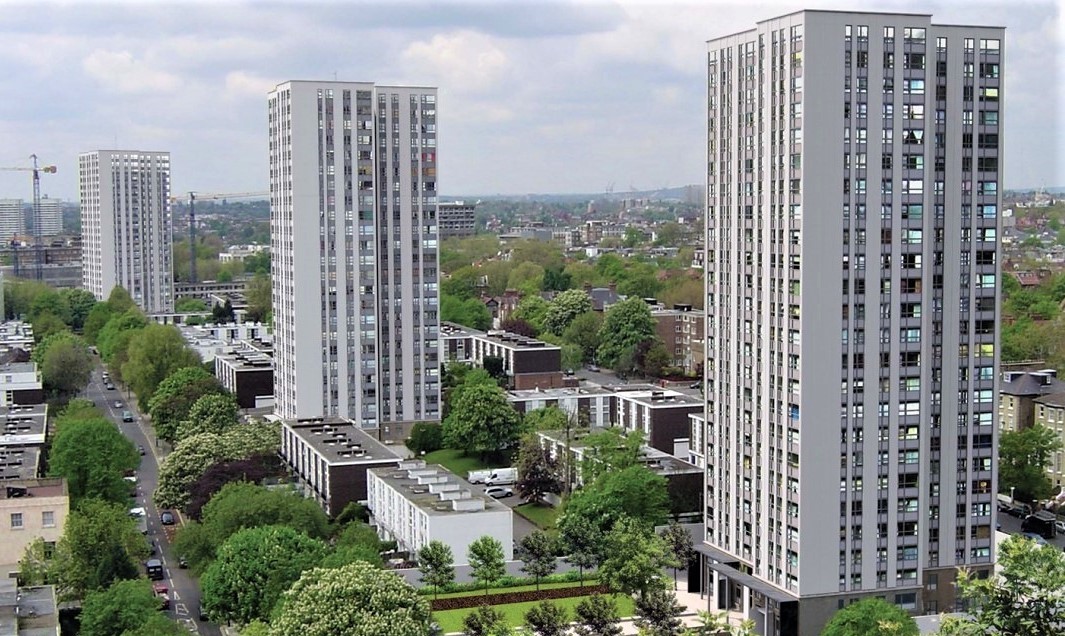
Colour photograph showing an external view of Lakanal House, Sceaux Estate, Camberwell, London (GB) ... after the Fatal Fire which occurred at 16.19 hrs, on 3rd July 2009. The fire was caused by a faulty television set, and resulted in the loss of 6 lives, with 15 residents and 1 firefighter left injured. London Fire Brigade was required to assist the evacuation of a further 40 building occupants to safety. Along with the serious loss of life, and the large number of injured people ... over 90 families had to vacate their flats.
.
Discussing the Principles of Fire Engineering … and elaborating on the significant differences between the limited Fire Safety Objectives of legal regulations/codes … and the much broader range of Fire Engineering Design Objectives intended to fully protect social wellbeing and the interests of clients/client organizations, i.e. to properly protect their asses and their assets, in the event of a fire … is a constant, tortuous, but rewarding, struggle. Masochism does help !
However, the 2009 Fire in a High-Rise Flat Complex at Camberwell, London (GB) … from just looking at the photograph above and reading available information about the spread of fire internally … raises some challenging fire engineering issues for building designers, property managers and construction organizations.
.
1. Reliability of People Strategies in a Fire Emergency ?
In spite of the People Strategies elaborated in current Fire Codes/Regulations/Standards … it is totally and utterly irresponsible to advise people to wait in their own flats/apartments during a fire incident, or to develop fire safety strategies based on this approach … unless the confidence level (of ‘Competent Persons’ in Control … managers, designers and builders … of the flat/apartment complex) with regard to the following aspects of construction is very high …
- reliability of both passive and active fire protection measures ;
- reliability of fire compartmentation (see below) ;
- reliability of not just the building’s structural stability, but also its serviceability, during the fire and for a minimum period of time afterwards, i.e. the ‘cooling’ phase.
Competent Person: A person capable of making sound value judgements in the area of professional endeavour in which he/she possesses profound knowledge, understanding and practical experience.
Fire Codes/Regulations/Standards, wherever or whatever their origin, are NOT Infallible … and it is unbelievably mind-boggling, and sad, to witness a blind and unquestioning faith in such documents !
Looking beyond the headline figure of 6 Fatalities in the 2009 Camberwell Fire … adequate attention should also be focused on the 16 Injured … comprising building occupants and firefighters … the lengthy disruption of community wellbeing resulting from the fire … 90 Families had to be re-located … and, of course, the tremendous amount of direct and indirect damage to property and the environment. And, I wonder … how did the more vulnerable occupants … and there may also have been visitors present in the complex at the time … cope in this emergency situation ?
This is why Fire Safety, Protection and Evacuation for All must be a Priority on any ‘Sustainability’ Agenda.
.
2. Independent Technical Control of AHJ Construction ?
I have said this before, but it is worth repeating here again … Self-Regulation Is No Regulation ! Surely this lesson has been burnt into our souls, following the recent scandals, financial and otherwise, in Ireland ? National and Local Authorities Having Jurisdiction (AHJ’s) … Government Departments & Agencies, Semi-State Organizations, a myriad of Qwangos, the Office of Public Works and Local Authorities are complacent, careless and stubborn concerning proper compliance with even the minimal performance requirements specified in fire regulations, codes and standards.
The 2005 & 2008 National Institute of Standards & Technology (USA) Reports on the 9-11 WTC Incident in New York presented us with some stark language … and a set of important Recommendations which must be heeded …
‘ NIST recommends that such entities be encouraged to provide a level of safety that equals or exceeds the level of safety that would be provided by strict compliance with the code requirements of an appropriate governmental jurisdiction.
To gain broad public confidence … NIST further recommends that as-designed and as-built safety be certified by a qualified third party, independent of the building owner(s). The process should not use self-approval for code enforcement in areas including interpretation of code provisions, design approval, product acceptance, certification of the final construction, and post-occupancy inspections over the life of the buildings.’
[2005 NIST Final Report on WTC 1 & 2 Collapses - Recommendation No. 25]
Later posts, here, will examine the individual NIST Recommendations in more detail.
However … many individuals and organizations, with vested interests, are still trying to discredit and/or ignore the Recommendations contained in the 2005 & 2008 NIST Reports on the WTC 9-11 Incident. British Standard BS 9999:2008 is a typical case in point … a document which is slowly seeping into the marrow of the Irish Fire Establishment. The complete and abject failure to consider any of the NIST Recommendations during the long development of this British Standard, or even to reference the Reports in the Standard’s Bibliography … was an inexcusable and unforgivable technical oversight. The result was … and remains … a sloppy, crassly inadequate, deeply flawed and discriminatory national fire safety standard. The British Public deserves far better !
At this stage … reluctantly … I must invite the Chair of British Standards Institution Committee FSH/14, Mr. David B. Smith, to seriously re-consider his position.
.
3. Fire Resistance, Compartmentation & Fire-Induced Progressive Collapse ?
Every person participating in the design, construction, management or operation of a building, no matter how simple or complex, must have a working knowledge and proper understanding of the Fire Engineering Principle of Fire Compartmentation:
The division of a building into fire-tight compartments, by fire and smoke resisting elements of construction, in order …
- to contain an outbreak of fire ;
- to prevent damage, within the building, to other adjoining compartments and/or spaces ;
- to protect a compartment interior from external fire attack, e.g. fire spread across the building’s facade or from an adjacent building ;
- to minimize adverse, or harmful, environmental impacts outside the building.
.
BUT … But … but … buildings are no longer designed and constructed, today, as they were in the 18th or 19th Centuries …
In a fire situation, Fire-Induced Progressive Collapse may commence before any breach of ‘integrity’ occurs in the boundary of such a Fire Compartment, i.e. the building compartment of fire origin.
Fire-Induced Progressive Collapse: The sequential growth and intensification of distortion, displacement and failure of elements of construction in a building – during a fire and the ‘cooling phase’ afterwards – which, if unchecked, will result in disproportionate damage, and may lead to total building collapse.
… which is related to, but distinguishable from …
Disproportionate Damage: The failure of a building’s structural system … (i) remote from the scene of an isolated overloading action ; and (ii) to an extent which is not in reasonable proportion to that action.
Structural Fire Engineering: Those aspects of fire engineering concerned with structural design for fire, and the complex architectural interaction between a building’s structure and fabric, i.e. non-structure, under conditions of fire and its aftermath.
.
AND … And … and … a designer of a Sustainable Building will want to utilize … in order to conserve energy … natural patterns of air movement for heating or cooling. This means that it will be necessary to have gaps between elements of construction which are continuously open … in direct conflict with the Principle of Fire Engineering just quoted above !
What happens when this sort of conflict … or lack of resolution (!) … occurs in modern, highly energy-efficient construction projects ? At the final stages of approval/certification … the Fire Prevention Officer will insist on following the outdated prescriptive approach in his/her rulebook. In other words, he/she will illegally apply the guidance text of Technical Guidance Document B as if it were prescriptive regulation. Fire Compartmentation will be uncompromisingly slapped onto ‘unresolved’ areas of a completed building design … to achieve the limited Fire Safety Objectives of Building Regulations … and the fire safety related construction will probably be badly executed, anyway, because the un-supervised sub-contractors of sub-contractors of sub-contractors couldn’t care less if it goes one way or the other ! The outcome is … nobody wins !!!
In Sustainable Building Design, therefore, Fire Resistance (a ‘passive’ protection concept) must not only be extended to consider a complementary relationship with ‘active’ fire protection concepts, but be stretched … ‘intelligently’ … to embrace the concept of ‘non-construction’ …
Building Sterile Space (Fire): An open space of sufficient and appropriate extent which is designed to retain an exceptionally low level of fire hazard and risk, and is ‘intelligently’ fitted with a suitable fire suppression system – in order to resist and control, for a specified time during a fire, the advance of heat, smoke and flame.
Fire Resistance: The inherent capability of a building assembly, or an element of construction, to resist the passage of heat, smoke and flame for a specified time during a fire.
.
.
END
European Parliament’s URBAN InterGroup – Inaugural Meeting
On Wednesday afternoon, 24th February 2010, the URBAN InterGroup of the European Parliament met for the first time in the new Parliamentary Term … at 16.30 hrs … in Meeting Room 6Q2 of the Parliamentary Complex in Brussels, Belgium. Dr. Jan Olbrycht, Member of the European Parliament (MEP), chaired the proceedings. The attendance was large, and included a large proportion of the 50, or so, MEP’s who are directly involved with the InterGroup. Please forgive the jargon, but … many other URBAN InterGroup Partners, Sectoral Stakeholders and Interested Practitioners also attended. However … not one Irish MEP appears to show any interest in this important InterGroup. Why is that ?

Colour photograph showing the Inaugural Meeting of the European Parliament's URBAN InterGroup, in Brussels, on 24th February 2010. The Meeting, chaired by Mr. Jan Olbrycht MEP, had a large attendance. Click to enlarge. Photograph taken by CJ Walsh. 2010-02-24.
.
I was very pleased to attend this Meeting, representing Sustainable Design International Ltd. (a Multi-Disciplinary Design & Research Practice in Europe, and a Micro-SME). Further to a series of interventions on my part, the following are some Comments on last Wednesday’s Meeting … and a few Suggestions …
1. Accountable & Representative Governance is an important component in the implementation of Sustainable Human and Social Development. It is not being too ambitious, therefore, to say that the URBAN InterGroup has an important task to fulfil within the ‘system’ of the European Parliament.
2. Within such a ‘system’ … it is a big advantage that the InterGroup’s Structure is informal and fluid. This allows the InterGroup to be cross-party and cross-committee at the Parliament … and to adopt a ‘flexible’ horizontal approach to Urban-Related Issues.
3. This same Horizontal Approach must, however, be applied to a proper consideration of the Urban Environment (City) itself … which is far more than the sum of its buildings, public spaces, transport systems, engineering infrastructure (roads, bridges, etc.), and service utilities, etc., etc.
4. In order to deal effectively with Urban-Related Issues and the many different Sectoral Stakeholders … it is essential that the Intergroup discusses and develops a comprehensive and coherent vision of what exactly is a Sustainable Urban Environment (City). Please see the previous post on this Blog, dated 2010-03-02.
And … even though the regular InterGroup Meetings will be of short duration … it will be of great benefit to link small, individual issues to that larger, coherent vision. Then, and only then, will the InterGroup always know where it is … and, more importantly, in which direction it is travelling … in order to monitor progress.
5. It was not clear to me, at the Meeting, that the significant differences between the words ‘Sustainable’ and ‘Green’ are fully understood. This will cause problems for the InterGroup in the future, and should be examined in more detail.
The European Union (E.U.) Treaties refer to ‘Sustainable Development’ … not to ‘Greenness’ !!
6. It was also evident, at the Meeting, that there is a Lack of Communication between the European Parliament and the European Commission on Urban-Related Issues. Let me immediately say, however, that there is a worrying lack of communication (on any issue !) between the different Directorates-General within the Commission.
It must be a Priority for the InterGroup … a difficult one, I know … to have direct access to available Urban-Related Information … across all of the European Union’s Institutions. It is too wasteful of the InterGroup’s limited resources to be required to ‘re-invent wheels’ !
7. With regard to the URBAN InterGroup’s Work Programme … it is necessary to add a specific mention of the following Two Subjects:
(i) Proactive Climate Change Adaptation
Climate Change Adaptation, generally, encompasses actions to reduce the vulnerability and strengthen the resilience of the Human Environment, including ecological and social systems, institutions and economic sectors … to present and future adverse effects of climate change and the impacts of response measure implementation … in order to minimize the threats to life, human health, livelihoods, food security, assets, amenities, ecosystems and sustainable development.
Urban Environment Climate Change Adaptation, more precisely, means … reliably implementing policies, practices, projects and institutional reforms in the Urban Environment (City) … with the aim of reducing the adverse impacts and/or realizing the benefits directly/indirectly associated with climate change, including variability and extremes … in a manner which is compatible with Sustainable Human and Social Development.
Following detailed briefing meetings, in Dublin, from high-level participants in Copenhagen … the suggestion of this subject arises from what happened … or, more correctly, did not happen … to the European Union and its inadequate Climate Change Policies at the 2009 Climate Summit in December.
(ii) Accessibility for People with Activity Limitations (Personnes à Performances Réduites)
The 2006 United Nations Convention on the Rights of Persons with Disabilities entered into force on 3rd May 2008, i.e. it became an International Legal Instrument. European Union (E.U.) Member States are currently undertaking the process of ratifying this Convention at national level. At a certain stage in the near future, the Union (as a polity, post Lisbon Treaty) will certainly also ratify the Convention.
People with Activity Limitations now have a clearly defined right, under International Law, to be able to access and use the Urban Environment (City). They also have the right to receive an equal and meaningful consideration in situations of risk, e.g. when there is a fire in a building.
The InterGroup must fully take account of these rights ! This is no longer an option. In this regard and until now, the attitudes and performance of the E.U. Institutions has been nothing less than a complete and utter disgrace.
8. With regard to the Main Objectives of the URBAN InterGroup … it is necessary to add the following Preamble to those Objectives …
Adopting a long-term perspective, i.e. beyond the lifetime of any single parliamentary term … the Main Objectives of the InterGroup are to:
- monitor the legislative and non-legislative work of the European Parliament’s Committees on Urban-Related Issues ;
- work on common European Union Strategies – to put Urban Needs on the agenda of E.U. Policies ;
- be actively involved in the preparation of E.U. legislation ;
- constantly stay in contact with partners and practitioners ;
- be informed about the realization of E.U. Policies on the ground.
Please note well … that the short-term perspective of elected politicians, whether at European, National or Local Levels, is a Serious Impediment to the proper implementation of a Sustainable Urban Environment (City) !
.
.
END
2010 ACRECONF in Delhi (Dilli), India – 8th & 9th January
It was a great pleasure to be invited to speak on the subject of Sustainable Fire Engineering at the 2010 ACRECONF in Delhi (Dilli), India. This ground breaking conference in Asia took place at the India Habitat Centre, Lodhi Road, Delhi … on the 8th & 9th January last. Back during August (2009) in Bengaluru … the ACRECONF Chairman, Mr. Ashish Rakheja, told me that he expected an attendance of somewhere between 500-600 people at the Delhi Conference. Over the two days of the actual conference, approximately 1800 delegates participated … an enormous response by architects, civil and service engineers, developers, client and construction organizations, etc., etc., from right across the country … and from the deep south.

Colour photograph showing some of the many participants at the 2010 ACRECONF in Delhi, as they enjoy talking and networking during the morning coffee break of the second day at the conference. The venue was the India Habitat Centre on Lodhi Road. The weather was chilly for the time of year, and there had been a heavy fog earlier in the morning. Click to enlarge. Photograph taken by CJ Walsh. 2010-01-09.
For me … refreshing, extremely impressive, and certainly the highlight of the conference … was a multi-media presentation … on the second morning, just after the coffee break … by Mr. Karan Grover, the renowned Indian Architect. He is quite an individual !
Before the break, delegates had been treated to an elaboration of the Environmental Design Innovations incorporated into the 71 storey Pearl River Tower (Guangzhou, China), by Mr. Varun Kohli of Skidmore, Owings & Merrill (SOM) in New York. Construction of the Tower is now well under way. Afterwards, however, an important discussion took place concerning the issue of fire safety, and fire engineering generally, in Sustainable Buildings. It became clear to all of the participants that this issue is a major oversight … an intentional gap … in the design of these buildings. I made the point, forcibly, that Sustainable Fire Engineering is open to innovation and design creativity. There will be an important follow-up to this discussion.

Colour photograph showing a silly tourist on a bicycle rickshaw, as he is brought sightseeing around the Bazaar District in Old Delhi. Click to enlarge. Photograph taken by Mr. Daljeet Singh, Ministry of Tourism, with CJ Walsh's camera. 2010-01-09.
Unfortunately, the conference was peppered with references to ‘Green’ Buildings … an outdated marketing concept (!) … which, within its limited world-view, gives people the false comfort of not having to deal with thorny issues such as ‘social justice, solidarity & inclusion for all’. I have discussed this issue many times in previous posts.
Even more unfortunately, where the Brundtland Definition of ‘Sustainable Development’ was actually presented in one session … as usual, it was only the first half of the definition which made any appearance. The second, and more important, half of the definition had mysteriously vanished without trace … which made the whole effort a meaningless exercise ! What a waste !! No wonder there is such confusion over the concept … at all levels … in most countries !!!
It was not surprising, therefore, that what was not stressed enough, during the entire conference, was that Sustainable Design Solutions must be appropriate to local geography, climate, economy, culture, social need and language(s)/dialect(s), etc. The LEED Building Rating System (USA), for example, is not being properly adapted to local conditions in India !
A final issue … another major oversight … another intentional gap … in the design of buildings … Accessibility-for-All ! Even though India ratified the 2006 UN Convention on the Rights of Persons with Disabilities on 1st October 2007 … this essential aspect of design … certainly in Sustainable Buildings … received no mention whatever during the conference … except by yours truly, in my presentation.
Overall … a magnificent achievement for the organizers !
.
.
END
Yesterday’s Burj Dubai Inauguration – The Tallest ?? How ?
Yesterday (2010-01-04), the Burj Dubai … recently renamed the Burj Khalifa, in honour of Abu Dhabi’s Ruler … was inaugurated. Dubayy, as it is known locally, is situated in the United Arab Emirates (UAE). Contrary to most reports, this building has a height of approximately 550 metres !

Colour photograph of the Burj Khalifa Tower in Dubayy, United Arab Emirates ... which was recently inaugurated on 4th January 2010. A romantic image, for now, of the World's Tallest Building. But ... how 'sustainable' ... and 'fire safe' ... is this building ? Click to enlarge.
Every single metre counts in the race of the ‘tallest’ ! So, the timing of the following CTBUH(USA) Press Announcement, back in November 2009, was most fortunate. In my opinion, the most meaningful height criterion is … Height to Occupied Floor. But, what do you think ? See below.
However … purposefully tripping you up as you race to read all about the height criteria of Tall and Super-Tall Buildings … we should all know and understand, I hope, that comparing the ‘size’ of structural members is a silly schoolboy’s game. So, I would like to pose Some Important Questions (discussed, ad nauseam, in previous posts) about the Burj Khalifa Tower …
- Dubayy (Dubai) is a crude reproduction of the nightmare that is the 20th Century North American City, i.e. it is on the opposite end of the scale from being ‘sustainable’ ! ’Greenwashing’ aside … How Sustainable is the Burj Khalifa Tower ?
- There is no effective system, in Dubayy, of Independent Monitoring and Technical Control of the processes of building design and construction by Local Authorities Having Jurisdiction (AHJ’s) or Competent Technical Controllers …
How Fire Safe is the Burj Khalifa Tower … for All of the large population, including People with Activity Limitations (2001 WHO ICF), who will undoubtedly be using/occupying the building during its long life cycle ?
Has the Tower been designed to adequately resist Fire-Induced Progressive Collapse ? ’Robustness’ and ‘Disproportionate Damage’ are separate, but related, structural concepts.
During my next visit to Dubayy … I will enjoy looking at, and photographing, the completed building. But, I will not be entering the Burj Khalifa Tower !
.
Chicago, 2009-11-17: The Council on Tall Buildings & Urban Habitat (CTBUH) – the international body which arbitrates on tall building height and determines the title of ‘The World’s Tallest Building’ – has announced a change to its height criteria, as a reflection of recent developments with several super-tall buildings.
The new criteria wording – ‘Height is measured from the level of the lowest, significant, open air, pedestrian entrance to …’ allows for the recognition of the increasing numbers of multi-use tall buildings with often several different entrances at different levels, whilst also accommodating buildings constructed in non-traditional urban or suburban locations. The CTBUH Height Committee has determined that the previous description of where to measure tall building height from – ‘Height is measured from the sidewalk outside the main entrance to …’ is now no longer sufficient.
This will have an impact on both the height of tall buildings and their relative international height rankings. Burj Dubai, set to open as the world’s tallest building in January 2010, will now be measured from the lowest of its three main entrances (which opens into the entrance lobby for the tower’s corporate suite office function), while the recently completed Trump International Hotel & Towers in Chicago will be measured from the lower, publicly accessible Chicago Riverwalk. In the case of Trump, this additional 9 metres (approx.) means that it will surpass the Jin Mao Tower in Shanghai to occupy the rank of 6th tallest on the current list of completed buildings.
“Beginning in 2007, with the knowledge that Burj Dubai would be significantly taller than any structure ever built, the CTBUH Height Committee met to review the criteria by which we recognize and rank the height of buildings”, said Peter Weismantle, Chair of the CTBUH Height Committee and Director of Supertall Building Technology at Adrian Smith + Gordon Gill Architecture in Chicago. “As one might guess, with the committee being made up of architects, engineers, contractors, developers, building owners and academics, a variety of opinions and views were expressed. The resulting revisions, almost two years later, reflect a general consensus of the committee in recognizing the most recent trends in tall building development around the world.”
Also in response to the changing designs and forms of tall buildings, the Height Committee has elected to discard its previous ‘Height to Roof’ Category. “The roof category just doesn’t make sense anymore”, said CTBUH Executive Director Antony Wood. “In the era of the flat-topped modernist tower, a clearly defined roof could usually be identified, but in today’s tall building world – which is increasingly adopting elaborate forms, spires, parapets and other features at the top of the building – it is becoming difficult to determine a ‘roof’ at all, even less so to measure to it.”

Colour image showing the World's 10 Tallest Buildings ... ranked by the Council on Tall Buildings & Urban Habitat (CTBUH), in November 2009, according to the criterion 'Height to Highest Occupied Floor'. Also included is the Burj Khalifa Tower, which was inaugurated on 4th January 2010. Click to enlarge.
The Revised CTBUH Height Criteria and Diagrams of the Tallest 10 Buildings in the World as of November 2009 can be found here, ranked according to the three height categories now recognized by CTBUH. These are: (i) Height to Architectural Top, measured to the topmost architectural feature of the building including spires, but not including antennae, signage, flag poles or other functional-technical equipment; (ii) Height to Highest Occupied Floor, measured to the level of the highest, consistently occupied floor in the building (thus not including service or mechanical areas which experience occasional maintenance access); and (iii) Height to Tip, measured to the highest point of the building, irrespective of material or function of the highest element.
.
.
END
Happy Christmas & Let’s All Stay Safe In Our Homes !
T’is the Season to be jolly ! It is also the time when we remember family and friends … far and near … and those souls, no longer with us, who remain in our hearts. Happy Christmas everyone ! And it will be better in 2010 !!
As a special treat … let’s keep Uncle Gaybo happy … and give each other the gift of ‘Safety’ !
In a previous post concerning the MACLAREN Baby Strollers, I referred to the U.S. Consumer Product Safety Commission (CPSC). A few days ago, on 14th December 2009, the Commission issued the following Seasonal Press Release #10-065 …
Ten Tips to Keep Your Holiday Home Fire and Injury Free: Fires Lead the List of Hazards Related to Holiday Decorations
WASHINGTON, D.C. – As the holiday season approaches, the U.S. Consumer Product Safety Commission (CPSC) is urging consumers to make safety a factor in holiday decorating. Whether it is careful candle placement or checking the warning label on the holiday lights, simple safety steps can go a long way in preventing fires and injuries this year.
Annually, during the two months surrounding the holiday season, more than 14,000 people are treated in hospital emergency rooms due to injuries related to holiday decorating. In addition, Christmas trees are involved in hundreds of fires resulting in an average of 15 deaths and $13 million dollars in property damage annually. Candle-related fires lead the list of hazards averaging more than 12,000 a year, resulting in 150 deaths and $393 million in property damage.
“Holiday decorating related fires and injuries most often involve defective holiday lights, unattended candles and dried-out Christmas trees”, said CPSC Chairperson Inez Tenenbaum. ”We are providing this list of 10 Simple Safety Steps to help keep your holiday home safe.”
Use the Following 10 Safety Tips when Decorating This Year:
Christmas Trees & Decorations
1. When purchasing an Artificial Tree, DO look for the label “Fire Resistant”. Although this label does not mean the tree won’t catch fire, it does indicate the tree is more resistant to catching fire. [In Ireland, ask anyway !]
2. When purchasing a Live Tree, DO check for freshness. A fresh tree is green, needles are hard to pull from branches and do not break when bent between your fingers. The bottom of a fresh tree is sticky with resin, and when tapped on the ground, the tree should not lose many needles.
3. When Setting Up A Tree at home, DO place it away from heat sources such as fireplaces, vents, and radiators. Because heated rooms dry out live trees rapidly, be sure to monitor water levels and keep the stand filled with water. Place the tree out of the way of traffic, and do not block doorways.
4. In homes with Young Children, DO take special care to avoid sharp, weighted or breakable decorations, keep trimmings with small removable parts out of the reach of children who could swallow or inhale small pieces, and avoid trimmings that resemble sweets or food that may tempt a child to eat them.
Christmas Lights
5. Indoors or Outside, DO use only lights that have been tested for safety by an independent, accredited testing laboratory … such as UL (USA) or TÜV (Germany).
6. Check each Set of Lights, new or old, for broken or cracked sockets, frayed or bare wires, or loose connections. Throw out, and carefully dispose of, damaged sets. DON’T use electric lights on a metallic tree.
7. If using an Electric Extension Cable, DO make sure it is rated for the intended use.
8. When using Lights Outdoors, DO check labels to be sure the lights have been approved for outdoor use and only plug them into an external, weather and circuit-breaker protected socket outlet.
Candles
9. Always keep Burning Candles within sight. DO extinguish all candles before you go to bed, leave the room or leave the house.
10. DO keep Lighted Candles away from items that can catch fire and burn easily, such as trees, other evergreens, decorations, curtains and furniture.
Get more Christmas Decorating Safety Tips at CPSC’s WebSite … www.cpsc.gov/
My Questions: In Ireland … is our Consumer Protection Legislation adequate ? More importantly … is compliance adequately monitored ? Relating to the critical area of fire safety in the home … do we have any, or sufficient, independent and accredited testing laboratories ?
END
Building Fire Emergencies – What is a ‘Place of Safety’ ?
As I have travelled around … not just Ireland, but many other countries as well … it still remains a puzzle to me, today, why so many Fire Emergency Assembly Areas are located just outside the main entrance of a building. These locations are not safe in a ‘real’ fire emergency … and they should not even be used for the purposes of test/drill evacuations !
Is the guidance contained in current Building & Fire Regulations, Codes and Standards on what is a ‘Place of Safety’ in a fire emergency clear, simple, direct and precise ? Are you joking ? No way ! Let us take a few examples close to home …
In Ireland:
When you look at the array of different Technical Guidance Documents (Building Regulations) at the same time … TGD B (Fire Safety) is way out of proportion, in size, compared to all of the others. You would expect, therefore, to find exactly what you were looking for in that document. Wouldn’t you ?
TGD B (2006), Paragraph #1.0.9 – Definitions
Place of Safety
A place, normally in the open air at ground level, in which persons are in no danger from fire.
Clear as mud ! If there is a fire on O’Connell Street in Dublin … a person is safe on Patrick Street in Cork ! But, how is any Building or Facilities Manager expected to work with such a vague definition ?
In England & Wales:
No practical definition, as such, is readily provided. The nearest thing to a definition is an amalgam of the following …
Building Regulations, Requirement B1 – Means of Warning & Escape
The building shall be designed and constructed so that there are appropriate provisions for the early warning of fire, and appropriate means of escape in case of fire from the building to a place of safety outside the building capable of being safely and effectively used at all material times.
Approved Document B: Volume 1 – Dwellinghouses & Volume 2 – Buildings Other Than Dwellinghouses
The ultimate place of safety is the open air clear of the effects of the fire.
British Standard BS 9999 : Code of Practice for Fire Safety in the Design, Management & Use of Buildings : 2008
Place of Ultimate Safety
Place in which there is no immediate or future danger from fire or from the effects of a fire.
Again … all as clear as mud ! Again … how is any Building or Facilities Manager expected to work with such vague guidance ? Have you also noticed the additional obfuscation introduced by use of the word ‘ultimate’ in BS 9999 ?
It is hard to escape the conclusion that what is urgently needed is a fundamental transformation and re-shaping of the tired, antiquated and flawed ad-hoc assembly of prescriptive ‘solutions’ contained in current national building and fire regulations, codes, standards and administrative provisions … whatever their origin !
Now … try this for clarity, simplicity, directness and precision …
Place of Safety (Fire Incident in a Building, No Explosion Hazard*)
Any location beyond a perimeter which is [100]* metres from the fire building or a distance of [10]* times the height of such building, whichever is the greater
and
where necessary and effective medical care and attention can be provided, or organized, within one hour of injury
and
where people can be identified.
* Where there is a Risk of Explosion … multiply the numbers in square brackets above by 4.
Was that good for you ?
Furthermore …
The Route to any Place of Safety must be Accessible for All Building Users, including people who use wheelchairs, the visually impaired, frail older people, women in the later stages of pregnancy, children, etc., etc.

Colour photograph showing a Typical Scene at a Building Fire Emergency, with Fire Service Vehicles and Personnel in operation mode. The haphazard arrangement of firefighting water hoses on the ground makes access difficult for many Building Users to a 'Place of Safety' which is remote from the Fire Building.
With regard to an Adequate, never mind a Proper, Awareness of Disability-Related Issues at a Fire Scene … it is shocking to realize how almost non-existent this is among Fire Services … not just in Ireland and Britain … but in the rest of Europe and North America as well.
Even a hint of criticism will usually … not always … meet the Neanderthal Fire Service Response: “Have you ever been in a ‘real’ building fire ?”
My Response is: “Do you have to be a hen to know when an egg is bad ?”
This discussion will continue later … have no doubt … that is a promise !
END
Disability Access Certificates – Parts M & B ? (II)
In everyday practice, the usual short introductory text in Technical Guidance Document M (Ireland) which refers to a linkage between ‘access and use’ of a building with ‘fire safety’ has little impact, because it is not explained … and is typically ignored.
In general … the basic problem is that this issue is hardly dealt with … at all … by Local Fire Authorities right across the country in their handling of Fire Safety Certificates … and where it does become part of the process, it receives inadequate attention. There are exceptions.
A major drawback with the current vertical approach to our Building Regulations … each of the Parts has its own separate Supporting Technical Guidance Document … is that people are not sufficiently aware of the important horizontal linkages between the different Parts. For example, all of the other Parts must be linked to Part D. Quick, run to find out what Part D covers ! Another two examples … Part B must also be linked to Part A and Part M … and Part M must also be linked to Part K and Part B.
So … while grudgingly having to accept that the scope of TGD M should have some limit, under the current flawed system … a precise intervention with just one or two sentences, at critical places in the guidance text, would help to improve the overall consideration of fire safety issues, relevant to Part M, by building designers … and client or construction organizations.
Here are a Few Suggestions for Discussion …
1. Revise Paragraph #0.6 of Draft TGD M (2009) & Add a Title …
Fire Evacuation for All
” Accessibility encompasses the full range of activity related to buildings: to approach, enter, use, egress from under normal conditions, and evacuate a building independently during a fire emergency, in an equitable and dignified manner. Provision for access and use must, therefore, be linked to provision for fire evacuation. For guidance on design for evacuation, reference should be made to Technical Guidance Document B (Fire Safety).”
Note: No such guidance is contained in TGD B (2006). It would be a great wonder if any person with a disability could actually evacuate a building which had been designed in accordance with TGD B. To take a simple example … all of the ‘stairways’ in Table 1.5 of TGD B – Minimum Width of Escape Stairways will not facilitate contraflow or the assisted evacuation of mobility and visually impaired people. Furthermore, those minimum widths specified in the Table may have a clear width which is 200 mm less. See Methods of Measurement, Paragraph #1.0.10 (c) (iii) … ” a stairway is the clear width between the walls or balustrades, (strings and handrails intruding not more than 30 mm and 100 mm respectively may be ignored) ” ! What an incoherent mess !!
2. Insert New Sentence at the End of Paragraph #1.1.1 of Draft TGD M (2009) …
Objective (Approach to Buildings)
” Consideration should be given to the use of the approach and circulation routes around a building as accessible routes to a ‘place of safety’ during a fire emergency.”
3. Insert New Sentence at the End of Paragraph #1.2.1 of Draft TGD M (2009) …
Objective (Access to Buildings)
” Consideration should be given to the use of all entrances to a building as accessible fire exits during a fire emergency.”
4. Insert New Paragraph at the End of Paragraph #1.3.4.1 of Draft TGD M (2009) …
Passenger Lifts
” Manual handling of occupied wheelchairs in a fire evacuation staircase, even with adequate training for everyone directly and indirectly involved, is hazardous for the person in the wheelchair and those people – minimum three – giving assistance. The weight of an average unoccupied powered wheelchair, alone, makes manual handling impractical. Lifts in new buildings should, therefore, be capable of being used for evacuation in a fire situation. For guidance on the use of lifts for fire evacuation, reference should be made to Technical Guidance Document B (Fire Safety).”
5. Insert New Paragraph and New Sentence at the End of Paragraph #1.3.4.2 of Draft TGD M (2009) …
Internal Stairs
” To allow sufficient space to safely carry an occupied wheelchair down or up a fire evacuation staircase, and to accommodate contraflow, i.e. emergency access by firefighters entering a building and moving towards a fire, while people are still evacuating from the building to a ‘place of safety remote from the building, the clear unobstructed width (exclusive of handrails and any other projections, e.g. portable fire extinguishers, notice boards, etc.) of the flight of a single, or multi-channelled, stairs should not be less than 1 500 mm. The surface width of a flight of stairs should not be less than 1 700 mm.”
Note: See Footnote (5) to Table 1.5 in TGD B (2006) … ” The minimum widths given in the table may need to be increased in accordance with the guidance in TGD M: Access for People with Disabilities.” DUH ?
And …
” For the purpose of safe assisted fire evacuation of people, the rise of a step should not have a height greater than 150 mm, and the going of a step should not have a depth less than 300 mm.”
6. Insert New Sentence at the End of Paragraph #1.5.1 of Draft TGD M (2009) …
Objective (Facilities in Buildings)
” Consideration should be given to the use of relevant facilities within a building, by people with disabilities, for the purposes of fire safety, protection and evacuation.”
7. Insert New Sentence at the End of Paragraph #1.6.1 of Draft TGD M (2009) …
Objective (Aids to Communication)
” Consideration should be given to the use of relevant aids to communication, by people with disabilities, for the purposes of fire safety, protection and evacuation.”
Note: More guidance could be provided under each of the individual paragraphs of Section #1.6 of Draft TGD M (2009). See Draft International Accessibility-for-All Standard ISO 21542.
8. Insert New Section #2.6 of Draft TGD M (2009) …
Fire Safety in Dwellings for People with Disabilities
END
BATIMAT Building Exhibition in Paris (2-7 November 2009)
Here we are, once again, approaching November 2009. Two years have rolled by … far too quickly … since the last Paris BATIMAT Exhibition in 2007.
Compared to what we are used to in Ireland, the BATIMAT Exhibition is huge … taking at least 3-4 days in order to see everything half-decently !

Annotated, colour image showing the 2009 Paris BATIMAT Exhibition Site Layout and general information about dates (2-7 November), opening times (every morning, from 09.00 hrs), etc. Click to enlarge. Extract from Official Exhibition Catalogue.
I have been going there for many years … to spot new trends, discover innovative building products and systems … and meet up with friends from CSTB or CTICM. In a good year, I would expect to find at least 7-8 good new ideas …

Colour photograph showing an exterior view looking up the main avenue towards Pavillon (Hall) 7. Click to enlarge. Photograph taken by CJ Walsh. 2001-11-09.
When I first enter the Exhibition, I usually become emotional … almost close to tears … not at the enormous scale of the event … but because so much on view never appears in the Irish Construction Product Marketplace … and if they do appear, it is not until many years later. I kid you not ! There are reasons … but, that is a discussion for another day …

Colour photograph showing an interior view looking over Pavillon (Hall) 1. Click to enlarge. Photograph taken by CJ Walsh. 2001-11-09.
I wonder if the Current Recession in the European Construction Sector will have an adverse impact on this year’s exhibition.
END
Search
Recent Comments
- 'Climate' Politics – From 2007 Consensus to 2009 Fracture ? | 'A … | Indonesia Day on ‘Climate’ Politics – From 2007 Consensus to 2009 Fracture ?
- Catherine on Murphy Commission Report on Child Sexual Abuse in Dublin
- Sustainable Climate Adaptation – 2008 G-77 Statement to the UN … | Algeria news on Sustainable Climate Adaptation – 2008 G-77 Statement to the UN
- Harmonized Indicators of Building GHG & Energy Performance | 'A … | Go Low Energy on Harmonized Indicators of Building GHG & Energy Performance
- Older People in Emergencies – Action & Policy Development (II … | DisabilityKit.Com on Older People in Emergencies – Action & Policy Development (II)
Categories
- architecture
- art
- built environment
- cinema
- climate change
- economic environment
- eu law
- european union
- fire
- human & social rights
- human environment
- human health
- institutions
- international law
- judicial
- media
- national law
- natural environment
- photography
- politics
- regulations & standards
- social environment
- sustainability
- technical control
- travel
- virtual environment
| S | M | T | W | T | F | S |
|---|---|---|---|---|---|---|
| « Jun | ||||||
| 1 | 2 | 3 | ||||
| 4 | 5 | 6 | 7 | 8 | 9 | 10 |
| 11 | 12 | 13 | 14 | 15 | 16 | 17 |
| 18 | 19 | 20 | 21 | 22 | 23 | 24 |
| 25 | 26 | 27 | 28 | 29 | 30 | 31 |
Links
- 'Spirit of Ireland' Project – National Energy Independence. At last … some 'real' Innovation in this country !
- 2bscene Web Design – Ireland
- AL JAZEERA – News & Views from the ARAB WORLD (1431 H)
- ALBA – Alianza Bolivariana para los Pueblos de Nuestra América / Bolivarian Alliance for the Peoples of Our America
- Amnesty International – Irish Section
- CJ Walsh: Architectural, Design & Technical Control Practice (Ireland, Italy & Turkey)
- Contact Us – Sustainable Design International Ltd. (Ireland, Italy & Turkey)
- Cuba Support Group – Ireland
- Department of the Environment, Heritage & Local Government (DEHLG) – Ireland
- E-PRTR – European Pollutant Release and Transfer Register … a Europe-wide register providing easily accessible key environmental data from industrial facilities in EU Member States and in Iceland, Liechtenstein & Norway.
- EL NACIONAL – News & Views from VENEZUELA
- EU Fundamental Rights Agency – The Agency focuses on the situation of fundamental rights in the European Union (EU) and its 27 Member States.
- EUR-Lex – Full, direct and free access to all European Union (EU) Legislation
- FireOx International – Ireland, Italy & Turkey
- GRANMA INTERNACIONAL – News & Views from CUBA
- HÜRRİYET – News & Views from TURKEY
- Ireland – Information about our Public Institutions, including Pretty Pictures of our green countryside !
- James Taylor – Singer & Songwriter
- JOURNAL DE BRASÍLIA – News & Views from BRAZIL
- Kanchi (Ireland) – Changing Society's View of Disability for the Better
- NAVBHARAT TIMES – News & Views (in Hindi) from INDIA
- PRAVDA – News & Views from RUSSIA
- Robert F Kennedy Centre for Justice & Human Rights (USA)
- Rocky Mountain Institute (USA) – Super Energy Efficiency by Design
- RTE Lyric FM – Classical (in its widest meaning !) Music on Irish Radio
- Senator Shane Ross – Ireland's Principal Economics Troubleshooter. What happened to George ?
- Survivors of Institutional Abuse Ireland [SOIAI] – WE (collectively) did not cherish all the children of OUR nation equally !
- Sustainable Design International – Ireland, Italy & Turkey
- Tom Doyle's Blog :: TALK
- UNFCCC (United Nations Framework Convention on Climate Change) + Kyoto Protocol + COP-15
- United Nations Human Rights Council – Established 15 March 2006
- WISE – Water Information System for Europe … a single location (portal) where geographically-mapped information on water-related issues can be found for the whole of Europe.
- XINHUA News Agency – News & Views from CHINA